We’ve been here before: from Victory League to NPL
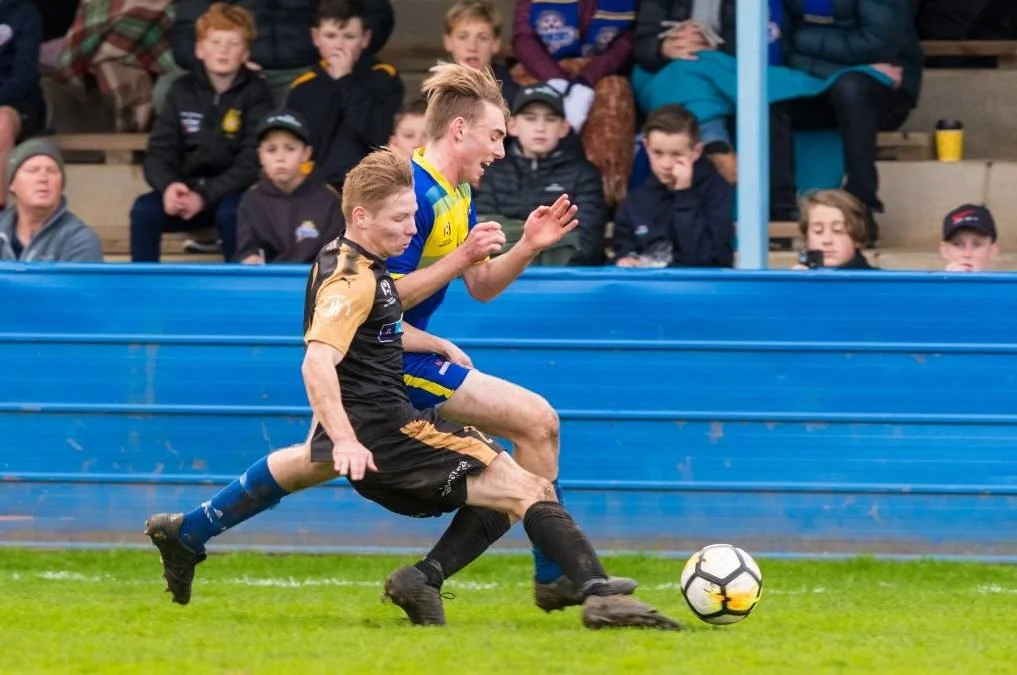
Devonport Strikers v Olympia FC Warriors 2019
Part Five: 2013 to 2026
When the Victory League finally kicked off in 2013, Tasmania had eight clubs, 21 league games and a genuine statewide spread.
Five clubs were from the south.
Launceston City and Northern Rangers represented Launceston.
Devonport represented the north-west.
For me, this was no longer history I was trying to piece together years later.
I was President of one of the clubs in it.
And we were excited.
After everything that had gone into the application process, it felt important that South Hobart was there.
Nobody wanted to be the club left out.
There was a sense that Tasmanian football was trying to lift itself into something bigger.
And I believed in it.
My view today is not necessarily the view I had then.
I am not going to list every season
I could sit here and tell you who won the league every year.
Who finished second.
Who was promoted.
Who was relegated.
The tables are there for anyone who wants them.
I am more interested in what these years felt like.
The competition began life as the T-League, became the Victory League and from 2016 was NPL Tasmania.
It began vibrantly.
A new statewide competition.
Eight clubs.
Twenty-one games.
A national pathway.
Something that felt important to be part of.
Then came all the layers underneath it.
Licensing.
National and club-licensing requirements.
More administration.
More qualified personnel.
More infrastructure.
More money.
And more work, much of it carried by volunteers.
Some of that undoubtedly improved the game.
Some of it became enormously time-consuming and expensive.
And some of it, frankly, could feel ridiculous when you tried to apply requirements designed for elite football to community grounds in Tasmania.
What strikes me now, after going back through the earlier State Leagues, is how familiar the journey feels.
They begin with enthusiasm.
Then the rumblings start.
Travel.
Money.
Who should be in.
Who should be out.
Whether the competition is worth what it costs to take part.
We have been here before.
Suddenly there was something beyond Tasmania
South Hobart won the first Victory League in 2013.
But one of my strongest memories of that season has very little to do with the league table.
It was the day Campbelltown City came to D’Arcy Street.
They were the South Australian grand final winners and we were playing in the first National Premier Leagues finals series.
The Army Band played.
D’Arcy Street looked magnificent.
There was a crowd.
There was atmosphere.
This little football ground in South Hobart was suddenly connected to something much bigger.
And South won 3-1.
It was huge.
It was the first NPL finals series ever played, so nothing like it had happened in Tasmania before.
A Tasmanian club beat the South Australian winners and earned its way into the first NPL Grand Final.
We hosted it at KGV.
We lost 2-0 to Sydney United 58.
That did not take away what the Campbelltown win had meant.
The new State League had given us something beyond Tasmania.
Then came the FFA Cup
Almost immediately another door opened.
The FFA Cup began in 2014.
Suddenly winning the Milan Lakoseljac Cup was not simply about winning Tasmania’s state cup.
It was a place in a national competition.
South Hobart won the Lakoseljac Cup that year.
So we were Tasmania’s club in the very first FFA Cup.
We drew Tuggeranong United from Canberra.
It went to penalties at KGV.
I could not watch.
I hid in the changeroom.
I bloody hate penalties.
We lost.
The cup gave players another target.
It gave supporters the chance to see teams at their own grounds that had previously seemed part of another football world.
I remember standing at Valley Road for one of Devonport’s wonderful FFA Cup nights in 2016.
The weather was dreadful.
Across Devonport’s two home ties that year more than 5,000 people turned up.
I also remember ruining a beautiful pair of French shoes.
That was the magic of the cup.
People went anyway.
Devonport beat Lambton Jaffas and then took Bentleigh Greens to extra time in the Round of 16.
In 2022 Wellington Phoenix came to Valley Road for an Australia Cup match.
An A-League club playing a competitive national cup game in Devonport.
That mattered.
The NPL finals gave the league champion somewhere to go.
The FFA Cup, later the Australia Cup, gave the state cup winner somewhere to go too.
Those opportunities mattered.
They still do.
This was not simply a league
But underneath the football, something else was developing.
The Victory League had been created through a licensing process.
Clubs applied.
Clubs were assessed.
The federation decided who met the requirements.
That is quite different from winning your regional competition and going up.
In 2015 the first licences ran out.
Six clubs were renewed.
Glenorchy Knights and Launceston City were told to reapply.
Launceston City got back in.
Knights did not.
They went back to the Southern Championship, won it three years running and returned in 2019.
Then they won the NPL twice.
It happened again in 2022.
Olympia had been there from the start.
They won the league in 2015.
They finished second in 2017 and 2019.
Football Tasmania said their application for 2023 did not meet all of the criteria.
They were not offered a licence.
Launceston United took the place.
At the time there was talk of getting Olympia back as quickly as possible.
Four seasons later they are still in the Southern Championship.
This was never simply a conventional football pyramid.
Take a players’ race
To be fair, many of the principles behind licensing make sense.
If you are going to call something the highest level of football in Tasmania, there should be standards.
Coaches should be qualified.
Players should be looked after.
Grounds should be safe.
But there is a difference between a requirement looking sensible on paper and what it means when a volunteer club has to deliver it.
One example sticks in my mind.
A players’ race.
The reason for it is perfectly understandable.
Players and referees should be protected as they enter and leave the field.
We were told we needed one at D’Arcy Street.
So picture it.
Four volunteers putting bollards across the path from the changerooms to the field, joined by a flimsy orange plastic chain.
Apparently that constituted a players’ race.
Licensing requirement met.
Then take Wentworth Park.
Depending on how the field is set up you could be talking about a race around 50 metres long.
Somebody has to buy it.
Put it up.
Take it down.
Store it.
One line in a licensing document.
Another expense.
Another job for volunteers.
That is the side of elite football structures people do not always see.
Rules, rules and more rules
As the NPL years went on, expectations increased.
Coaching qualifications.
Medical requirements.
Youth teams.
Facilities.
Match-day operations.
Reporting.
More forms.
More boxes to tick.
Some were necessary.
Others left you wondering whether the person writing the regulation had ever stood at a Tasmanian football ground on a wet Saturday and asked who was actually going to make it happen.
Usually the answer was volunteers.
And for me something else changed.
The relationship between the clubs and Football Tasmania felt less like a partnership and more like master and servant.
The federation made the rules.
The clubs delivered them.
And the clubs paid the federation for the privilege.
That does not mean every rule was wrong.
It means the balance had changed.
Expansion never quite settled
The competition itself kept changing too.
In late 2016 came the plan for ten clubs with promotion and relegation.
A proper football pyramid.
Clubs could earn their way in.
Clubs could fall out.
It was meant to be ten in 2019.
Then Northern Rangers, one of the original eight, stepped away.
Riverside Olympic came in.
Glenorchy Knights were back.
Nine clubs.
Each played 24 league matches.
Twenty-four.
That number is worth remembering.
Then Clarence United and Hobart Zebras merged to become Clarence Zebras.
Back to eight.
Eight.
Nine.
Eight.
A competition still trying to find the shape that suited Tasmania.
Devonport became central
Devonport became one of the defining clubs of the modern era.
Strong teams.
Strong coaching.
Repeated success.
That is fascinating when you remember Part Three.
This was the same club that had once stepped away from the old State League when the cost of statewide travel no longer stacked up.
Now Devonport were back and central to the competition.
A State League without the north-west does not feel very statewide.
So Devonport matters.
Launceston matters.
Geographic representation matters.
How far a competition should change in order to preserve that representation is another question.
One I am saving for Part Six.
The real cost was never just the bus
By then I understood something I had not appreciated in that interview room in 2012.
Statewide football is not simply about getting on a bus to Devonport or Launceston.
Travel is one cost.
The burden runs through the whole club.
Coaching.
Players.
Medical support.
Youth structures.
Ground requirements.
Administration.
Then there is the other side of the ledger.
Home games.
Gate.
Canteen.
Bar.
Sponsors.
Members.
The competition has to give something back.
That sounds very unromantic.
After years of helping run a football club I can tell you it is very real.
Ten clubs at last
For 2026 the NPL expanded to ten clubs.
Ulverstone and South East United joined.
Every club played the other nine home and away.
Eighteen league games.
Before the season began it was already known that the bottom two would be relegated and the league would go back to eight.
So Tasmania finally got to ten clubs.
For one season.
Launceston United and Ulverstone were relegated.
Then Riverside told Football Tasmania it would not field an NPL team in 2027.
The planned eight became seven.
Seven
The 2027 NPL will be:
Clarence Zebras.
Devonport City.
Glenorchy Knights.
Kingborough Lions.
Launceston City.
South East United.
South Hobart.
Five southern clubs.
One from Launceston.
One from the north-west.
Eighteen league matches across 21 rounds.
Compare that with the competition we entered in 2013.
Eight clubs.
Three from the northern half of the state.
Five from the south.
Twenty-one league matches.
Fourteen years later the competition is smaller.
Whether that is good, bad or unavoidable comes next.
The national game has changed around us
There is another difference between 2013 and now.
The NPL national finals that meant so much to us stopped after 2019.
For a few years the league champion had nowhere to go.
Then in 2025 came the Australian Championship.
South Hobart played in the first one.
The second starts next weekend and we are in that too.
The FFA Cup became the Australia Cup and opened up.
The divide between the A-League and the old clubs is not as absolute as it once was.
There is still no promotion and relegation between them.
But this weekend South Melbourne play Melbourne Victory in the Australia Cup final.
A great traditional club from outside the A-League against an A-League club in a national final.
The opportunities open to ambitious clubs are quite different from those of 1978, 1988 or even 2013.
That matters when we ask what Tasmania needs from its own competitions.
Excitement first. Rumblings later.
After nearly fifty years of this history, that is the pattern I keep seeing.
The first State League began with optimism.
Then came money worries, travel and clubs struggling underneath it.
The second arrived with new ambition.
Then clubs withdrew, the north fell away and it disappeared again.
The modern version began vibrantly too.
In 2013 I wanted South Hobart in.
Very much.
I watched the Army Band play at D’Arcy Street while South beat Campbelltown City and thought this was exactly where Tasmanian football should be.
I also spent years seeing what was asked of clubs underneath it all.
Different era.
Some very familiar noises.
The same questions
How much travel is reasonable?
How many games are enough?
How much should it cost to take part?
How important are local rivalries?
How important is geographic representation, and how far should a competition change to preserve it?
What happens when good clubs decide the State League is not for them?
And does a full season of statewide football have to be the only way ambitious clubs and players reach something bigger?
We found those questions in 1981.
Again in the 1990s.
We are asking them again now.
Nearly fifty years later
Part One began in 1978.
We have followed Tasmanian football through three State League eras and two long periods without one.
There has been some terrific football along the way.
That has never been the problem.
I began this part excited to be in the new Victory League.
I finish it looking at seven teams and 18 games.
Somewhere between those two points my thinking changed.
I could finish this series by asking how we make the State League work better.
I think the question is bigger than that.
Do we need a full season State League at all?
That is Part Six.