
What Is Community Sport Worth? Tasmania's Councils Have Very Different Answers

Photo courtesy of Pulse Tasmania
I thought this would be simple.
Clarence sporting clubs have been making plenty of noise about the cost of using council facilities. Clarence Zebras is one of them.
So I thought I would have a look.
What does it cost a community club to hire a ground in Tasmania? Is Clarence really that different?
Tasmania has 29 councils. How hard could it be?
Quite hard as it turns out.
I got through 17 of them before I ran out of patience and looking at published fee schedules.
I did not find 17 versions of the same system with different prices.
I found six different systems.
Six ways to charge community sport
Some councils charge by the hour with different rates for juniors and seniors and for matches and training.
Some charge one flat hourly rate.
Some charge by the day or the session.
Some charge per match day.
One charges by the number of teams a club fields.
One charges each club a flat annual fee based on its size.
Then come the lights. The changerooms. The kiosks. The clubrooms. The seasonal discounts. The casual rates.
Just when you think you have one council worked out you cross a boundary and start again.
Let's start with Clarence
Clarence's 2026-27 schedule looks straightforward at first.
Junior training is $25 an hour. A junior match is $35.
Senior training is $47. A senior match is $57.
Then football gets a category of its own.
An NPL soccer match is $85.50 an hour. There is no junior rate.
Lights are another $15 an hour.
Small-sided junior grounds are different again. $5.50 an hour per ground without fixed goals. $11 with them.
So inside one council the question "what does a football match cost?" has at least four answers.
Cross the river and everything changes
The City of Hobart sorts its grounds into four levels.
Take a Level 2 ground such as Clare Street Oval or Soldiers Memorial.
Junior training is $31 an hour. A junior match is $45.
Senior training is $48. A senior match is $89.
So Hobart looks dearer than Clarence.
Except Hobart gives seasonal hirers 25 per cent off ground hire.
That takes the $89 senior match to $66.75. The $45 junior match drops to $33.75.
Which is less than Clarence's $35.
Lights are not a flat fee either. Hobart adds 15 per cent to the ground charge.
Same sport. Different sums.
Then there is Glenorchy
Glenorchy publishes a rate for every ground.
KGV is $76 an hour. North Chigwell and Prince of Wales Bay are $42 or $48 depending on the pitch. Juniors pay half.
But those are casual rates only. The schedule says so.
Football Tasmania holds the head lease at KGV.
So the published price tells us nothing about what Glenorchy Knights pays.
That problem turns up again and again.
The advertised price of a ground is not necessarily what the resident club pays for a season on it.
And then I found Taroona
Kingborough does not charge its tenant clubs by the hour at all.
It sorts them. Large, medium or small. Urban, rural or junior.
Then it charges each club one fee for the year.
Kingborough's own manual names Taroona Football Club as a Medium Urban club.
Last year that band cost $2,575. A Large Urban club paid $5,150.
It is worth knowing how that came about.
In 2022 Kingborough proposed an hourly charge. Clubs objected. They argued for a seasonal fee on a sliding scale by club size.
That is more or less what they got.
Now put Taroona beside Clarence Zebras.
Two football clubs on opposite sides of the Derwent.
Under Kingborough's published system, Taroona has been classified as a Medium Urban club paying a flat annual ground-user fee.
Clarence Zebras is billed by the hour with separate prices for juniors and seniors and for matches and training. Plus an NPL rate.
Club president Nick Di Giovanni has said publicly that before the Zebras even open their clubroom doors each year he has to find around $78,000 to meet these costs.
It would be very tempting to put $2,575 beside $78,000 in enormous type and leave it there.
I can't.
I don't know what Taroona's fee covers. I don't know whether lights and clubrooms are extra. I don't know what band the club is in this year.
And the $78,000 is the Zebras' own figure. I haven't seen the breakdown.
So I am not going to tell you one club pays 30 times what the other does.
The evidence doesn't show that.
What it does show is two councils answering the same question in completely different ways.
Keep driving
Derwent Valley hires out its soccer ovals at Tynwald Park by the day. $132.
Brighton charges $48 an hour at most grounds with a three-hour minimum. Lights at Thompson Oval are $91 an hour.
Burnie charges a soccer club per game day and a separate fee for a season of training.
Launceston sells blocks of time. Last year a training session was $58 for a two-hour minimum.
Meander Valley charges per team per season. Last year a senior men's soccer team was $330. A senior women's team was $165. A junior team was $82.50.
Last year Sorell charged for soccer lights by the number of towers you switched on.
Then there is George Town.
Its schedule lists the soccer ground at $18 an hour.
It also says the charges do not apply to current sporting clubs using the facilities.
So in one Tasmanian municipality the resident club appears to pay no ground hire.
In another we are working out whether a match is $85.50 an hour before the lights go on.
I'm not saying one council is right and another is wrong.
I'm wondering how we arrived at such different answers.
And then there are the clubrooms
So far I have only been talking about grass.
Football clubs don't run on grass alone.
They need somewhere to get changed. Somewhere to run a canteen. Somewhere to hold a presentation night.
And this is where comparing councils gets even harder.
Some councils publish separate prices for buildings and rooms.
Brighton lists the Seymour Street Clubrooms at $48 an hour.
Derwent Valley charges $263 a day for a pavilion.
Clarence lists the Wentworth Park Sports Centre at $15 an hour for sporting activities. The kiosk is another $15.
Hobart also publishes separate charges for some facilities.
North Hobart Oval is a good example. The ground hire specifically excludes the Plaister Stand and the function room has its own separate hire charge.
Others tell you there is an arrangement and leave it there.
Meander Valley says the fee for the Prospect Vale Park clubrooms is determined by the leaseholder.
Kingborough says pavilions and clubrooms are by special arrangement.
At Somerset the soccer club manages the ground itself.
And even where a council publishes an hourly or daily price for a clubroom, that still doesn't tell us what the resident sporting club pays to occupy the whole facility for a season.
Does it pay rent?
Does it pay for power and water?
Who cleans the building?
Who pays for repairs?
Who maintains the changerooms?
Who replaces something when it breaks?
That is the problem.
The price of hiring the grass is relatively easy to find.
The total cost of being the club that lives there often isn't.
Try running junior football across council boundaries
This matters to me because of the Central Region Junior Football Association.
Every weekend we run many matches across many municipalities.
We rent our Hobart grounds directly from the City.
Everywhere else the clubs pay their own council and we give them a rebate.
So we get to see what different councils are charging for junior football.
In Clarence a junior match is $35 an hour. Unless it is small-sided. Then it is $5.50 or $11.
At North Chigwell or Prince of Wales Bay the junior casual rate works out at $21 or $24.
In Hobart it is $49, $45, $36 or $35 depending on the ground. Less 25 per cent because we book for the season.
There is a catch.
If a round is washed out we pay anyway.
Same association. Same competition. Same children.
What it costs to put them on a pitch depends on which side of a boundary the pitch sits.
So is Clarence expensive?
I set out to answer that.
I still can't give you a simple answer.
Hourly rates are not enough.
You need to know whether a club is a casual or seasonal hirer. Whether it has a lease. Whether someone else holds the head lease. Whether lights and changerooms are included. Whether the club maintains the place itself. Whether the council charges by the hour, the match, the team, the season or the year.
Sometimes you can read the whole schedule and still not know what the resident club pays.
So before anyone declares one council cheap and another expensive we need to be sure we are comparing the same things.
There is a reason councils charge
This needs saying.
Sporting grounds don't maintain themselves.
Grass has to be cut and watered. Lights use power. Toilets need cleaning. Drainage, fencing and buildings wear out.
Ratepayers carry a lot of that whether they play sport or not.
Councils also own very different grounds and have very different budgets.
So I don't expect every council to charge the same.
A basic training paddock should not cost what a top competition venue costs.
There is another comparison worth making.
Hobart doesn't expect its Aquatic Centre to pay for itself.
People pay to swim. They pay memberships and other charges. But those fees don't cover the full cost of running the place. In 2025–26 the Centre was budgeted to bring in about $7.3 million in fees and charges against expenses of about $8.9 million.
Ratepayers make up the difference.
And I don't have a problem with that. An aquatic centre is a community facility. It gets people moving, keeps them active and provides something valuable to the community.
But aren't our sporting grounds doing much the same thing?
Maybe the question isn't whether the people using these facilities should contribute. Of course they should.
The question is how much?
But what is it worth to have people playing?
There is another side to this ledger.
We can work out what it costs to mow a football ground.
We can work out what the lights cost to run.
It is much harder to put a price on hundreds of people turning up to use that ground every week.
Children are moving.
Adults are staying active.
Teenagers belong to something.
Parents who would never otherwise meet are standing on a sideline talking.
People who live alone have somewhere to be on a Saturday.
We talk a great deal about inactivity and loneliness. We worry about mental health and the cost of preventable illness.
Community sport is already doing something about all of them.
Most of it is delivered by volunteers.
Then we send the club an invoice.
Here is the part that surprised me.
I could only find figures for two councils.
In both cases the invoices didn't come close to covering the bill.
In 2022 City of Hobart officers reported that sportsground fees were recovering about 15 per cent of what the City spent on its grounds. That was based on benchmarking from around 2017 so I am not suggesting it is the figure today.
The same year Kingborough said it was spending $1.4 million a year maintaining its grounds. Its new club fees would cover only a small part of that.
Ratepayers were already paying for most of it.
Maybe that is exactly what we want them to do.
What value do we put on sport?
Governments put public money into elite sport and major stadiums for all sorts of reasons.
Visitors. Jobs. Civic pride. The hope that it inspires people to play.
Community sport doesn't need to promise that people will play one day.
They are already playing.
Every Saturday morning the evidence is running around on the grass.
And there is Australian research that puts a value on it.
In 2018 KPMG and La Trobe University estimated that Australia's community sport facilities generate more than $16.2 billion a year in economic, social and health value.
That was $6.3 billion in economic benefit. $5.1 billion in social benefit. $4.9 billion in health benefit.
La Trobe also studied community Australian Rules clubs in Victoria.
The researchers estimated that for every dollar spent running a club, at least $4.40 in social value was created.
That study was not about soccer. It was not done in Tasmania. I won't pretend the figure transfers directly.
But it tells us something.
Community clubs don't simply use up public resources.
They create value too.
So should the grounds be free?
That is a question I did not expect to be asking when I started reading council fee schedules.
Maybe not.
Grounds cost money. Somebody has to pay.
But George Town's schedule says its ground charges don't apply to its current sporting clubs.
Other councils have chosen very differently.
When a council puts its fees up the club has only so many places to find the money.
Sponsorship.
Fundraising.
The canteen.
Or registration fees.
And registration fees mean families.
So is community sport a user of council services that should contribute to the cost?
Or is it a community service worth investing in?
It can be both.
Tasmania's councils have drawn that line in very different places.
I looked at 17 of them and found six different models.
I'm not asking for every ground to cost the same.
I'm asking what principles should decide what a volunteer club pays to play on a publicly owned ground.
Because right now the answer depends on which side of a council boundary you happen to be standing.
And maybe the figure we should be looking for is not what a football ground costs.
Maybe it is what community sport is worth.
We've been here before: thirteen years without a State League
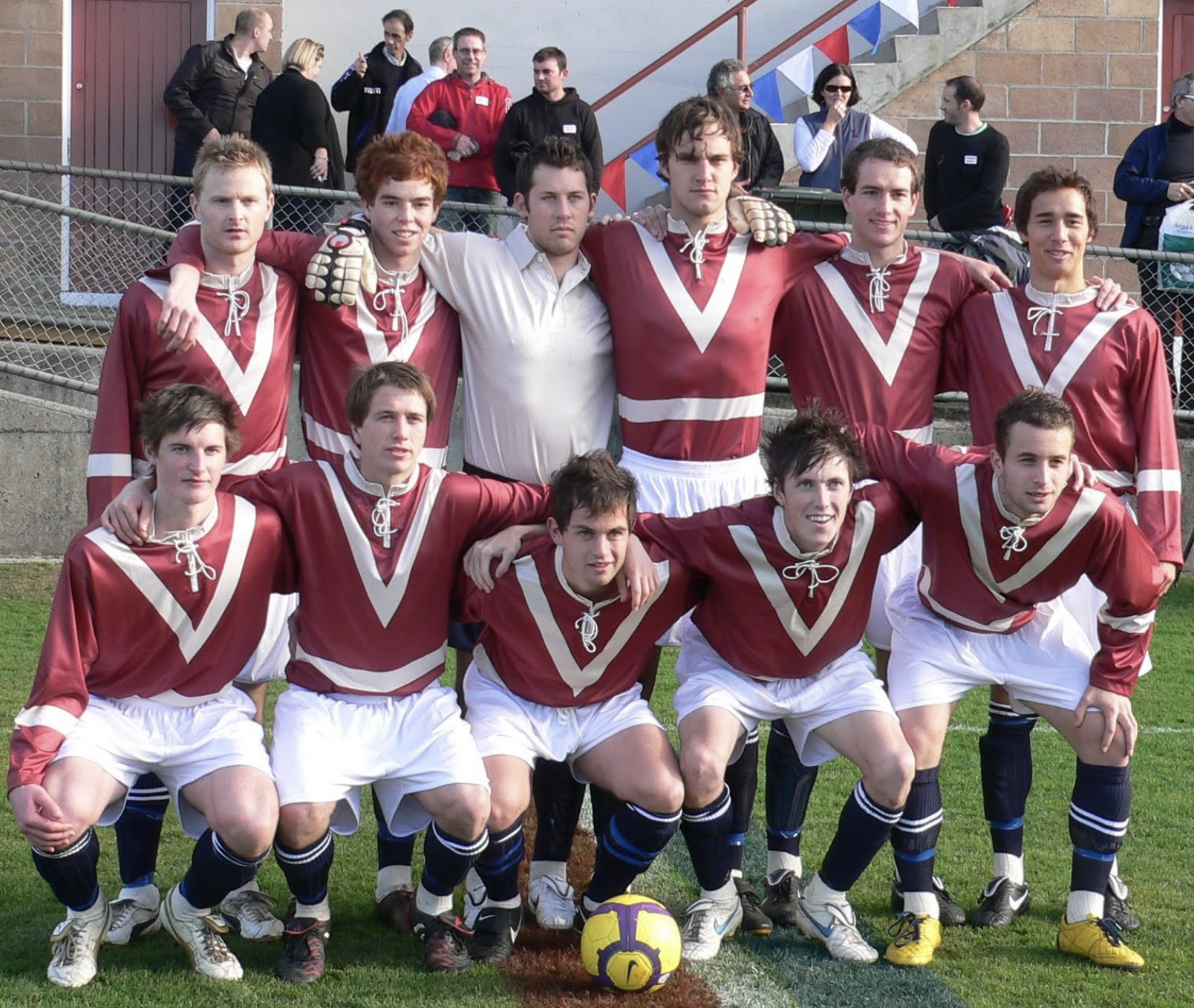
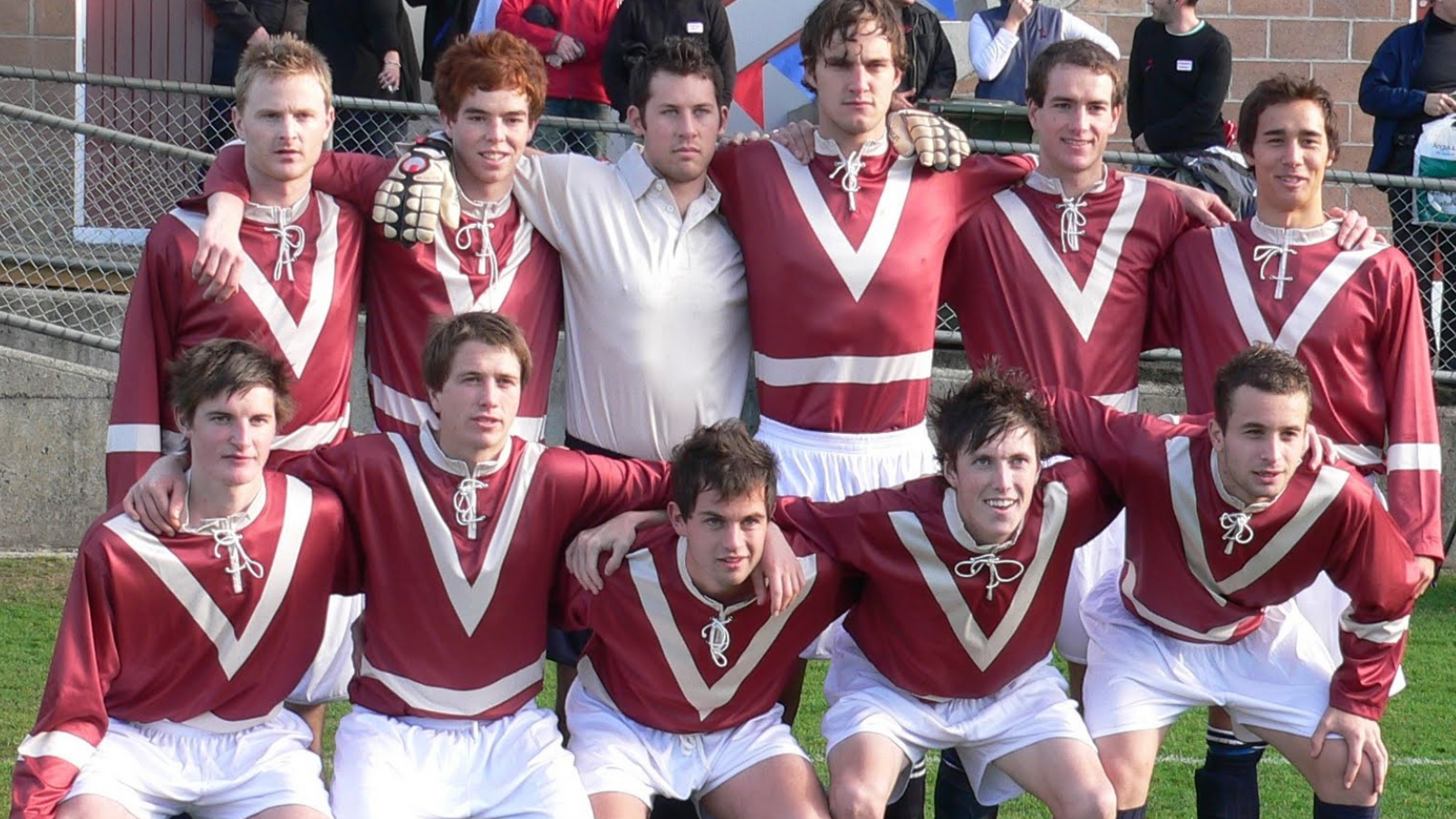
South Hobart’s starting XI in replica 1912–14 shirts during the club’s centenary celebrations in 2010. It was my first year as President and Ken’s third season as senior coach. Photo: Walter Pless.
Part Four: 2000 to 2012
When the State League disappeared at the end of 1999, football was just beginning to find its way into my life.
I had arrived in Tasmania in 1993 with Jake still a toddler and pregnant with Ned, who was born here a few months later.
Max arrived in 1995.
All three boys would turn out to be super keen to play football.
A few years later, when Max was about five or six, there was no junior football at his school.
So we went looking for somewhere the boys could play.
That search led us to Tony Chaffey, South Hobart Primary and eventually South Hobart Football Club.
Funny how life works.
By the time Tasmania finally brought back a State League in 2013, football was no longer something happening around me.
I was right in the middle of it.
Back to regional football. Again.
The second State League finished after the 1999 season.
Travel was part of the reason, especially for the northern clubs.
So Tasmania went back to what it had done before.
Northern football.
Southern football.
Regional champions.
What did not happen was the collapse of the game.
We have seen this before.
The State League disappears.
Football carries on.
In 2000 Glenorchy Knights won in the south, coached by Ken Morton.
They won just about everything that year.
The Southern Premiership.
The Steve Hudson Cup.
The Final-Five Series.
The very first Milan Lakoseljac Cup.
Devonport won in the north.
The years that followed produced strong regional competitions, sometimes with ten teams in the south.
There was plenty of football.
Thirteen years is a long time
This period lasted from 2000 through to 2012.
Thirteen seasons.
Long enough for regional football to stop looking like a temporary fix while everyone waited for the State League to return.
It became the structure.
Clubs played local rivals more often.
Travel was reduced.
Northern clubs played northern clubs.
Southern clubs played southern clubs.
That sounds rather familiar after Part Two.
Tasmania had already spent six seasons without a State League between 1982 and 1987.
Now it was doing it again.
Only this time for more than twice as long.
Statewide football still found a way
No State League did not mean no state champion.
The northern and southern champions played off for the title.
From 2009 it became a knockout series with the top four from each region.
The titles went all over the island.
University in 2001.
South Hobart in 2002.
Devonport in 2003 and 2004.
Glenorchy Knights in 2005.
Somerset in 2006.
Hobart Zebras in 2007.
South Hobart in 2008.
Clarence United in 2009.
Then South Hobart three years running from 2010 to 2012.
Launceston City were never far away.
Northern Rangers emerged as a serious club late in the period.
So perhaps this was another Tasmanian compromise.
Play most of your football regionally.
Keep the travel manageable.
Then bring the best clubs together at the end.
It was not the week-to-week experience of a State League.
But it gave you local football and north against south.
Meanwhile football had found our family
This is where the history becomes much more personal for me.
Tony Chaffey was enormously important in leading us towards South Hobart.
He had done so much work developing young players through South Hobart Primary School and the club.
I want to be careful not to write South Hobart's later success as though it suddenly appeared when Ken arrived.
It did not.
Nathan Robinson coached South Hobart to the Southern title in 2002.
Then they beat Devonport over two legs to become state champions.
It was the club's first state title since 1959.
Forty-three years.
The pathway was there.
The junior work was there.
Clubs are never built by one person.
Then my own football life accelerated
In 2007 I met Ken.
By then the boys were playing and South Hobart had become a huge part of our lives.
In 2008 Ken took over as coach.
South won 14 of 18 league games and beat Devonport 3-0 in the state final.
Then in 2010, South Hobart's centenary year, I became President.
That team went through 21 league games without losing one.
They beat Northern Rangers 1-0 for the state title.
Not a bad first year.
I do smile looking back at the beginning of this series.
In 1978 I was in Auckland and probably barely knew where Tasmania was.
In 1988 I was living in Glebe, going to the odd Swans game with no idea football would ever become part of my life.
By 2010 I was President of a football club.
Life comes at you quickly.
And Tasmania still had no State League.
So did we actually need one?
So what do those thirteen years tell us?
Could Tasmanian football survive without a State League?
Of course it could.
It had just done so for thirteen years.
Clubs developed players.
Regional leagues worked.
South Hobart became a very strong club without playing a statewide season.
So did Devonport.
Would bringing one back be worth it?
Tasmania decided yes.
Again.
The T-League
By 2012 Football Federation Tasmania was building a new statewide competition.
It was not even called the Victory League at first.
It was the T-League.
Melbourne Victory came on board as sponsor in July 2012 and the name changed.
This was not the old State League under a new name.
There was a licence.
Clubs had to apply.
It was not just about having a good team.
There were expectations around club structure, youth teams and pathways.
The federation was now deciding what a top club should look like.
That was new.
John Boulous, the FFT chief executive, said at the time, "It won't be for every club."
He meant it.
And then came the interview
I remember this part very well.
Applications closed in May 2012.
Three of us went along for South Hobart.
Frances Seaborn was Secretary.
Tracey Gofton was Treasurer.
I was President.
Three volunteers from a club that had just won three state titles in a row.
John Boulous was there.
Guy Green was there.
Jack Johnston led the panel.
And he ran the room.
It was one of the most uncomfortable hours I have spent in football.
It did not feel like a conversation.
It felt like we were the ones being examined.
We had questions.
Reasonable ones I thought.
They were not welcome.
We were told, quite firmly, that if we did not like the model we did not have to be involved.
That stayed with me.
I walked out of that room feeling smaller than when I walked in.
South Hobart absolutely wanted to be part of it.
But the message was clear.
This was the model.
Take it or leave it.
A different relationship
I did not think much about it then.
I do now.
The old State Leagues had been competitions.
This one was also a licence.
The federation was not simply arranging who played whom on Saturday.
It was deciding who was allowed in.
That brought good things.
Higher expectations.
Pathways.
A clear top tier.
But it changed the balance between the clubs and the governing body.
You no longer earned your place by winning your regional competition.
You were granted it.
More on that in Part Five.
Eight clubs got the nod
The new competition would begin in 2013 with eight clubs.
Devonport City.
Glenorchy Knights.
Kingborough Lions.
Launceston City.
Northern Rangers.
Olympia Warriors.
South Hobart.
Tilford Zebras.
Five southern clubs.
Two from Launceston.
One from the north-west.
Each club would play 21 league matches.
Remember that number.
Twenty-one.
Because when we eventually arrive at 2027, Tasmania will be looking at seven clubs and 18 league games.
It was meant to be eight in 2027.
Then Riverside dropped out this year.
But that is a story for later in this series.
Back to 2012.
There was one more thing we did not know in that room.
Nobody mentioned the National Premier Leagues.
We had never heard of it.
The name did not exist yet.
It arrived in February 2013, just before the first season.
Our new league would be Tasmania's place in it.
Its champion would play off against the champions of other states.
That turned out to matter quite a lot to South Hobart.
We had been here before
Round and round we go.
Tasmania abandoned its first State League after 1981.
Regional football followed.
The State League returned in 1988.
It disappeared after 1999.
Regional football returned.
Then, after thirteen more seasons, Tasmania built another one.
Three attempts.
The same island.
The same distances.
The same questions.
How much travel can clubs afford?
How many games are enough?
How important are local rivalries?
What do clubs get back for taking part?
What happens when a club decides it would rather play regionally?
We had asked those questions before.
We were about to ask them again.
For the earlier State Leagues I relied entirely on others.
Walter Pless most of all.
Old tables, club histories and the memories of the people who were there.
Not this time.
This time I was in the room.
That is where Part Five begins.
The dogs of D'Arcy Street are back
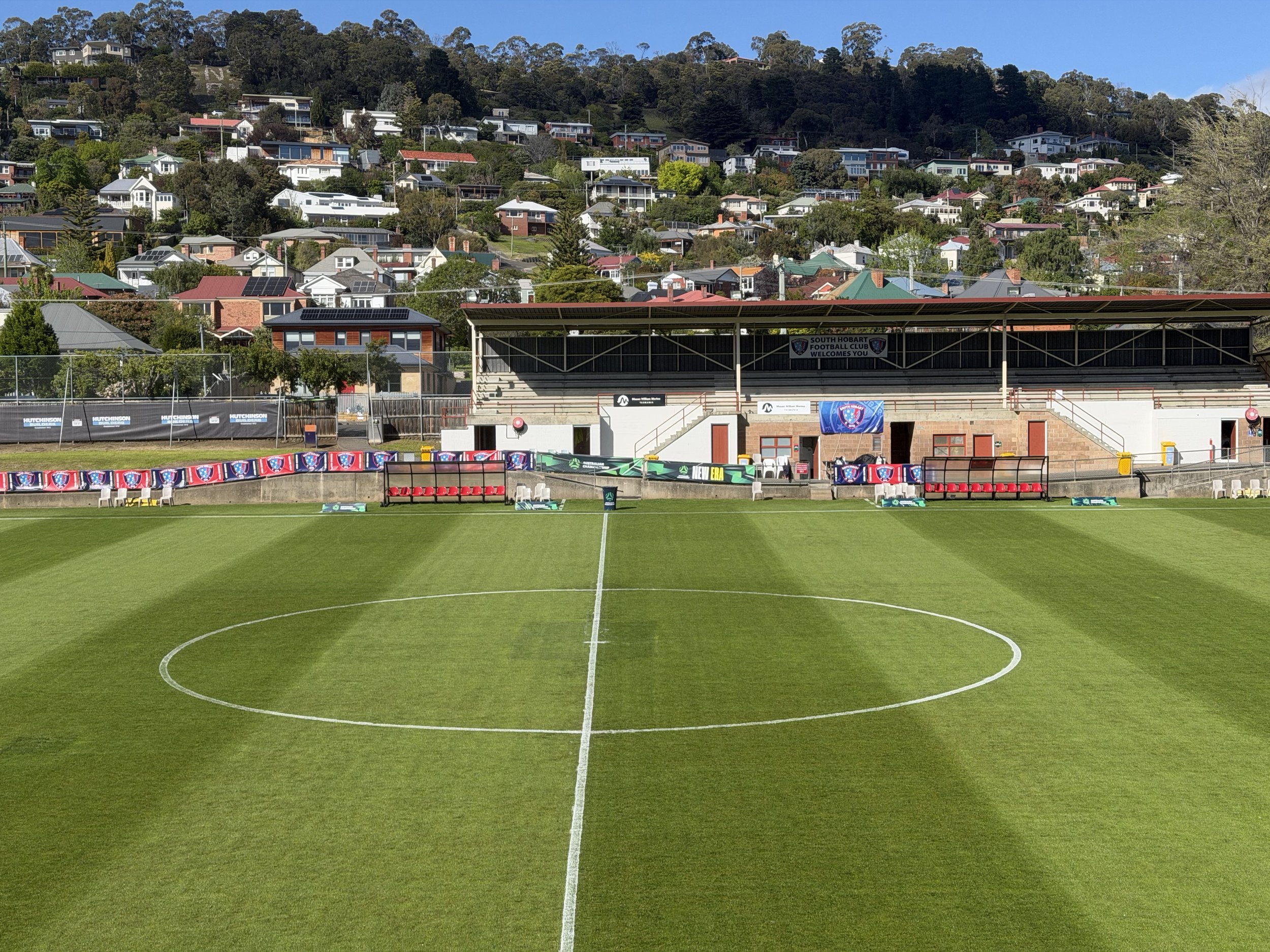
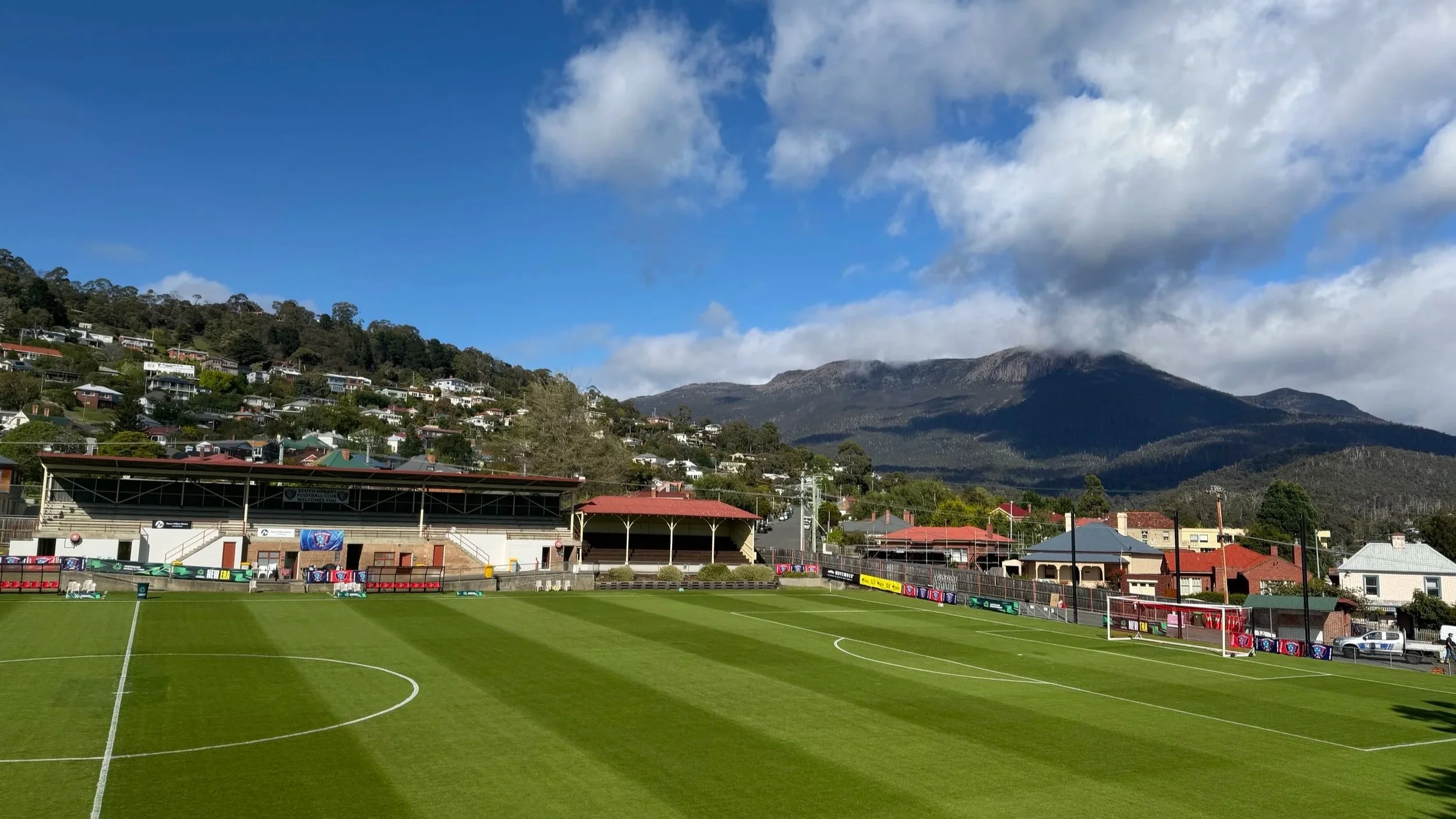
South Hobart Oval - The rectangle that is D’Arcy Street Ground.
The Hobart City Council election is upon us.
And the dogs of D'Arcy Street are back.
The issue is all over social media again.
Candidates are being asked for their views.
Past Council decisions are being revisited.
Some extraordinary things are being said again about South Hobart Football Club and the people connected to it.
So let's go back to what actually happened.
Not what Facebook says happened.
What actually happened.
This wasn't a decision made overnight
South Hobart Football Club played its first official match at the newly opened South Hobart Ground on 21 May 1910.
For many years the ground was also shared with people exercising their dogs.
And for many years Council tried to make that shared use work.
That is not my version of history.
It is Council's.
In July 2025 the City acknowledged the "long-standing shared use" of the ground by South Hobart Football Club and the local dog-walking community.
It also referred to years of efforts to find a compromise.
The club had raised concerns about the impact of dogs on the playing surface.
Council also recognised the importance of the oval to people who had used it as a central off-lead exercise area.
Two competing uses.
In July 2025 there was an attempt to settle it.
Councillor Louise Elliot moved an amendment that included making South Hobart Oval restricted to dogs at all times from 1 September 2026, along with alternative dog areas including at Wellesley Park.
It was defeated 7 votes to 5.
Voting for the amendment were Marti Zucco, Bill Harvey, John Kelly, Louise Elliot and Will Coats.
Voting against were Anna Reynolds, Zelinda Sherlock, Mike Dutta, Louise Bloomfield, Ryan Posselt, Ben Lohberger and Gemma Kitsos.
So the dogs stayed.
Council kept looking for a compromise.
Professional mediation was proposed.
So was a consultative committee involving the club and the broader community.
Council talked about more surveillance, extra maintenance, more playing spaces and new off-lead dog areas.
By February 2026 Council officers had reached a much firmer conclusion.
Their report described South Hobart Oval as the City's only dedicated regional-level soccer ground capable of hosting state and national competition matches.
It concluded that continued off-lead dog use was not compatible with that sporting role.
Council put the proposed restriction out to the community.
There were 272 submissions.
Of the 243 about South Hobart Oval, 137 supported the restriction and 105 opposed it.
Then came the decision
On 30 March 2026 Council made its final decision.
Dogs would be restricted from South Hobart Oval at all times from 1 July 2026.
It passed 7 votes to 5.
This time, voting for the restriction were Will Coats, Louise Elliot, Bill Harvey, John Kelly, Ryan Posselt, Zelinda Sherlock and Marti Zucco.
Voting against were Anna Reynolds, Mike Dutta, Louise Bloomfield, Ben Lohberger and Gemma Kitsos.
Two councillors had changed their position from the July vote.
Ryan Posselt and Zelinda Sherlock.
I'm not going to tell anyone how to vote in a Council election.
But I do think people are entitled to know how their elected representatives voted.
And now they do.
What about Lower Wellesley?
When Council voted for the restriction, it also committed $180,000 to a fenced off-lead dog park at Lower Wellesley Park.
The community didn't want it.
Around 80 per cent of 185 submissions opposed it.
Many dog walkers opposed it too.
Writing in the Mercury on 16 June, the president of the Hobart Dog Walking Association said the South Hobart community had rejected the fence because they were being "sold a pup".
In June Council voted unanimously to scrap it.
The restriction at D'Arcy Street went ahead on 1 July.
I understand why that stings for dog walkers.
But the fence wasn't taken away from them.
Many of them argued against it.
Is D'Arcy Street really such an extraordinary restriction?
Read some of the commentary and you'd think banning dogs from a sporting ground was an attack on dog owners.
It isn't.
Hobart has traditionally been relaxed about dogs on sportsgrounds.
Dogs can still be exercised off-lead on many Hobart sportsgrounds when sport isn't being played, the ground isn't booked, a school isn't using it and maintenance isn't underway.
But there are exceptions.
North Hobart Oval, New Town Oval, Queenborough Oval, the TCA Ground, Domain Athletics Centre and now South Hobart Oval are among the sporting facilities where dogs aren't permitted.
Council itself called the South Hobart Oval situation unique.
Off-lead dogs were already banned at all its other major sportsgrounds.
So perhaps the question isn't why D'Arcy Street is so unusual.
Perhaps the long-running shared use was the unusual part.
You don't have to go far beyond Hobart to find tighter rules.
In Kingborough, dogs are restricted at all times from the playing field of Council-owned and managed sportsgrounds. Dogs may be walked on lead around the outer areas.
Clarence prohibits dogs from sporting recreation grounds and their perimeters.
Brighton's current Dog Management Policy prohibits dogs from sportsgrounds, playing fields and their perimeters.
Glenorchy tells dog owners that sports grounds are prohibited areas and dogs must not be taken there.
For plenty of people just outside Hobart, keeping dogs off a sporting field is nothing new.
South Hobart Football Club and Morton's Soccer School are not the same thing
This keeps coming up so let's clear it up.
South Hobart Football Club is a community football club.
Morton's Soccer School is a private business.
They are not the same organisation.
I was President of South Hobart Football Club for 16 years.
Ken and I are the directors of Morton's Soccer School.
Morton's Soccer School is the club's training partner.
We deliver the training programs for the club's teams, from Mini Mortons through to the Under 21s.
The teams play for South Hobart Football Club.
But they are separate organisations.
Their Council ground bookings are deliberately kept separate.
Morton's Soccer School very rarely hires D'Arcy Street.
Our principal training base is Wellesley Park.
There are no lights at D'Arcy Street.
So it is mainly used for senior training in summer and for daytime matches in the darker months.
South Hobart Football Club uses both Wellesley Park and D'Arcy Street.
So when people claim a private business has taken over community space at D'Arcy Street?
It hasn't.
A booking doesn't mean a club is using a ground every minute
Plenty has also been said about the number of hours football clubs book Council grounds.
South Hobart Football Club doesn't get D'Arcy Street for free.
It pays Council, just like every other sporting club in Hobart.
Those costs end up with players and their families.
Clubs with qualifying seasonal bookings get a 25 per cent discount on ground hire.
The trade-off is no refund if Council closes the ground.
Seasonal bookings can also change as the season goes on.
So a ground showing as "booked" doesn't mean a club is on it for every one of those hours.
When Council put the restriction out for consultation, it estimated South Hobart Oval would remain available for informal community use around 87 per cent of the year.
Remember that next time someone says football has locked the community out.
Then somehow this became about whether the football club belongs there
Somewhere along the way, a disagreement about dogs on a football ground became an argument about whether South Hobart Football Club belongs in South Hobart.
One public comment suggested the club should permanently relocate out of South Hobart.
Others have said the club is "too big for its boots" or "too big for this suburb".
There have been claims about where club members live.
Where committee members live.
Where I live.
Where councillors live.
So I have to ask.
What has any of that got to do with whether dogs should be allowed on a football ground?
Who actually counts as "the community"?
Do sporting facilities only belong to the people who live next door?
Do you have to live in North Hobart to play at North Hobart Oval?
Should the athletes who train at Domain Athletics Centre all live on the Domain?
Do the footballers using Queenborough Oval have to live in Sandy Bay?
Of course not.
These are community sporting facilities.
People travel to them.
Council's own report calls D'Arcy Street the City's only dedicated regional-level soccer ground capable of hosting state and national competition matches.
Football people don't stop being members of the community when they cross a suburb boundary.
That doesn't mean nearby residents don't matter.
Of course they do.
Residents are entitled to raise concerns about parking, traffic, lights, noise and neighbourhood amenity.
That's a very different argument from saying footballers, coaches, parents, volunteers and supporters are less a part of "the community" because some of them live somewhere else.
D'Arcy Street hasn't been privatised
This word gets thrown around too.
But restricting dogs doesn't make D'Arcy Street private.
Remember that 87 per cent.
People can walk there.
Children can kick a ball there.
People can sit there.
The community can use it.
The restriction is about dogs.
And now there is an election
Which brings us back to where we started.
Council elections are exactly the time to examine what councillors have done.
Look at their votes.
Ask them why they voted the way they did.
Ask candidates whether they would support changing the decision.
That is entirely legitimate.
But there is a difference between scrutinising someone's Council vote and making things personal.
During this debate I have seen public discussion about where Councillor Bill Harvey lives.
I have seen his dog described.
I have seen discussion about where he regularly walks.
Bill's vote on D'Arcy Street is absolutely relevant.
His dog isn't.
Nor is where he lives or walks it.
If you disagree with how Bill Harvey voted, argue with the vote.
I've also seen South Hobart Football Club described publicly as "bullies".
I've seen claims that it is a "profit based operation".
I've seen claims that community open space has been stolen or gifted to the club.
And I've seen calls for the club and Morton's Soccer School to be permanently relocated.
One public comment went considerably further. It made a serious insinuation about how the original Council decisions were reached. I'm not going to repeat it here.
If anyone has evidence of wrongdoing, take it to the appropriate authorities.
Otherwise, what exactly are we doing here?
More than a football ground
South Hobart Football Club has been part of South Hobart since 1910.
Generations of players have played there.
Children have grown up there.
Parents have stood on the sidelines there.
Volunteers have marked pitches, run canteens, coached teams, washed shirts, served on committees and spent countless hours keeping a community football club alive.
People have met their partners there.
Families have been formed there.
Friendships have lasted lifetimes.
Sounds like community to me.
None of that diminishes the attachment local dog walkers have had to the ground.
They used it for many years too.
They built friendships there too.
They were entitled to argue to keep that access.
Council eventually had to choose between two uses it concluded were no longer compatible.
That decision can absolutely be debated.
But the history shouldn't be rewritten in the process.
One final thing
Debate dog access to D'Arcy Street by all means.
Debate whether Council got the balance right.
Campaign to change the decision if that's what you believe.
Scrutinise councillors' votes.
That's what local democracy is for.
But don't rewrite the history of South Hobart Football Club to do it.
And don't pretend that a community football club that played its first official match at D'Arcy Street in 1910 somehow doesn't belong there.
It does.
Sources
City of Hobart, Council Minutes, 28 July 2025, Item 10: Dog Management Policy Review.
City of Hobart, Council Minutes, 30 March 2026, Dog Management Policy Review.
City of Hobart, Council supporting information, 23 February 2026, Item 10: Dog Management Policy Review.
City of Hobart, News from tonight's Hobart City Council meeting, 28 July 2025.
City of Hobart, South Hobart Oval dog access proposal goes to community consultation, 24 February 2026.
City of Hobart, News from tonight's HCC meeting, 30 March 2026.
City of Hobart, News from tonight's Hobart City Council meeting, 29 June 2026.
City of Hobart, Dog Management Policy and Dog Exercise Areas.
City of Hobart, Sportsground Information and Sportsground Bookings.
The Mercury, 16 June 2026: "Council really barking up the wrong tree believing everyone supports their idea of a fenced dog park".
South Hobart Football Club, Club History.
Kingborough Council, Dog Management Policy.
Clarence City Council, Dog Exercise Areas.
Brighton Council, Dog Management Policy.
Glenorchy City Council, Dog Management Policy Review FAQs.
We've been here before: the State League returns
White Eagles, State League champions in 1989, during their dominant run of four consecutive titles from 1988 to 1991. Photo: Walter Pless archive.
Part Three: 1988 to 1999
Australia was celebrating its Bicentenary.
Bob Hawke was Prime Minister. Sydney was buzzing.
I was 29, turning 30, living in Glebe and working at the Sydney Theatre Company's Wharf restaurant.
I even went to a few Swans games at the SCG.
The year before I had seen Crowded House at the Hordern Pavilion, which feels very late-80s Sydney to me now.
But football, the real type, was still nowhere on my horizon.
No children yet to introduce me to the game.
No South Hobart.
No Morton's Soccer School.
Certainly no thought that decades later I would be sitting here trying to unravel the history of Tasmania's State League.
Meanwhile, in Tasmania, the State League was coming back.
Ten clubs and genuinely statewide again
After six years of regional football, Tasmania returned to a full State League in 1988.
Ten clubs entered.
White Eagles.
Olympia.
Hobart Juventus.
Croatia Glenorchy.
Caledonians.
Launceston Juventus.
Launceston Matric.
George Town United.
Devonport City.
Ulverstone.
Five from the south and five from the northern half of Tasmania.
That is worth remembering.
This was not a Hobart competition with a couple of northern clubs tacked on.
It was genuinely statewide.
Each club played 18 league games, home and away against nine different opponents.
And there was something else new.
Three points for a win.
Launceston City's history records that 1988 was the first time the three-point system had been used in Tasmania.
It was still relatively unusual around world football at the time.
So this was not simply a recreation of 1978.
Tasmanian football was trying something new again.
White Eagles wasted no time
There is a lovely symmetry to what happened next.
White Eagles had won Tasmania's first State League in 1978.
Ten years later they won the first season of the second one.
They finished 14 points clear of Olympia in second, with Launceston Juventus third.
They would go on to win four consecutive State League titles from 1988 to 1991.
That is an extraordinary period of dominance and Walter Pless has written extensively about what a strong era it was for the club.
But while White Eagles were providing stability at the top, the competition underneath them was already moving.
And this, I think, is the real story of the second State League.
The revolving door starts almost immediately
George Town United played in the revived State League in 1988.
Then withdrew.
One season.
Gone.
I have not yet found a reliable contemporary source that tells me exactly why.
So I am not going to invent one.
But the fact itself matters.
Tasmania had just rebuilt its State League with ten clubs and genuine statewide representation.
Within a year, one of those clubs had left.
Then there was Launceston.
Launceston Matric had only just come up from the Northern Premier League for the 1988 season.
A year later they merged with Launceston United.
Launceston United's own history describes the combination as something of a marriage of convenience. One club had the ground, the other had the players.
That tells you something.
Clubs were already combining resources to make top-level football work.
The combined club lasted only briefly in the State competition before returning to northern football.
Launceston United would be back later in the decade.
The league continued.
But the membership kept changing.
Strong clubs were leaving too
This is the part that really interests me.
It would be easy to assume that clubs left the State League because they were not good enough.
The history does not support that.
Ulverstone withdrew after the 1993 season.
Then went back north and won the Northern Premier League in 1994 and again in 1995.
Two of their players, the Conkie twins, were recruited by Morwell Falcons in the National Soccer League in 1996.
Ulverstone were not disappearing because they could not compete.
They could.
They simply were no longer in the State League.
Summer football
There is something else that happened at almost exactly the same time.
The State League moved to summer.
The National Soccer League had already done it in 1989.
Football Australia says the national league moved to make better use of grounds, take advantage of warmer weather and night games, and bring in more families.
Crowds went up.
Tasmania decided to follow.
The 1993/94 State League was trialled as a summer competition to put more people through the gate and to line up with the national calendar.
That sounds very familiar now.
The A-League plays in summer and does not have to fight the AFL every weekend for grounds, crowds and attention.
Tasmania tried its own version of that idea more than thirty years ago.
And 1993 was a strange year.
The State League played a shortened winter season of just 14 games, finishing in August.
Then in November a brand new summer season kicked off.
Two State League seasons in one calendar year.
White Eagle's president Frank Bansel called it "new and uncharted territory, but it has the potential to be a great success."
Ulverstone played in the winter part of 1993.
They were not there for the summer.
I have not found anything that says the switch was the reason.
But the timing is hard to miss.
The first summer season ran through to April 1994.
The Grand Final was played at night at KGV in front of a large crowd.
The second summer season ran from November 1994 to June 1995.
Then in 1996 the State League went back to winter.
So did it work?
In some ways, yes.
One person involved at the time later recalled that gate numbers were up and the bar and barbecue made a profit.
That is a recollection rather than an official figure, but it fits what the experiment was meant to do.
So why stop?
The same account gives three reasons.
The media coverage everyone hoped for never really came.
Players tried to play two seasons a year.
And club volunteers burnt out from being on duty twelve months of the year.
That last one rings true.
Winter football never stopped. The regional leagues kept going.
Devonport's captain Snow Compagne played the summer State League, then went straight back to Ulverstone for the winter of 1994 and won the Northern League with them.
Great for him.
Exhausting for the people running the clubs.
Anyone who has spent time on a club committee will understand that.
Summer football was not a failure.
It just sat on top of everything else rather than replacing it.
And that is a lesson worth remembering.
Devonport
Devonport may be one of the most important examples in this entire series.
They topped the State League in 1992.
Again in 1993.
In those years topping the table did not automatically make you state champion. There was a playoff, and Devonport lost to Glenorchy Croatia in 1992 and Hobart Juventus in 1993.
Then came the first summer season.
Devonport went through it unbeaten.
They finished 14 points clear of Launceston Juventus and then beat White Eagles 3-2 in the Grand Final.
And then they did not enter the next summer season.
One of the strongest clubs in Tasmania.
Not a club at the bottom.
Not a club being relegated.
The best.
Gone.
Launceston Juventus then signed some of the players from Devonport's championship side.
Devonport returned in 1996, the same year the State League went back to winter.
They finished runners-up that year.
Runners-up again in 1997.
Top of the State League in 1998.
And after that season they withdrew again.
This time the reason is on the record.
Devonport's own history says they were forced to withdraw because of the increasing cost of travelling to and from Hobart every second week.
That is important.
Because it tells us something that goes well beyond football ability.
A club can be strong enough to win the competition and still decide that participating in it does not stack up financially.
That should sound familiar.
The issue was not whether the north could play
By the late 1990s, the State League was becoming increasingly southern.
But northern football itself was not becoming weak.
Quite the opposite.
Riverside Olympic's decision is even more interesting because they already knew exactly what State League football involved.
They had been in the competition in 1997, finished bottom and dropped back into the Northern Premier League.
A year later they won 17 of 18 games, scored 138 goals, beat Launceston United 3-0 in the promotion playoff and then declined promotion.
They had been there before.
They had earned their way back.
And they still said no.
I have not yet found the contemporary record explaining exactly why.
I would love to.
The question was never whether Riverside were good enough.
It was whether they wanted to be in the competition.
Same clubs, new names
Before we get to 1999, a quick word on names, because they changed a lot in the late 1990s.
In the mid-1990s Soccer Australia pushed clubs to drop ethnic-based names.
In Tasmania, the changes came through in 1997.
White Eagles became New Town Eagles.
Croatia Glenorchy became Glenorchy Knights.
Hobart Juventus became Hobart Zebras.
Olympia became Olympic.
Launceston Juventus became Launceston Zebras in 1997 and then Launceston City in 1998.
That last one matters for this story.
Launceston Juventus and Launceston City are the same club.
And as far as I can tell, they were the one northern club that stayed in the State League for all twelve seasons.
Everyone else came and went.
And that brings us to 1999
By 1999 Launceston City was the only northern club left in the State League.
Just think about how far the competition had shifted.
In 1988 it began with five southern clubs and five from the northern half of the state.
Eleven years later there were nine clubs.
Eight were southern.
Launceston City stood alone.
And here is the part that surprised me most.
The decline was not slow.
In 1997 there were still four northern clubs in the State League.
Devonport.
Launceston City.
Launceston United.
Riverside.
Two seasons later there was one.
And yet northern football remained strong.
Riverside.
Devonport.
Ulverstone.
Launceston United.
George Town.
Burnie.
Somerset.
Northern Rangers.
There were plenty of football clubs.
There were good football clubs.
They just were not in the State League.
That is a very different problem.
The problem was not finding northern teams capable of playing at that level.
The problem was keeping strong northern teams inside the statewide competition.
Launceston City nearly won the whole thing
There is an irony here too.
Launceston City did not just make up the numbers in 1999.
They went into the final match of the season needing only a win to be champions.
University had already won their game the day before and sat two points clear.
Launceston City travelled to Wentworth Park to play bottom side Clarence United.
Clarence had won just one game all season.
They won their second that day.
University became champions for the first time.
So the only northern club left came within one result of winning the competition.
Then the State League itself disappeared.
Again.
Why?
This is where I keep coming back to the same themes.
Travel.
Money.
Whether clubs were getting enough out of the competition to justify the cost.
Whether statewide participation was worth it.
We do not have a perfect documentary explanation for every withdrawal.
George Town's reason remains unclear to me.
Ulverstone's exact reason remains unclear.
I still want to know precisely why Riverside declined promotion in 1998.
But when you stand back and look at the pattern, it becomes difficult to ignore.
Strong northern and north-western clubs repeatedly moved out of the State League.
Some returned.
Some did not.
Some dominated regional football instead.
Devonport gives us the clearest example because their own history specifically identifies the cost of regular travel to Hobart.
And that is why this history matters now.
A competition can be good and still not be sustainable
I think this is one of the things I have learned from researching these first three parts.
We tend to talk about competitions as either successful or unsuccessful.
It is rarely that simple.
The second State League produced very good football.
White Eagles won four straight titles.
Devonport became one of Tasmania's strongest clubs.
Launceston Juventus, later Launceston City, was rarely far from the top.
There were strong players, good coaches and memorable matches.
The league lasted twelve seasons.
That is hardly failure.
But underneath it, clubs kept moving.
Withdrawing.
Merging.
Returning.
Choosing regional football.
Declining promotion.
Even the season moved, from winter to summer and back again.
The league existed.
Stability was another matter.
And then it ended
After the 1999 season, the State League was disbanded.
And here is the bit I find almost funny.
By early 2000, clubs were already asking for it back.
The Mercury reported that the presidents of all eight southern-based State League clubs, together with Metro-Claremont, asked Soccer Tasmania to bring back statewide competition.
Soccer Tasmania said no.
One of the arguments was that any future State League needed proper proportional representation from north and south if it was going to attract appropriate sponsorship.
There we are again.
Statewide representation.
Money.
Sponsorship.
Sustainability.
The same questions.
It was not just soccer
It is worth remembering that the other code was wrestling with the same thing.
Tasmania's Australian rules statewide league shrank through the late 1990s as clubs struggled with travel, crowds and money.
It collapsed at the end of 2000.
Two codes.
Same island.
Same distances.
Similar problems.
What does this period tell us?
For me, the biggest lesson from 1988 to 1999 is not that the State League failed.
Nor is it that regional football was better.
It is that a State League only works if clubs believe being in it is worth the cost.
Tasmania began this second attempt in 1988 with ten clubs and genuine statewide balance.
By 1999 it had nine clubs and only one from the northern half of the state.
That transformation did not happen because northern football suddenly stopped producing good teams.
It happened while strong northern clubs were thriving outside the State League.
And that is the part I cannot get past.
Ulverstone could compete.
Devonport could dominate.
Riverside could win almost every game it played.
Yet all of them, at different times, were outside the statewide competition.
The problem was not finding good northern teams.
It was persuading good northern teams that the State League was worth being in.
That is a very different question.
And it feels remarkably relevant now.
The uncomfortable Devonport parallel
There is one historical detail I suspect we will come back to later in this series.
Devonport were one of Tasmania's best teams in the 1990s.
They withdrew from statewide competition more than once.
Their own history says the 1998 withdrawal came down to the cost of travelling to Hobart every second week.
Nearly thirty years later, Tasmania is again trying to make a statewide competition work with Devonport as an important part of it.
And once again the practical questions are there.
Travel.
Cost.
How many games.
How many home games.
What clubs get back for what they spend.
I am not going to jump ahead of the story yet.
But I think that history is worth keeping in the back of our minds.
From five northern clubs to one
Perhaps the simplest way to tell the story of the second State League is this.
1988:
Five southern clubs.
Five from the northern half of Tasmania.
1999:
Eight southern clubs.
One northern club.
Then the State League was gone.
That is some journey in eleven years.
And once again Tasmania returned to regional football.
This time it would be a much longer absence.
The next State League would not arrive until 2013.
And by then, I most definitely knew what football was.
That is Part Four.
Money Talks: What Do We Do With Manchester City Now?
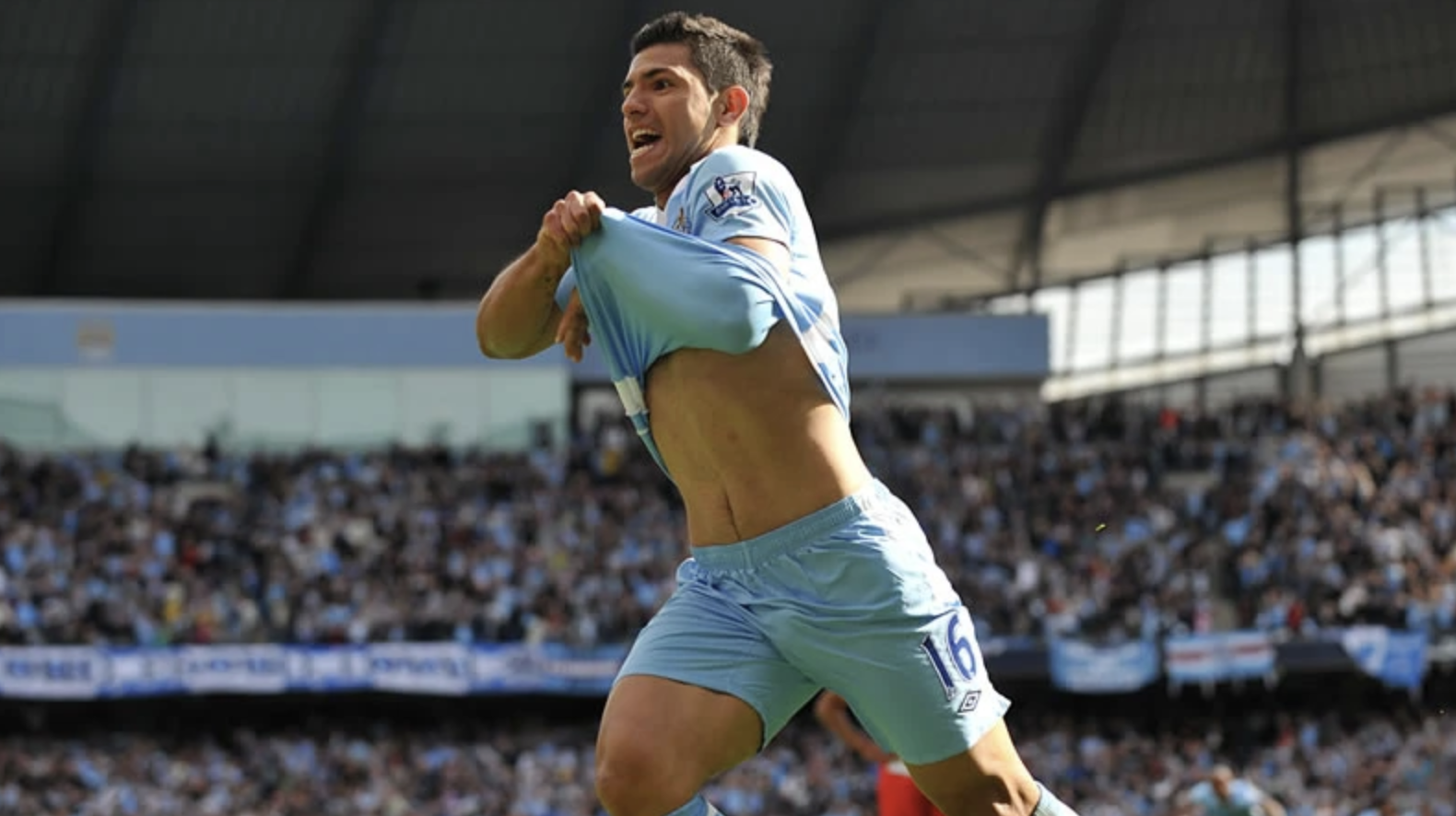
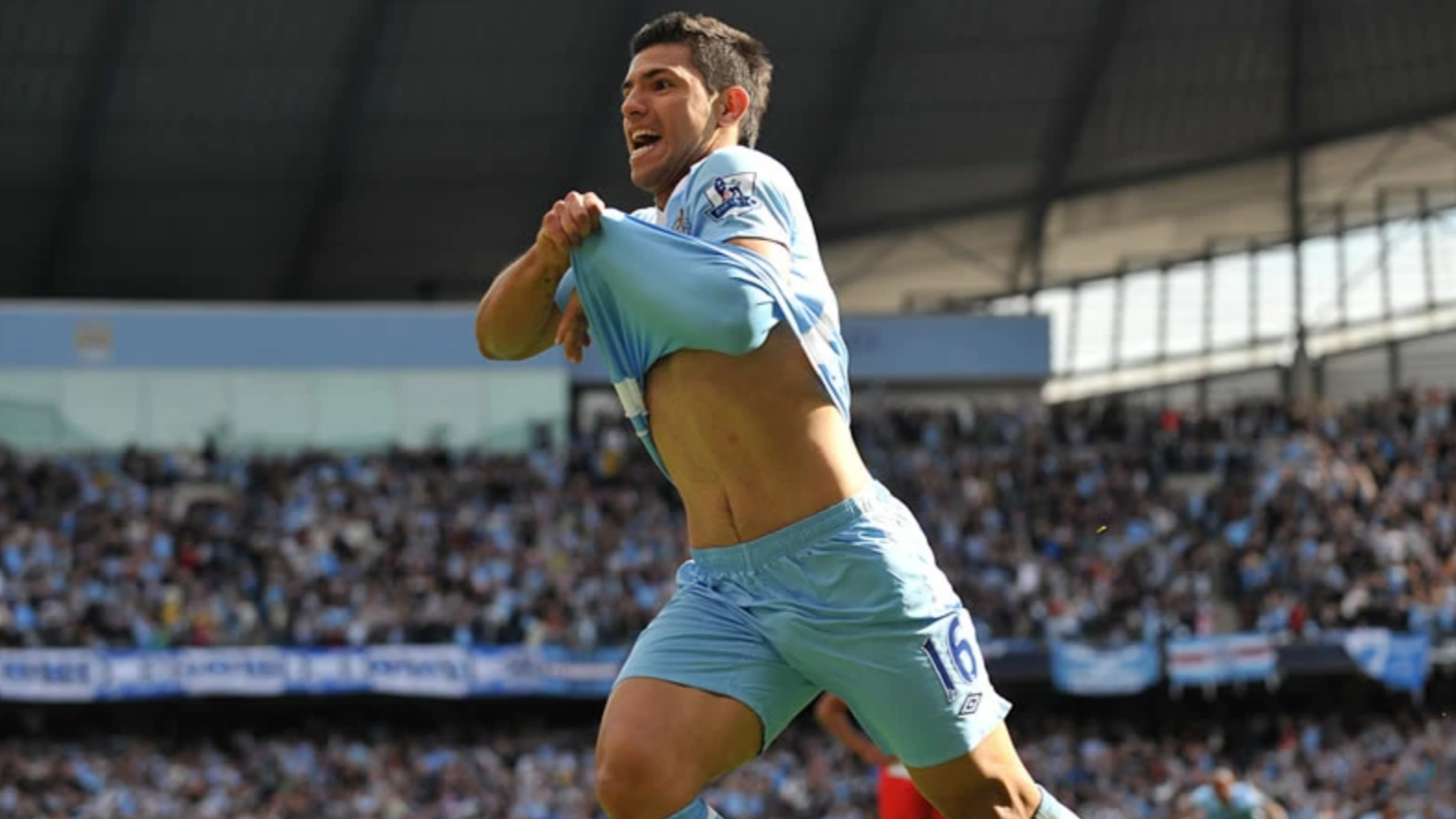
Sergio Agüero celebrates the 93:20 winner against Queens Park Rangers in 2012, the goal that gave Manchester City its first league title in 44 years.
Manchester City gave us extraordinary football. They transformed a club and built a global football organisation whose professionalism I have seen first-hand. Now an independent commission says the financial playing field was not level. How do we reconcile the two?
We all remember Agüero.
You only need the surname.
Manchester City were 2-1 down to Queens Park Rangers as the clock ran into stoppage time on the final day of the 2011-12 season.
Manchester United thought they had won the title.
It was squeaky bum time at our house.
To quote Fergie.
Ken was watching United win at Sunderland.
The title was theirs.
For about two minutes.
Then Džeko.
Then Agüero.
93:20.
City were champions of England for the first time in 44 years.
In our house it was the ultimate loss.
It was also the perfect argument for playing every final-round game on the same day at the same time.
Nobody knew until the very last kick.
I wasn't a City supporter but I loved it.
That moment changed the way many of us thought about Manchester City.
For years this club had lived in the enormous shadow of United.
Relegated.
Promoted.
Relegated again.
Its supporters suffered plenty.
Then suddenly they weren't just good.
They became the best.
Fourteen years later we are being asked to look at that rise differently.
114 out of 115
An independent Premier League commission has found Manchester City guilty of serious breaches of the league's financial rules over nine seasons.
The commission found City arranged sham commercial contracts.
Sponsors paid only part of some sponsorship fees. The rest was funded through Abu Dhabi United Group.
Revenue was artificially inflated and costs reduced by more than £900 million over the period.
The commission also found City filed misstated accounts and concealed the true state of its finances from auditors and football regulators.
These aren't small findings.
This isn't simply a club that spent too much money.
The finding is that City presented a financial picture that didn't reflect what was really happening.
Manchester City rejects that completely and intends to appeal.
No sanction has been imposed yet.
So this story is a long way from finished.
But the findings are there.
They raise some uncomfortable questions.
Because the football was bloody good
I loved watching Pep Guardiola's Manchester City.
At their best the passing, the movement and the control were magnificent.
That football happened.
Kevin De Bruyne still had to see the pass.
Agüero still had to score.
The players still had to perform under enormous pressure.
Pep still had to coach them.
Great football doesn't stop being great football because someone has since examined the accounts.
Manchester City produced some of the finest football of their era.
If these findings survive the appeal, the financial ground under that team was not level.
Both things are true.
What does the supporter do with that?
Does the average Manchester City supporter actually care?
Imagine following City through the bad years.
Imagine watching United win everything while your club wandered through the divisions.
Then you get Agüero.
Premier League titles.
Pep.
De Bruyne.
A Champions League.
A global profile the old Maine Road faithful could never have imagined.
Can a legal decision now tell you those memories should feel different?
I'm not sure it can.
Maine Road to the Etihad
Ken and I and 65 other Tasmanians were at the Etihad last September.
I've been to a lot of football grounds.
Surprisingly it was our least favourite experience.
It felt corporate.
A bit plastic.
That's completely subjective. City supporters may well tell me I'm talking rubbish.
Maybe part of it was knowing what came before.
For 80 years City's home was Maine Road.
The Kippax.
Colin Bell.
Francis Lee.
Shaun Goater.
All the chaos of being Manchester City before Manchester City became what it is today.
City moved in 2003 to the stadium now called the Etihad.
It is bigger and newer.
It sits in a vast modern football campus.
It is a very different football experience.
Standing there I thought about the dyed-in-the-wool City supporter.
The one who went to Maine Road when there weren't trophies every season.
The families who stuck with them through relegations while United ruled England and Europe.
What are they thinking this week?
Angry?
Embarrassed?
Defensive?
Or do they look at everything their club has become and think:
I wouldn't swap any of it.
I don't know.
I don't think outsiders get to tell them how to feel.
Manchester didn't only get footballers
The investment in Manchester City bought more than a football team.
The club's community programs run across Greater Manchester.
The Etihad Campus has become part of the regeneration of east Manchester.
That makes this even more complicated.
Britain's Prime Minister Andy Burnham was Mayor of Greater Manchester until this year.
He is also an Everton supporter.
This week he said he would be “really concerned” if Manchester City's owners sold the club.
He described them as a major partner in building modern Manchester as well as transforming City into a global football force.
At the same time he said it would be wrong for him to intervene in the disciplinary process while sanctions and appeals remain unresolved.
I think that gets to the heart of it.
You can believe the rules have to be enforced and still acknowledge what the investment has brought to Manchester.
Football supporters don't experience their clubs as balance sheets.
They experience them through family.
Saturday afternoons.
Trips away.
Shirts.
Pubs.
Goals.
Defeats.
Memories.
That matters when people talk glibly about wiping achievements away.
My experience of City Football Group
There's another reason this isn't easy to write.
My own experience of City Football Group has been positive.
My son Max worked within the City organisation in Melbourne.
From what I saw it was an extremely professional environment.
During Covid, when football organisations everywhere were under enormous pressure, City looked after its staff very well.
I was impressed.
I've also met Simon Pearce.
He sits on the boards of City Football Group and Manchester City.
He is Vice Chairman of Melbourne City.
He is also a club representative on the board of the Australian Professional Leagues.
We crossed paths at a couple of Bonita Mersiades' Football Writers Festivals, including one not long after Covid.
I thanked him for how City had treated its staff during that time.
It was a nice exchange.
He was prepared to front public football discussions and answer questions.
At least one of those was under Chatham House rules, so I won't reconstruct conversations from years ago.
I didn't walk away with a negative impression of Simon Pearce.
Quite the opposite.
My experience of someone doesn't cancel out a commission's findings.
A commission's findings don't require me to pretend my own experience never happened.
Both belong in the story.
And that brings us to Melbourne City
Manchester City and Melbourne City are part of the same City Football Group.
CFG bought Melbourne Heart in 2014.
Melbourne City is now wholly owned by the group.
Today CFG is majority owned by Newton Investment and Development LLC, which is wholly owned by Sheikh Mansour bin Zayed Al Nahyan. US investment firm Silver Lake holds a minority stake of nearly 17 per cent.
Let me be very clear.
Melbourne City has not been accused of anything.
The men's team has won three premierships and two championships.
Those were won on the pitch.
Under a salary cap.
Under Australian rules.
The players did nothing wrong.
The academy kids at Casey Fields certainly didn't.
The supporters didn't.
This isn't about pinning Manchester City's findings on Melbourne City.
But Australian football can't pretend there's nothing to see here.
The APL has said it will review the Premier League findings.
It has also confirmed Melbourne City has never been the subject of an APL investigation.
Our league is a closed shop.
The clubs own it.
Club people sit on its board.
That's the model.
So one of the directors of the body reviewing the Manchester City findings also sits on Manchester City's board.
I'd expect Simon Pearce to step aside from that review.
I'd just like to hear someone say so.
Football Australia's club licensing rules also include a Fit and Proper Person Test.
By 30 April each year every director and shareholder of an A-League licence applicant must provide a declaration confirming they are not subject to a disqualifying condition.
The requirement applies again when a new director or relevant new shareholder comes in.
England's new Independent Football Regulator also has the power to assess existing owners and senior managers at regulated clubs.
That doesn't mean Melbourne City's licence is suddenly under threat.
I have seen nothing that suggests it is.
But surely somebody asks the questions.
What does the APL review find?
Does Football Australia look separately at the findings?
Does Melbourne City offer any assurances?
If Manchester City loses points, money or faces major compensation claims, does CFG keep spending at the same level on its smaller clubs?
Is Melbourne City a priority in a crisis or a line item?
Will Melbourne City supporters be made to wear an asterisk they did nothing to earn?
Maybe everyone looks and finds no issue at all.
Fine.
But surely you look.
Were we too grateful?
When City Football Group arrived in Australia in 2014 most of us thought it was fantastic news.
I certainly did.
Australian football has spent its professional life looking for people prepared to invest in it.
Someone arrives with expertise, money, international pathways and ambition.
Our first instinct is:
Thank goodness.
Look at what Melbourne City became.
A professional environment.
An academy.
Strong men's and women's teams.
Facilities.
Pathways.
Success.
My own family has seen that professionalism first-hand.
I'm not going to rewrite history and claim I always had doubts.
I didn't.
But maybe Australian football has been so grateful for investment that we haven't been very curious about what sits behind it.
Gratitude and scrutiny can live together.
But isn't football already unfair?
Football has never had a level financial playing field.
Manchester United got rich through decades of success and enormous commercial growth.
Roman Abramovich transformed Chelsea.
Newcastle now has resources its old supporters could barely have dreamed of.
The biggest European clubs earn amounts most clubs will never see.
So where is the line between investment and unfair advantage?
You can argue owners should be allowed to put more of their own money in.
You can argue financial rules protect the established elite.
You can argue the rules are flawed.
All fair.
But that's a different question to the one Manchester City now faces.
Twenty clubs play under rules they agreed to.
If you think the rules are wrong, change them.
If most clubs stay inside the rules while one gains an advantage outside them, the competition isn't level.
That's the fairness question.
Money talks
Maybe money simply talks.
Given enough time success drowns out the questions about how it was won.
A new generation grows up knowing City only as a giant.
Pep's teams become folklore.
The Etihad gets bigger.
The origin story matters less.
Maybe that's modern football.
But Everton and Nottingham Forest have already lost points for breaking financial rules.
Other clubs made decisions about players, wages and spending because they believed there were limits.
Rules only work if everyone believes they're playing under the same ones.
Back to Agüero
So I come back to where I started.
Agüero.
93:20.
I loved that moment.
Even with a United man sitting next to me.
Can a commission decision fourteen years later change how I remember it?
No.
Should it change how we understand City's rise, if the findings survive the appeal?
I think we at least have to ask.
That afternoon every club kicked off at the same time under the same rules.
That's what made it so perfect.
Football isn't played in an accountant's office.
But every competition relies on everyone agreeing where the touchlines are.
Financial rules are touchlines too.
If money talks louder than the rules, what are the rules for?
We've been here before: the State League-less years
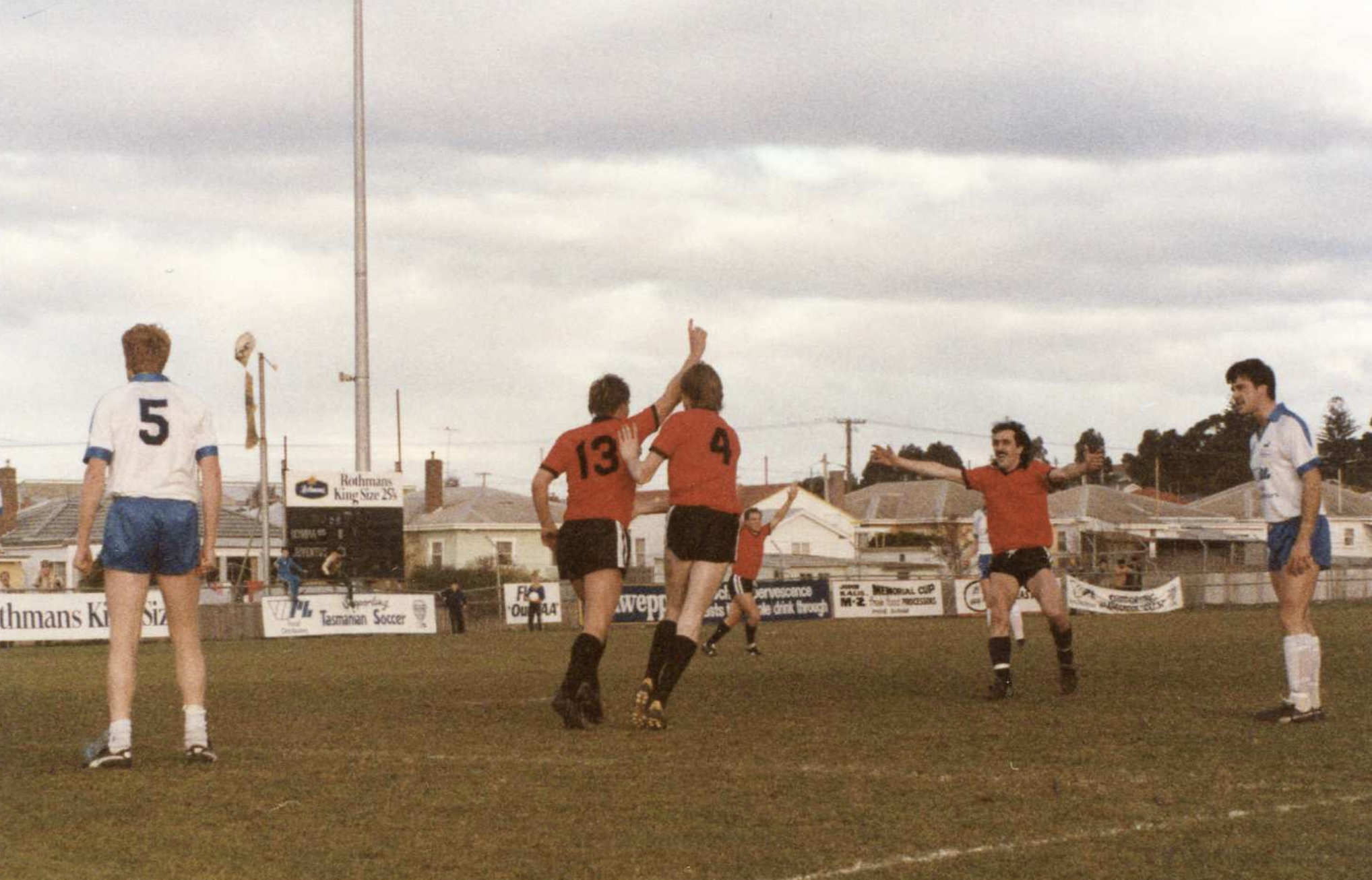
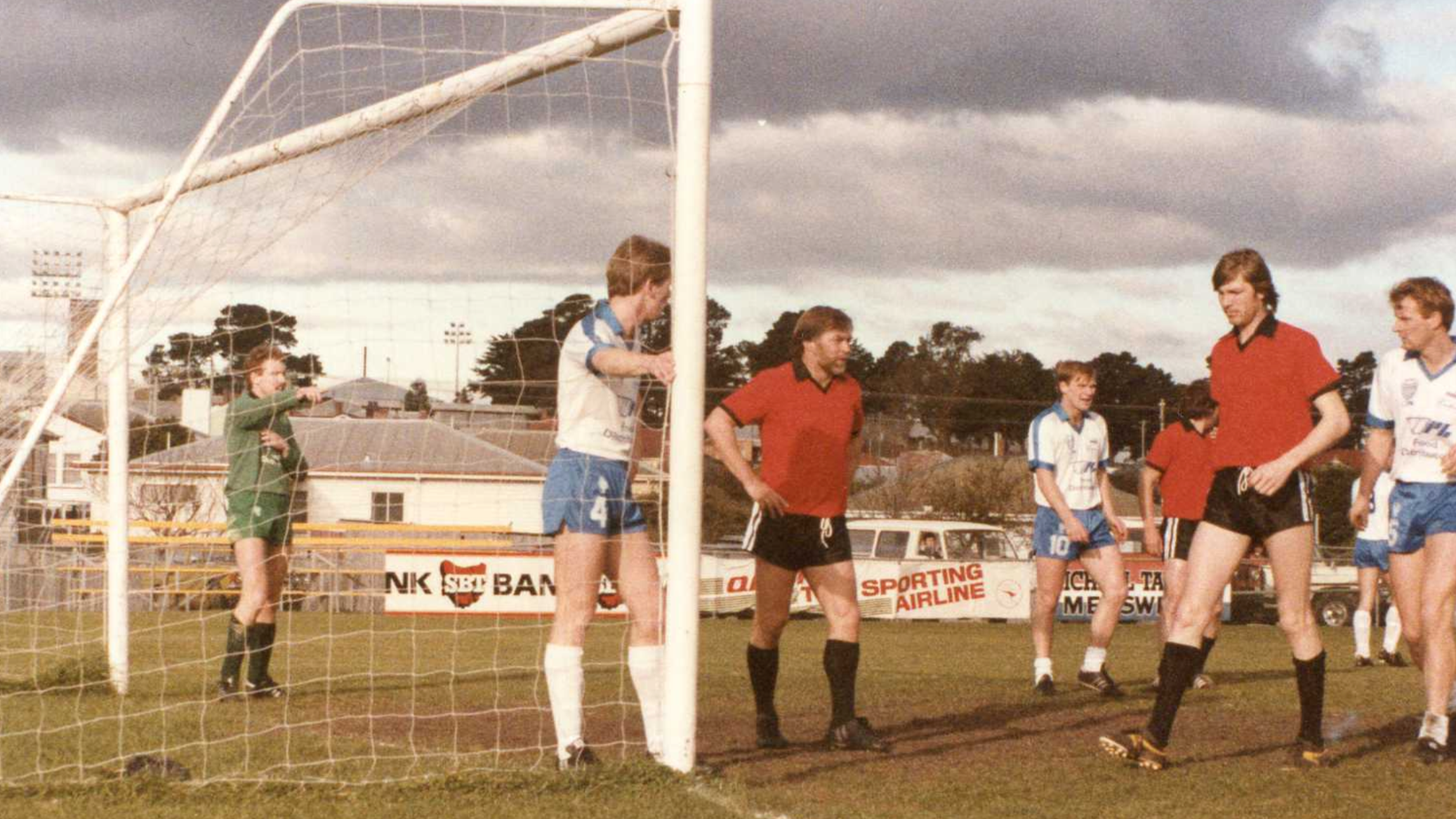
Ken Morton scoring for Juventus against Olympia at KGV Park in 1982. My future husband, although I was still in New Zealand and had no idea who he was! Photo: Ralph Dymond, via Walter Pless.
Part Two: 1982 to 1987
By 1982 I was 23, turning 24.
Michael Jackson was about to release Thriller. Men at Work were singing Down Under. Split Enz had Six Months in a Leaky Boat. E.T. was filling cinemas.
And just a year away, the wonderful Annie Lennox was about to give us Sweet Dreams (Are Made of This).
We were still buying LPs and cassettes. The internet was something far removed from ordinary life. The World Wide Web was still years away and there was certainly no mobile phone in your pocket.
And in Tasmania there was something else missing.
The State League.
After just four seasons, it was gone.
For the next six years Tasmania would find out what its top-level football looked like without one.
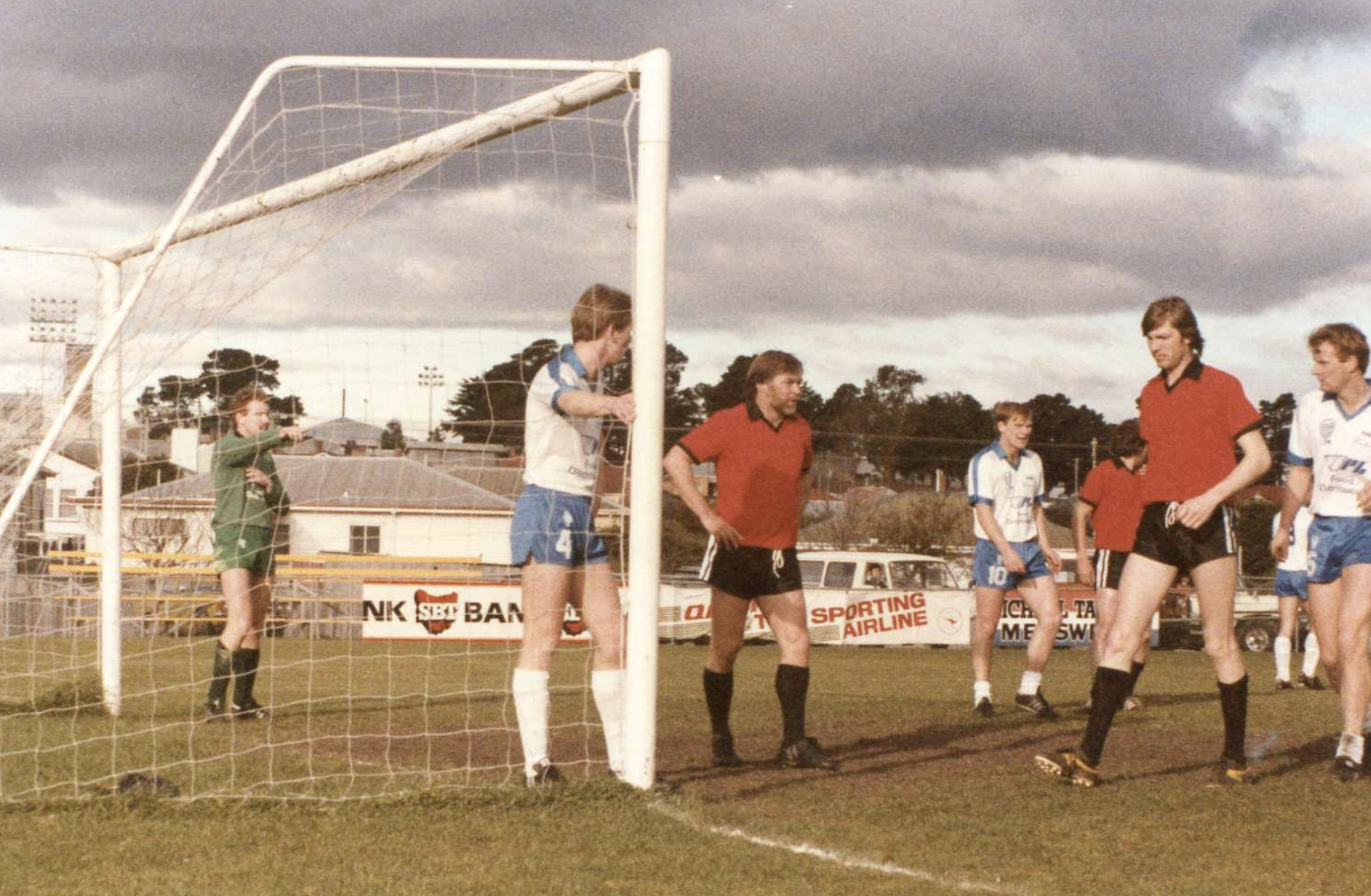
Ken Morton in action for Juventus against Olympia at KGV Park in 1982, moments before scoring. Photo: Ralph Dymond, via Walter Pless.
Before I start
As I said in Part One, I am not a historian.
I am simply curious.
And I wasn't here for this part of the story.
In 1982 I was in New Zealand.
I hadn't even met Ken yet.
He was already in Tasmania, playing.
So I have gone back through as much material as I can find. Old competition tables, club histories, newspaper material and, once again, Walter Pless's extraordinary archive.
Walter has also been kind enough to communicate with me since Part One and I am very grateful for that.
He didn't discover this history 40 years later.
He lived it.
He played, coached and reported Tasmanian football and ultimately spent 25 years as The Mercury's soccer writer.
So I am going to lean on his experience.
Where something is clearly documented, I will say so.
Where different records tell different stories, I will say that too.
And where I have found something interesting but cannot completely verify it, I would rather tell you that than pretend I know.
The State League was gone. Football certainly wasn't.
One of the things I wondered before I started researching this part was whether the collapse of the State League had left some enormous hole in Tasmanian football.
It didn't.
In 1982 Tasmania went back to regional top-level competitions.
The north had Devonport City, Launceston Juventus, George Town United, Ulverstone, Launceston United, Burnie United, Riverside Olympic and Launceston Croatia.
The south included Rapid Wrest Point, Hobart Juventus, Olympia, White Eagles, Croatia Glenorchy, Metro-Claremont, Caledonians and South Hobart.
And here is the first thing that really jumped out at me.
In 1982 they played 21 league games.
Twenty-one.
In both the north and the south.
League games.
Then there were cup matches on top of that and for the leading clubs there was State Championship football as well.
Keep that number in mind.
Because the proposed seven-team NPL in 2027 gives clubs 18 league games.
Seven teams playing each other three times.
Nine at home.
In 1982, without a State League, clubs were playing more league football than our NPL clubs are scheduled to play in 2027.
The regions were strong
Devonport won the northern competition in 1982 with 16 wins from 21 games, scoring 79 goals and conceding only 12.
Launceston Juventus finished second, George Town third and Ulverstone fourth.
In the south, Rapid Wrest Point finished top and then beat Hobart Juventus 4-0 in the grand final.
Rapid and Devonport then met to determine the State Championship.
Rapid won it.
So the State League had disappeared.
The desire to find Tasmania's best team had not.
That is an important distinction.
For most of the season north played north and south played south.
But there was still a statewide prize at the end.
And the pattern continued
In 1983 Devonport again won the north.
Hobart Juventus won the south and became State Champion.
In 1984 George Town had a tremendous northern season, winning 17 of its 20 league matches and scoring 89 goals.
Hobart Juventus won the southern competition and again took the State Championship.
Hobart Juventus were State Champions again in 1985.
Ulverstone won it in 1986.
Olympia in 1987.
There was no State League.
There was still very good football.
The north and north-west were hardly struggling
This may be one of the most important things to understand about these six years.
Northern football had depth.
North-west football had depth.
Devonport.
Ulverstone.
George Town.
Launceston Juventus.
Launceston United.
Burnie.
Riverside.
These clubs were not sitting somewhere on the edge of Tasmania's senior game.
They were a substantial part of it.
Ulverstone were particularly strong.
Walter's archive records them winning the statewide Ampol Cup in 1982 and they went on to become State Champions in 1986.
At one stage they were even flying players in from Sydney.
That tells you something about ambition.
It probably also tells you something about what clubs were prepared to spend.
But I don't want to overstate the imports.
Walter is clear there weren't that many. When Rapid played Juventus in 1982 each side had three. The rest were locally produced.
George Town had a particularly strong period too.
Launceston Juventus remained a major force.
Devonport were powerful.
To be fair, the northern competition did get smaller.
Eight clubs in 1982.
Seven in 1983, playing 18 games.
Six in 1984.
So that 21-game season didn't last everywhere.
But the quality at the top was never in doubt.
The State League might have disappeared, but northern football most certainly had not.
Statewide football never really disappeared either
This is the part I find fascinating.
Tasmania had abandoned a full season-long State League.
But it had not abandoned statewide football.
There were State Championships.
There were statewide cups.
There was representative football.
There were statewide individual awards.
The Rothmans Medal was still recognising the state's best players.
So we had this rather interesting arrangement.
For most of the season the regions stayed apart.
But we still wanted to compare them.
We still wanted a State Champion.
We still wanted statewide recognition.
Perhaps the State League disappeared more easily than the desire for statewide football.
White Eagles are a wonderful thread through the story
Walter's history of White Eagles gives us a particularly good example of what happened to clubs during this period.
White Eagles had won the inaugural State League in 1978.
They were later relegated.
Walter records that they won the Southern Championship in 1981 but could not be promoted because there was no State League left to be promoted into.
Then in 1982 they simply went into the southern competition.
And won it.
Then it fell apart.
In 1983 they finished last in the south with just two wins from 21 games.
Down they went.
In 1984 they were in the second division.
They won 19 of their 21 games and scored 104 goals.
The club rebuilt.
By 1986 White Eagles were again contesting the State Championship, losing to Ulverstone.
Then the State League returned in 1988.
White Eagles won it.
There is something rather lovely about that.
Champions of the first State League in 1978.
Relegated five years later.
Champions again when the State League returned ten years after the first.
What did a Saturday at the football actually look like?
This is where I think we need to be careful when comparing then with now.
The structure of football is one thing.
The world around it is another.
Going to the football in the 1980s was part of a very different social landscape.
If you wanted to watch your team, you generally went to the ground.
There wasn't a livestream waiting for you at home.
You couldn't check the score on Facebook.
You weren't following five other matches on your phone.
For a family, Saturday football might mean getting into the car, heading to the local ground, finding a place around the fence or in the stand and spending the afternoon there.
Kids ran around. Kicked balls about.
Parents talked.
You bought something from the canteen.
Someone disappeared into the clubhouse.
You saw the same people every other Saturday.
The football club was part of the social life of the community.
Walter records 800 people watching Rapid beat Juventus 3-0 in September 1982.
Eight hundred.
For a regional league game.
And regional football had an obvious advantage.
It was local.
The opposition might be from the next suburb or the next town rather than two or three hours away.
Supporters knew the players.
There were familiar rivalries.
And there was a reason to physically turn up because for most people that was how you saw the game.
That world has changed
This is why I don't think we can simply look back at 1982 and say, "Well, regional football worked then, let's just do that again."
Football is consumed differently now.
We livestream NPL and WSL matches.
People can sit at home and watch.
Young people have vastly more entertainment choices.
Families have countless things competing for their Saturdays.
And I do not believe supporters travel to senior football in anything like the numbers they once did.
Some do, of course.
But clubs cannot build a financial model around assuming they will.
That matters.
A home match is not simply a football fixture.
It is an opportunity for a club to make money.
Gate revenue where applicable.
Canteen.
Bar.
Hospitality.
Sponsors.
Functions.
People physically coming into the club.
So when I look at the 2027 NPL and see 18 league matches, I see something else as well.
Nine home games.
Nine.
I think that is woeful from a revenue point of view.
The irony is that football has never been easier to watch.
Someone can watch Launceston City playing in Hobart without leaving Launceston.
Someone can watch Devonport away without buying petrol, a ticket, a coffee, a pie or a beer at the ground.
The football is still being consumed.
The host club may receive very little direct benefit from that person watching it.
The game may be easier to watch than ever.
That doesn't necessarily mean the clubs are better off.
Perhaps regional football suited that world better
The more I look at these six years, the more I wonder whether regional football actually suited the world of the 1980s rather well.
There were plenty of games.
In 1982 the northern and southern competitions each provided 21 league matches.
League matches.
Then there were cup games.
Then, for the successful clubs, State Championship football.
There were local derbies.
Shorter trips.
More local opponents.
Crowds physically attending because that was how you watched the game.
The whole structure existed in a social environment where clubs had a greater chance of capturing the financial benefit of people following their team.
From a purely practical point of view there is quite a lot to like about it.
Which makes what happened next all the more interesting.
If it worked, why bring the State League back?
This is the question that has been bothering me throughout the research for Part Two.
Tasmanian football did not collapse between 1982 and 1987.
Far from it.
There were strong regional competitions.
Quality clubs.
Good players.
State championships.
Statewide cups.
Youth football.
Women's football was developing too.
Launceston City, then Launceston Juventus, records its women's team going through 1987 undefeated and finishing at the top of its competition.
So why, after six years, did Tasmania decide it wanted a State League again?
I haven't yet found the Federation document or contemporary newspaper article that answers that neatly.
There are plenty of clues.
The obvious structural difference is that regional football could produce a northern champion.
It could produce a southern champion.
A playoff could even produce a Tasmanian champion.
What it could not do was have Devonport regularly playing White Eagles.
Ulverstone regularly playing Olympia.
Launceston Juventus regularly playing Hobart Juventus.
The best teams in Tasmania still spent most of their season apart.
There were also some cracks in the south by 1987.
Rapid Wrest Point, State Champions five years earlier, won just two of their 20 games.
Hobart City were excluded partway through the season.
Was the southern competition starting to thin out?
By 1988 the game had apparently decided that regular statewide competition was worth restoring.
Exactly why remains something I am trying to establish.
Was it about playing standards?
Player development?
Sponsorship?
Status?
Pressure from clubs?
A desire for Tasmania's best players and teams to face each other every week?
Possibly some combination of all of them.
But "possibly" is not evidence.
So that question remains open.
And what was Australian rules doing?
There is another little piece of timing I can't ignore.
In 1986 Australian rules football in Tasmania launched its own statewide league.
Two Launceston clubs joined the six Hobart clubs.
In 1987 Devonport and Burnie came in and it was fully statewide.
Then in 1988 soccer brought its State League back.
One year later.
Coincidence?
Maybe.
Or was there a little bit of, well, if they are doing it, perhaps we should be doing it too?
I have found no evidence that proves that.
So I am not saying that is what happened.
But I think it is a perfectly fair question to ask.
Was the return of soccer's State League entirely about what our game needed?
Or was there also a little bit of a knee-jerk response to what was happening elsewhere in Tasmanian sport?
I would love to find something from the time that answers that.
For now, it stays in the interesting-question pile.
Then, in 1988, Tasmania put itself back together
Launceston City's history says it very simply:
"In 1988 the State League was reformed once more."
The revived competition also introduced three points for a win for the first time in Tasmania.
That was more significant than I realised.
Three points for a win was not yet the worldwide norm. England had introduced it earlier in the decade in an effort to reward teams for chasing victories rather than settling for draws. Tasmania adopting it in 1988 was relatively early.
And there is a nice connection to this whole story. Part of the thinking behind the rule elsewhere was to encourage more attacking football and make matches more attractive to spectators.
There we are again.
Crowds.
Revenue.
Making the competition attractive enough for people to want to be there.
Ten teams entered.
White Eagles.
Olympia.
Launceston Juventus.
Hobart Juventus.
Devonport City.
Croatia Glenorchy.
George Town United.
Ulverstone.
Launceston Matric.
Caledonians.
Five southern clubs and five from the northern half of the state.
Home and away against nine different opponents.
A genuine statewide competition again.
White Eagles won it.
Olympia finished second.
Launceston Juventus third.
Tasmania had deliberately put the state back together.
And here is something I have to be honest about.
That 1988 State League gave clubs 18 league games.
Nine at home.
Exactly what the 2027 NPL offers.
Hang on a minute.
Doesn't that undo my argument?
I don't think it does.
In 1988 those 18 games came against nine different opponents.
In 2027 they come against six, three times each.
And 1988 was still a world where people went to the ground to watch.
But I would also point out what happened next.
George Town United played that first season of the new State League.
And then withdrew.
So what do these six years actually tell us?
I started looking at 1982 to 1987 expecting it to be the period when Tasmanian football somehow muddled along waiting for the State League to return.
That isn't what I found.
Regional football appears to have worked pretty well in a number of respects.
There were strong competitions.
There was genuine strength in the north and north-west.
Clubs played substantial seasons.
Local rivalries mattered.
There were statewide cups.
There was representative football.
And Tasmania still found its State Champion.
So I don't think history allows me to say regional football failed.
It didn't.
But nor did those six seasons remove the appetite for a State League.
Tasmania spent six years proving that strong football could exist without one.
Then it brought one back anyway.
I find that fascinating.
And perhaps the most important thing for 2027 is that neither model can simply be lifted out of history and dropped into the present.
The geography hasn't changed very much.
Almost everything else has.
How people spend their Saturdays.
How they watch football.
Whether they travel.
How clubs make money.
What it costs to run a senior program.
What leagues require from clubs.
All of that has changed.
Which brings me back, once again, to nine home games.
If we are asking community clubs to meet the standards and costs of a statewide NPL, there has to be enough football and enough opportunity around that football to make the model sustainable.
Eighteen games may look respectable on a fixture list.
It looked respectable in 1988 too.
Nine home games looks rather different when you are trying to balance a club's books.
And history is about to become even more interesting.
Because in 1988 the State League came back.
Ten teams.
Strong northern and north-western representation.
White Eagles champions.
On the surface Tasmania had rebuilt the statewide competition it had lost six years earlier.
But almost immediately, clubs began coming and going.
That is Part Three.
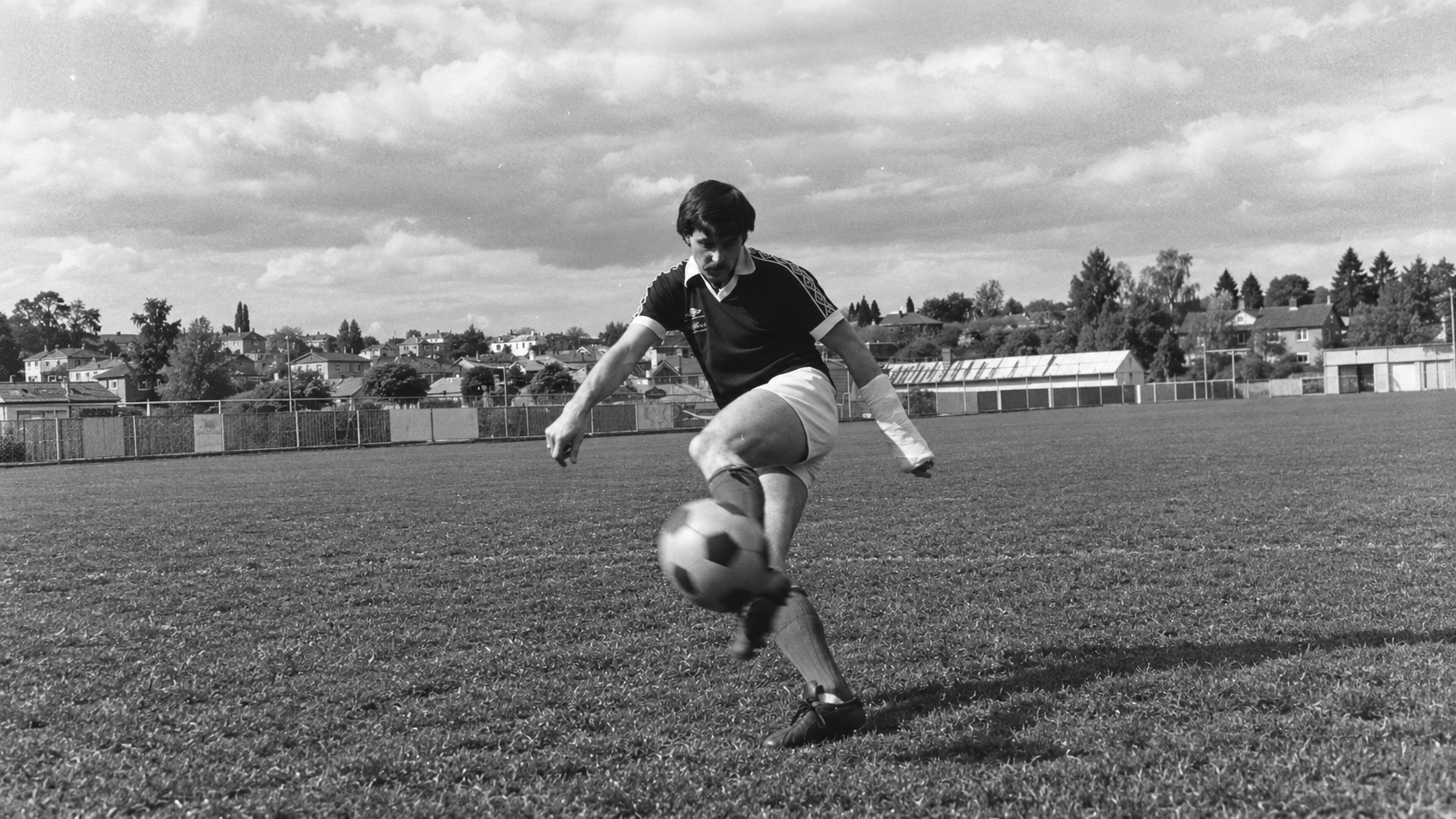
We've been here before: Tasmania's first State League
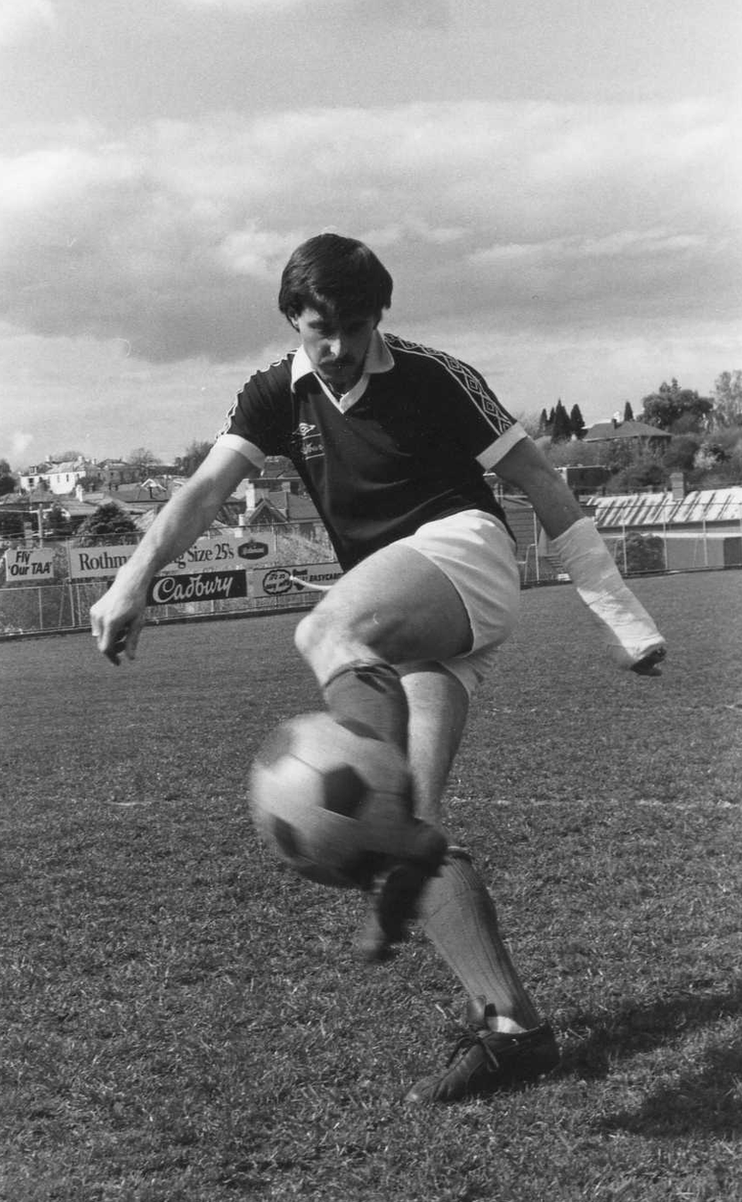
Ian Parker in action for Caledonians at South Hobart in 1981. Photo: Ralph Dymond, via Walter Pless. - Cigarette and chocolate advertising.
Part One: Four seasons and gone
In 1978, when Tasmania's first genuine State League kicked off, I was 20 years old and living in Auckland.
I had left boarding school a couple of years earlier and was discovering that life after school was perhaps a little tougher than I had imagined.
Tasmania?
I am not even sure I could have pointed to it on a map.
My world was New Zealand, work, LP records and music. Rod Stewart, Elton John, the Bee Gees. Grease was everywhere. We bought records, put them on a turntable and listened to an entire side before getting up to turn them over.
There were no mobile phones.
No internet.
No Google.
No social media.
Certainly no way for a 20-year-old woman in Auckland to know that on the other side of the Tasman, Tasmanian football was embarking on an experiment that would still be worth talking about nearly 50 years later.
Tasmania was creating a State League.
I knew nothing about it.
Walter Pless did.
Thank goodness he did.
I should say at the outset that I am no historian.
I have simply become curious.
After all the recent discussion about a seven-team NPL in 2027, only 18 league games, the loss of Riverside, Launceston being reduced to one NPL club and the wider question of whether Tasmania is slowly losing a genuinely statewide competition, I wanted to know whether we had been here before.
So I went looking.
I have worked through as many records as I can find. Walter Pless's extraordinary archive. Old league tables. Club histories. Newspaper reports and the work of people who have spent years documenting Tasmanian football.
I am not claiming to have lived this history or to be an authority on it.
I am simply trying to piece together what happened as accurately as I can and ask what it might tell us about where we are now.
Where records disagree, I will say so.
Where something cannot be established with certainty, I won't pretend otherwise.
But one thing is already clear.
Tasmania has been here before.
Twice, in fact, we have lost a State League.
This is Part One.
It starts in 1978.
Four seasons later, the State League was gone.
Ten teams, and it really was statewide
The first thing that struck me when I looked at 1978 was the composition of the league.
There were ten clubs:
White Eagles
Croatia Glenorchy
Rapid Wrest Point
Hobart Olympia
Caledonians
Devonport City
Launceston Juventus
Ulverstone
George Town United
Launceston United.
Five from the south.
Five from Launceston, the north and north-west.
Each club played 18 league games, home and away against nine different opponents. White Eagles won the inaugural championship, finishing level on points with Croatia Glenorchy but ahead on goal difference.
Now compare that with what is proposed for 2027.
Seven clubs.
Five based in the south.
Launceston City.
Devonport.
That is quite a change in what "statewide" looks like.
And there is another comparison that caught my attention.
The 1978 clubs played 18 league games.
The 2027 clubs are also scheduled to play 18 league games.
Same number.
Very different competition.
In 1978, 18 games meant playing nine different opponents home and away.
In 2027, with only six opponents, 18 games means playing every other club three times.
Is that really the same thing?
We have cut the number of opponents by a third but kept the same number of league matches.
That may suit the format Football Tasmania wants.
But it is hard to argue it offers the same breadth of statewide competition.
Getting into the State League wasn't easy
Another part of the 1978 story sounds surprisingly modern.
Entry was not simply a matter of nominating.
Launceston City's history records that the original proposal was for an eight-team competition. Clubs had to meet criteria covering their ground, facilities, financial position, supporter base and previous football success.
Launceston Juventus was initially rejected.
The club appealed. Volunteers put in a substantial amount of work at Prospect Vale before it was admitted.
Hobart Juventus were excluded because they didn't have an acceptable home ground. This was despite being one of the best-supported clubs in the state.
Croatia Glenorchy even wrote supporting their inclusion.
The Federation still said no.
Nearly 50 years ago, clubs were already being asked to invest in infrastructure and show they were capable of playing at the highest level in Tasmania.
Some things really don't change.
And I don't necessarily think they should.
A premier competition should have standards.
But standards have consequences.
Facilities cost money.
Qualified coaches cost money.
Administration costs money.
Medical and match-day requirements cost money.
Maintaining grounds and clubrooms costs money.
Today we ask NPL clubs to operate at increasingly sophisticated levels.
That is reasonable if the competition supporting those clubs is strong enough.
But that leads me to a question I keep coming back to.
If a community club is asked to meet all the requirements of an NPL licence, what does it receive in return?
In 2027, the answer in league football will be 18 games.
And only nine home league matches.
That matters because home games aren't simply games.
They are spectators.
Canteens.
Bars.
Sponsors.
Functions.
Local interest.
Revenue.
Nine opportunities is not a great many.
And you could lose your place
The first State League also had genuine movement between levels.
White Eagles were the inaugural champions in 1978.
Two years later they finished bottom with only one win and were relegated.
South Hobart won the second-tier competition and entered the State League for 1981.
You could win it.
And you could lose your place in it.
That is interesting when we talk about what the NPL is supposed to be.
If it is a genuine pyramid, movement matters.
But promotion and relegation only work if clubs below the State League actually want to enter it and believe they can afford to.
That issue becomes very important later in this history.
Tasmania wasn't thinking small
By 1980 this was not some sleepy little domestic competition.
It was the Radio Rentals State League, with $5,000 for the winner.
Rapid Wrest Point went through the season undefeated.
Fifteen wins.
Three draws.
Champions.
Around the league were players and coaches who had arrived from England, New Zealand, interstate and elsewhere.
Brian Davidson, a New Zealand international, was with Croatia Glenorchy.
Jimmy O'Donnell had played in the United States.
John Charlton, son of England World Cup winner Jack Charlton, was at Caledonians.
Steve Darby was player-coach at Devonport.
Ken Morton was player-coach at Rapid.
Yes, that Ken Morton.
My husband.
There was even a serious attempt to get Tasmania into the national Philips League.
The proposed Tasmanian Devils needed $100,000.
Only $50,000 could be raised.
The bid died.
Tasmanian football wasn't lacking ambition.
It wanted higher standards.
Better football.
Better players.
A national presence.
Sound familiar?
There is nothing wrong with ambition.
But history suggests ambition has to be matched by a competition structure capable of sustaining it.
Then the warning signs appeared
This is where the first State League became more than an interesting piece of history for me.
Because the language starts sounding familiar.
Travel.
Cost.
Sponsorship.
Sustainability.
A State League in Tasmania is not simply a football competition.
It is also an economic arrangement laid over a difficult piece of geography.
A Hobart club playing another southern club might travel 15 or 20 minutes.
Launceston and Devonport don't have that luxury for most of their State League fixtures.
And vice versa.
The travel issue was there from the beginning.
Launceston United's history records that the club lost many players because some preferred to play locally rather than travel around the state.
By 1980, just three seasons in, Walter was recording:
"financial rumblings within the State League about the cost of running the competition"
That is the sentence that really stopped me.
Three years.
The football was good.
Clubs were recruiting players from interstate and overseas.
Tasmania was dreaming about national league football.
And underneath all of that, people were already worrying about whether the State League itself was affordable.
That feels relevant now.
The geography hasn't changed since 1978.
What has changed is where the NPL clubs are.
With five of seven clubs in the south in 2027, most southern clubs will play most of their football within their own region.
Launceston City and Devonport will not.
That creates an imbalance you can't see just by counting teams.
It is a difference in kilometres.
Hours.
Fuel.
Buses.
Time away from home.
Volunteer workload.
The map matters.
1981 looked terrific on the surface
This is perhaps the most fascinating part of the story.
If you judged the health of the State League purely by its final title race, you might have thought things were going beautifully.
On Sunday 9 August 1981, Brighton ICL Caledonians and Launceston Juventus met at South Hobart with the State League title at stake.
Walter Pless was there reporting for Soccer Action.
He later recalled around 2,000 spectators.
Hundreds had travelled from Launceston.
People were still trying to get in after the match had started.
His memory of the queue is wonderful:
"The queue ran down to the roundabout at the Macquarie Street intersection."
Walter called the match "the perfect finale to the season".
Launceston Juventus had gone through the entire 18-game league season undefeated.
Fourteen wins.
Four draws.
Caledonians had won 15, drawn two and lost one.
Both finished on 32 points.
The surviving records show Caledonians winning the State League on goal difference.
Later recollections disagree on the exact final score. That is one of the little complications of researching football nearly half a century on.
But the important facts are not in dispute.
The title went to the final day.
The two leading clubs finished level on points.
One went the whole league season undefeated.
Around 2,000 people were there.
Northern supporters travelled south in large numbers.
It sounds like exactly what we should want from a State League.
And then there wasn't one.
Four seasons and gone
Walter summed up what happened next in five words:
"The State League then folded."
Tasmania returned to regional competitions in 1982.
Gone.
How does that happen?
Good football wasn't enough.
A close title race wasn't enough.
An undefeated side wasn't enough.
A crowd of around 2,000 for the deciding game wasn't enough.
A genuinely statewide spread of clubs wasn't enough.
Because underneath all of that, the structure was struggling.
That is why I don't think we should judge the health of the current NPL simply by whether the games are good.
They probably will be.
There will be good players.
Good coaches.
Good games.
Someone will win it.
None of that tells us whether the competition is structurally healthy.
This isn't 1981
I want to make this very clear.
I am not saying that because the State League disappeared after 1981, the NPL will disappear after 2027.
That would be ridiculous.
The circumstances are different.
The governance is different.
The money is different.
The clubs are different.
Football itself is different.
But history does not have to repeat exactly to be useful.
Sometimes it simply tells you which things deserve attention.
And the things that come out of Tasmania's first State League are remarkably familiar.
The economics have to work.
The geography has to work.
The clubs have to believe taking part is worth what is being asked of them.
The competition needs proper financial support.
And statewide football needs enough genuine statewide participation to justify the name.
Those aren't criticisms of individual clubs or administrators.
They are structural questions.
And Tasmanian football has faced them before.
Without Walter, we'd be guessing
I also need to acknowledge why we can revisit any of this.
In 1978 I was in Auckland buying LPs and learning about adult life.
Walter Pless was recording Tasmanian football.
The way he worked in those days is extraordinary.
After matches at South Hobart, he would sit in the back seat of his Datsun Bluebird station wagon with a Royal manual typewriter and write separate reports.
One went into the post for Australian Soccer Weekly.
One was delivered to The Mercury.
Another meant a drive to Hobart Airport so his Soccer Action report could travel by air express to Melbourne.
I love that detail.
Not because this series is about Walter.
It isn't.
But without Walter and others who recorded this stuff, we would be relying on memory and folklore.
Instead, we can go back and look.
And when I do, the history makes me think much more carefully about what is happening now.
What Part One leaves me wondering
The first State League began with enormous optimism.
It had ten teams.
Proper statewide representation.
Promotion and relegation.
Talented players.
Big ambitions.
And in its final year, an extraordinary title race.
Four seasons later it was gone.
The lesson isn't that Tasmania should recreate 1978.
It shouldn't.
The lesson is that the things underneath the football matter enormously.
And the comparison that stays with me most is the simplest one.
In 1978 Tasmania had ten State League clubs and 18 games.
In 2027 we will have seven clubs and 18 games.
Nearly half a century apart.
Same number of games.
Fewer opponents.
Far less geographical representation.
And much greater expectations on the clubs taking part.
That doesn't tell us what will happen next.
But it gives us every reason to ask whether we are strengthening Tasmania's State League or slowly making it smaller.
Because one thing the first State League teaches us is this:
A competition can look healthy on a Sunday afternoon while the foundations underneath it are already weakening.
Tasmania learned that in 1981.
It is worth remembering now.
Next: Part Two
Six years without a State League. What happened between 1982 and 1987, why did Tasmania want it back and what did the second attempt look like?
A few Saturday morning thoughts after Socceroos v Brazil
Nestory Irankunda scoring his goal against Brazil in Townsville, with the deteriorating playing surface clearly visible. Screenshot from match broadcast.
A few things rattling around in my head this morning after the Socceroos drew 1–1 with Brazil in Townsville last night.
The game.
Nestory Irankunda.
That pitch.
And somehow Lucas Herrington and transfer fees.
That's generally how my football brain works. One thing leads to another.
First, the football
I didn't quite make it through the whole game.
An 8pm kick-off and my usual ridiculously early start eventually got the better of me. So I watched the first half and caught up with the rest this morning.
And apparently I picked a pretty poor time to go to bed.
Nestory Irankunda produced an absolute cracker of a free kick in the 68th minute to put Australia 1–0 up.
Then Rayan broke Australian hearts with an equaliser in the 95th minute.
So 1–1 against Brazil.
Not bad at all.
Reading through the reports this morning, this doesn't appear to have been one of those results where Australia spent 90 minutes desperately hanging on and somehow escaped with a draw.
Joey Lynch, writing for The Guardian, described it as a "promising, positive performance" from the Socceroos.
Australia were prepared to have a go.
After taking the lead they defended well.
Brazil got frustrated and struggled to find a way through.
Then the quality came.
Raphinha produced a superb delivery and Rayan powered home the header.
Cruel.
But against a Brazilian side containing Vinícius Júnior, Raphinha, Endrick, Estêvão and Bruno Guimarães, there is plenty for Australia to take from it.
£75 million
That name, Bruno Guimarães, sent me down my first rabbit hole this morning.
Arsenal paid Newcastle United £75 million for him just last month.
£75 million.
For one footballer.
It is almost impossible to comprehend those numbers from an Australian football perspective.
And it got me thinking about Lucas Herrington.
Remember that one?
The Lucas Herrington sell-on
Herrington came through Brisbane Roar's academy. Brisbane sold him to Colorado Rapids in 2025 for what the club described as a record fee.
Importantly, Brisbane kept a 20 per cent sell-on interest.
Good business.
Then Colorado offered to buy that sell-on interest back.
Brisbane agreed.
The reported price was around A$560,000.
You can probably guess what happened next.
Herrington went to the World Cup with Australia. His reputation soared. Premier League clubs started circling.
Hull City eventually signed him from Colorado for a reported upfront fee of around A$24 million, with millions more in add-ons.
That 20 per cent suddenly looked rather valuable.
Football360 estimated Brisbane would have banked around A$4.8 million from the Hull deal if they had kept the clause.
Instead they walked away with about A$1.75 million, as well as solidarity payments.
Ouch.
Now, hindsight is a wonderful thing.
Brisbane couldn't possibly have known what was going to happen to Herrington.
There is always value in taking guaranteed money rather than gambling on a future transfer.
And to be fair to the Roar, they have defended the decision publicly. They say Colorado approached them and the offer went through their ownership group as their governance requires.
But surely this is exactly the gamble Australian clubs need to become better at taking.
We keep talking about the financial sustainability of Australian football.
Player development is one of the assets we actually have.
If we develop an outstanding 17-year-old, sell him overseas and he becomes a £10 million, £20 million or £30 million player, shouldn't the Australian club that helped develop him share meaningfully in that value?
Maybe sometimes the best cheque is the one you don't cash too early.
Anyway, that's a discussion for another day.
Back to Brazil.
Nestory Irankunda
What a talent.
We've been waiting to see exactly where Irankunda's enormous potential might take him. Scoring a goal like that against Brazil isn't a bad addition to the CV.
And while we're talking about him, here's a small inconvenient reminder in the middle of all our current arguments about immigration and multiculturalism.
Irankunda was born in a refugee camp in Tanzania to Burundian parents who had fled civil war. He arrived in Australia as a three-month-old baby, grew up here and now wears the green and gold.
Another one of those immigrants spoiling it for the rest of us.
Anyway.
Next rabbit hole.
That pitch
Good grief.
What was going on there?
Even during the first half it looked awful. Uneven, loose and cutting up under the players.
And apparently it got worse.
Several players were slipping as the surface deteriorated through the night.
So this morning I went looking to see whether I was being unfair.
I wasn't.
Joey Lynch, writing for The Guardian, described it as an "ice-rink of a surface".
Carlo Ancelotti wasn't impressed either.
"It was difficult to play on this pitch," he said.
Later he returned to it.
"It was not good, the pitch."
He's managed Real Madrid, Bayern Munich, Chelsea, AC Milan and Paris Saint-Germain.
He's seen a few football pitches.
But here's where it gets interesting.
Tony Popovic actually agreed with him.
"Was it good? No."
But Popovic then made a point that probably deserves a bit more attention.
He said Australia regularly encounters poor pitches, including during World Cup qualifying, and questioned why nobody seems particularly interested when it happens to the Socceroos.
Fair point.
Then he said this:
"We'd love to have carpet as grass to play on like we did at the World Cup. That's a dream for us, but at the moment that's a dream that's not close to reality."
And that troubles me a little.
Why should it be a dream?
I'm not asking for a World Cup billiard table every time the Socceroos play.
But surely expecting a genuinely good football surface for an international involving Brazil isn't an unreasonable aspiration.
Harry Souttar was pretty frank about it too.
"I don't think the pitch was that great, to be honest with you."
Then came the line that really caught my attention.
"We know it's not technically designed for football, so it's going to cut up."
There it is.
A stadium hosting an international football match between Australia and Brazil, but a surface that our own captain acknowledges isn't really designed for football.
Jackson Irvine took the traditional footballer's view.
"It is what it is."
And, yes, the pitch was the same for both teams.
But I've never particularly liked that argument.
Of course it was the same for both teams.
That doesn't make it a good pitch.
And it doesn't answer the bigger question.
Why are we accepting this as normal?
So what happened?
My first thought was that rugby league must have been played on the ground immediately beforehand.
Apparently not.
The Cowboys' last NRL/NRLW double-header at Queensland Country Bank Stadium was on 5 September.
Australia played Brazil on 25 September.
Twenty days.
Almost three weeks.
So naturally I have questions.
What happened to the pitch?
What preparation was undertaken during those 20 days?
Who was responsible for preparing it for international football?
What standard was required?
Who inspected it?
Did Football Australia have concerns?
Did Brazil?
And at what point is someone able to say this simply isn't good enough?
I don't know the answers.
I'd quite like to.
We got Brazil here
And that's really the point.
We got Brazil here.
Not Brazil's C team.
Vinícius Júnior. Raphinha. Endrick. Estêvão. Bruno Guimarães.
Carlo Ancelotti in the dugout.
Townsville packed the stadium and embraced the occasion.
Fantastic.
I strongly support taking games like this outside Sydney and Melbourne. Regional Australia should get to see the Socceroos and the world's great football nations.
But if we're going to do it, let's do it properly.
We want Brazil to come back.
We want Argentina, England, Spain, France, Germany and others to come here.
We want their best players.
And presumably we'd like them to go home talking about the football and the atmosphere rather than the grass.
One last thing
Australia and Brazil do it all again in Brisbane on Tuesday night.
Same teams.
Different stadium.
Different surface.
Although Suncorp Stadium will have hosted an NRL preliminary final only four days earlier.
So there we go.
A 1–1 draw with Brazil.
An outrageous Irankunda goal.
A £75 million Brazilian midfielder.
A reminder of a rather painful Australian transfer decision.
And an international football pitch that looked anything but international standard.
Not a bad collection of Saturday morning football rabbit holes.
I'll be watching Brisbane's grass very closely.

More Football? WTF?

Photo pinched from FT website
I went to bed last night disappointed.
I woke up this morning still disappointed.
And perhaps disappointment is the right word.
Because I genuinely cannot understand how Tasmanian football has reached a point where our response to problems within our highest competitions seems to be to play less football.
Football Tasmania announced yesterday that the NPL Tasmania, NPL Under 21s and Women's Super League will each be conducted across 21 rounds in 2027.
Seven teams.
Eighteen matches each.
Three byes.
Then finals.
And the headline?
"Season 2027 extended for top-flight leagues."
Extended?
Sorry.
You've lost me already.
Football Tasmania CEO Tony Pignata's own quote begins by saying the structure "gives every team 18 matches."
The headline says extended.
The CEO says 18.
So what exactly has been extended?
He goes on to say it will create "more playing and development opportunities."
How?
Eighteen games
Let's start with the NPL.
In 2026 Tasmania's NPL had ten teams and an 18-round league season followed by finals.
In 2027 it will have seven teams. Each club will play 18 league matches across 21 rounds followed by finals.
So there is no increase in league football.
None.
Eighteen becomes eighteen.
The difference is that with seven teams somebody has to sit out each round.
The bye is back.
Because each club plays 18 league games, an evenly balanced draw would mean nine at home and nine away.
Nine home league games across an entire season.
But whichever way you arrange them there are still only 18.
The women are actually going backwards
Then we get to the WSL.
In 2026 the WSL has eight teams playing across 21 rounds.
Eight teams meant no bye.
Every club playing every week.
Regular football matters.
Every WSL club plays 21 league games this year.
Now fast forward twelve months.
Seven teams.
Eighteen league games each.
Three byes.
Three fewer games for every club.
So if losing the bye was a good thing, how is bringing it back part of a structure being promoted as creating more playing and development opportunities?
What changed?
And now the women get finals
The WSL will have a finals series in 2027.
Pignata says the new structure "offers each league the chance at finals football."
The chance.
We don't yet know the format. Football Tasmania says it is still working with clubs on the detailed framework.
With seven teams a Top 4 means three clubs miss out.
A Top 5 means two do.
Either way some clubs finish after 18 games.
I'll come back to finals.
I don't have a problem with relegation
Let me be clear about something.
Launceston United and Ulverstone finished in the bottom two of the NPL.
The rules for 2026 said the bottom two would be relegated.
Neither accumulated enough points to remain in the competition.
Philosophically, promotion and relegation sits comfortably with me.
If one or both earns the right to return to the NPL after a season through a genuine promotion and relegation system, terrific.
That's football.
There should be consequences for finishing at the bottom and rewards for succeeding in the division below.
So I'm not suggesting we simply tear up the relegation rules because Riverside has withdrawn.
Riverside's decision undoubtedly created a problem.
Football Tasmania had planned to go from ten teams to eight.
The bottom two went down.
Then Riverside withdrew.
Eight became seven.
I understand the arithmetic.
What I don't understand is why seven teams automatically means only 18 league matches.
Find a way to play more football
Why does the solution have to be fewer games?
Seven teams can still play plenty of football.
Play four rounds instead of three.
That's 24 league games.
Six more than 18.
With the same seven clubs.
Yes, it takes more weekends.
Or create another meaningful competition phase.
Find another model.
Find a way.
Sometimes I think we're becoming extraordinarily good at finding reasons why clubs shouldn't play.
Too much travel.
Too much work.
Too hard on volunteers.
Too many games.
Someone has a bye.
Someone doesn't want to travel north.
Someone doesn't want to travel south.
I know those pressures are real.
I've run a football club.
I've been one of those volunteers.
I know exactly what goes into putting teams onto football pitches every weekend.
But at some point we have to remember what all that work is actually for.
To play football.
We once talked about 28
This isn't something I've suddenly decided because I don't like yesterday's announcement.
I've argued previously for more football.
I've supported an eight-team NPL playing four rounds.
That would produce 28 league matches.
Fourteen home.
Fourteen away.
A proper season.
Would clubs complain about travel?
Probably.
Would volunteers have more work?
Yes.
Would it cost more?
Probably.
But do you know what else it would produce?
Football.
Ten more competitive league matches than our senior players will get in 2027.
Ten.
For a 17 or 18-year-old trying to establish himself in senior football, that's enormous.
For a 20-year-old hoping to attract attention from interstate, that's enormous.
For coaches trying to develop players, that's enormous.
That's not a little scheduling difference.
That's months of competitive football.
Then I looked around Australia
Perhaps I'm expecting too much.
Perhaps 18 league matches really is normal for an elite state competition.
So I looked.
It isn't.
NSW's NPL Men has 30 rounds in 2026. Football NSW says its 30-round men's program is designed to maximise development and align with Football Australia's high-performance framework.
Victoria's NPL Men has 14 teams playing a 26-round season.
Northern NSW has 12 teams playing home and away over 22 rounds with promotion and relegation.
Western Australia has 12 teams playing 22 home-and-away rounds followed by a separate Top Four Cup. It also has promotion and relegation.
South Australia has 12 clubs playing a 22-round NPL season.
Tasmania?
Eighteen.
And yes, Tasmania is different.
We're smaller.
Our geography creates challenges.
We don't have the population of NSW or Victoria.
But Northern NSW isn't Sydney.
Western Australia isn't Victoria.
And they manage 22.
Thirty. Twenty-six. Twenty-two. Eighteen.
Sometimes you don't need another strategic plan.
You just need to count the football.
NSW: 30.
Victoria: 26.
Northern NSW: 22.
Western Australia: 22.
South Australia: 22.
Tasmania: 18.
Across the Tasman, New Zealand is moving to a new 12-team National League in 2027.
Home and away.
Twenty-two league matches.
Their direction is towards more competitive football.
Ours is 18.
Parents, you might want to start packing
Here's a thought for Tasmanian parents.
If little Jimmy or Jenny is showing a bit of football talent and you're dreaming that one day they might make it to the top of the football tree, perhaps you should start packing your bags.
Because look at how much football kids are playing across Bass Strait.
Victoria's top boys youth competitions run across 30 rounds.
Its top girls youth competition also runs across 30 rounds.
In NSW the top boys youth competition plays 30 league rounds.
The top girls youth competition plays 26, followed by a Championship Series.
Tasmania's senior NPL men will play 18 league matches in 2027.
Eighteen.
Not our U14s.
Not our U16s.
Our senior men.
Teenage footballers in the elite youth systems of Victoria and NSW are getting considerably more competitive football than our senior NPL players.
Yet we talk endlessly about pathways.
Player development.
Talent identification.
Keeping our best young players in Tasmania.
Producing players capable of progressing to the A-League and beyond.
But players develop by playing football.
You can have all the academies, development programs, coaching courses, high-performance strategies and pathways you like.
Eventually the kid has to play.
And apparently, if you're a talented Victorian teenager, you may get more opportunities to do that than a senior NPL footballer in Tasmania.
So if I were the parent of a genuinely talented 15 or 16-year-old Tasmanian player looking at those numbers, I'd be asking a pretty uncomfortable question.
Are they going to get enough football here?
And then we bolt finals onto it
I know the response.
Finals.
Yes.
We have a finals series.
Finals can produce fantastic football.
Launceston City and Clarence Zebras proved that this year.
Their Elimination Final finished 1-1 after extra time before City won 5-3 on penalties.
Drama.
Pressure.
Excitement.
It was a terrific game.
Football Tasmania itself called it an "excellent advert for the post-season finals series."
Fair enough.
It was.
Perhaps I'm showing my football-purist tendencies here.
A league should mean something.
Everybody plays everybody on a fair basis and the table tells the story.
Finals are very Australian.
People enjoy them.
They create excitement.
But increasingly it feels as though we're using finals to make up for not providing enough league football in the first place.
Play 18.
Stick a finals series on the end.
Call the season "extended".
Except finals don't solve the problem.
Only the teams that qualify get the extra football.
The rest finish after 18.
Why manufacture extra football at the end of the season for some teams when we could give all seven more league football in the first place?
Give me the football first.
Then we can argue about finals afterwards.
What did the chosen ones recommend?
Then we arrive at the consultation.
The chosen ones.
Football Tasmania says this structure responds directly to feedback from clubs.
So what was the feedback?
Seriously.
What did clubs ask for?
Was the message really:
Please give us only 18 games?
Was it volunteer workload?
Was it travel?
With Riverside gone and Launceston United relegated, were northern clubs concerned about travelling south more often?
Were southern clubs unwilling to make additional trips north?
Was 18 simply the easiest number?
Were 21, 24, 27 or 28-match models considered?
Was there discussion about bringing another club up to create an eight-team competition?
Did anybody in the room say:
Hang on. Shouldn't our footballers actually be playing more football?
New Zealand consulted more than 400 people before settling its new national league.
Club leaders.
Federation staff.
Referees.
Players.
Fans.
I wasn't one of the chosen ones.
So I genuinely don't know what was said in our room.
Perhaps there are very good reasons.
I'd like to hear them.
But fellas, I am disappointed.
Really disappointed.
Because if this really is the outcome our leading clubs wanted, perhaps we need a much bigger conversation about what we want the NPL and WSL to be.
Football clubs are supposed to play football
I know running football is hard.
I know volunteers are tired.
I know Tasmania creates travel challenges.
I know clubs have financial pressures.
Players have work and study.
Grounds are difficult.
The weather can be dreadful.
I've lived all of it.
But surely our ambition has to be to overcome those problems so people can play football.
Not allow the problems to decide how little football we can get away with playing.
Other jurisdictions have problems too.
They still play.
Their kids play.
Their senior players play.
Their best players get 22, 26 or 30 league games.
Ours get 18.
Disappointed
That's where I've landed.
Disappointed.
Because Tasmanian football should be ambitious.
We should want more games.
More opportunities.
More development.
More meaningful competition.
More chances for young players.
More opportunities for supporters to watch their clubs.
More home games for clubs to engage their communities.
More football.
If seven teams is the reality for 2027, then make seven teams work.
Be creative.
Be ambitious.
Give them more games.
Give all of them more games, not just those lucky enough to qualify for whatever finals format is eventually chosen.
Because if we genuinely believe playing opportunities matter for development, the answer surely cannot be fewer playing opportunities.
Maybe something else is coming.
I hope it is.
Football Tasmania says the detailed framework is still being worked through, so perhaps there is.
But right now we have:
Eighteen league matches.
Three byes.
A finals series bolted onto the end.
And "more playing and development opportunities."
How?
Football clubs are supposed to play football.
More football?
WTF?
Coach Bingo, Rumours and Other Bits and Pieces
The rumour mill is going off.
It must be that time of year.
The season has barely finished and already there is enough happening around Tasmanian football to keep the phone calls, messages and coffee catch-ups going for weeks.
So rather than one subject today, here are a few snippets from around the grounds.
Coach Bingo
Devonport, Launceston City and Clarence Zebras are all looking for men's coaches.
Riverside is after a coach for its Championship side.
And I'm hearing another coach may have tendered his resignation too.
Then there are the coaches who already have jobs.
I'm also hearing that some currently contracted coaches may be looking for a change of scenery and putting their names forward for some of the vacancies.
Perhaps several of the vacancies.
Whether all of that proves correct, who knows.
That's why they're called rumours.
But with this many jobs potentially in play and some familiar names apparently appearing on more than one application list, get your cards ready.
Coach Bingo has well and truly begun.
And the WSL isn't entirely immune either.
Devonport and Kingborough are on the hunt for coaches as well.
Which raises another question.
Are there actually enough appropriately licensed coaches to go around?
With vacancies across both the men's and women's competitions, surely we're going to see some interesting names and perhaps a few imports appearing in Tasmania for 2027.
Tasmania has always been a good launching pad for ambitious coaches.
Come down here, take charge of an NPL or WSL side, build a reputation and use it as a stepping stone to something bigger.
We've seen plenty of coaches build their careers here before moving on.
But let's be serious.
Anyone moving interstate to Tasmania specifically to coach at this level is going to have to really love football.
These aren't A-League coaching salaries.
Add the cost of moving interstate, finding somewhere to live and earning a living.
Suddenly an NPL or WSL coaching job in Tasmania isn't the most compelling financial proposition in Australian football.
So Coach Bingo might extend interstate this year.
This could get interesting.
Show me the money
It's not just coaches who are getting phone calls.
Players are being approached too and I'm hearing some pretty lucrative offers are being put in front of them.
That's hardly unusual at this time of year.
One season finishes and the recruitment battle for the next one starts almost immediately.
Who stays?
Who goes?
And who suddenly discovers a lifelong passion for a club 200 kilometres away?
It's all part of the fun.
Seven? Eight? 21? 28? Anybody?
Then there is the small matter of what everyone is actually signing up to play in next year.
Football Tasmania's original plan was clear.
Ten NPL teams in 2026, the bottom two relegated and eight teams in 2027.
But Riverside has now announced it won't participate in the NPL or WSL in 2027.
So what happens now?
Seven teams?
Does somebody come up and make it eight?
Twenty-one rounds?
Twenty-eight?
Promotion and relegation?
A playoff?
There seems to be an expectation that we may know more on Friday.
Which brings me back to the chosen ones.
I've written before about the group selected to provide input into the future structure of our competitions.
When the announcement eventually arrives, it will be fascinating to see what influence that process actually had.
Did their discussions materially shape the final structure?
Did they make recommendations that were adopted?
Were others rejected?
Did Football Tasmania change its thinking as a result of the consultation?
Or will we be left wondering whether it was little more than lip service and the destination had already been decided?
I don't know.
But surely meaningful consultation should leave some fingerprints on the final product.
Perhaps on Friday we'll find out whether the chosen ones really were chosen to help shape the future.
Or merely chosen to be consulted.
Nick's home. But he can't play.
Meanwhile, our Nick is back in Tasmania.
But he can't play for South Hobart in the Australian Championship.
I've written about the registration window situation previously.
Nick had a decision to make.
Play for Northcote City in its promotion playoff against Melbourne Victory or make himself available for South Hobart and the Australian Championship.
He chose Northcote.
They won on penalties and secured promotion to NPL Victoria.
Hard to argue with that decision.
But the consequence is that Nick can't now register for South Hobart for the Australian Championship.
So he's home.
He's fit.
And he can't play.
And it turns out Nick isn't the only player caught by the timing.
Bruno Fornaroli has just had a remarkable season in Victoria.
At 39, he scored 22 goals for Avondale and won the NPL Victoria Golden Boot.
Then last Saturday Avondale faced Oakleigh Cannons in the Grand Final.
After 120 goalless minutes it went to penalties.
Bruno scored his.
Avondale won the shootout and became NPL Victoria champions.
But Bruno had faced a decision of his own.
He could have moved to another club before the Grand Final.
That would have kept him eligible for the Australian Championship.
Instead, he stayed and played the Grand Final for Avondale.
He chose the big game sitting immediately in front of him.
He won it.
Sound familiar?
Nick chose a promotion playoff.
Bruno chose a Grand Final.
Both chose their teammates and the game in front of them.
Both won.
And neither will now be playing in the Australian Championship.
I'm hearing Bruno's next destination might be APIA.
I haven't been able to confirm that one, so into the rumour file it goes.
After a decade in Melbourne and Perth, it would be his first stint in Sydney.
Perhaps Mrs Fornaroli fancies a look at the Harbour City for the family.
And why not?
But Nick and Bruno are good examples of the strange consequences created by the Australian Championship registration window.
Two footballers faced with a choice between walking away from an enormous game for their existing club or preserving their eligibility for a competition that hadn't yet started.
Both chose the enormous game.
I'd suggest most footballers would.
Sometimes football regulations produce some very peculiar outcomes.
Are we looking for our news in the wrong place?
And while all of this is going on, I've been thinking about something else.
I've written before about the lack of Tasmanian football coverage in The Mercury.
I still think our game deserves proper journalism and I still think there are stories in Tasmanian football that should be told.
But perhaps I also need to stop getting quite so hung up on traditional media.
Because maybe that's simply not where the future lies.
I read a story in The Guardian this morning about the BBC axing some of the sports bulletins on its television news channel.
Part of the thinking behind the decision is simple.
By the time the sports bulletin comes on, supporters already know what happened.
They've seen the goal.
They know the result.
They've watched the highlights.
They've argued about it on social media.
And they've probably watched the goal another six times.
The BBC is responding by directing more of its resources towards digital content, online analysis, social media and YouTube.
Maybe there is a lesson in that for us.
Think about how we actually consume Tasmanian football now.
If I want a result, Tassie Football Central is generally going to give it to me far more quickly than traditional media.
And, God help me, sometimes the live betting apps are even quicker.
You can be standing at the ground wondering what the score is and somebody's phone already knows.
That's the world we're living in.
Club Facebook pages.
Instagram.
Tassie Football Central.
Live scoring.
Blogs.
Podcasts.
Supporters producing their own content.
And of course the Tasmanian football rumour mill, which remains considerably faster than any known telecommunications network.
Maybe we shouldn't get too hung up on newspapers not giving us the match reports, scores and tables they once did.
Because I'm not convinced that's the future anyway.
Why wait until tomorrow morning to find out what happened at three o'clock this afternoon?
We don't consume news like that anymore.
At least I don't.
But there is one thing I don't think we should lose.
Journalism.
Because instant information and journalism aren't the same thing.
There is a difference between knowing South Hobart won 3-1 and somebody explaining what happened and why.
There is a difference between hearing that a coach has resigned and someone asking why so many coaching positions are vacant.
There is a difference between seeing a league table on your phone and asking whether the competition itself is working.
And there is certainly a difference between hearing that next year's NPL might have seven teams and somebody actually asking Football Tasmania what the plan is.
Perhaps that's where traditional media still has an important role.
Not telling us what happened.
We're pretty bloody good at finding that out for ourselves now.
Tell us why it happened and what it means.
Anyway...
So that's Thursday morning in Tasmanian football.
The coaching merry-go-round is spinning.
Players are receiving offers.
Apparently some coaches with jobs are looking for different jobs.
We don't quite know how many teams will be playing in the NPL next year.
We don't know whether we'll get 21 rounds, 28 rounds, promotion and relegation, playoffs or something else.
We might know more tomorrow.
Our Nick is home but can't play in the Australian Championship.
Bruno Fornaroli won the Victorian Golden Boot and an NPL championship but can't play in the Australian Championship either.
The BBC is cutting sports bulletins because people increasingly get their sports news somewhere else.
And somewhere in Tasmania right now somebody knows somebody who knows somebody who has definitely heard where a particular coach is going next year.
Whether any of it is true is another matter entirely.
It's only Thursday.
Plenty of time for another square on the Coach Bingo card before the weekend.
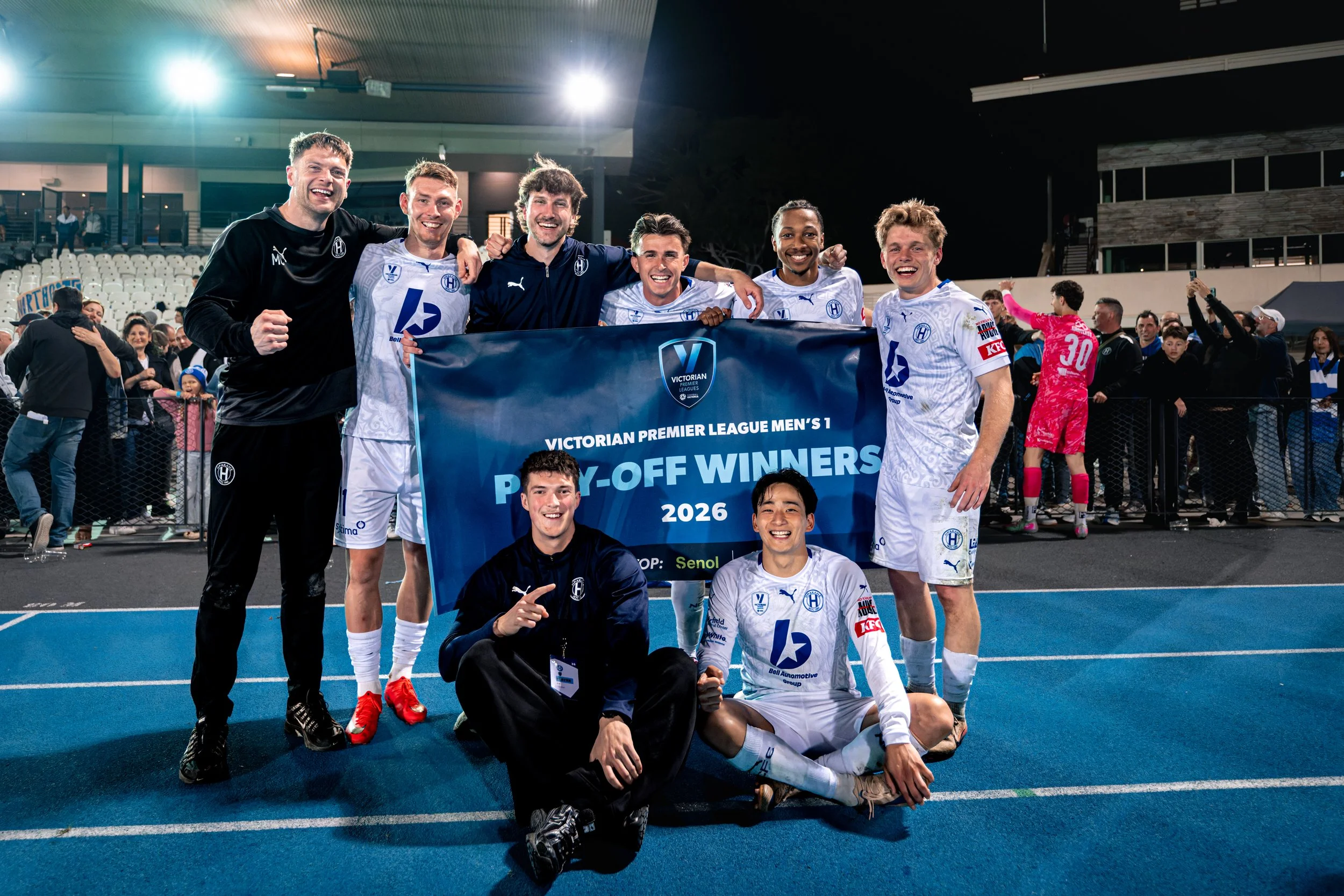
From Agony to Ecstasy
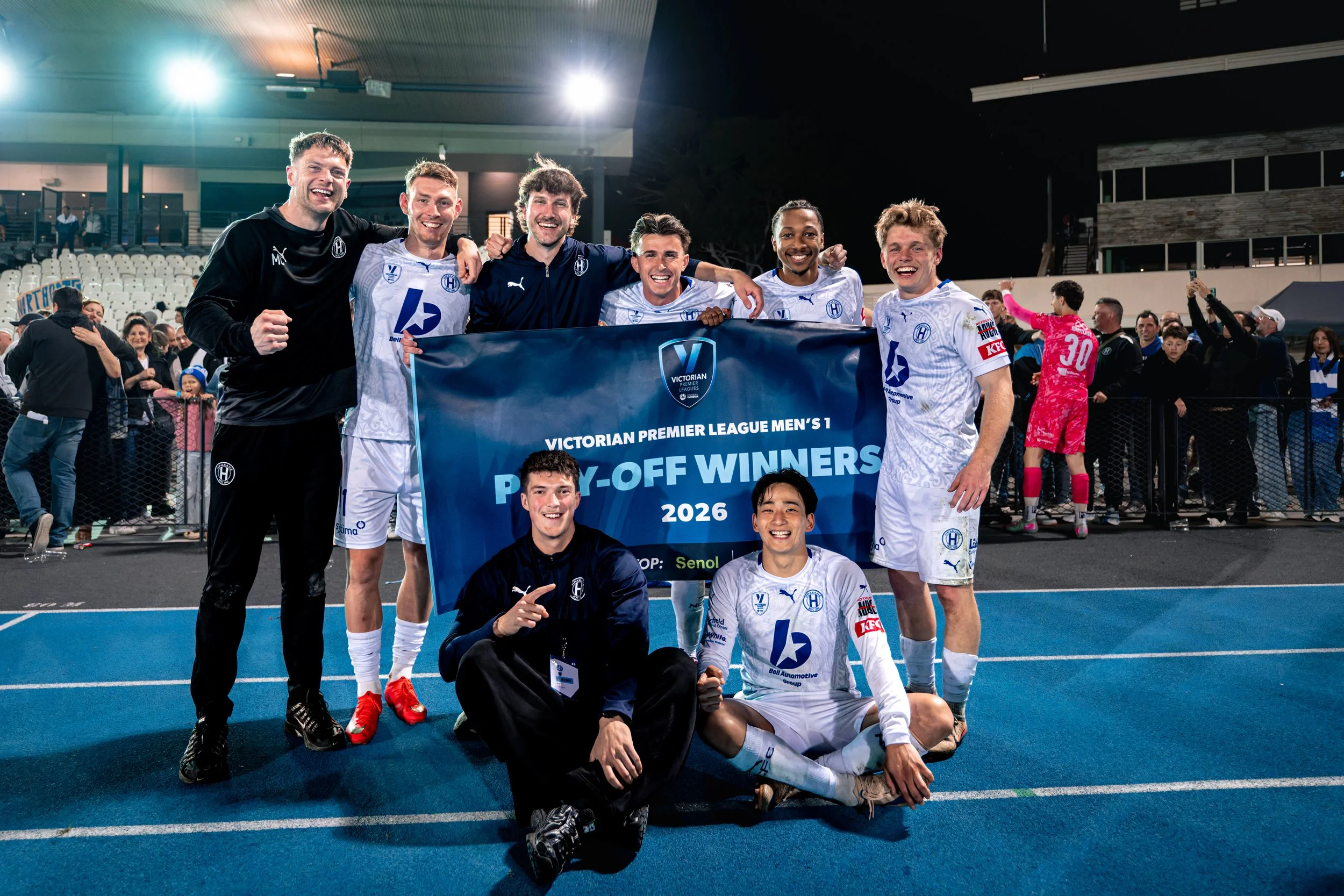
From Tasmania to the Victorian NPL
Sometimes football gives you a night that reminds you exactly why you love it.
Saturday was one of those nights.
Ken and I were in Launceston for the Launceston Cup with 15 South Hobart teams.
Kids everywhere.
Ken was coaching an Under 13 side and I was operating on a thank-God-for-ChatGPT schedule trying to get around enough grounds to photograph at least half of every South Hobart team sometime during the weekend.
I managed 14 out of 15.
Not bad.
By Saturday evening I was totally exhausted.
We finally got back to our hotel at about 6.50pm, ordered some room service and got ourselves ready to watch what, for us, was a very big game in Melbourne.
Northcote City against Melbourne Victory.
A place in NPL Victoria on the line.
Max, our son, coaching Northcote.
Nick, his stepbrother, playing up front.
Simple really.
Eat dinner.
Put the football on.
Try to remain calm.
Of course not.
Then the bloody fire alarm went off
We had just finished eating when the fire alarm sounded.
Out we went at about 7.15pm with everyone else.
Half an hour standing outside.
False alarm.
Normally I would have been thoroughly unimpressed.
This time football had done us a favour.
The game before Northcote's at Lakeside had gone to penalties and everything had been pushed back.
So while we were standing outside wondering when we were ever going to be allowed back in, the delay was actually saving us.
Eventually we were let back into the hotel.
Perfect.
Or so we thought.
Because we were only just making our way back towards the room, surrounded by people trying to get into the lifts and get back upstairs, when Melbourne Victory scored.
One minute.
One bloody minute.
We weren't even properly back in the room.
"Oh God."
That horrible football feeling had already started.
One minute
Northcote were behind almost before the game had properly begun.
This wasn't just another football match.
The winner was going into NPL Victoria in 2027.
Northcote had not played at that level since 2018.
This mattered.
To the players.
To the coaches.
To the board.
To the supporters.
To everyone who had carried the club through the years.
And now they were behind almost immediately.
Then came the 27th minute.
Nick Morton.
1–1.
Ken exploded.
"That's my son!"
And then, almost immediately, in that wonderfully understated fatherly assessment:
"He took his goal so well."
Yes Ken.
He did.
Nick had made a choice
There was another layer to Nick being out there that night.
He could have been preparing to play for South Hobart in the Australian Championship.
Football Australia had set the Australian Championship registration window for 9–15 September.
Because Football Victoria scheduled its promotion final after that window, any player wanting to transfer from a Victorian club to an Australian Championship club had to deregister from the Victorian club before the registration period closed.
There was no exemption allowing them to play the Victorian final and transfer afterwards.
So Nick had a choice.
Leave Northcote before its biggest game in years and make himself available to return to South Hobart for the Australian Championship.
Or stay.
Finish what he had started with Max.
Play for promotion.
He stayed.
And then scored the goal that kept Northcote alive.
I love that.
Agony
And then nothing.
And nothing.
And nothing.
For more than two hours.
Northcote and Victory could not be separated.
Every Victory attack felt dangerous.
Every Northcote attack had us leaning towards the television.
Every refereeing decision seemed enormous.
Besart Berisha, coaching Victory, was living every moment on the touchline.
There was plenty of emotion over there.
There was plenty in our hotel room too.
Ninety minutes.
Still 1–1.
Extra time.
Still 1–1.
Oh God.
Penalties.
Why does football do this to us?
Five-four
Penalty shootouts are bloody awful when you care.
You can barely watch them.
And yet you cannot possibly look away.
Eventually it came down to Victory's fifth penalty.
Did Noah Calamatta save it?
Did he get a hand to it?
Who cares.
It came off the post.
And absolute pandemonium broke out.
Northcote City had won the shootout 5–4.
Promotion.
NPL Victoria.
Max had done it.
Nick had done it.
Northcote had done it.
And two supposedly sensible people in a Launceston hotel room were jumping up and down and dancing like lunatics.
That is football.
Max
I was so proud of Nick.
But I was enormously proud of Max too.
We talk endlessly in football about pathways for players.
We don't talk enough about pathways for coaches.
Especially coaches who weren't former professional players or big names.
There still seems to be this assumption in football that if you played at a high level you must automatically be a good coach.
Well, not necessarily.
Max hasn't had that advantage.
He has had to learn his craft.
Work.
Study.
Prepare.
Take whatever opportunities came his way.
And convince somebody to give him a chance.
Northcote City did.
And it paid off.
There are plenty of really good coaches who never get that opportunity because their playing CV doesn't open the same doors.
Max got his chance.
He took it.
And next year he will coach in NPL Victoria.
How bloody good is that.
Our Tassie boys
There is another little bit of pride in this for me too.
Tasmanians are so often told, directly or indirectly, that our football isn't quite good enough.
Our players aren't quite good enough.
Our coaches aren't quite good enough.
The opportunities are somewhere else.
Well, some Tasmanian boys went across Bass Strait and had something to say about that.
Nick scored twice in Northcote's 3–2 semi-final win over Bulleen and then again in the promotion final.
Three goals across two games.
He wasn't the only one.
Angus and Kaz had both played their football in Tasmania before crossing the Strait and both were trusted by Max.
Kieran, a South Hobart boy, had been Northcote's keeper for most of the season before injury ruled him out.
Noah, who had also spent time playing in Tasmania, stepped into goals in his place and there he was when the whole season came down to a penalty shootout.
Kasper stood up and took his penalty beautifully.
Toby hampered by injury but contributing with appearances and attitude.
Max coached the team there.
Every one of them played a part.
That makes me incredibly proud.
Meanwhile, back in the hotel room
My phone was going mad.
Messages from people who cared.
Ash, Max's partner, and I messaging backwards and forwards.
Then later we heard all the little stories you don't see on a livestream.
The emotion.
The relief.
Max lifting Ash over the fence.
The tears.
Back to the Northcote clubhouse.
Pizzas ordered.
Flares in the clubhouse.
A club celebrating something that genuinely mattered.
And that matters to me.
Because this wasn't a final where you win a trophy and then everything goes back to exactly how it was.
This changed something.
Northcote City will play at a different level next year because they won that football match.
Players will test themselves at a higher level.
Supporters will watch their club play different opponents.
The board members and volunteers who have carried Northcote through the years get their club back into Victoria's top tier.
It mattered.
Really mattered.
At 4am
Naturally I woke ridiculously early the next morning.
So did Max.
About 4am we were messaging.
Neither of us could sleep.
Adrenaline still going.
Going over moments.
Talking about the game.
The relief.
The pride.
The sheer bloody madness of it.
And maybe that is why I love football as much as I do.
Promotion and relegation
God I love promotion and relegation.
I really do.
It gives games like Saturday night's enormous meaning.
Win and your club goes up.
Lose and you stay where you are.
Everybody knows exactly what is at stake.
Players.
Coaches.
Volunteers.
Board members.
Supporters.
No guaranteed place next year.
No protection because somebody bought a licence.
Earn it on the football field.
Northcote earned it.
That is the beauty of it.
That is why there were tears.
That is why there were flares in the clubhouse.
That is why a hotel room in Launceston suddenly had two people dancing around it like complete idiots.
It meant something.
What next?
Max is going to NPL Victoria.
That sounds pretty bloody good.
What Nick does next, who knows?
His decision to stay in Melbourne meant giving up the opportunity to play for South Hobart in this year's Australian Championship.
That's the consequence of the choice he made.
But I hope he stays in Melbourne.
I hope he keeps challenging himself and keeps proving what a wonderful footballer he is.
He spent almost his entire football life at South Hobart.
Now he has gone somewhere new, stepped into another football environment and made an impact when it mattered.
Not a bad few weeks.
And somewhere in a hotel in Launceston, his dad got to leap up and yell:
"That's my son!"
Football.
Bloody hell.
I love it.
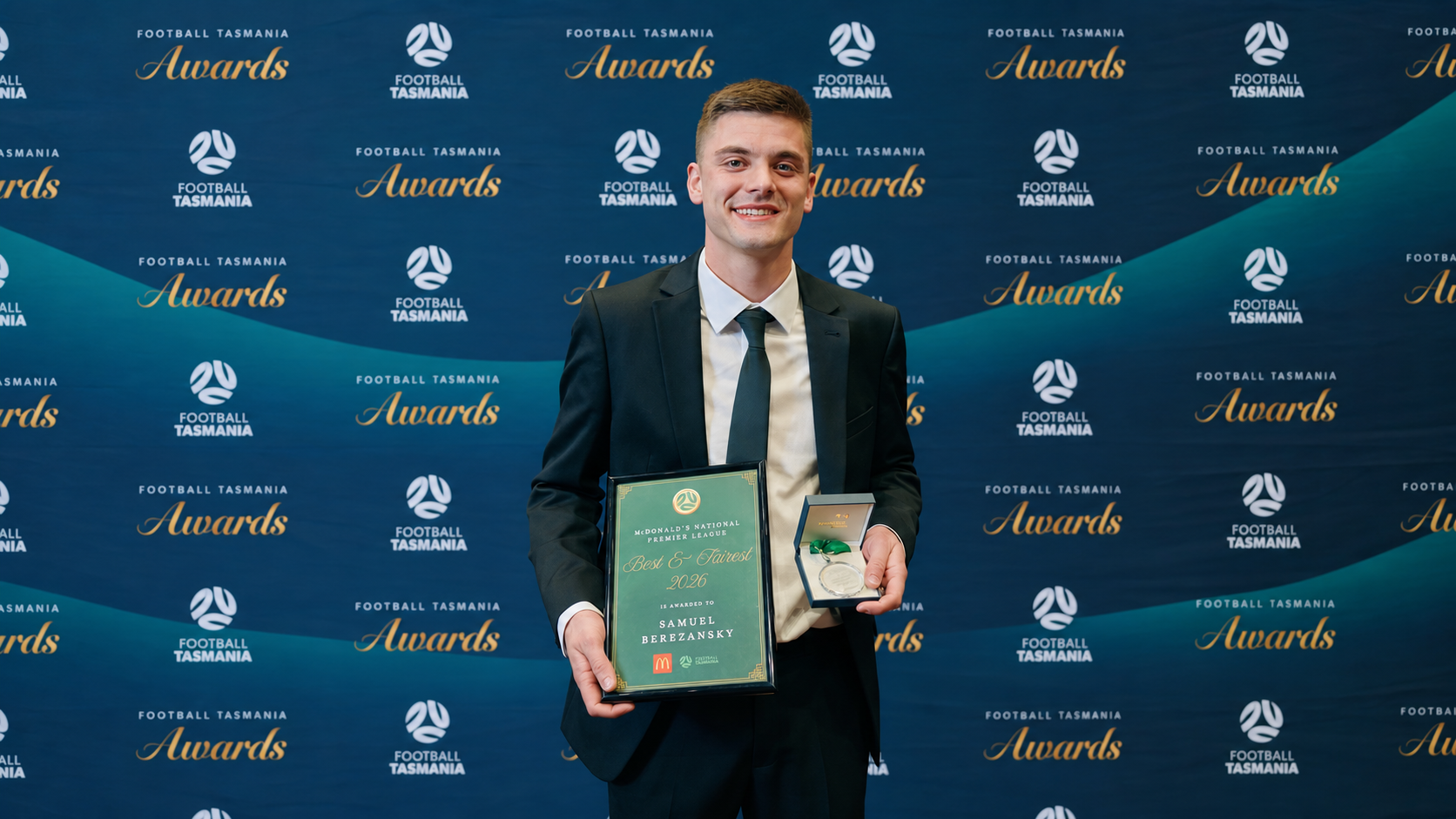
Sam Berezansky: The Journey From 16 to Best & Fairest
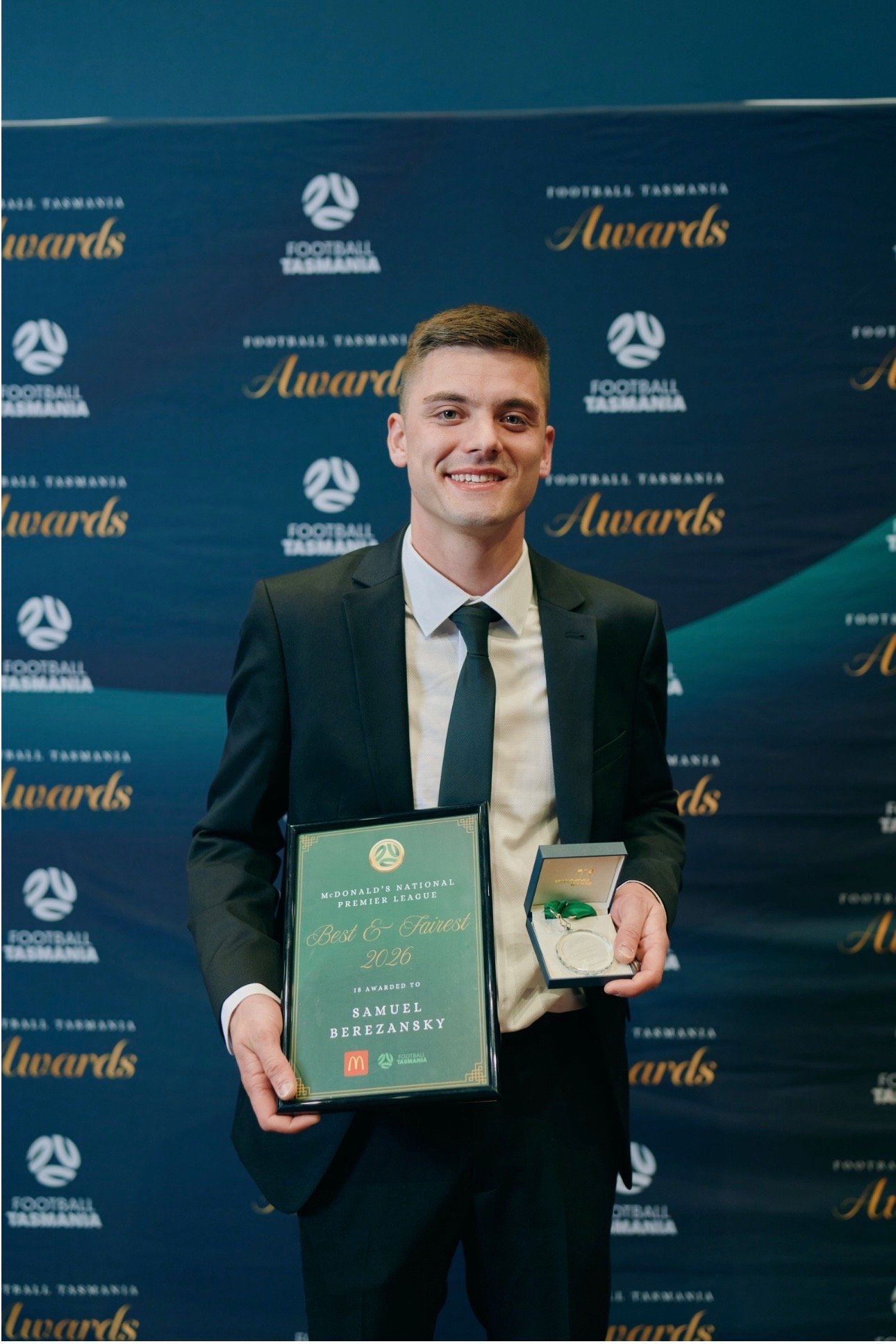
Photo credit: Football Tasmania
I have known Sam Berezansky for nearly a decade.
When he first came to South Hobart from New Town White Eagles, he was a skinny kid who simply loved his football.
Over the years I have watched him become part of the fabric of the club, growing not just as a player but as a person.
He has always been a fabulous person to have around the club. Friendly, respectful and always ready for a chat.
And over those years I have also got to know the family around him.
I have always loved my interactions with his dad, Tristan, who would regularly put his hand up to be match manager. There have been plenty of afternoons when the two of us have stood on the sideline biting our nails and muttering, "Oh my God", as the opposition suddenly grabbed control of a game.
Then there is Sam's mum Sarah, one of those wonderfully passionate football mums you can always hear from the stands, and his sister Annabelle, just as loyal in her support.
They have been one of those families who simply become part of a club.
So watching Sam win the 2026 NPL Tasmania Best & Fairest felt special.
Not just because of the player he has become.
But because of the growth we have all been lucky enough to watch.
Arriving at South Hobart
When Sam Berezansky arrived at South Hobart in 2018, the first thing he noticed was the environment.
"It felt special to arrive at such a successful club such as South Hobart," he remembers.
"I definitely remember walking into a very professional environment."
Eight years later, Berezansky is no longer the young player walking through the door wondering where he fits.
He is one of the senior players.
One of those younger footballers now look towards.
And in 2026, after years of growing, learning and establishing himself in South Hobart's midfield, he was named the NPL Tasmania Best & Fairest.
For Berezansky, though, the individual award sits inside a much bigger story.
A story about a group of players who grew up together.
A story about persistence.
And a story about staying.
Growing Up Together
Ask Berezansky what has kept him at South Hobart and his answer comes quickly.
"The culture of the club and the people involved."
But particularly, he says, it is the group of players around him.
"We have been together for the majority of that time and formed a really strong bond as a group."
That connection has been built over years.
When Berezansky first became part of the senior environment, South Hobart had a young group learning alongside several experienced players.
"We started as a group of young men with a few senior leaders at the time," he says.
"We have worked hard to improve each year and it feels special to see the rewards we are getting now."
Those rewards have not always come easily.
There have been near misses.
Cup final defeats.
League campaigns that went down to the wire.
One season in which South Hobart lost the title to Glenorchy Knights on goal difference.
But throughout Berezansky's senior career, South Hobart has never finished lower than third.
After winning the Lakoseljac Cup in 2019, silverware became harder to find.
South lost consecutive Lakoseljac Cup finals to Devonport and came agonisingly close in league campaigns without quite getting over the line.
That made finally winning the NPL title in 2025 mean considerably more.
"To finally get that NPL league success last season was so sweet and rewarding," Berezansky says.
"And to go back to back is amazing."
It is that resilience, rather than any individual moment, which he says makes him proudest.
"It is a proud feeling to be a part of this club and group of players that I know will do anything for each other."
From the Wing to Midfield
Berezansky's own development has mirrored that of the team around him.
When he first broke into South Hobart's senior side, he played as a winger.
Midfield, though, was where he had played throughout his junior years.
"I debuted for the senior team as a winger and played there for a couple of years," he says.
Eventually, he worked his way back into midfield.
With that came greater responsibility and a role which now suits the player he has become.
The biggest changes, he believes, have been his composure and his ability to read the game.
"As a younger player first coming in, you have those nerves and maybe rush things or tend to force a decision."
With experience has come greater composure.
Playing in midfield now means being constantly involved, reading what is happening around him and making decisions quickly.
"Most of the time I find myself in the thick of things," he says.
"Those early years of senior football playing more in the wider spaces definitely allowed me to gain confidence and build into being a ball-playing senior player."
There is another part of his game he particularly values.
The willingness to play forward.
"Having the confidence and mindset to play forward as often as I can," he says.
"And also my defensive side."
The Night His Name Was Called
Berezansky has attended plenty of NPL awards nights.
He has watched plenty of outstanding players win the NPL Tasmania Best & Fairest.
In 2026, it was his turn.
"It meant a lot," he says.
"I have been to a lot of NPL dinners now and witnessed some great players win the award. So it's a great honour to be among those guys and a nice feeling to see how far I have come."
There was a moment during the count when he realised something significant might actually be happening.
"After round 15 I jumped into the lead by a few votes and it started to hit me a bit I could be a chance to win from here haha."
He regards 2026 as arguably his best individual season, although he also points to 2025, when South Hobart won both the league and cup.
This year was different.
"Personally though I really enjoyed the role I played for the team this season, topping it off with a league title and finals series."
A league title.
A successful finals series.
And the Best & Fairest medal.
The Players Who Help Shape You
Football careers are never built alone.
When Berezansky talks about his development, he repeatedly comes back to the players and coaches who were around him.
Two teammates have been beside him for almost his entire senior career.
Kobe Kemp and Nick Morton.
"Coming in as a youngster they were guys I really looked up too, always trying to learn from and they were a huge part of improving as a player."
There were older South Hobart players too.
Dan Brown.
Hugh Ludford.
Loic Feral.
"All great leaders and people, when they had bits of advice you would make sure to take as much as possible on board."
Now the cycle has turned.
Berezansky is one of those senior players.
He enjoys helping younger footballers coming into the group and understands why those small pieces of advice can matter.
"Yes I do, where I can step in and help a younger player with bits of advice I try too, because I think it's important it continues."
His message to a 16 or 17-year-old entering senior football is uncomplicated.
"Have the right amount of confidence, do the little things well and always be willing to work hard for your team mates."
And listen.
"Take as much as you can on board from those older players around you."
Where It Started
Long before South Hobart, there was New Town White Eagles.
Berezansky has not forgotten it.
"I will always owe huge thanks to the people at New Town White Eagles. My first football club where I met a lot of great people and mentors."
Among them was Shane Revell, who Berezansky says invested considerable time in him as a youth player.
"He was a quality coach and also a great guy."
Training in a senior environment from a young age under Andrew Leszczynski was another important step.
"Being exposed to senior training from a young age under Andrew Leszczynski was also a major step and I will always value the experience and knowledge that Andrew provided."
Ken Morton also played a major role in his development.
"Ken Morton played a huge part in my development too which I owe thanks, playing six seasons with him at senior level enjoying some great years."
And behind all of it were his parents.
"Also Mum and Dad for all the years of continued support, without them none of this would have been possible."
The Opponents You Remember
Eight seasons of NPL football also bring plenty of opponents you would rather not see lining up against you.
For Berezansky, Devonport stands out.
"It's hard to look past the Devonport teams of the past 10 years, they have had some great players."
As a younger player, Joel Stone made a particular impression.
"As a young player Joel Stone was an incredibly skilful player and fierce competitor."
More recently there have been the midfield battles with Charles Bidwell.
"Over recent times it was always a great battle and a game I looked forward to against Charles Bidwell, a tough but very talented player."
They were the sort of contests Berezansky looked forward to.
A Few Moments That Stay With You
Some football memories remain vivid regardless of how many games follow.
For Berezansky, one goes back to 2019.
South Hobart was playing in the Lakoseljac Cup final and Berezansky remembers making the starting eleven as a 16-year-old.
"My first senior trophy for the club, the 2019 Laka Cup final where I made the starting eleven as a 16 year old was a special one."
And then there was the goal.
The one from beyond halfway.
He knows people still talk about it.
"My goal from beyond half way last year, some people may say there was some wind around that day haha."
Keeping Players in the Game
Having played in Tasmania's top competition since 2018, Berezansky has watched the NPL evolve.
One of the most noticeable changes has been the age profile of teams.
"I think the competition is going through a bit of an age transition."
"A few years ago the senior teams were almost full of guys mid to late twenties and early thirties. At the moment there are some quite young teams going around which isn't a bad thing."
But he does believe it is important to make senior football attractive enough for players to stay in it.
"It's just important that clubs and the federation make the league attractive for people to keep playing and maintaining a strong top league here in Tasmania."
He is also supportive of promotion and relegation.
"I think the promotion relegation concept is great, if they can get that to work properly so every club has the chance of earning the right to play at the highest level that would be fantastic."
Life Away From Football
Football takes up a large part of Berezansky's life, but not all of it.
Away from the game, he enjoys spending time with his partner Evelyn and making the most of the occasional breaks the football calendar allows.
"Outside of football I enjoy time with my partner Evelyn, we try to get away as much as possible when football has its occasional breaks."
"I owe a big thanks to Evelyn as well for always being by my side and supporting my football career."
He has been a qualified electrician for almost a year and works with Lifestyle Electrical.
"I love the work I do and the opportunities it has given me."
And when there is a free weekend, there is another passion.
His motorcycle.
"A bit of a weekend hobby is my Motorcycle, I love riding my bike all over Tassie especially in the summer months."
Some of his favourite rides are with his dad.
"Getting away with my Dad for a good ride is always very enjoyable and a good way to relax away from everything."
Still Hungry
Winning the NPL Tasmania Best & Fairest might appear to be the culmination of a journey.
Berezansky does not see it that way.
There is still more football to play.
More to learn.
More to achieve.
"The hunger to be the best player I can be, to keep improving and to work as hard as I can to help keep this club at the top."
And there is also the prospect of testing himself at a higher level.
"You never know when there might be a chance to play at a higher level and the Australian Championship is a great example, to play in that against the opposition on offer is motivation in itself."
What 16-Year-Old Sam Would Think
When Berezansky looks back at the player he was at 16, one of the biggest surprises would be the role he now plays.
"I think the transition of becoming more of a holding midfielder and playing an important role for the team."
But perhaps the bigger change is what he represents within the club.
"If I was to think to myself at 16, I would be one of the senior players and leaders of our club that would be huge in itself."
"To add a NPL Best & Fairest is something incredibly special."
It is a long way from being the young player trying to establish himself in senior football.
And when the trophies and awards are eventually put aside, Berezansky knows what he hopes people remember about him.
"I hope people can remember my team first attitude and aggressive attacking style."
"I always give 100% when I step onto the field to do whatever the team needs to get that success at the end of the day."
Perhaps that is the clearest measure of how far Sam Berezansky has come.
In 2018, he walked into South Hobart and immediately noticed the professional environment around him.
He was a young footballer trying to establish himself.
A winger trying to earn minutes.
A 16-year-old learning from senior players.
Eight years later, he has become one of them.
A holding midfielder.
A senior player.
A leader.
A back-to-back NPL champion.
And now the 2026 NPL Tasmania Best & Fairest.
Yet when Berezansky talks about how he hopes he will be remembered, the answer is not really about medals.
It is about giving everything.
Putting the team first.
Playing with intent.
Doing whatever the team needs.
And perhaps that explains quite a lot about why, after all these years, South Hobart and Sam Berezansky have grown together so well.

Riverside Walks Away: ‘The Current Model Is Not Sustainable’

Riverside Olympic will not renew its NPL or Women’s Super League licences for 2027.
And according to club president Stuart McCarron, this is not a decision made because Riverside has lost its ambition.
It is a decision made because the club wants to survive.
For a club with around 600 players, significant facilities at Windsor Park and a pathway stretching from juniors through to senior football, walking away from Tasmania’s highest men’s and women’s competitions is enormous.
McCarron describes the decision as “soul destroying”.
But after months of discussion, Riverside’s board unanimously decided the club could no longer justify the financial, administrative and volunteer burden of operating NPL and WSL programs under the current model.
The decision was unanimous at board level and, McCarron says, received majority support when presented to the club’s general membership.
“The major thoughts from the current board are to ensure that the club continues,” McCarron said.
“It is always our intention to play football at the highest levels but the survivability of the club has to be the main goal.”
The Cost Of Playing At The Top
The numbers are confronting.
McCarron says the direct cost of providing a competitive WSL program is more than $65,000 a year.
For the NPL, including the club coach, he puts the figure at more than $160,000.
And he says that still does not account for all of the costs associated with running the program.
“This doesn’t count ground rentals, electricity or coaching costs that are compulsory for NPL clubs,” he said.
The direct revenue generated by the senior programs does not come close to covering those expenses.
“Direct revenue doesn’t come anywhere near covering these costs and like a lot of Australian football, junior fees and academies tend to be a major contributor to revenue,” McCarron said.
At the same time, he says attendances at games have fallen significantly.
“There has been a massive drop in the attendance at games and thus a significant drop in gate, canteen, bar, sponsorship and general fundraising because of this.”
That creates a fairly simple problem.
The cost of operating at the highest level continues to rise while some of the traditional ways clubs generate money from senior football are shrinking.
Too Much From Too Few
Money, however, is only part of Riverside’s decision.
The other currency football clubs constantly spend is time.
McCarron has previously spoken publicly about the enormous administrative burden associated with NPL licensing and compliance.
This time he is even more direct.
“Volunteers, whether they are players, administrators or coaches, are an integral part of the club and the demands are immense,” he said.
“At times we are asking too much from too few.
“Unfortunately I believe that the volunteer culture in society is reducing and our football club is no different.”
That matters enormously at a club the size of Riverside.
There are around 600 people wanting to play football.
The NPL and WSL programs represent only a relatively small percentage of them.
When I asked whether the board had ultimately decided its resources would be better directed towards the broader membership, McCarron’s answer was simple.
“Yes. The continuity of the club is the paramount priority.”
What About The Players?
Of course, there is another side to this decision.
Players who grew up at Riverside believing the pathway led to NPL or WSL football will no longer have that opportunity at their own club in 2027.
McCarron acknowledges that concern.
“We will always encourage players to play at the highest levels that they can and still enjoy their football,” he said.
But Riverside believes removing the financial and administrative burden of NPL and WSL football may actually allow the club to invest more heavily in player development.
“We believe that we can enhance the player development offerings as we will be able to divert more resources to this area without the distraction of the WSL and particularly NPL programs.”
That raises an interesting question.
Does a strong development club necessarily need an NPL or WSL team at the top of its pathway?
Riverside is about to test that proposition.
The Women’s Game Has Its Own Problem
While many of the pressures are common to both programs, McCarron believes the WSL faces an additional problem.
Player depth.
He says clubs wanting to be competitive increasingly need to recruit from interstate or overseas because the Tasmanian player pool, particularly in Launceston, is simply not large enough.
“Unfortunately, to be competitive the use of imported players, overseas and mainland players, has become essential as the Tasmanian and in particular Launceston player pool is too small.”
That should concern anyone interested in the long-term health of the women’s game.
If clubs need to bring players into Tasmania simply to remain competitive, what does that tell us about the depth underneath the competition?
‘The Current Model Is Not Sustainable’
This is where the Riverside story becomes much bigger than Riverside.
I asked Stuart a fairly simple question.
If a club of Riverside’s size, with its player numbers and facilities, decides NPL and WSL football are not sustainable, what does that say about the model?
His answer was unequivocal.
“The current model is not sustainable.
“NPL in particular, the cost both in time and dollars is too much for clubs to bear.
“We burn out too many.
“To have the same compliance regime as multi-million-dollar clubs is just not sustainable.”
For McCarron, the answer is a model built specifically around Tasmania rather than applying the same compliance expectations faced by much wealthier clubs.
“There has to be a Tasmanian way with our diverse population,” he said.
I put the broader sustainability question directly to Football Tasmania CEO Tony Pignata when we spoke on Tuesday.
I asked him whether the current model in Tasmania was unsustainable.
Pignata did not frame it that way, but said clubs and Football Tasmania needed to work together to make sure the model works.
He also told me that Member Federations around Australia are discussing whether they should have greater control over their own NPL structures because of the significant differences clubs face from state to state.
That is an important point.
An NPL club in Tasmania is operating in a very different environment from a club in Sydney, Melbourne or Brisbane, in terms of population, revenue, travel, player depth and volunteer capacity.
The question may therefore be less about lowering standards and more about whether the structure can be adapted to the very different environments in which NPL clubs operate.
Is Riverside Alone?
McCarron does not believe so.
“I believe that most clubs are in this discussion but are too concerned about ramifications to openly discuss the issue.”
That is perhaps one of the most significant comments in this entire conversation.
Because if he is right, Riverside’s decision is not an isolated event.
It is simply one club saying publicly what others may be discussing privately.
The Conversation With Football Tasmania
McCarron says Riverside sought an in-person meeting with Football Tasmania earlier in the year over a range of concerns.
When I spoke with Football Tasmania CEO Tony Pignata on Tuesday, he said he had been willing to discuss the issues by phone but did not believe a trip to Launceston for an in-person meeting was appropriate.
Pignata also agreed that getting volunteers was becoming increasingly difficult.
There was also an important difference in understanding around Riverside’s position.
Pignata told me on Tuesday that Football Tasmania had not, at that stage, been formally advised that Riverside would withdraw its NPL and WSL licences for 2027.
He said Football Tasmania had instead given Riverside an extension of time to meet the relevant criteria.
Of course, that was the position when Tony and I spoke on Tuesday and discussions may have moved on since then.
That does not alter Riverside’s reasons for making its decision, but it does show that at the time of my conversation with Tony, the club and the governing body were approaching the situation from different places.
McCarron remains critical of the current competition review process.
He describes it as “half hearted” and believes it needs more time and a broader range of input.
He is careful, however, to separate that criticism from the four NPL presidents involved in the review.
“This is not a reflection on the four NPL presidents that have been chosen but on the process established by the CEO.”
Riverside Accepts Its Own Mistakes
What I found interesting was that McCarron did not attempt to absolve Riverside of responsibility.
He readily acknowledges the club has made decisions that have contributed to its present position.
“Riverside have made mistakes that haven’t helped the situation,” he said.
But he believes those mistakes sit within a broader structure that has become increasingly difficult for clubs to carry.
He is particularly critical of fixturing and the way the game is marketed in Tasmania.
He described the rostering system as a “disaster” and said it had helped bring the situation to a head.
He was even more blunt about the promotion of the game.
“The marketing of our game is the laughing stock of all sporting codes in Tasmania,” he said.
Strong words.
But they come from someone who has spent more than 50 years involved in football and around 40 years as an administrator.
This Isn’t Goodbye
Perhaps the most important thing Stuart McCarron told me came right at the end.
Riverside is not abandoning elite football forever.
“Riverside will be back playing at the top level in Tasmania but only when the model is sustainable for the club and the game in general.”
There is disappointment in his answers.
There is frustration.
There is also pragmatism.
Riverside Olympic has decided that maintaining an NPL or WSL licence cannot come ahead of maintaining Riverside Olympic.
And perhaps that leaves Tasmanian football with a much bigger question.
If a club with around 600 players, significant facilities, decades of history and an ambition to play at the highest level decides the price of doing so has become too high, should we really be asking what is wrong with Riverside?
Or should we be asking what is wrong with the model?

Maybe If We Grow Some Testicles

Football Tasmania is promoting its State NPL XI match against Western Australia.
State versus State.
Tasmania's best against Western Australia's best.
Representative football.
A bigger stage.
A chance to wear the state badge.
And when the match was first announced, I did ask about the women.
I wrote:
"If representative football is valuable, why are the girls missing out again?"
So I can't pretend this has only just occurred to me.
It hadn't.
But I don't think I felt it then quite the way I feel it now.
At the time, the absence of a women's team was one question among many.
Why were we doing this?
What was the objective?
Why Western Australia?
What would success look like?
Was the money better spent elsewhere?
And, yes, why were the women missing out?
I wrote about all of that here:
Representative Football Is Back. But Why?
Now, watching Football Tasmania promote the men's match and celebrate the opportunity for Tasmania's best male players, that last question has pushed all the others aside.
Because I am looking at it not just as somebody involved in football.
I am looking at it as a woman.
And perhaps, at 68, as a woman who is finally able to see some things about her own life much more clearly than she once did.
I was conditioned from birth
I grew up in a world where men were more important than women.
That was simply how things were.
Women did jobs around the house.
Men had careers.
Girls did not go to university.
They went to business college.
They learned to type.
They learned shorthand.
They became somebody else's secretary.
That was very much the world created by my parents and their beliefs about women and girls.
Nobody had to sit me down and say:
Men are superior.
It was just there.
In the expectations.
In the opportunities.
In what boys were encouraged to become.
And in what girls were encouraged to accept.
Fortunately, business college gave me very good typing skills.
So all these years later I can sit at a keyboard at ridiculous hours of the morning writing things designed to annoy, challenge and occasionally provoke people.
There is some irony in that.
Would my life have been different if I had gone to university and got a degree?
Almost certainly.
Would it have been better?
I have absolutely no idea.
I have had a fascinating life.
But that is not really the point.
The point is that we are conditioned.
And sometimes it takes a very long time to understand just how deeply that conditioning sits inside us.
I haven't always got it right either
I can see it in my own football life.
I spent many years as President of a football club.
I was surrounded by men.
Male coaches.
Male administrators.
Male football conversations.
At home I had sons.
My football world was overwhelmingly male.
So I am not going to sit here now and pretend that my own outlook was always perfect when it came to women's football.
It wasn't.
There were times when I needed to be reminded.
Times when somebody needed to say:
What about the women?
What about the girls?
Why aren't we doing the same thing for them?
I can look back now and recognise that.
I am not particularly proud of it, but pretending otherwise would be dishonest.
I was a product of the same conditioning I am writing about.
Perhaps the difference is that in this older and, hopefully, more thoughtful period of my life, it is much easier to see.
And once you start seeing it, it is everywhere.
The men's game is still the default
Men's football is important.
Men's coaching is important.
Men's representative football is important.
Men's pathways are important.
Men's matches are events.
Men's achievements require promotion.
And women's football?
Too often it is still the extra.
The addition.
The thing we will get to once everything else is sorted.
We talk endlessly about the growth of women's football.
Participation.
Pathways.
Opportunity.
Role models.
Keeping girls in the game.
The legacy of the Women's World Cup.
All worthy things.
All important.
But at some point the words have to turn into action.
Think about the women at Devonport
This is the bit that really gets me.
Think about those women at Devonport.
Think about what they have achieved.
Three consecutive Women's Super League titles.
The Statewide Cup as well.
Sustained excellence.
Not a lucky season.
Not a flash in the pan.
Year after year.
There are some marvellous female footballers in that team.
And there are marvellous female footballers right across Tasmania.
Women who train.
Women who sacrifice.
Women who travel.
Women who organise their lives around football.
Women who represent their clubs brilliantly.
Women who have earned the right to be taken seriously.
Then they watch Tasmania put together a men's representative side, fly it across the country and promote it as an opportunity for our best players to test themselves on a bigger stage.
What must they think?
Perhaps they should grow some testicles.
Maybe then somebody would notice them.
Yes, that is ridiculous
Of course it is.
That is why I wrote it.
Because sometimes ridiculous makes the point better than polite language ever could.
Women have spent generations being told that the things men do matter more.
Men's jobs mattered more.
Men's sport mattered more.
Men's opinions mattered more.
Men's ambitions mattered more.
And if women wanted the same thing, we were often expected to ask nicely.
And be grateful.
And not make too much noise.
Because when men push for more, they are ambitious.
When women push for more, they are difficult.
Men challenge.
Women complain.
Men demand better.
Women whinge.
Men are strong.
Women are never satisfied.
It is an old story.
And football is hardly immune from it.
Gratitude is not equality
One of the things women are often told is to look how far things have come.
And yes.
They have.
Women's football has come a very long way.
Girls now have opportunities I could not have imagined when I was young.
Women coach.
Women administer.
Women referee.
Women lead.
Women play at levels and in competitions that simply did not exist for previous generations.
That is all true.
But women should not be required to spend the rest of our lives being grateful for progress somebody else has decided is sufficient.
Gratitude is not equality.
And progress should not become an excuse to stop asking questions.
I do not want less for the men
This is the part that will inevitably be misunderstood by someone.
So let me be very clear.
I do not want the men to lose this opportunity.
I hope they enjoy it.
I hope they represent Tasmania proudly.
I hope they play well.
I hope they win.
This is not about taking something away from them.
Equality is not about making men's lives smaller.
It is about making women's opportunities bigger.
It is about noticing when the men's opportunity is automatically funded, promoted and celebrated while the women's equivalent does not appear to exist.
That is the issue.
Not the men.
The assumption.
This is life in a microcosm
Perhaps that is why this match has started bothering me more than it did when it was first announced.
It is not really about one football game.
It is about a lifetime of watching the same pattern repeat itself.
Men are the default.
Women are the addition.
Men's football is simply football.
Women's football needs the word "women's" in front of it.
Men's opportunities are part of the program.
Women's opportunities are often special initiatives.
Men's success is expected to be promoted.
Women's success is something we are told we should be grateful to see acknowledged.
And after a while, everybody becomes conditioned to it.
Including women.
Including me.
The part that makes me uncomfortable
That is probably the most uncomfortable part of all this.
I have been involved in football for decades.
I have led a club.
I have sat in boardrooms.
I have made decisions.
I have challenged plenty of things.
But I can still look back and see occasions where I viewed football through a predominantly male lens.
I can see times where somebody had to remind me about the women.
That matters.
Because if we want football to change, perhaps the answer is not simply pointing at a room full of men and blaming them.
Sometimes women have absorbed the same assumptions.
Sometimes we help maintain the very culture that disadvantages us.
Not deliberately.
Not maliciously.
Just because it has always been there.
That is how conditioning works.
And then one day you see it
Age does not automatically make us wiser.
But it can give us distance.
It gives us time to look back.
It gives us the opportunity to ask why we accepted certain things without question.
I look at things very differently now than I did at 28.
Or 38.
Or 48.
I notice more.
I question more.
And I am much less interested in being told that women should simply be happy with what they have got.
So when I now look at this representative match, the question seems incredibly simple.
If representative football matters, women should have representative football.
If showcasing Tasmania's best players matters, Tasmania's best female players should be showcased.
If wearing the state badge matters, women should get to wear it too.
If competing against another state is valuable, women should get that opportunity too.
It should not require somebody complaining.
It should not require women repeatedly asking where their opportunity is.
And it certainly should not require us to grow testicles first.
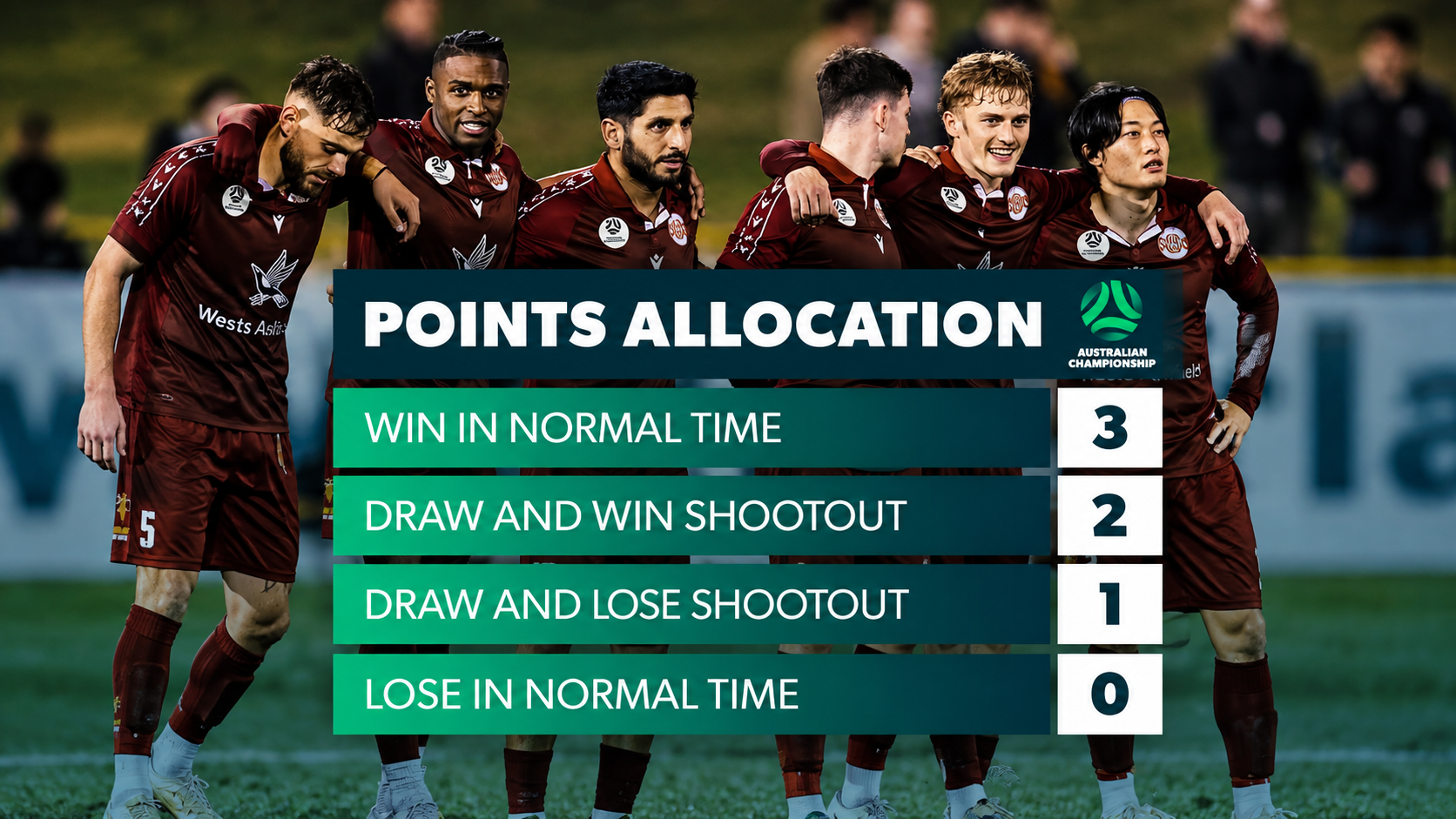
Apparently a Draw Is No Longer Exciting Enough
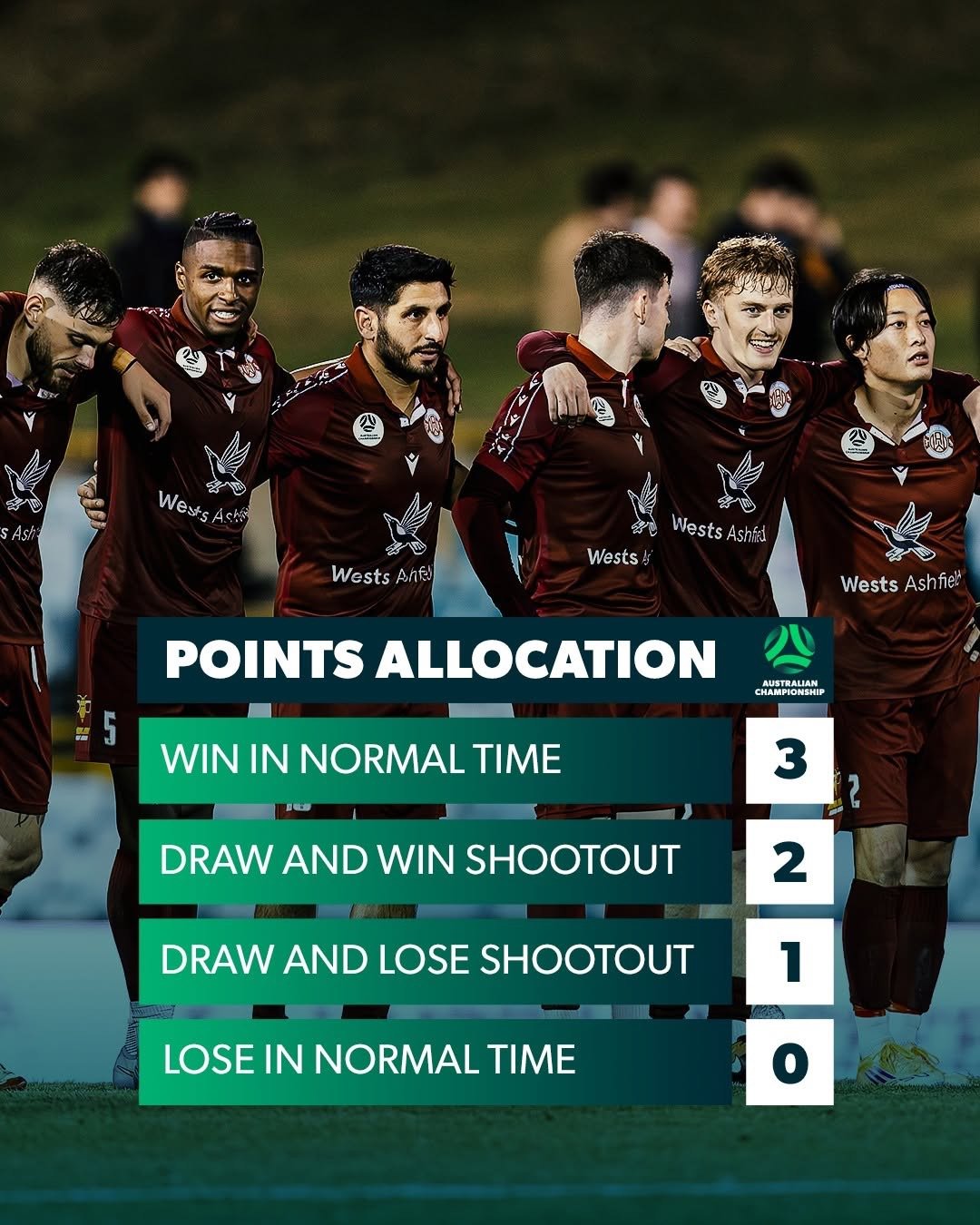
Football Australia has had an idea.
Which is always an exciting sentence.
From 2026, every drawn regular season match in the Australian Championship will go to a penalty shootout.
Not because somebody needs to progress.
Not because it is a final.
Just because, apparently, a draw is no longer entertaining enough.
The match will still officially be a draw.
Except there will be a winner.
But it is still a draw.
The winner gets two points.
The loser gets one.
Simple.
Clear.
Completely normal.
A committee somewhere is very proud of this.
Fixing What Wasn't Broken
Three points for a win.
One for a draw.
Zero for a loss.
It has worked perfectly well for decades.
Possibly too well.
Somewhere along the line someone looked at football and thought:
You know what this needs?
More content.
More theatre.
More engagement.
And penalties.
Obviously penalties.
So now two teams can play 90 minutes, finish level, then take spot kicks so somebody can win a bonus point for a match they did not win.
Groundbreaking.
Somebody should tell FIFA.
Nobody Won, But Somebody Won
Imagine explaining it to somebody new to football.
"Who won?"
"Nobody. It was a draw."
"So why are they taking penalties?"
"To see who wins."
"But you just said it was a draw."
"It is."
"So the penalty winner wins?"
"No."
"What do they get?"
"An extra point."
"So they do win?"
"No. The result is still a draw."
"Then what was the point of the penalties?"
"Excitement."
Right.
Glad we cleared that up.
A League Table, Plus Penalties
A league is meant to reward performance across a season.
Wins.
Draws.
Losses.
Consistency.
Grit.
The ability to go away and earn a point.
Now we can add:
Being good at penalties after a draw.
Two teams could finish with identical wins, draws and losses and land apart on the table because one goalkeeper dives the right way more often.
That is not league performance.
That is a shootout wearing the league's clothes.
An Interesting Way to Encourage Parking the Bus
If I am 1–1 with ten minutes left and I have a good keeper and five reliable takers, why would I chase a win?
I would sit on the draw and fancy my odds from twelve yards.
In the name of excitement, we may have just incentivised parking the bus.
Bold strategy.
Innovation, Engagement and Other Dangerous Words
There is a bigger thing here too.
Football administrators seem increasingly terrified of leaving football alone.
Everything needs to be more innovative.
More engaging.
More entertaining.
More marketable.
More dramatic.
More something.
Sometimes a match is brilliant.
Sometimes it is terrible.
Sometimes it ends 0–0.
That is sport.
Not every 90 minutes needs a manufactured climax.
Football has survived quite successfully without needing somebody to add a bonus feature at the end.
Japan Did It, So We Should Too
Japan tried something similar.
The old NSL did it in 1994/95.
Both are offered as reassurance.
We also used fax machines in 1994.
Big shoulder pads too.
Not campaigning for either to come back.
"Japan is trying it" is not a reason to redesign one of the simplest scoring systems in world football.
By that logic we should also adopt Japan's train timetables.
That one I would actually take.
Every Draw Now Has a Winner. No, It Doesn't.
The official line says every draw now has a winner.
No.
It doesn't.
That is why it is called a draw.
That is the definition of the word.
League football is different from knockout football.
That difference is the whole point.
So What Was Actually Wrong?
What exactly was wrong with three points for a win, one for a draw, none for a loss?
From where I am sitting, nothing.
It worked.
It was understood.
It was fair.
Apparently that was the problem.

Are We Consulting, or Just Confirming a Decision Already Made?

People send me stuff.
A lot of stuff.
Emails.
Screenshots.
Messages.
Documents.
And the occasional "you didn't get this from me".
I suppose that happens because I have a public forum.
I tend to write about the things other people either don't want to say publicly or feel they can't.
And football can be like that.
Criticising Football Tasmania can feel risky for clubs.
Clubs need licences.
They need approvals.
They need competitions.
They need relationships with the governing body to work.
So quite understandably, a lot of people keep their heads down.
But that does not mean there aren't questions.
There are plenty.
And right now there are some very big ones.
Football Tasmania has established a Competitions Working Group to look at the future of senior and youth football in Tasmania.
I wrote about the formation of this group earlier in the year in The Chosen Ones, when I questioned how the representatives had been selected and whether the process was transparent enough for a group supposedly representing the collective interests of clubs.
The scope of the group has now become even broader.
NPL.
WSL.
Championship.
Promotion and relegation.
Youth structures.
Licensing.
Competition pathways.
Facilities.
The long-term direction of the game.
These are not decisions about whether Round 7 is played on Saturday or Sunday.
These are questions that could shape Tasmanian football for years.
Which makes me wonder why it all seems to be happening in such a hurry.
This piece is long.
Really long.
Which feels appropriate, given the Working Group has been handed years of decisions and a few days to think about them.
I hope they packed a lunch.
And a sleeping bag.
The chosen few
The Working Group is a relatively small, appointed group.
There are club representatives and Football Tasmania representatives and they have been given a very broad brief.
That is not necessarily a problem.
Someone has to start the conversation.
But surely with questions this significant, the process should be long enough and broad enough to genuinely test ideas before decisions start taking shape.
Clubs were asked for feedback on ten major areas ahead of the first meeting.
And the turnaround has been tight.
Very tight.
How much meaningful consultation can a club really undertake in a few days?
On whether the NPL should have finals.
Whether Championship 1 should disappear.
Whether promotion and relegation should be introduced.
What youth football should look like.
These are not yes/no questions.
They deserve modelling.
Financial information.
Competition data.
Discussion with coaches.
Discussion with technical people.
Discussion with players.
Discussion with volunteers and administrators.
And perhaps a little time to think.
And then there is the calendar
This is the bit that really made me stop.
Attached to the consultation material was a proposed 2027 competition calendar.
And that calendar already has an NPL and WSL season built around 21 rounds plus a Finals Series.
Three rounds.
Then finals.
Which raises an obvious question.
Has that decision already effectively been made?
Because if the Working Group is genuinely being asked whether we should have an NPL Finals Series in 2027, why has the draft calendar already been constructed on the assumption that we will?
Perhaps it is simply a working draft.
Perhaps Football Tasmania needed something on paper to start the discussion.
That is perfectly possible.
But perception matters.
And from the outside, it can look a little like we are being asked to consult on the colour of the curtains after the house has already been built.
If the Working Group decides that four full rounds would be better than three rounds and finals, the calendar changes completely.
If it decides there should be no finals, the calendar changes.
If it decides the competition structure itself needs to change, the calendar changes again.
So why not settle the competition model first?
Then build the calendar around it.
Why finals?
I should probably declare my hand here.
I am not particularly fond of finals series in league football.
I understand why people enjoy them.
They create an event.
There is jeopardy.
There is a Grand Final.
Someone gets to lift another trophy.
But I struggle with the principle.
A league season tests a football club over months.
It tests depth.
Injuries.
Suspensions.
Travel.
Poor form.
Bad weather.
Players leaving.
Young players coming through.
The ability to recover from a bad result.
The ability to keep winning when you are tired and carrying injuries.
Resilience.
Consistency.
A team can graft its way through 28 matches, deal with everything a season throws at it and finish on top.
To me, that is your champion.
Then we add a short Finals Series where another club can get itself right at exactly the right time, win two or three games and suddenly become the team everyone is talking about at the end of the season.
I am not convinced that makes the competition better.
And I think, inevitably, it takes something away from the team that actually won the league.
Perhaps that is the traditionalist in me.
But if we have eight teams, I would rather see them play four full rounds.
Twenty-eight league games.
Everyone plays everyone the same number of times.
Home and away twice.
Test the squads.
Test the depth.
Test the coaches.
Test the clubs.
Then the team sitting on top after 28 games is the champion.
Simple.
And instead of manufacturing more football through a Finals Series for only some clubs, just play more league football.
Of course there is a financial question.
Seven additional rounds cost money.
Referees.
Travel.
Ground hire.
Match-day operations.
But there are also another three or four home games for every club.
More gate.
More canteen and bar sales.
More sponsorship opportunities.
So show us the numbers.
What does three rounds plus finals cost?
What does four rounds cost?
What would each mean for club licence fees?
If four rounds is simply unaffordable, that is relevant information.
But don't start with the assumption that we need a Finals Series.
Start with the football.
For me, the league should be the main event.
And if we want more football, there is a very simple solution.
Play more football.
The match-day product matters too
There is another piece of this that probably does not get talked about enough.
Where practical, why are clubs not playing the same opposition across multiple senior teams on the same day?
U21 Men.
WSL.
NPL Men.
Or perhaps U18 Girls, WSL and senior men.
At the moment, we too often have one-off games.
A team arrives.
They play.
They leave.
That does very little for atmosphere.
It does very little for gates.
It does very little for canteen or bar sales.
It does very little for sponsors.
A proper club-versus-club match day gives people a reason to stay.
It creates atmosphere.
It connects younger players to senior teams.
It makes the whole thing feel more like a club event than a collection of unrelated fixtures.
Of course, this is not always possible in a statewide league.
Travel matters.
Nobody wants a Devonport U21 team leaving home at 4am just because it makes the fixture list look neat.
Which, again, takes us to a bigger question.
Do we actually need a statewide NPL?
There.
I said it.
Perhaps we do.
But if we are genuinely reviewing the future of Tasmanian football, why shouldn't the question be asked?
What would happen if we had strong Northern and Southern premier competitions with genuine promotion and relegation?
Then used Cup competitions to provide more statewide football?
You could have more local rivalries.
Less travel.
More meaningful Cup football.
More realistic fixture alignment.
Better match-day atmosphere.
And perhaps more football overall.
The statewide element does not have to disappear.
It could become more meaningful.
Cup competitions.
North v South.
Championship matches.
Statewide knockout football that actually feels special because it is not happening every week.
A regional league structure with proper statewide Cups might give us the best of both worlds.
Strong local competition and meaningful statewide football.
Again, I am not saying this must be the answer.
But surely a Working Group tasked with looking at the long-term structure of the game should be willing to ask the question.
What about the women?
The WSL discussion is even more complicated.
Do we simply add finals because the men have them?
I do not think that should be the starting point.
The bigger issue is whether the competition itself is strong enough and competitive enough.
At present we have one very dominant team.
That can change quickly in football, of course.
But perhaps the immediate priority should be strengthening the league itself.
The player demographic is also interesting.
There are a lot of very young players playing senior women's football.
Then a group of older, experienced players.
There does not always seem to be the depth through the middle that you would expect from a mature senior competition.
Each club is also developing its women's program differently.
So before we turn WSL into "NPL Women", perhaps we should ask what that actually means.
Does the football improve?
Do clubs receive more support?
Do coaching standards improve?
Does player retention improve?
Or does everything simply become more expensive because the competition suddenly has three different letters in front of its name?
Calling something NPL does not automatically make it better.
If we are serious about elevating women's football, then strengthen the competition first.
Promotion and relegation
I am a traditionalist on this one too.
I like promotion and relegation.
Finish last and there should be consequences.
Win the competition below and there should be an opportunity to go up.
Sporting performance should matter.
The difficulty in Tasmania is what happens when the Championship winner does not want promotion.
That is not easily solved.
Perhaps entering Championship needs to come with an expectation that if you win it and meet reasonable licensing standards, you go up.
Otherwise we do not really have a football pyramid.
We have separate competitions with an occasional conversation about whether somebody would like to change leagues.
And if Championship 1 disappears, perhaps we should also stop calling the competitions below Championship "Social Leagues".
If we want a genuine pathway, then call them what they are.
Championship.
Division 1.
Division 2.
Division 3.
Division 4.
Simple.
Clear.
A pyramid.
Our youth need more football
This is probably the issue I feel most strongly about.
Our youth players simply do not play enough competitive football.
We used to have more Cup competitions.
We have lost them.
Then there are byes.
Uneven competitions.
Forfeits.
Washed-out rounds.
And suddenly a 15-year-old who is supposedly on a development pathway has played surprisingly few meaningful matches.
If we are serious about development, perhaps we should start with a very simple question.
How many competitive games should a 14, 15 or 16-year-old footballer play in a season?
Then work backwards and build competitions that deliver it.
Instead, we spend enormous amounts of time discussing structures, age groups and alignment.
Maybe the number of games the kids actually play should be our starting point.
More league football.
More Cups.
Reschedule washed-out rounds where possible.
Just give them more football.
Licensing needs some Tasmanian reality
Standards are important.
Of course they are.
Clubs should be well governed.
Coaches should be appropriately qualified.
Players should be looked after.
Clubs should be financially responsible.
But standards also need to reflect Tasmania.
We have a relatively small pool of players.
If licensing says every club needs teams at every age, we can end up with clubs racing around recruiting the same children from each other to satisfy licence criteria.
That isn't growing football.
It is moving players around.
Facilities are another obvious example.
Most Tasmanian clubs do not own their grounds.
Councils do.
And councils are not always particularly helpful.
Clubs can lobby.
They can write.
They can plead.
They can put in grant applications.
But ultimately they often do not control whether a light tower gets replaced, a changeroom gets upgraded or another pitch becomes available.
Should a club lose its licence because a council will not build something?
There has to be some common sense.
Licensing should improve clubs.
It should not create a player race or punish clubs for things genuinely outside their control.
This deserves time
I actually think the Working Group is a good idea.
There are some important conversations that Tasmanian football has avoided for too long.
But that is exactly why I do not think they should be rushed.
If we are genuinely talking about the shape of the game for the next five or ten years, then give the process time.
Put options on the table.
Show the financial modelling.
Show the participation numbers.
Show how many games youth players actually play.
Show the travel implications.
Show what the finals actually delivered.
Ask clubs.
Ask players.
Ask coaches.
Ask technical people.
Ask administrators.
Ask people in the North and South.
Then decide.
Because consultation only has value if the outcome is still capable of changing.
If the calendar already assumes 21 rounds and finals before the first Working Group meeting has even taken place, it is reasonable for people to ask.
Are we actually deciding what the competition should look like?
Or are we being consulted on a decision that has largely already been made?
And if the answer is that nothing has been decided yet, excellent.
Then let's have the conversation properly.
Because these are big questions.
They deserve more than a few days of thinking.
And, above all, if we want better football in Tasmania, perhaps the starting point is not that complicated.
Play more football.

Who Do Referees Notice?
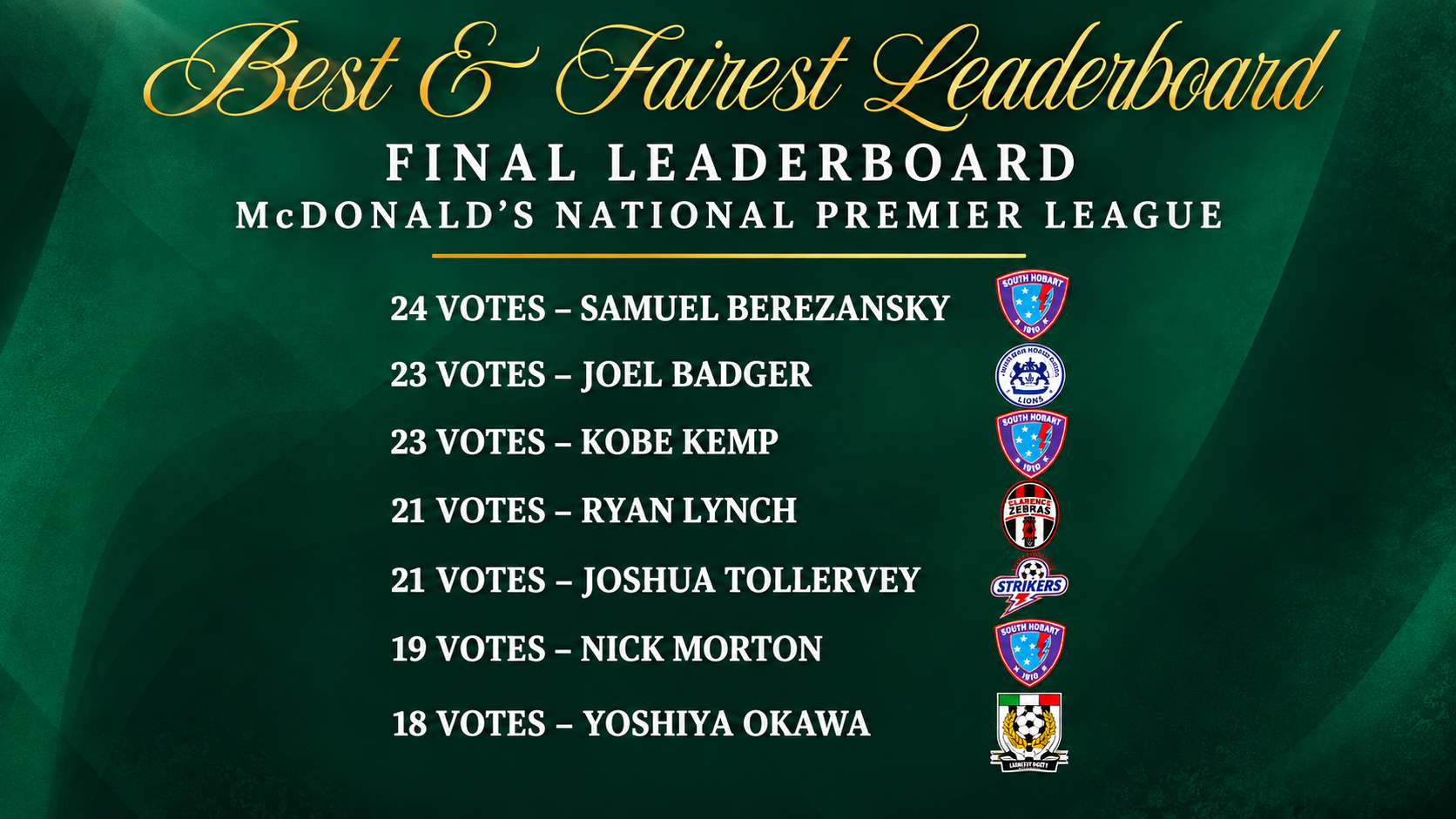
The NPL Best & Fairest votes made me wonder whether the position you play changes your chances of being noticed.
I didn't go to the Football Tasmania awards dinner.
The thought of pantyhose and a dress is fairly horrific these days, particularly as my waist seems to be getting larger rather than smaller.
I like comfort.
Give me trousers, flat shoes and something with a bit of room around the middle and I am happy.
So I stayed home.
But I did get sent photographs of the NPL Best & Fairest leaderboards as the count unfolded.
And they made me think.
Not particularly about who won.
Samuel Berezansky finished on top with 24 votes, one ahead of Joel Badger and Kobe Kemp on 23.
What interested me was who was appearing on the leaderboard and why referees might notice certain types of players more than others.
Because these aren't coaches' votes.
After every NPL match the referee awards 3, 2 and 1 votes to the players they consider the best on the ground.
Eighteen games. 54 votes available across each club's matches, although those votes can go to players from either side.
And when I looked at the final seven, something stood out.
Samuel Berezansky, midfielder.
Joel Badger, attacker.
Kobe Kemp, predominantly an 8 or 10 this season.
Ryan Lynch, attacker.
Joshua Tollervey, winger and attacker.
Nick Morton, attacking midfielder and forward.
Yoshiya Okawa, creative midfielder.
Not a specialist defender amongst them.
Goalkeepers are a slightly different discussion because they have the Golden Glove award. I don't know whether that consciously or unconsciously takes them out of Best & Fairest thinking, so I am not going to use their absence to make an argument.
But defenders?
That is interesting.
They were there early
This isn't as simple as saying referees never notice defenders.
After Round 5, Toby Barton from Devonport was sitting on seven votes and Riverside captain Will Prince was on six, sitting in the middle of a leaderboard headed by Okawa and Nick.
So defensive players were certainly being noticed early, although the leaders even then were attacking and creative players.
As the season went on the attacking and creative players pulled away and the defenders faded from the group entirely.
Which got me thinking about what a referee actually sees during a football match.
Not what I see sitting in the stand or taking photos on the sideline.
Not what a coach sees standing in the technical area.
What does the person physically running around inside the game see?
Are attacking players simply closer to the referee's attention?
A referee has to follow the ball.
They need to be close enough to see tackles, contact, handballs, fouls and everything else happening around the contest.
And who lives around the ball?
The midfielders.
The number 10s.
The wingers cutting inside.
The striker receiving the ball with a defender on his back.
The player being fouled three or four times.
The player carrying the ball through midfield.
The player playing the final pass.
The player scoring the goal.
All of those things demand the referee's attention.
A centre-back can have an outstanding game without doing anything remotely as obvious.
In fact, perhaps the better a defender is, the less there is to see.
He reads the danger early.
He gets into the right position.
He closes the space.
He intercepts the pass before the striker ever gets there.
He tracks a runner and the ball goes somewhere else.
Nothing dramatic happens because he has made sure nothing dramatic happens.
How does that compare in somebody's memory with a winger beating two players and smashing one into the top corner?
Then there is the problem of memory
The referee isn't judging the Best & Fairest while the match is happening.
Their job for 90 minutes is to referee the football match.
Then the game finishes and at some point they have to decide.
Who gets three?
Who gets two?
Who gets one?
I would love to get inside their heads at that point.
Do they already know?
Does one player immediately spring to mind?
Do they think about the goals first?
The midfielder who seemed to be everywhere?
The winger who kept causing problems?
Or the defender who quietly won everything all afternoon?
I also wonder what happens in the referees' room afterwards.
Is there a discussion?
Does an assistant referee say, "I thought number eight was excellent"?
Does someone else say, "What about their centre-half"?
Is it entirely the referee's decision or do the three officials kick names around before the votes are submitted?
I genuinely don't know.
But I would really like to.
Because the way those decisions are made could tell us quite a lot about the eventual leaderboard.
The final seven
The final count from the photographs I was sent was:
Samuel Berezansky 24
Joel Badger 23
Kobe Kemp 23
Ryan Lynch 21
Joshua Tollervey 21
Nick Morton 19
Yoshiya Okawa 18
There are different sorts of footballers in there, so it would be unfair to call them all strikers.
Berezansky is a midfielder.
Kemp has predominantly played as an eight or ten.
Okawa is a creative midfielder.
But there is a common thread.
They are players who become heavily involved in possession and in the attacking phases of the game.
They are visible.
And perhaps visibility matters.
One result needs a little context
There is one result on that final leaderboard that needs explaining.
Nick had 19 votes after Round 15.
At that point the count was:
Samuel Berezansky 21
Nick Morton 19
Ryan Lynch 19
Joel Badger 18
Yoshiya Okawa 18
Kobe Kemp 18
Joshua Tollervey 16
Nick then left South Hobart and Tasmania and didn't play the final three rounds.
So when his NPL season finished he was equal second in the Best & Fairest count, two votes behind Berezansky.
He received no further opportunity to poll and still finished sixth.
Nick is my stepson, so obviously I know him rather better than the other six players on this list. I am not suggesting he would have won. Nobody can know that.
But the numbers are the numbers, and 19 votes from 15 rounds is very good polling.
This isn't just a 2026 thing
I went back through the recent winners.
Kobe Kemp won the award in 2022.
Nick won in 2023 and 2024.
In 2025, Nick, Kobe and Angus Taylor shared it.
Different players, different styles, but again there is a common theme.
They are footballers who spend a lot of time involved in possession, progressing the ball, creating chances or scoring.
That doesn't prove anything about referees.
But it does make the 2026 leaderboard harder to dismiss as a one-off.
And importantly, this is not the Golden Boot. There is already a separate award for goalscorers.
Nor is it the Golden Glove. Goalkeepers have their own category too.
This award is meant to identify the competition's Best and Fairest player.
So why, year after year, do midfielders and attackers seem to be the ones who rise to the top?
And what about the "fairest" part?
That is another interesting layer.
Players can become ineligible through serious disciplinary suspension, so the award is not simply about football ability.
But I wonder whether there is also a more subtle human element.
If a player spends the afternoon arguing with the referee, committing cynical fouls or being difficult to manage, does that stay in the referee's mind when it comes time to vote?
Even if the player remains technically eligible?
Again, I don't know.
But it would be extraordinary if human interaction had no influence at all.
A referee does not experience players as statistics on a page.
They hear them.
They talk to them.
They warn them.
They manage them.
They see how they respond after being fouled, after conceding a decision, after receiving a card.
Perhaps all of that becomes part of the impression.
And then I noticed something else
Look at the clubs represented in that final seven.
South Hobart had Berezansky, Kemp and Nick.
The other four were Badger at Kingborough, Lynch at Clarence Zebras, Tollervey at Devonport and Okawa at Launceston City.
Those four players were all recruited into Tasmanian football from overseas.
That isn't a criticism.
In fact it may say something very positive about the recruitment being done by Tasmanian clubs.
If you are going to bring players halfway around the world, you would certainly hope they make an impact.
And clearly these four did.
But it is another interesting feature of the final leaderboard.
Perhaps clubs tend to use their overseas recruitment on attacking and creative positions because those players are harder to find locally.
Perhaps those recruits arrive with qualities that immediately stand out at NPL Tasmania level.
Perhaps it is just one season and means absolutely nothing.
But once you notice it, it is hard not to wonder.
So do referees favour attacking players?
I don't think we can say that.
The Round 5 leaderboard itself tells us not to.
Defenders were receiving votes.
Referees aren't sitting there thinking, "I am not voting for a centre-back today."
But I do wonder whether the way a referee experiences a match naturally makes some performances easier to recognise than others.
The player around the ball is repeatedly in the referee's line of sight.
The player being fouled is interacting with them.
The player creating chances produces memorable moments.
The goalscorer provides the most obvious moment of all.
Meanwhile the defender who has quietly read the game beautifully for 90 minutes may have done his finest work before anybody else even realised there was danger.
Perhaps these votes don't simply tell us who the best players were.
Perhaps they also tell us which kinds of excellence are easiest to see from the middle of the pitch.
And perhaps that is the most interesting thing about these awards.
A referee watches a different football match to the rest of us.
The coach is looking at structure.
A supporter tends to follow the ball.
A goalkeeper watches the game from behind it.
A parent might spend half the match watching one player.
The referee is inside it, moving with it, talking to the players and concentrating on completely different things.
Then we ask them to finish all of that and tell us the three best footballers on the park.
No wonder the result is interesting.
And now I really want to ask some referees how they do it.
Northcote, Tasmania, 90 Minutes and All the Washing Folded
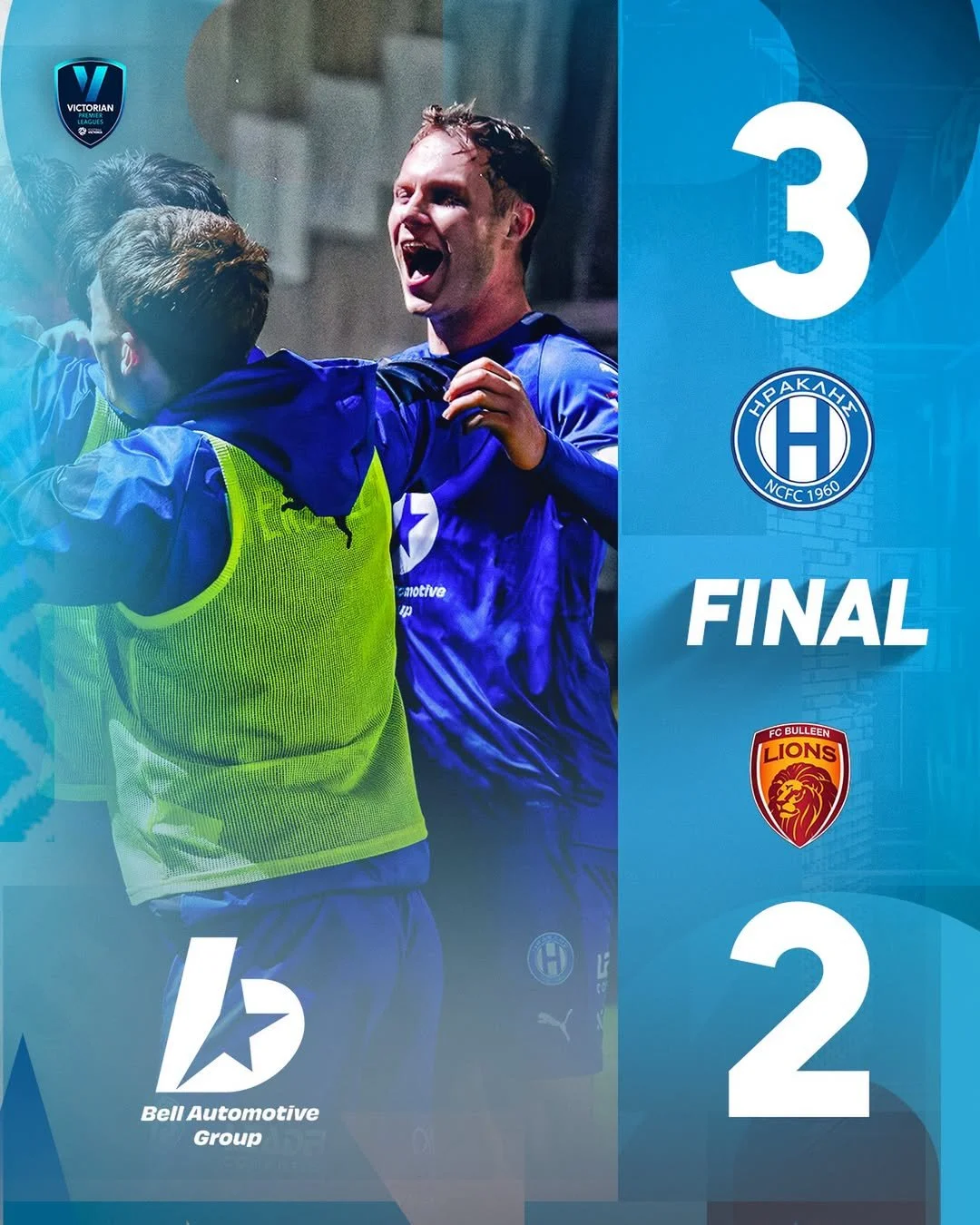
A Very Civilised Kick-Off
Last night, at the very civilised hour of a 7.30pm kick-off, we had our eyes firmly fixed on the livestream from Victoria.
Max coaching. Nick playing.
Northcote City v Bulleen in the VPL finals.
Huge game.
Win and you go through to the Grand Final.
Lose and you stay in VPL for another year.
Do or die. Sudden death. Winner takes all.
No pressure then.
Sitting Still Was Never Going to Happen
I pretended I was going to sit calmly on the couch and watch.
That lasted about five minutes.
I was twitching in my seat. Then I was out of my seat. Back in it. Then up again.
Thankfully our house is open plan, so I could wander around pretending to be useful while still seeing the television.
I folded washing.
I washed dishes.
I replied to a few emails. Hopefully they made sense.
I found jobs.
Anything really, as long as I could still see the screen.
Normally, when I am nervous watching football, I fiddle with my phone.
Couldn't even do that.
Mabel was sleeping over and we had handed her my phone so she could watch mermaids on YouTube Kids while we watched the football.
So there I was.
No phone.
No escape.
Just football.
Elation. Eventually.
Eleven minutes in, Northcote scored.
Except our television chose that exact moment to lag.
Of course it did.
We knew the ball had gone in, but we had no idea who had scored.
“Did Nick score that?”
Nothing.
Then Ken's phone went.
A message from Nick's sister Sarah.
Nick had scored.
Almost immediately another message came through from Ned.
“Did Nick score that?”
YES.
YES.
Angus Taylor had put the cross in and Nick had finished it.
1–0.
Absolute elation, just delivered to us via family text message rather than the livestream.
And suddenly the lagging television was forgiven.
For the moment.
Then the Mood Changed
Half-time came with Northcote still 1–0 up, but things were already getting pretty fiery.
There had been six yellow cards before the players even went down the tunnel.
This was not going to be a quiet second half.
Ten minutes after the restart, Bulleen equalised.
1–1.
And there went the comfortable feeling.
I got up.
I needed a job.
I honestly can't remember whether that was when I folded more washing or attacked something in the kitchen, but I had to move.
Anything that meant I could keep watching without actually sitting there staring at the television. Anyone who knows me knows I take photos at games - it gives me something to do other than stressing about every kick on the field.
Because somehow standing at the sink makes football less stressful.
Obviously.
Elation Again
Five minutes later, Northcote went back in front.
Nick scored again.
2–1.
This time there was no television lag and no confusion.
We saw it.
And then came the knee slide.
Quite possibly the best knee slide ever.
One minute I was stomping around the house trying not to look directly at the television and the next I was cheering a knee slide like my life depended on it.
Football is ridiculous really.
And Back Down We Went
It lasted eleven minutes.
Bulleen equalised again.
2–2.
Seventy-one minutes gone.
Back to despair.
Back out of the chair.
What else could I clean?
What else could I fold?
Were there dishes somewhere that hadn't yet been washed?
At that point I probably would have cleaned the oven if I thought it might help.
It was completely tit for tat.
Northcote ahead.
Bulleen back.
Northcote ahead.
Bulleen back.
And all the while the temperature of the game kept rising.
Perhaps Not So Child Friendly After All
The tackles were coming.
The yellow cards were coming.
The arguing was coming.
Eight yellow cards in total.
Tempers were well and truly frayed.
Then Kotsi was sent off from Max's bench.
At one point the commentators remarked that it was perhaps a good thing the microphones weren't picking everything up from the coaches' box.
I laughed.
At the start of the night I had been delighted about the very civilised 7.30pm kick-off.
7.30pm not so child friendly after all.
Meanwhile, Ken Was Being Strangely Calm
While I was up, down, folding washing, washing dishes and generally behaving like someone incapable of coping with ninety minutes of football, Ken was strangely relaxed.
Well, relatively relaxed.
Every now and then there would be a comment about something Northcote had done wrong, particularly at the back when they gave Bulleen opportunities they really didn't need to give them.
There was also some swearing.
Mostly under his breath.
Mabel was in the room after all.
But Ken is Ken.
He is always looking for more. Always seeing the thing a player could have done better. And when it comes to Nick, he is probably his toughest critic.
Last night though, there wasn't much to complain about.
Nick was everywhere.
He scored two. Set up the winner. Worked. Competed. Got involved in everything.
He was excellent.
And beneath Ken's occasional critique and muffled swearing, you could see just how proud he was.
Very proud.
I was probably showing it a little more obviously.
Eighty-Nine Minutes
By now I was a wreck.
2–2.
A whole season sitting there.
Promotion hopes sitting there.
A Grand Final sitting there.
Then, in the 89th minute, Nick put the cross in.
Angus scored.
3–2.
Absolute bloody elation.
Again.
Angus isn't Tasmanian, but he has his own Tasmanian connection after playing here with Launceston City, so there was still something very familiar about seeing him involved in such a big moment.
This time surely Northcote just had to hang on.
And they did.
Full-time.
Northcote City 3, Bulleen 2.
Into the Grand Final.
“We Played Poorly”
Of course, coaches see football rather differently to people pacing around lounge rooms.
I was messaging Max afterwards.
His assessment?
They played poorly.
Right.
I had just spent nearly two hours going from elation to despair, back to elation, back to despair and finally into something approaching hysteria, and apparently they hadn't played very well.
Maybe it was nerves.
Maybe it was the occasion.
Maybe it was simply the pressure of knowing exactly what was at stake.
But there is something in winning when you aren't playing your best.
They found a way.
Sometimes finals aren't about looking pretty.
Sometimes they are simply about surviving.
The Tasmanian Connection
One of the things I really loved about the livestream was how often Tasmania was mentioned.
The commentators talked about Max.
They talked about South Hobart.
They talked about Nick, Angus and the injured Kieran.
They talked about the players who had come across from Tasmania.
There was something pretty special about hearing Tasmanian footballers and coaches being spoken about like that interstate.
This was finals football.
Time to shine.
And they did.
A Different Level of Intensity
What really struck me watching the game was the tempo.
The speed.
The physicality.
It was immense.
Relentless.
We simply don't see that sort of football week in, week out here.
That isn't criticism of Tasmanian football. It is just the reality of population, depth and the level of competition players are exposed to every week.
Watching Nick out there and Max coaching in that environment made me enormously proud.
Proud of them, obviously.
But also proud to be Tasmanian.
And Now It Gets Even Harder
There isn't much time to enjoy it.
Next week Northcote head to Lakeside.
Melbourne Victory await after winning their elimination final.
And this is where things get interesting.
I was messaging Max afterwards asking exactly what people mean when they talk about Victory's “scholars”.
His answer was that there could be six or seven of them involved. Players called scholars but, as Max put it, basically young first-team players.
Their goalkeeper is 23.
Right then.
So Northcote could potentially be lining up against a Melbourne Victory side containing a decent group of players sitting right underneath their A-League first team.
That is a fairly serious assignment.
But then again, this is finals football.
If you want to go up, these are the games you have to find a way to win.
From the Lounge Room to the Hotel Room
We will be in Launceston next weekend for the Cup.
Another 7.30pm kick-off.
So it will be straight back to the hotel room, livestream onto the television and another evening pretending I can sit quietly and watch Max and Nick in a final.
We all know that isn't going to happen.
Hopefully the hotel walls are thick.
Oh God. There won't even be washing to fold.
And hopefully the microphones at Lakeside aren't too close to Max's coaches' box.
Bring it on.
Super proud.

Nothing Bloody Changes
It is the Thursday after the Hobart Cup and my body still aches from transporting all the gear back to storage.
I still haven’t finished replying to feedback from the Cup or dealing with the issues that came out of it.
Nikki is still editing and uploading photos.
I have stopped yelling at Ken.
My boys have stopped telling me to dial it down.
I am still waking ridiculously early, which probably comes from spending the build-up to the Cup chatting to ChatGPT at all hours for a running weather update.
Is it dangerous? How much rain? What about the wind? Has the forecast changed? What does Saturday look like now? And Sunday?
Yesterday I woke at 2.30am. Today I added another half an hour and made it to 3am. Hopefully I am slowly heading back towards my usual 4am.
Life goes on.
And nothing has bloody changed.
We Saw It With Our Own Eyes
For three days we saw, with our own eyes, just how big football is in Tasmania.
324 teams.
Around 4,000 young footballers.
742 games.
45 playing fields.
Thousands of children playing football across Greater Hobart.
Thousands of parents, grandparents, coaches, managers and supporters.
Ground after ground full of football.
You could drive across Hobart and see kids playing everywhere. Tiny ones on 4v4 pitches, older kids playing 9v9 and 11v11, boys, girls, clubs, schools, visiting teams and local teams.
Football absolutely everywhere.
Sometimes participation figures just become numbers on a page. Someone says football is one of the most played sports in Tasmania and everyone nods, then moves on.
But this was different.
You could actually see it.
You could stand at one ground and look around at hundreds of children playing football, then drive ten minutes down the road and see the same thing happening again.
And again.
And again.
This was not a small event.
It was enormous.
More Than 826,000 Facebook Views
The social media figures tell part of the story too.
Between 12 August and 8 September, Hobart Cup content on Facebook recorded 826,000 views.
More importantly, there were 60,172 viewers.
The page received 53,900 visits and almost 6,900 content interactions.
There were 795 follows, resulting in 728 net new followers.
There were also 112 conversations started.
And more than half of the views, 50.1 per cent, came from people who were not already following the Hobart Cup page.
For a junior football tournament in Tasmania, those numbers are extraordinary.
People were interested.
Families were engaged.
Clubs were engaged.
Players were engaged.
Grandparents were following.
People outside our existing audience were finding the Cup too.
It had an audience, and a substantial one.
The Media Still Missed the Bigger Story
To be fair, 7NEWS did ask me for an interview.
The timing was terrible for me and I could not make it work, so that one is on me.
I also spoke to the ABC.
And, as seems to happen every year, part of the interest was in where the entry money goes.
I find that incredibly frustrating.
The Hobart Cup entry fee is $395 per team for most age groups.
Compare that with major interstate tournaments such as the Gold Coast Cup and Kanga Cup, where team entry is around $1,200 or more.
Yet somehow the question here becomes: where does the money go?
Well, it goes into running the bloody tournament.
Ground hire.
Referees.
Security.
Medals.
Trophies.
Footballs.
Software.
Venue managers.
Staffing.
Equipment.
Set-up.
Pack-down.
Administration.
You do not put 324 teams and around 4,000 children onto football pitches across Greater Hobart for three days for nothing.
And I think sometimes that question completely misses the bigger story.
The bigger story was thousands of children playing football.
The bigger story was families travelling into Hobart.
The bigger story was the economic activity around the city.
The bigger story was a junior sporting event generating 826,000 Facebook views and more than 60,000 viewers in 28 days.
That was the story.
And What About the Risk?
There is another part of this conversation that rarely gets mentioned.
Risk.
I have written about this before because it matters.
The Hobart Cup has become my baby. I love it, I want to keep it and I want to keep growing it.
But that does not mean the risk magically disappears.
Before a ball is kicked, money has already been committed to grounds, medals, trophies, security, software, staff, equipment, set-up and all the rest of it.
Then there is the weather.
Withdrawals.
Last-minute changes.
Unexpected costs.
And sometimes, apparently, a nesting plover.
This year one Masked Lapwing managed to close an entire field at Wentworth Park.
Suddenly a carefully constructed roster had to be changed. Games had to move. Teams had to be contacted. The whole puzzle had to be rebuilt.
Plovergate.
Funny now.
Not especially funny at the time.
And that is the thing about running something like this. You can spend months trying to plan for every possibility and then something completely outside your control happens and somebody still has to fix it.
That is part of the risk too.
The financial risk, obviously.
But also the responsibility.
If the weather turns, if a venue changes, if a field closes, if a team withdraws or if something goes wrong, there is no magic tournament fairy who appears and sorts it out.
You sort it out.
I carry that risk because I believe in the tournament and because I want it to exist.
So when one of the first questions becomes “where does the entry money go?”, I sometimes want to ask a different question.
What about the risk involved in putting the whole thing on in the first place?
At $395 a team for most age groups, compared with around $1,200 or more for some major interstate tournaments, I am very comfortable with the value the Hobart Cup provides.
And I am also very comfortable saying that creating something like this, backing it financially and carrying the responsibility when things go pear-shaped has value too.
Even Football Put Football Up Against Football
Football Tasmania also scheduled its own grand final against the Hobart Cup weekend.
That made very little sense to me given the scale of what was happening across Hobart.
To be fair, Tony Pignata came out to the Hobart Cup, saw it for himself and acknowledged the clash.
He told me they would change it next year and move the grand final back a week.
Good.
That is exactly the sort of practical response football needs more of.
But the broader frustration remains.
Here we had one of the largest junior sporting events in Tasmania happening across Hobart, thousands of children playing and enormous community engagement.
And when the weekend is over, football still goes back to fighting for the same things it has been fighting for forever.
Then Everyone Goes Home
The marquees come down.
The goals get packed away.
The teams go home.
And football goes straight back to fighting for the same things.
Ground space.
Decent lighting.
Change rooms.
Training availability.
Better surfaces.
Enough facilities to actually cater for the number of people who play the game.
And somehow, despite the participation, despite the demand and despite the evidence sitting right in front of everyone, football still seems to be expected to make do.
Politicians See It Too
We had politicians of all persuasions with children involved in the Hobart Cup.
They were there.
They saw it.
They know how many families football touches.
We have had Premiers who like football.
Premiers who profess to support football.
People in government who genuinely enjoy the game.
And then, when the serious decisions are made and the serious money is spent, things happen for other sports.
Football gets another meeting.
Another plan.
Another review.
Another promise.
Another discussion about priorities.
And nothing bloody changes.
This Is Not About Hating AFL
I am not writing this as an anti-AFL piece.
I am tired of every discussion about football funding immediately turning into some ridiculous code war.
That is not the point.
The point is fairness.
The point is proportionality.
The point is that if thousands upon thousands of Tasmanian children are choosing to play football, the infrastructure available to them should bear some reasonable relationship to that participation.
It doesn’t.
And everybody knows it.
When the Stadium Money Is Spent, What Is Left?
There will continue to be arguments about Tasmania’s stadium.
Maybe it will cost $750 million.
Maybe it will cost $1 billion.
Maybe, by the time everything associated with it is included, people will argue the real figure is closer to $2 billion.
You can debate the number forever.
My question is much simpler.
When that money is spent, what will be left for football?
Will there suddenly be decent lights on the grounds where our children train?
Will there be enough pitches?
Will girls get equitable access to good facilities?
Will junior clubs stop scrambling for somewhere to train?
Will players stop being squeezed onto inadequate spaces because there simply isn’t enough capacity?
Will football finally receive investment that reflects the number of Tasmanians actually playing it?
Because I don’t have much confidence that it will.
I Think About Mabel
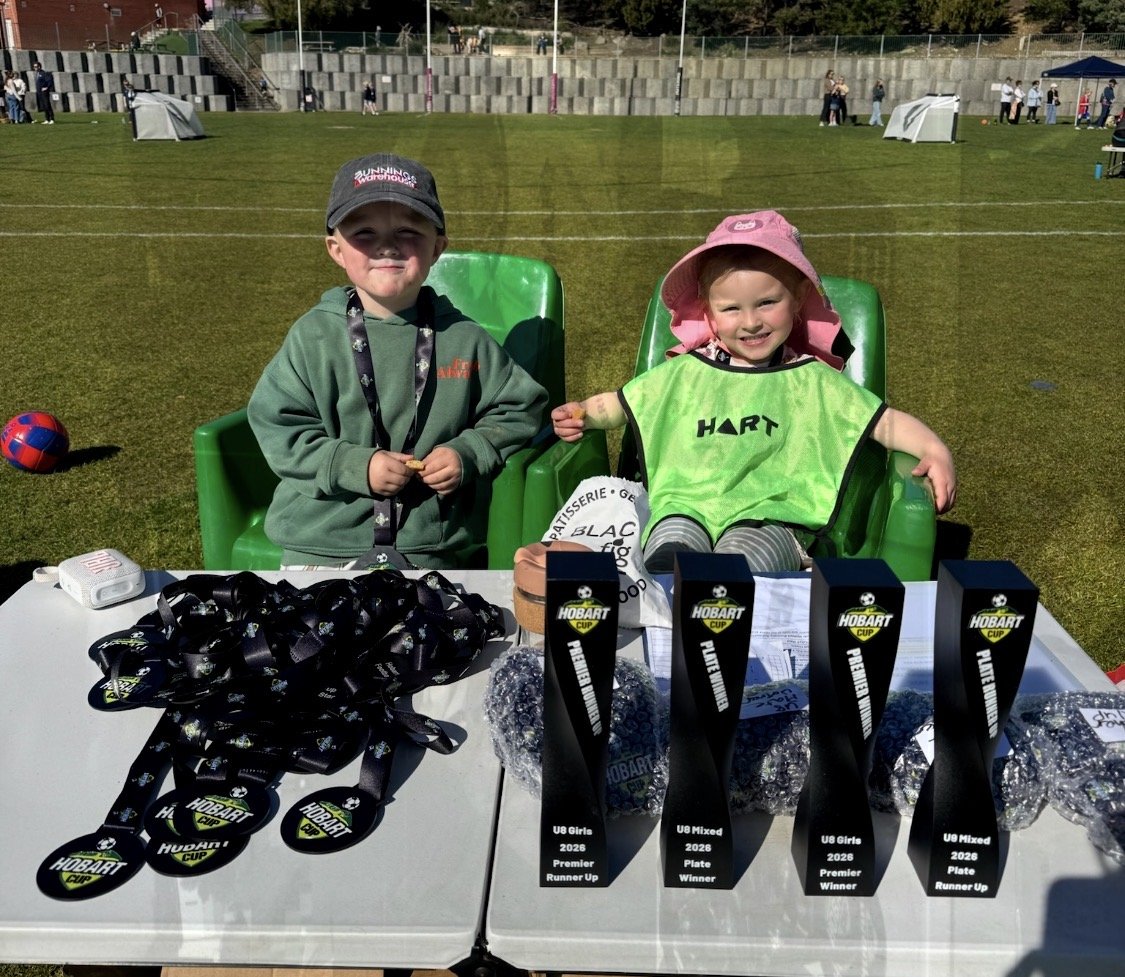
And that is the bit that gets to me.
My granddaughter Mabel is little now. She loves to play soccer. She is three.
She is part of the generation coming through behind all the children we watched at the Hobart Cup.
And I find myself wondering whether, when she is older, she will still be fighting for exactly the same things.
A decent ground.
Decent lights.
Enough space.
A fair share.
Basic sporting infrastructure that should not be considered some extraordinary luxury.
I hope she isn’t.
Because by then I may be too bloody old to keep writing about it.
And with my eyesight, there may come a day when I cannot even stand on the sideline and properly watch her play.
That thought makes this feel very personal.
I do not want another generation of kids inheriting the same argument.
Football Brings Economic Benefit Too
The Hobart Cup brought obvious economic benefit.
Teams travelled.
Families stayed in accommodation.
They bought meals.
They bought coffee.
They bought fuel.
They visited shops.
They spent money across Hobart.
And they did it because their children were playing football.
Sport does not exist in some little bubble separate from the economy.
Events like this bring people into the city and generate activity.
Again, you could see it with your own eyes.
Participation Has To Matter
At some point Tasmania needs to have a serious conversation about how sporting investment is decided.
Not based on which sport has the most political momentum.
Not based on which project makes the biggest announcement.
Not based on which code has historically had the loudest voice.
Participation has to matter.
Community benefit has to matter.
The number of children actually using these facilities every week has to matter.
Because football keeps providing the evidence.
We fill the grounds.
We fill the teams.
We fill the competitions.
We run tournaments with thousands of children.
We generate enormous engagement.
We bring families together.
We bring people into Hobart.
And then we go back to fighting over lights.
That is the absurdity of it.
How Many More Kids?
So yes, I have said all this before.
I will probably say it again.
But after standing there at the Hobart Cup and watching thousands of children playing the game they love, I keep coming back to one question.
How many more kids have to play football before football is finally treated like it matters?
Because right now, after all these years, it still feels like nothing bloody changes.
The Hobart Cup Has Finally Cracked the Media Code

Apparently, all we needed was a plover
I really do not have time to write this.
I am, quite genuinely, ridiculously busy with the Hobart Cup.
There are 324 teams, hundreds of games, venues all over Hobart, referees, volunteers, equipment, parking, weather forecasts, last-minute questions, roster changes and several thousand children about to descend on us.
So naturally, at an hour when sensible people are asleep, I am writing about a plover.
Because sometimes something is just too ridiculous not to write about.
For Years, I Have Been Doing This All Wrong
For years I have apparently been going about football promotion entirely the wrong way.
I thought the secret might be good football.
Perhaps 324 teams.
Maybe more than 4,000 children playing across Hobart over one weekend.
Possibly the hundreds of coaches, referees, volunteers and parents who somehow make the whole thing work.
No.
Turns out what we really needed was a plover.
More specifically, a Masked Lapwing with excellent timing and, judging by events this week, a considerably better understanding of media relations than I do.
Wentworth Park 3 Has a New Tenant
With the Hobart Cup only days away, our feathered friend decided that Wentworth Park 3 looked like an ideal place to raise a family.
Unfortunately, we had also decided that Wentworth Park 3 looked like an ideal place to play football.
The plover won.
As it should.
Masked Lapwings are protected native birds and once we knew there was an active nest on the ground, that was that.
Wentworth Park 3 came out of the Hobart Cup.
Simple.
Except, of course, nothing involving a 324-team football tournament is ever simple.
Just Move the Games Somewhere Else
That sounds easy, doesn't it?
Just move the games.
The problem is that when you are running a tournament of this size, there really isn't a convenient spare football ground sitting somewhere in Hobart waiting for you to discover it on Tuesday.
We had already spent an extraordinary number of hours building the roster.
Every team needs its games.
Different age groups need different sized pitches.
Some teams have travel considerations.
Some venues can handle certain age groups and not others.
Some grounds have lights.
Some don't.
Some have parking problems.
Some have multiple pitches squeezed into every available piece of grass.
And, by the time you get to Cup week, almost every useful bit of football turf in Hobart already has someone's name on it.
So losing Wentworth Park 3 meant sections of the roster had to be pulled apart and rebuilt.
Under-13s.
Under-14s.
Under-15/16s.
Boys.
Girls.
Different venues.
Different kick-off times.
Families needing to know where they are going.
Teams needing enough time to get from one game to another.
It is basically a giant game of Tetris, except the pieces are football teams and if you get it wrong someone's child is expected to be in Howrah and North Hobart at the same time.
Please Don't Panic, We Have Just Run Out of Grass
That was more or less where we found ourselves.
The message to everyone was simple.
Please wait for the revised roster.
Everyone will still play.
We will sort it out.
Behind the scenes, of course, there were a few rather long hours involved. Thanks Emma and Frances.
There is always something with the Hobart Cup.
Weather.
Ground closures.
Lights.
Goals.
Referees.
Parking.
Late withdrawals.
Teams entering under slightly different names.
Someone discovering on Thursday that their coach is unavailable on Saturday morning.
You expect those things.
I will admit that "protected bird has taken possession of one of our pitches" was not particularly high on my contingency planning list.
It probably will be now.
And Then Something Extraordinary Happened
The media became interested.
Really interested.
Not because more than 4,000 young footballers were about to play across Hobart.
Not because hundreds of volunteers were preparing to give up most of their weekend.
Not because organising more than 740 games across three days is, when you stop and think about it, slightly insane.
Not because junior football clubs from across Tasmania were coming together for one enormous weekend of football.
Because of the plover.
Pulse Tasmania ran with:
"Nesting plover upends 320 team soccer cup."
And then ABC Radio got in touch and asked me to talk about it.
At which point I realised something.
We have finally cracked the media code.
Forget the Press Release
This changes everything.
For years football administrators have written media releases.
We have produced statistics.
We have sent photographs.
We have talked about participation numbers, volunteers, pathways, community involvement and the growth of the game.
Apparently this has all been a terrible waste of time.
The answer was wildlife.
Next year I am changing the entire Hobart Cup communications strategy.
No media release.
No carefully prepared tournament preview.
No emails explaining that thousands of children are about to play football all over the city.
We simply need animals.
The 2027 Hobart Cup Media Strategy
Wentworth Park already has the plover.
Excellent start.
Cornelian Bay could perhaps arrange a penguin.
Queens Walk feels like a sulphur-crested cockatoo venue.
Sandown Park might require something slightly more dramatic. A wedge-tailed eagle would certainly give us some coverage, although I suspect there may be additional risk-assessment paperwork involved.
West Hobart needs something endangered, preferably photogenic and with a strong social media following.
If we allocate one native animal to every venue, I am confident that by Friday afternoon we will have television crews stationed around Hobart.
The ABC will be doing live crosses.
Pulse will have a rolling blog.
Someone will launch a petition.
And all 324 football teams can quietly get on with playing their games in the background.
There Is Something Quite Lovely About It
The truth is, underneath all the jokes, I actually love this story.
Because the bird wins.
And it should.
We have spent months organising this tournament and, for a couple of frantic days, one tiny part of it has been turned upside down because a native bird chose exactly the wrong patch of grass, from our point of view, to build a nest.
So we move.
The bird doesn't.
That seems fair enough.
The Hobart Cup will survive.
The roster has been changed.
The children will still play.
Thousands of them.
Wentworth Park 3 can belong to the plover for the weekend.
Less Advertising, More Plovers
What makes me laugh is that this one bird has probably generated more publicity for the Hobart Cup than almost anything we could have manufactured ourselves.
Months of work.
Hundreds of volunteers.
Thousands of players.
More than 1,500 games.
Fourteen venues. 45 grounds.
And the media star of the Hobart Cup is currently sitting on a nest at Wentworth Park.
You couldn't make it up.
So I think we now know the strategy.
Next year:
Less advertising. More plovers.
And if Tasmanian football ever complains again that it cannot get enough media coverage, I have the answer.
Bring a plover.