What Misty Taught Me About Women's Football
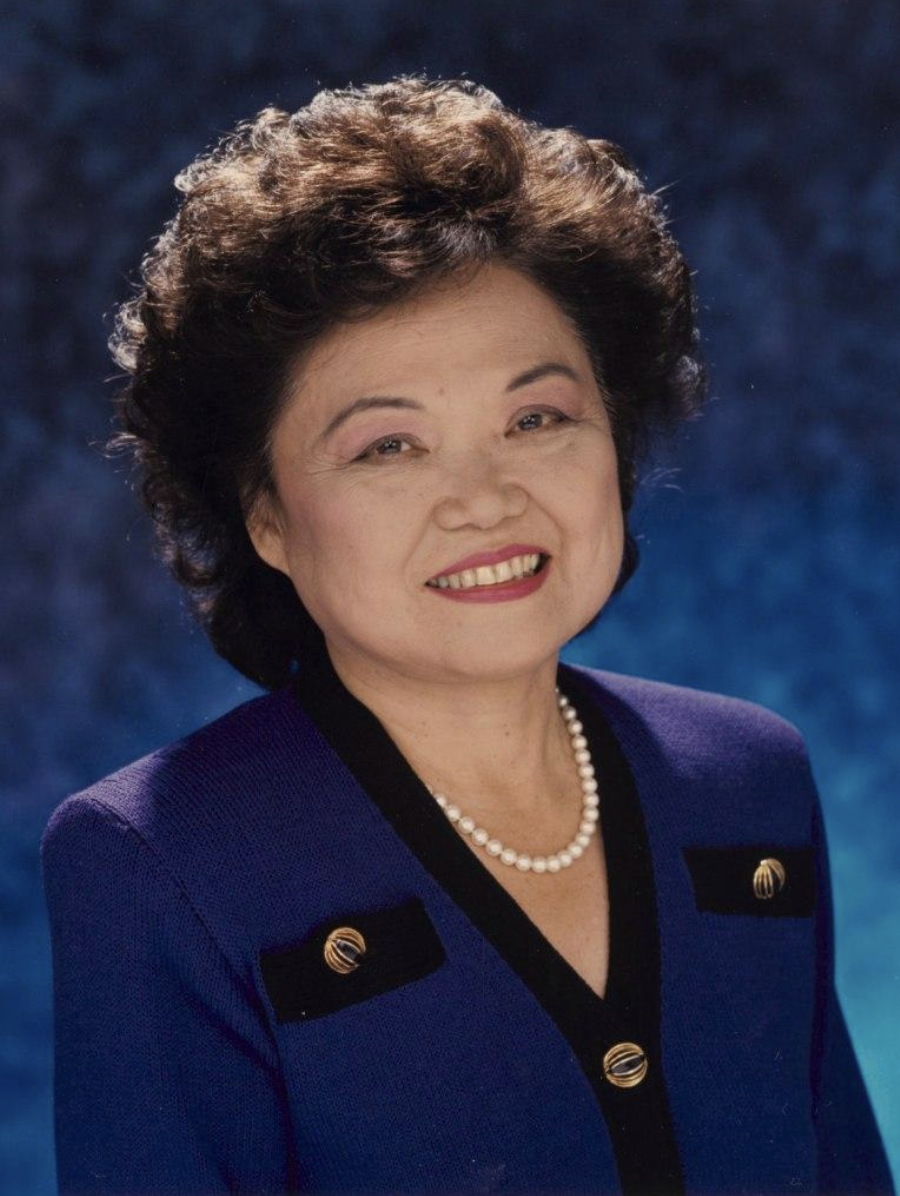
Congresswoman Patsy Mink of Hawaii, one of the driving forces behind Title IX. The landmark 1972 legislation transformed opportunities for millions of women in education and, indirectly, helped reshape women's sport.
One of the things I enjoy most about writing is that I'm still learning.
After my recent article about equal prize money in football, I received exactly what I expected. There was plenty of thoughtful discussion, but also the usual criticism.
Some people argued that the commercial gap between the men's and women's game simply justified the difference in prize money. Others quoted ticket sales and television revenue as though the discussion began and ended with a balance sheet.
Then, one morning, my daughter-in-law Misty called in on her way to school. Misty is a teacher, but before that she played college soccer in the United States.
We were chatting about my article and the reaction it had received when she asked me a simple question.
"Have you ever heard of Title IX?"
I hadn't.
That surprised me.
I've spent more than twenty years immersed in football, yet somehow I'd never come across one of the most influential pieces of legislation in the history of women's sport.
Regular readers will know I'm not exactly first in line to sing America's praises these days. I've been openly critical of plenty of things happening there, particularly under its current political leadership.
But credit should always be given where it is due.
Because what Misty told me sent me down a fascinating rabbit hole.
It Was Never About Football
The first thing I discovered was that Title IX wasn't written to help women's football.
In fact, it never even mentions sport.
Passed by the United States Congress in 1972, Title IX states that no person can be excluded from participation in, denied the benefits of, or discriminated against on the basis of sex in any education program or activity receiving federal funding.
It sounds straightforward now.
Back then, it was revolutionary.
Women were routinely denied opportunities that men took for granted. Some universities limited female enrolments into certain courses. Scholarships overwhelmingly favoured men. Women found themselves excluded from educational opportunities simply because they were women.
One of the driving forces behind the legislation was Congresswoman Patsy Mink of Hawaii, who had herself experienced discrimination after being refused entry to medical school because she was a woman. Alongside education activist Bernice Sandler and others, she helped expose widespread discrimination in American education and fought for equal opportunity.
The goal wasn't to create better female athletes.
It was to ensure women had the same educational opportunities as men.
Sport simply came along with it.
When Opportunity Becomes Reality
As I was reading about Title IX, Misty shared a story from her own life that suddenly brought all of this into focus.
She grew up in the United States during the 1990s, watching players like Mia Hamm, Brandi Chastain and Julie Foudy. They weren't just outstanding footballers. They inspired an entire generation of young girls to believe they belonged in the game.
Then came a moment she has never forgotten.
At 17, in her final year of high school, she travelled with her club team from a small town in the United States on a football tour of England and Wales. Along the way they had the opportunity to play against academies including Manchester United.
"I expected them to be miles ahead of us," she told me.
"They weren't."
At the time, she couldn't understand why. Manchester United was one of the biggest football clubs in the world. Surely their girls' academy would be untouchable.
Looking back now, she understands exactly what she was seeing.
The talent in England was always there.
What wasn't there were the pathways.
While England and many other football nations were still developing opportunities for girls, the United States had already spent decades building them through youth clubs, high school football, college scholarships and the opportunities created by Title IX.
The United States wasn't producing better footballers because girls were more talented.
It was producing better footballers because girls had more opportunities.
That is a very important distinction.
Today the picture looks very different.
England, Spain and many other countries have invested heavily in girls' academies, professional leagues and player pathways. The quality of women's football has risen dramatically because the investment has finally begun to catch up.
The gap wasn't about ability.
It was about opportunity.
Misty also told me about something else that struck her.
In 2024, Kansas City opened the world's first purpose-built stadium for a professional women's sports team. It wasn't shared with a men's club. It wasn't an existing ground adapted for women. It was designed and built from the ground up as the home of the Kansas City Current.
That, perhaps more than anything, symbolises how far the women's game has come.
The United States Women's National Team has also used its platform to push for greater equality, often attracting criticism along the way. Whether people agree with every stance they have taken or not, they have undoubtedly helped move the women's game forward.
Listening to Misty, I realised that what she experienced as a teenager wasn't simply a football tour.
She had unknowingly witnessed the difference that decades of investment can make.
That's the Part We Often Forget
Some people responded to my previous article by quoting ticket sales from the FIFA Men's and Women's World Cups.
Those figures are real.
The men's tournament still generates substantially more revenue.
Nobody sensible disputes that.
But what Title IX taught me is that today's commercial success is often the result of decisions made decades earlier.
The men's game has benefited from well over a century of uninterrupted investment, professional structures, media attention and commercial backing.
Women's football has not.
For decades, in many countries, it wasn't simply underfunded.
It was actively discouraged.
In England, the Football Association banned women's matches from being played on grounds affiliated with its member clubs for fifty years.
You cannot under-invest in something for generations and then point to today's financial results as proof it was never worth investing in.
Markets don't simply exist.
They are built.
Investment Comes Before Success
That's why I continue to believe prize money is about more than rewarding what has already happened.
It also helps shape what happens next.
Investment funds coaching.
Facilities.
Player development.
Professional environments.
Opportunities for the next generation.
If we base every decision solely on today's commercial returns, we risk locking yesterday's inequalities into tomorrow's future.
Title IX demonstrated something incredibly important.
Investment came first.
Commercial success followed.
Not the other way around.
A Lesson Worth Learning
Australia doesn't need to copy everything America does.
Nor should we.
But we should never be too proud to learn from ideas that have worked.
One conversation with Misty taught me something I genuinely didn't know.
It reminded me that sometimes the best conversations aren't the ones where someone tells you you're right.
They're the ones where someone teaches you something new.
The debate about equal prize money will continue, and people will hold different views.
That's healthy.
But before we use today's revenue figures to decide what women's football deserves tomorrow, perhaps we should remember one simple lesson from Title IX.
The market didn't build the opportunity.
The opportunity helped build the market.
For me, that was the biggest lesson of all.