The Underdog Game
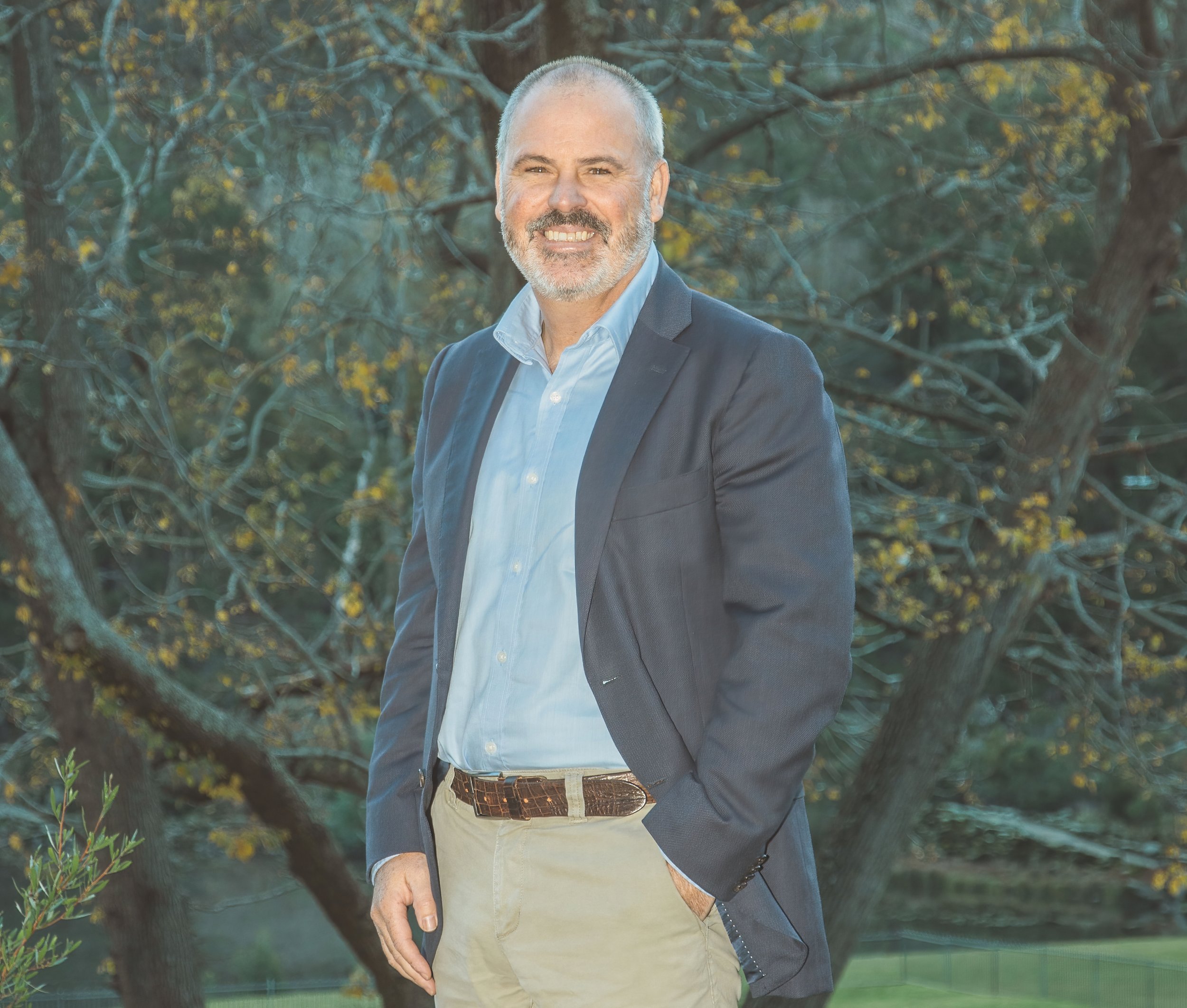
Brian Wightman photographed by Nikki Long
When I first asked Brian Wightman for an interview, he didn't immediately say yes.
In fact, months passed before he agreed.
During that time, he thought carefully about whether he wanted to do it at all. Later he told me his family had encouraged him to say yes.
That hesitation wasn't surprising.
Brian Wightman has spent much of his life speaking for schools, communities, football clubs, union members and constituents.
Talking about himself was another matter.
When the answers eventually arrived, they came with a short note attached.
"Well, here is your scoop, what a tome..."
"There is a lot in there....a life lived pretty full so far."
Then came the sentence that explained his reluctance.
"I am reluctant because it is not about me; I exist to help/assist others, particularly my family. But I hope that this helps someone out there."
A little later he admitted something else.
"It was good for me to write it down."
"It was cathartic."
And then, in a later message, perhaps the most revealing comment of all.
"First time I've spoken about losing my seat and the impact. Hopefully it might help someone out there."
That surprised me.
Brian Wightman has spent decades in public life.
Yet it turned out the public part of the story was only half of it.
Most people know Brian Wightman the politician.
Former Attorney-General.
Former Education Minister.
Former Labor MP.
Some know Brian Wightman the school principal.
Others know Brian Wightman the football coach.
What follows is something different.
The story of a life shaped by family, migration, education, politics, community and football.
And perhaps most of all, the story of what happens after success, failure and finding your way forward again.
Long bus trips, Margaret Thatcher and Parliament
Parliament followed a career in education.
Wightman spent years working with students, families and staff before entering politics.
“Parliament followed a career in education and a conviction that decisions affecting schools, communities, and working people should be informed by lived experience,” he said.
“I had spent years working with students, families, and staff, and they shaped a strong commitment to opportunity for young Tasmanians and regional communities.”
Politics, however, had arrived much earlier.
“There was also a longstanding interest in Labor Party politics and politicians, fueled by dining table debates, Margaret Thatcher, and newspapers and books read on long bus trips during the first iteration of the state league.”
That sentence tells you quite a lot.
Politics at the dinner table.
Books on buses.
Football trips around Tasmania.
The foundations of several careers being built at the same time.
The first law officer
One of the more unusual aspects of Wightman's career was becoming Attorney-General despite coming from education rather than law.
“The Attorney-General is the first law officer, which was an interesting challenge given that my background is in education rather than law.”
“The role spans constitutional and legal responsibilities, from judicial appointments to decisions about state intervention in significant legal matters.”
Looking back now, he remains comfortable with the decisions he made.
“I approached the role with integrity and a strong belief in social justice.”
“The Attorney-General’s role carries significant responsibility, and decisions were always made carefully and conscientiously, even when politically difficult.”
“Like anyone in public life, reflection comes with time, but I remain comfortable with the decisions taken.”
His political career, he notes, was “bookended by particularly difficult decisions that ultimately withstood Federal Court challenge.”
Politics also taught him something about how government actually works.
“Politics taught me that decisions are rarely as simple as they appear from the outside.”
“Cabinet decision-making is grounded in process, informed by advice, and supported by evidence.”
“While ministers ultimately carry responsibility, the public service plays a critical role in providing context and expertise.”
“It also reinforced how important relationships, trust, and credibility are in achieving outcomes.”
The rise of social media
Asked what would feel most different if he stepped back into Parliament today, Wightman did not mention policy.
He mentioned social media.
“The rise of social media would be the biggest change.”
“When I entered Parliament, online political debate was only beginning.”
“Today, constant noise, vitriol, and abuse would require real discipline.”
There was also something else he would change.
“I would also place greater importance on maintaining balance and continuing passions like coaching, camping, and family life, rather than sacrificing them entirely to the job.”
Experience often changes what people value.
Hare-Clark, failure and courage
Tasmania's electoral system has a habit of keeping politicians humble.
“Hare-Clark is a beautiful thing.”
“Preferential voting can be your greatest friend or your worst enemy, and in 2014, it was the latter.”
“I finished fifth in the popular vote, which ordinarily would have secured another term, but the incoming members of the new government swamped me.”
“That’s politics, and long may the system last.”
But election mathematics only tells part of the story.
The personal impact came later.
“Politics was all-consuming, but public office is only one part of my story.”
“It also taught me bravery.”
“To rebuild my career after what I perceived as a fall from grace and a gigantic failure, including letting down my family, who had sacrificed so much, took courage.”
There is honesty in that answer.
And vulnerability.
Particularly from someone who spent much of his life in leadership roles.
The more I read his answers, the more football seemed to reappear at the moments it was needed most.
Before Parliament.
During Parliament.
And afterwards.
Especially afterwards.
When titles disappeared and a different kind of work began.
Then came the line that stayed with me long after I finished reading.
“I have always said that I needed this role far more than Riverside Olympic needed me.”
Not Parliament.
Not government.
A football club.
A community.
A place to belong.
Belfast, Best and a waterlogged football
Long before Parliament there was football.
And before football there was Belfast.
“My late father was from Belfast, Northern Ireland.”
“He loved the Busby Babes and George Best, and my brother and I grew up on a diet of Law, Best, and Charlton, alongside the melancholy surrounding the 1958 Munich Air Disaster and the loss of Duncan Edwards.”
Then came childhood football.
“One of my best mates, Richard Lawson, started playing for Trevallyn Junior Soccer Club, and my brother and I, along with another great mate, Mark Littlechild, decided to go to training after school on the Oval.”
“Richard’s dad, Charlie, was the coach.”
“Our first boots came from Coles Variety Store on the corner of Launceston Mall.”
“The former Tasmanian cricketer and quality footballer, Roger Brown, gave us our first ball, all leather and waterlogged; it was like Christmas!”
That sentence captures an era.
A waterlogged leather football.
Like Christmas.
Football people understand exactly what he means.
“As Richard often reminds us, we beat St Leonards Primary 5–4 in the final that year, with Richie scoring all five goals.”
There is something wonderfully human about the fact he still remembers it.
Not a ministerial decision.
Not an election result.
A childhood football final.
The game becomes unaffordable
One small detail in Wightman's football story feels surprisingly relevant today.
“After Trevallyn Primary School, I took a break from football when the game shifted into clubs, and I played Australian Rules instead.”
“My dad held deep concerns that the move would make the game unaffordable for families.”
Even decades ago, affordability was part of the conversation.
Some debates never entirely disappear.
Coaches who shape lives
Football people rarely forget certain coaches.
Wightman certainly hasn't.
“In those formative years, I would meet Ross Logan, who coached our U/10 Northern representative side.”
“He remains a great friend and supporter.”
Then came Peter Davidson.
“Peter Davidson later brought me back into the game when he coached the U/15 Northern Team in the highly competitive intrastate carnivals.”
“He would later coach us to back-to-back Northern League titles at Riverside Olympic.”
“Davo was ahead of his time as a coach.”
The admiration remains obvious.
Football as belonging
When asked what has kept him involved all these years, the answer wasn't trophies.
It wasn't winning.
It wasn't status.
“Initially, my kids and now, coaching.”
“Beyond that, football builds connection, belonging, and lifelong friendships.”
“I love clubs, clubrooms, and the camaraderie and safe spaces they create.”
Safe spaces.
For many people, football clubs are exactly that.
Places where friendships form.
Where communities gather.
Where people find connection.
Still learning
Football has also become another classroom.
“The accreditation process undertaken with David Smith has assisted me enormously as a coach and keeps me motivated to be the best I can be.”
Then came something unexpected.
“In the future, it will be my significant interest in the role of Artificial Intelligence in professional and semi-professional sports coaching, which I find fascinating.”
From George Best to Artificial Intelligence.
The common thread is curiosity.
The underdog game
At one point I asked what continues to hold him in football.
The answer was immediate.
“Football is an underdog in Tasmania, and I’ve always loved a cause.”
The more I read the interview, the more that sentence seemed to explain the rest of it.
Public education.
Community clubs.
Grassroots football.
Regional Tasmania.
Again and again, Wightman found himself drawn towards causes that needed advocates rather than applause.
Football also filled a gap after school leadership.
“Coaching also mirrors teaching, helping people grow and develop.”
“In my professional life post school leadership, I missed the positive interactions that teaching gave me.”
“Coaching is a close substitute.”
Again and again throughout this interview, teaching and coaching seem inseparable.
Helping people improve.
Helping people grow.
Helping people believe.
Sport is honest
When asked what he enjoys most on the sideline, Wightman again sounded more like a teacher than a tactician.
“Watching players grow in confidence and understanding.”
“Coaching is about helping people believe in themselves, solve problems collectively, and work for each other.”
“Building culture and relationships is probably my greatest strength as a coach.”
Then came perhaps the most memorable sporting quote of the interview.
“Sport is honest.”
“The feedback is immediate, emotions are genuine, and success depends on collective effort.”
“Coaching also allows me to switch off from the complexities of life and lock in for 90 minutes.”
“I remain ultra-competitive, although tempered in recent years, and football scratches that itch.”
Football's biggest challenge
Football's participation numbers continue to grow, yet many within the game believe investment and infrastructure have lagged behind.
Wightman sees history as part of the explanation.
“Football developed differently in Tasmania, particularly through post-war migration linked to projects like the Hydro and the manufacturing industry in George Town.”
“Participation has grown strongly, but infrastructure investment hasn’t kept pace, and the game hasn’t always spoken with a unified voice.”
That issue of unity kept returning.
“Perception matters in politics and sports, with a united and organised message generally achieving better outcomes.”
Then came an observation that football people should probably pay attention to.
“Football has enormous strengths in participation and diversity, but hasn’t always translated those into coordinated advocacy.”
“Too often, clubs compete individually for limited funding rather than uniting around the collective cause.”
This is not someone speculating from the outside.
This is someone who has sat inside government.
When asked whether a stronger collective voice would change outcomes, his answer was simple.
“Absolutely.”
“Unified advocacy matters enormously.”
Tasmania, migration and family
The conversation became deeply personal when discussing family.
“My parents came to Tasmania escaping ‘The Troubles’ in search of opportunity and a better life, and Tasmania provided that in an environment often described as being ‘just like back home’.”
“They came on their own, and none of our extended family followed.”
“That background gave me a deep appreciation for family, community, opportunity, and the importance of education.”
“My parents sacrificed everything for a new life.”
Then came a sentence that says more than most paragraphs ever could.
“My mother has never said goodbye because of the grief associated with leaving Northern Ireland.”
Migration leaves marks that last a lifetime.
Football sat at the centre of that family story too.
“Football was central to that story, with my father heavily involved in clubs including Launceston Rovers, Launceston Juventus, and Trevallyn Junior Soccer Club before my own involvement eventually found a home at Riverside Olympic.”
“I’m now part of an elite program at Devonport City Strikers.”
Football as inheritance.
Football as continuity.
Football as family.
A Tasmanian generation
Asked whether Tasmania's smallness is a strength or limitation, Wightman sees both.
“Smallness can create strong relationships and accessibility, but it can also encourage insularity.”
“The challenge is embracing the strengths without limiting ambition.”
Then he shared something many Tasmanians of a certain generation will recognise immediately.
“I can remember as a young lad feeling a bit ashamed on the mainland when people asked where you were from.”
Many readers will understand exactly what he means.
Those feelings changed.
“Those feelings have changed dramatically because Tasmania is now one of the most talked-about places on the planet!”
Schools, justice and community
The interview repeatedly returned to schools and community.
Asked which role shaped him most, the answer was immediate.
“School leadership, because it provides the clearest understanding of how policy lands in classrooms and communities.”
“Schools are intricate places where every decision affects students, families, and staff in real ways.”
Education remains the thread running through almost every part of Wightman's career.
Teacher.
Principal.
Minister.
Union leader.
Different roles, but ultimately the same objective: helping people learn, develop and find opportunity.
It is perhaps no coincidence that many of the things he values most in coaching are the same things he valued in schools.
He spoke about the realities facing educators.
“People often underestimate the complexity of modern schools and the demands placed on educators.”
“Schools now deal with wellbeing, mental health, trauma, disadvantage, and community expectations alongside learning.”
He was also direct about bureaucracy.
“The accountability measures placed upon schools and educators are overly complex, with no clear purpose, because they don’t measure improvement when they should.”
“Let teachers teach and inform parents/guardians/carers how their kids are tracking academically and socially.”
“The best data in schools is qualitative, and it remains difficult yet not impossible to collect and analyse.”
His views on justice reflected similar themes.
“Not every decision should be driven by politics or public pressure.”
“While the Attorney-General sits within Cabinet, the office also carries a responsibility to uphold the rule of law and proper legal process.”
“Maintaining that separation is essential.”
Then came advice from a former Chief Justice.
“If you don’t agree with the law, change it.”
“I did that, and although laws don’t stop people from committing crimes, they allow you to send a message to our community about what society is not willing to accept.”
Rebuilding at Riverside
Wightman describes the years after politics not as an ending, but as a rebuilding.
“I learned that skills are transferable.”
“Post politics, I became a trusted voice on mergers, club constitutions and bylaws, processes and procedures, and setting them up for success when funding eventually arrives.”
Football had helped shape his early life.
It was also there during the next chapter.
“Setting clubs up off the field is essential for success on the field.”
The redevelopment at Riverside Olympic remains a source of pride.
“The redevelopment at Riverside Olympic was legacy leadership, underpinned by a highly experienced and strategically recruited skills-based board of governance.”
Standing and kindness
Late in the interview, the conversation shifted towards values.
“Preparation, fairness, and relationships.”
“Listening carefully, understanding context, and treating people respectfully have always mattered to me.”
Then came perhaps the simplest advice in the entire interview.
“Your standing matters particularly in a small town; protect it, enhance it.”
“Kindness counts.”
Simple words.
Hard-earned ones.
What remains
I finished by asking what a good day looks like now.
“Time with family.”
“Talking with my wife Katie and the twins about school, ferociously advocating for public education, having meaningful conversations, helping people solve problems, coaching, analysing football, and getting outdoors.”
“Balance and connection matter more with age.”
Then one final detail.
“I still write with a good pen every day, and I could not live without music or bottomless cups of Irish Breakfast tea.”
And perhaps that is where this story should end.
Because despite the titles, the elections and the public life, what emerges from this interview is not simply a former politician.
A teacher.
A coach.
A son of Northern Irish migrants.
A husband and father.
A community builder.
A football person.
And someone who was willing, perhaps reluctantly, to tell his story in the hope that it might help somebody else.