A Headquarters for Football Tasmania, not a home for Football
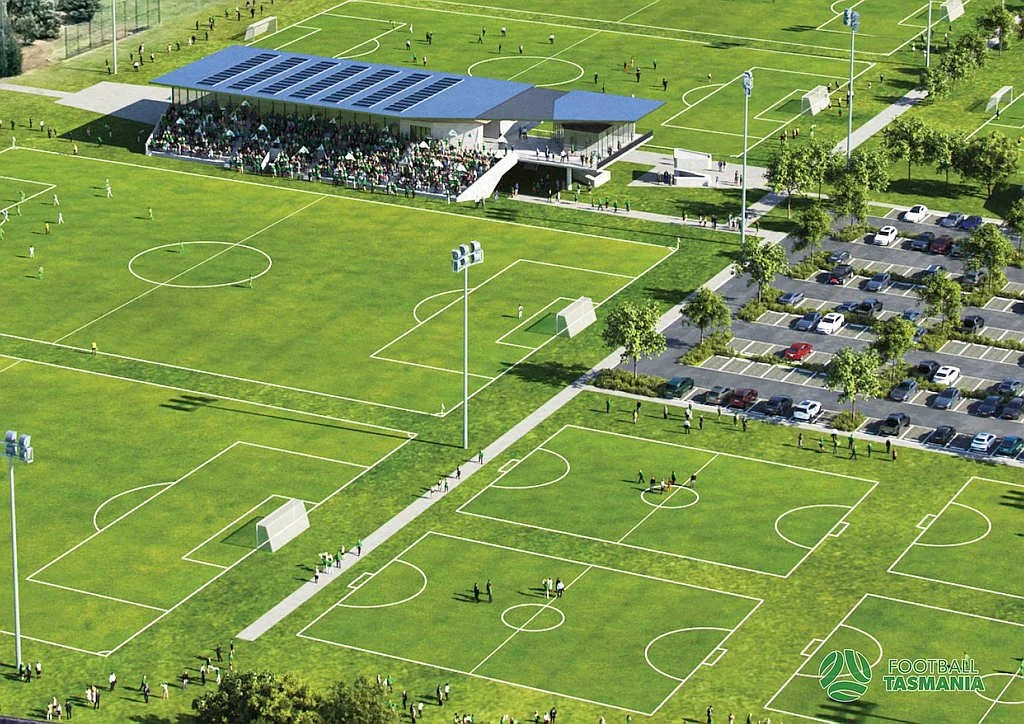
Image of the potential “Home of Football - Wentworth Park”
This is a long post, but I couldn’t leave anything out and I suspect I’ll be writing much more on this topic because it has been front and centre through almost 20 years in Tasmanian football.
I’ve watched the “Home of Football” idea return in Tasmanian football again and again.
It comes back dressed in different language, pinned to different sites, launched with optimism, and then quietly parked while the game continues on without it.
At various points the idea has floated around Cambridge. Then the Showgrounds. Now Wentworth Park.
Each time the pitch is similar. A central home. A showcase facility. The headquarters. The solution.
But here’s the bear poke.
Before we ask where this Home of Football should be built, we should ask a more confronting question.
Do we even want one?
And if we build it, who exactly is it for?
Because what is being proposed does not feel like a home for Tasmanian football.
It feels like a headquarters for Football Tasmania.
I’ve watched grassroots football fund itself
I’m not theorising here. I’ve lived it.
I’ve watched clubs fund goals, nets and equipment through sausage sizzles and canteens. I’ve seen volunteers unlock sheds, line-mark pitches, set up fields, manage rosters, referee shortages, discipline issues, wet-weather chaos and still turn up the next week.
That’s the reality of Tasmanian football.
It is bottom-up funded, volunteer-powered, and community-owned.
So when a proposal arrives that shifts the centre of football away from clubs and into a central facility, it deserves more than excitement. It deserves scrutiny.
Because in Tasmania, home grounds aren’t a tradition.
They’re a survival mechanism.
The Home of Football: a recurring Tasmanian storyline
The story is familiar.
A vision is announced. Plans are drawn. People talk about legacy and transformation. Clubs are told this is what football needs.
Then time passes.
Then a new version appears somewhere else.
The sites change, Cambridge, the Showgrounds, Wentworth Park. The storyline stays the same.
This isn’t written to mock the idea. It’s written because every time this proposal returns, it carries a hidden assumption.
That Tasmanian football needs one central home.
That assumption deserves scrutiny.
Grassroots football already has homes
Tasmania already has homes of football.
Hundreds of them.
They are the club grounds where kids play every weekend. They are the school ovals where parents stand with coffee in hand. They are the local venues where volunteers run canteens to buy the next set of nets, or replace a goal frame, or pay for training gear.
This is what a bottom-up funded sport looks like.
Clubs don’t just play football at their grounds.
They survive there.
Home games pay for:
canteen income and fundraising
equipment replacement
balls, bibs, cones, nets
training gear and goalkeeper gloves
referee payments
first aid supplies
the gradual improvements that keep a club alive
For many clubs, the difference between replacing nets or not comes down to a handful of home match canteens.
That is the economics of Tasmanian football.
Clubs want to play at home
Clubs want to play at home.
Schools want to play at home.
Junior associations want to play local.
Parents want to play local.
In a small state, the “home” part isn’t sentimental. It’s logistical. It’s cultural. It’s economic.
And it’s not just clubs.
Junior football is built for decentralisation.
CRJFA has over 400 teams. Those games are concentrated into Saturday mornings. Not spread across the whole weekend. Not spread across the whole day.
And importantly, CRJFA matches are 9-a-side at most.
Junior football is designed to be played across multiple club and school venues at once, close to families and communities.
So the question becomes obvious.
If every team wanted to play their match at one central Home of Football between 9am and 1pm on a Saturday morning, what would that even look like?
I know this because it was suggested at the time that junior games could be played there. It was never going to work.
The answer is, it would look impossible.
Grassroots football cannot be centralised without breaking the community model that holds it up.
Two models: centralised football vs distributed football
This debate is often framed like a simple facilities question.
Where should the Home of Football go?
But that’s not what it really is.
This is a debate about two different models of football.
Model A: Centralised football
One major venue.
Central programs.
Central showcases.
Central finals.
Centralised power, over time, whether intended or not.
Model B: Distributed football
Many upgraded local venues.
Clubs remain the centre.
Communities stay attached to their grounds.
Investment is spread across the system, not concentrated at the top.
The more centralised the infrastructure becomes, the more centralised the sport becomes.
And in a small state, centralisation has consequences.
If Football Tasmania did its core job, a Home of Football wouldn’t be necessary
Here’s the sharper point.
If Football Tasmania focused on what only a governing body can do properly, then a Home of Football becomes an optional supplement, not a defining project.
Those core functions are straightforward.
competitions that work and are stable
referee frameworks that protect, retain and develop officials
coach education that supports clubs across the state
governance that is transparent and trustworthy
promotion of the game
genuine club support and capability-building
That is the job.
But when Football Tasmania expands into areas that should belong to clubs, especially player development, the centre of gravity shifts.
Which leads to a bigger issue.
Mission creep: when the governing body becomes a club
This is where we need a concept Tasmanian football rarely names.
Mission creep.
Mission creep is when an organisation gradually expands beyond its core purpose, usually in ways that sound reasonable at the time.
We’ll just add this program.
We’ll just fill this gap.
We’ll just deliver this directly.
Then, slowly, the organisation becomes something else.
In football terms, it looks like this.
The governing body stops focusing on governing and starts delivering football itself.
It becomes a program provider.
It begins operating like a club or an academy.
And the moment a governing body becomes a delivery machine, it starts needing:
facilities
grounds
central venues
control over scheduling and programming
“pathways” that sit above clubs rather than within them
That is when the Home of Football stops being about serving football.
It becomes a base of operations.
And that changes the relationship between Football Tasmania and clubs.
Instead of enabling clubs, the system risks competing with them.
Who benefits most from a Home of Football?
This is the uncomfortable question we avoid.
A Home of Football benefits:
Football Tasmania’s programs
centralised development pathways
administration and HQ functions
showcase events and visiting content
finals hosted centrally
high performance needs
Those things might be worthwhile.
But who benefits least?
volunteer clubs trying to keep the lights on
junior associations who need distributed venues
communities that depend on local grounds
parents who rely on convenience and familiarity
clubs whose budgets rely on home games and canteens
That imbalance matters, because it reveals the risk.
A Home of Football may strengthen the organisation while weakening the clubs that fund the game.
There is also another uncomfortable reality. A Home of Football has to sit somewhere. If it is built at the home ground of one club, then it effectively becomes that club’s home ground, with permanent advantages attached. Hosting, familiarity, prestige, access and association with state programs would naturally concentrate around that venue. In a small state, that matters. If we are going to centralise football infrastructure, we should at least be honest about which clubs benefit structurally and which clubs are asked to subsidise it from the outside.
Finals would move away from clubs, permanently
A Home of Football doesn’t just create a venue.
It changes the incentives and economics of football.
Because a central venue has a natural pull. It becomes the default.
Finals, representative programs, showcases, coach education blocks.
Slowly, clubs stop hosting the big days.
And that has consequences.
If finals are moved permanently to a central Football Tasmania venue, it means:
fewer home finals, even when clubs earn them
loss of finals-day canteen income
loss of fundraising events
loss of community pride
reduced incentive to invest in club facilities
A finals series should reward clubs, not relocate them.
Finals are not where football lives.
But they are where clubs earn money, build identity, and feel seen.
Centralising them shifts money and status away from clubs and toward the governing body.
That might not be the intention.
But it will be the outcome.
We’re already seeing how centralised thinking can distort what finals are meant to be. The recent move toward tendering for finals venues may sound fair on paper, but in practice it can produce outcomes that make little sense for the football community. Last year the Lakoseljac Cup Final was hosted in Devonport, despite two southern men’s teams contesting it. Supporters were expected to travel, the crowd was small and the atmosphere suffered. It became an inconvenience rather than a celebration. It didn’t look great as a showcase, particularly with political figures present to “open facilities” in front of a very modest crowd. Finals are supposed to reward clubs and communities. When they become a travelling roadshow, they start serving optics more than football.
“But we need it for visiting teams and A-League matches”
There is always another argument for a central venue.
We need it for visiting teams, they say.
A-League matches.
Showcase events.
Interstate content.
But let’s be honest about what this means in Tasmania.
We are not building for the football we have.
We are building for the football we imagine.
We also need to be clear about who pays for this visibility. Tasmania pays for content. Governments subsidise it. We pay for teams to come. We pay to stage the spectacle.
It might be exciting.
But it does not change the daily reality of the game.
We are a very, very long way from having an A-League team.
So who are we building this for, and what are we not building while we chase that future?
What problem are we actually trying to solve?
This is the question we keep skipping.
If the problem is coach education, a hub can help.
If the problem is referee development, a hub can help.
If the problem is lack of synthetic capacity, a hub may help.
But if the problem is:
clubs with no lights
change rooms not fit for purpose
toilets and storage missing
volunteer burnout
local grounds struggling
clubs fundraising week to week
Then a Home of Football does not solve it.
It might even worsen it, because it draws attention and investment away from the places football already lives.
The funding problem: one ribbon cutting or many real upgrades
Here is the question that should keep clubs awake.
If government finds major funding for football, where does it go?
Into one showcase facility.
Or into the dozens of club and school venues that already exist.
Because lighting upgrades are not glamorous.
Toilets are not glamorous.
Change rooms are not glamorous.
Storage and fencing are not glamorous.
But they are what football needs.
A new headquarters doesn’t put lights on local grounds.
A new headquarters doesn’t upgrade community change rooms.
A new headquarters doesn’t solve the weekly workload carried by volunteers trying to keep local venues functional.
Tasmania doesn’t need one great home.
It needs many better homes.
So what should we be pushing for?
If we want a real football infrastructure legacy, here is what would actually transform Tasmanian football.
lights at more community grounds
better change rooms and toilets
storage, fencing, safety and access upgrades
synthetic upgrades where they make local sense
shared facility funding across regions
partnership models that reduce volunteer burden
investment that strengthens clubs rather than bypassing them
This is not as politically exciting as a single mega project.
But it is far more powerful.
Because it strengthens the foundation.
And in Tasmania, football is foundation-first.
The bear poke question
So I’ll end with this.
If the government has funding for football, should it be spent on a single Home of Football?
Or should it be used to upgrade the many homes of football we already have?
Because if football funding builds one headquarters, the organisation wins.
If football funding upgrades local grounds, the game wins.
And in a small state, that difference matters.