Another One Bites the Dust: What Happens to Western United Now?
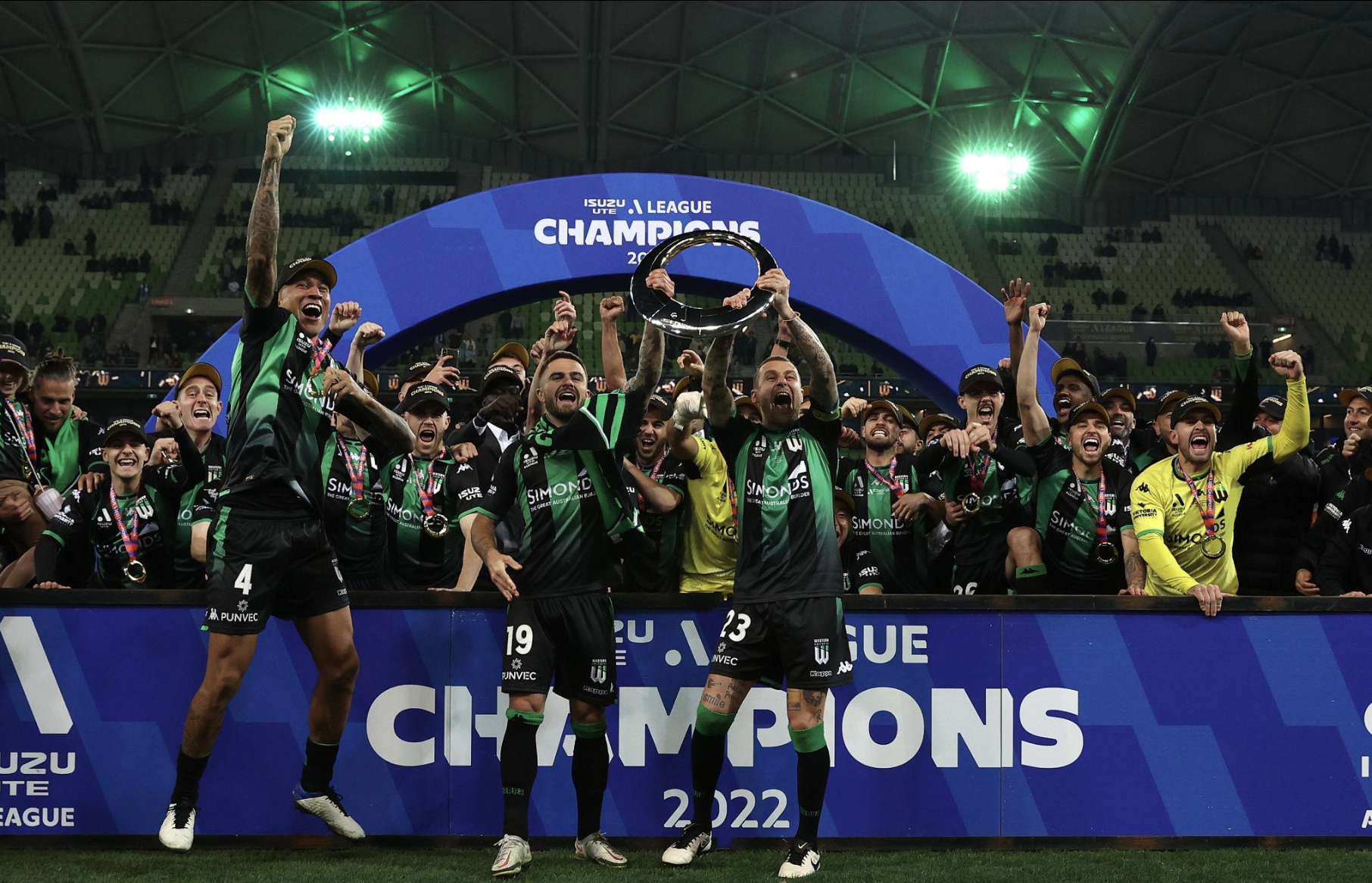
There is something desperately sad about watching a football club fall apart.
On Monday, the Australian Professional Leagues terminated Western United's Club Participation Agreement.
Seven years after entering the A-League, Western United is out.
For now, anyway.
The club insists this should not be the end. It wants new custodians, new investment and ultimately a return to the A-League in 2027/28.
I genuinely hope it finds a way.
Because this isn't just a story about owners, licences, participation agreements and millions of dollars.
There are people underneath all of that.
And there is still a football club underneath it too.
This one is a little personal
My son Max spent several years coaching at Western United.
Through Max, we developed a very good relationship with the club. He made some wonderful friends there and worked with excellent coaches, staff and some very talented young footballers.
So there is no pleasure whatsoever for me in seeing Western United in this position.
I've seen the other side of it.
I've seen the people.
And even since Max left Western, I've continued seeing a little bit of the club because Western United's senior academy team plays in the same VPL1 competition in Melbourne as Northcote City, where Max now coaches.
I've watched Western play Northcote.
I've watched those young players.
There are some very good footballers there.
Which is why one of the biggest questions for me isn't simply what happens to Western United's A-League ambitions.
What happens to all of them?
Another one bites the dust
Western United joins an uncomfortable list.
New Zealand Knights.
North Queensland Fury.
Gold Coast United.
And now Western United has lost its place in the A-League.
Western entered the competition in 2019.
Three seasons later, it was Champion of Australia.
Four years after lifting that trophy, its participation agreement has been terminated.
That is an extraordinary rise and fall.
Of course, Western United had serious problems of its own.
There were well-publicised financial difficulties, including a reported $15.5 million tax debt, and the club failed to satisfy the mandatory licensing requirements required for an A-League return.
So let's not pretend this was simply something done to Western United.
Things went badly wrong.
But after 21 seasons of the A-League, when clubs continue to lose enormous amounts of money and clubs periodically disappear, surely we're entitled to ask whether every failure can be blamed entirely on the individual club.
At some point we have to examine the model.
And now the stadium is gone too
This week brought another blow.
Wyndham City Council has terminated its Development Agreement with Western Melbourne Group for the proposed Wyndham Stadium Precinct.
That matters.
Because the stadium wasn't some little addition to the original Western Melbourne proposal.
It was central to it.
When Western Melbourne was selected for A-League expansion in 2018, one of the great selling points was the promise of a privately funded football-specific stadium.
That was exciting.
A club with its own home.
A football stadium in Melbourne's rapidly growing west.
A permanent base from which to build an identity.
Seven years later, the A-League participation agreement is gone.
And now the stadium development agreement is gone too.
The existing Ironbark Fields football facility is different. It is owned by Wyndham City Council and remains there.
But the grand stadium vision that helped sell the Western Melbourne dream is effectively gone under the existing agreement.
That's quite some distance from what Australian football thought it was buying in 2018.
But Western United hasn't completely disappeared
And this is where the story gets really interesting.
Because Western United still has football teams.
Its academy has been substantial.
There are junior teams.
There is an Under 23 team.
And there is a senior academy team playing in VPL1.
I know that team a little because I've watched them.
Northcote City and Western United play in the same league.
When I watch Western's youngsters play against Max's Northcote side, I'm not watching a failed corporate entity.
I'm watching footballers.
Young, ambitious, talented footballers trying to make their way in the game.
They don't disappear because somebody terminates a participation agreement.
So what happens to them?
As I write this, Football Victoria has not publicly provided a definitive answer about the future status of Western United's VPL1 and academy teams following the termination of the A-League agreement.
And that creates a fascinating situation.
What exactly is Western United now?
Think about it.
No A-League team.
No current Club Participation Agreement.
No longer the stadium development agreement that formed such a large part of the original vision.
But potentially still:
A name.
A badge.
A football facility it uses.
Supporters.
Coaches.
An academy.
Junior teams.
An Under 23 team.
A senior team playing competitive football in Victoria.
That sounds suspiciously like a football club to me.
And perhaps this is where Australian football's strange structure becomes most obvious.
Football Victoria has previously said participation by A-League clubs in its competitions has not historically been automatically tied to their A-League licence, although those arrangements were under review.
So perhaps Western United can continue.
But presumably it would need an entity capable of satisfying the same financial, governance, insurance and competition requirements expected of other Victorian clubs.
And then comes the really interesting question.
Could Western United simply become a normal Victorian football club?
Maybe the franchise disappears and the football club survives
I'd quite like that.
Strip away the A-League licence.
Strip away the grand expansion promises.
Forget about returning to the A-League for a moment.
Let Western United play football.
Keep developing those kids.
Keep the senior team.
Find sponsors.
Build membership.
Strengthen the relationship with Melbourne's west.
Play Northcote.
Play Bulleen.
Play Brunswick.
Win games.
Lose games.
Build rivalries.
Create history.
Become part of the community.
In other words, become the sort of football club Australian football already has hundreds of.
Perhaps something genuinely sustainable could grow from that.
But then we arrive at the great Australian football contradiction.
Western United could theoretically become a wonderful football club.
It could win VPL1.
It could climb Victoria's football pyramid.
It could ultimately become one of the strongest clubs beneath the professional game.
But it could never win its way back into the A-League.
For that it needs another mechanism entirely.
Owners.
Investment.
Approval.
A participation agreement.
Money.
Lots of it.
Welcome to Australian football.
Did we build clubs or franchises?
This is the uncomfortable question Western United leaves behind.
Australia already had football clubs when the A-League was created.
Lots of them.
Some more than a century old.
They had supporters.
Juniors.
Clubrooms.
Volunteers.
Rivalries.
History.
Generations of families attached to them.
The professional competition largely chose a different model.
New entities representing geographical markets.
There were understandable reasons for doing that.
But perhaps Australian football underestimated something fundamental about our game.
You cannot manufacture belonging.
You can create a logo.
You can design a shirt.
You can identify a catchment containing hundreds of thousands of people.
You can buy players.
You can even win a Championship.
But creating a football club that people feel belongs to them is different.
That takes time.
Sometimes generations.
Australia doesn't have a football problem
That's what makes all of this so frustrating.
Football itself isn't struggling.
Come to Tasmania in a few weeks and have a look.
We are currently putting together the Hobart Cup.
More than 4,000 kids.
Hundreds of teams.
Families travelling from around the state.
Coaches.
Parents.
Volunteers.
Football everywhere.
And that's one tournament in one small Australian state.
Multiply that across the country.
Australia has an enormous football community.
Kids play it.
Parents spend thousands on it.
Volunteers give their lives to it.
Australians get up in the middle of the night to watch it being played in England and Europe.
We don't have a football participation problem.
We have a conversion problem.
The A-League has never managed to convert enough of those football people into people who feel they cannot live without the A-League.
People who attend.
People who buy memberships.
People who watch.
And increasingly importantly, people who subscribe.
Subscriptions matter
Professional sport is no longer simply about the crowd through the gate.
Eyeballs matter.
Broadcast audiences matter.
Streaming matters.
Subscriptions matter.
The APL has secured another three-year agreement with Paramount. That's important and positive for the competition.
But ultimately broadcasters pay for audiences.
And that brings me, somewhat reluctantly, home.
Tasmania and the licence Western got
Forgive me a little Tasmanian bitterness here.
Western United came out of the same 2018 A-League expansion process in which Tasmania was trying to get into the competition.
We missed out.
Western Melbourne survived the process and ultimately got a licence.
And then, just to add insult to injury, they turned up wearing green.
Green!
Seriously?
We had spent years dreaming about a green Tasmanian team representing our island in the national competition.
Western Melbourne got the licence.
Then they pinched the bloody colour.
Grrrrr.
But that is where the bitterness ends.
Because Max subsequently went to work there.
We got to know people at Western United.
They became friends.
I watched what they were trying to build.
And I feel desperately sorry for them now.
They didn't decide Tasmania shouldn't get an A-League licence.
They were simply football people trying to make their club work.
But what has happened to Western United has fundamentally changed the way I think about Tasmania.
I used to desperately want Tasmania in the A-League
I don't anymore.
There. I've said it.
Not under this model.
I don't think it would work.
Tasmania has a population of a little over half a million people spread across an entire state.
Could we get a fantastic crowd for the first game?
Absolutely.
Could the first season create enormous excitement?
I think it could.
But what happens in year three?
Year five?
Year ten?
How many memberships can we sustain?
How much corporate sponsorship can our economy provide?
How many Tasmanians will regularly watch?
And crucially, how many additional streaming subscriptions would a Tasmanian team generate?
Because Tasmania's small population matters when the economics of professional sport increasingly depend on broadcast audiences.
Then somebody has to pay for everything else.
Players.
Coaches.
Administration.
Travel.
Facilities.
Marketing.
Academies.
And whatever gap remains between income and expenditure.
Bring on the white knight
Maybe he or she exists.
Perhaps one morning our Tasmanian white knight will gallop over the hill on a magnificent steed carrying an enormous chequebook and announce:
"Don't worry everyone. I'm quite happy to contribute bloody millions of dollars every year to keep this thing going."
Wonderful.
I'll wave as they ride past.
But let's call that what it is.
It isn't a sustainable business model.
It's benefaction.
Western United should make every prospective Tasmanian investor think very carefully.
Western wasn't operating in a market of a little over half a million people.
It was sitting in Melbourne's rapidly growing west.
It had an enormous football-playing population around it.
It had an academy.
It had men's and women's professional teams.
It won the bloody Championship.
And seven years after entering the competition, its A-League participation agreement is gone.
Maybe Tasmania dodged a bullet
I never thought I'd write those words.
When Tasmania missed out in 2018, I thought we'd been denied an enormous opportunity.
Eight years later, I wonder whether we were lucky.
Western Melbourne got through.
Tasmania didn't.
Western got the licence.
Western got the green.
Western got its Championship.
And now Western has lost its place in the A-League.
Meanwhile Tasmania still has football.
We have clubs.
Juniors.
Volunteers.
Coaches.
Competitions.
History.
Thousands of people playing every weekend.
So perhaps we should stop asking:
When will Tasmania finally get an A-League licence?
And ask something else.
If somebody really did have the millions required to establish and continually subsidise a Tasmanian A-League club, where could those millions do the most good for Tasmanian football?
I'm no longer convinced the answer is the A-League.
I hope Western survives
None of this means I want Western United to disappear.
Quite the opposite.
I've watched those young players.
Max has friends there.
Our family has friends there.
There are good football people whose livelihoods and dreams have been caught up in something far bigger than them.
Western United says this should be a reset rather than the end.
I hope they're right.
Maybe somebody does come along.
Maybe Western eventually returns to the A-League.
But perhaps there is another future too.
Maybe the professional franchise disappears but the football club underneath it refuses to die.
Maybe those young players keep playing.
Maybe the academy survives.
Maybe Western United becomes a genuine part of the Victorian football pyramid.
And maybe, over time, it builds something from the ground up rather than the top down.
There would be something rather wonderful about that.
It would also leave Australian football with one painfully obvious question.
If Western United can survive, develop players, build a community, win football matches and climb a football pyramid...
why shouldn't it be able to win its way back to the top?
Perhaps that's the question this whole sorry Western United story ultimately leaves us with.
Because Western United may have lost its place in the A-League.
But football in Melbourne's west hasn't disappeared.
The kids haven't disappeared.
The coaches haven't disappeared.
The supporters haven't disappeared.
The game certainly hasn't disappeared.
And perhaps that tells us where Australian football should have been looking all along.
Build football clubs people belong to.
Then build a system that gives them somewhere to go.