At a Glacial Pace
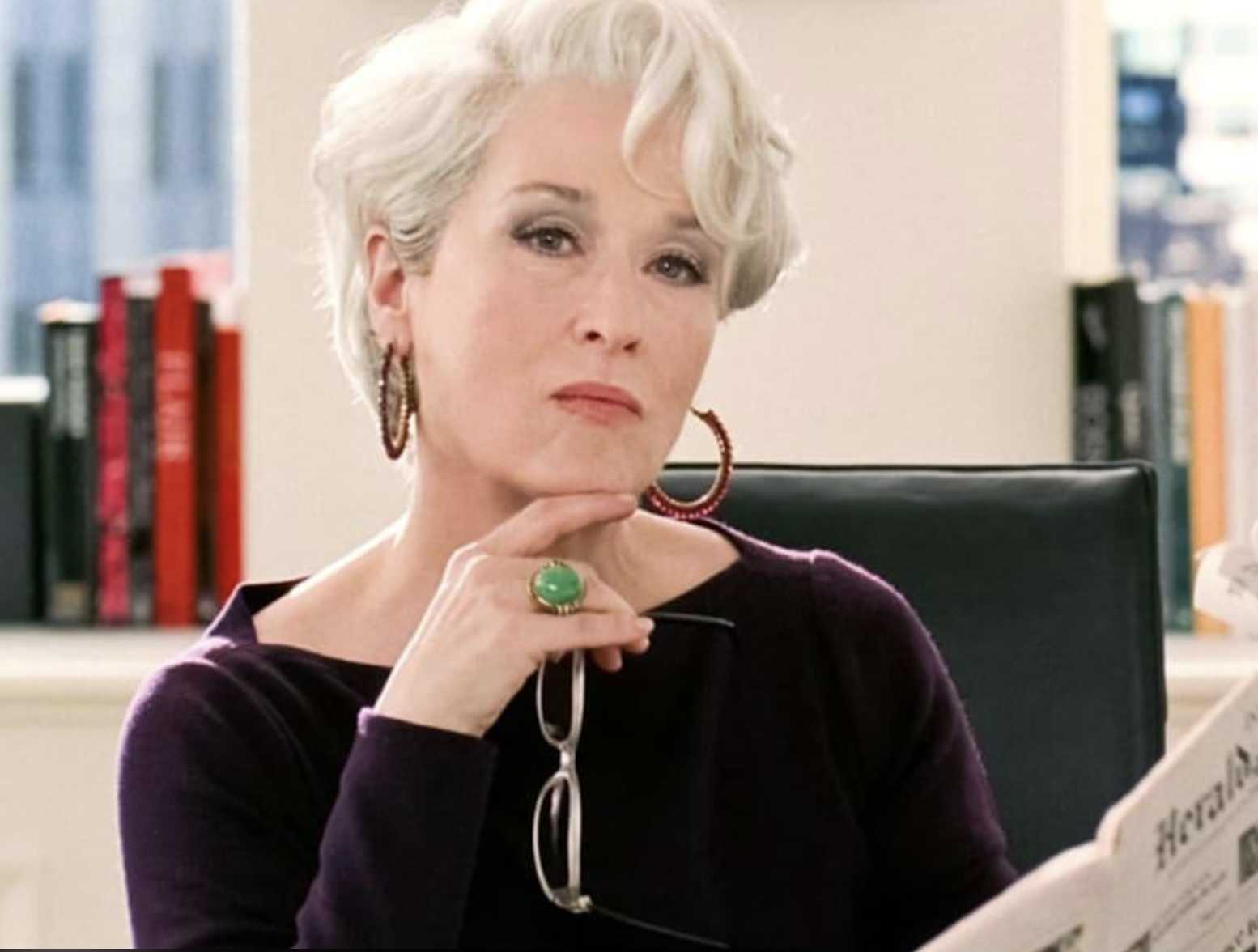
Meryl Streep as Miranda Priestly - The Devil Wears Prada
The Slow Politics of Football Change
Votes, Alliances and the Politics of Football
In Part One, I explained who holds the votes in the Football Australia Congress.
This is the part people rarely see.
How those votes are actually used.
Because the constitution tells you where power sits.
It does not tell you how it moves.
The vote is the last act
Most people think decisions are made when hands go up.
They are not.
By the time a vote happens, the real work has usually already been done.
Numbers are counted quietly.
Support is tested.
Positions are softened.
By the time Congress meets, the outcome may already be known.
The vote is theatre.
The decision was made earlier.
That is not corruption.
That is politics.
One hundred votes decide the game
Pause on that.
The national direction of football in Australia can be shaped by 100 votes.
Not millions of players.
Not supporters.
One hundred.
That is the electorate.
Imagine standing for the Board.
Imagine being someone like Mark Schwarzer and trying to get elected.
What does campaigning look like?
Not public debate.
Private persuasion.
Calls. Conversations. Counting.
In a room that small, every relationship matters.
And yes, one suspects the conversations over coffee are often hotter than the coffee.
Fame does not win elections
Here is the part people underestimate.
Public profile does not equal votes.
Take Craig Foster.
Years on SBS.
A respected voice.
A human rights advocate.
Yet even someone like Foster could not convert that into Congress support.
That tells you something important.
This is not a popularity contest.
It is a numbers contest.
Admiration does not win elections.
Coalitions do.
I remember a moment that brought this home.
Ken and I once shared a taxi with Foster on the way to drinks. We spoke openly about how difficult the process was. There was no bitterness, but there was a sense that the numbers were not there.
He understood the reality.
Looking back, having seen his work on human rights and the Save Hakeem campaign, perhaps it was a blessing in disguise.
His influence on the game, and beyond it, has not come from a seat on a board.
And I suspect Hakeem al-Araibi would see it that way too.
Blocs do not win. Interests do.
It is easy to talk about blocs.
Federations.
A-League clubs.
Players.
Women’s football.
But blocs are just labels.
Underneath them sit interests.
And interests tend to protect themselves.
The Member Federations are expected to protect the grassroots game.
The A-League Club Members protect the commercial game.
The Players’ Member, through Professional Footballers Australia, protects professional players.
Each is doing what it is meant to do.
But it also means every decision carries an element of self-interest.
That is not a criticism.
It is the system.
Four blocs. Four different priorities
At its simplest, Congress is a negotiation between priorities.
Grassroots participation.
Commercial growth.
Player welfare.
Women’s football development and equity.
None of these are wrong.
All of them matter.
But they do not always align.
And when they do not align, decisions are not made on what is best in theory.
They are made on what can get enough support.
That is a different test.
The most interesting votes in the room
The ten votes held through the Women’s Football Council are particularly interesting.
Not because they are unclear.
But because they are not fixed.
They sit across multiple priorities.
Participation.
Equity.
Professional conditions.
At times they may align with federations.
At times with the professional game.
That makes them harder to predict.
And in close votes, unpredictability can become leverage.
A fixed position is easy to count.
A flexible one is harder to control.
That is where influence can sit.
Where ambition meets arithmetic
This is where it becomes very real.
If football is pursuing major ambitions, expansion, new competitions, or even an A-League future in places like Tasmania, those ambitions have to pass through this system.
Which means they have to pass through competing interests.
The professional game may want growth.
The federations may want protection of the base.
Players may want improved conditions.
Women’s football may be pursuing equity and development outcomes.
None of these are unreasonable.
But they do not automatically point in the same direction.
So ambitions are not simply judged on merit.
They are judged on alignment.
Who benefits.
Who is neutral.
Who resists.
That is the reality of the system.
Why reform feels glacial
People ask why football reform is so slow.
This is why.
Coalitions take time.
Agreements take time.
Compromise takes time.
Sometimes reform only survives by becoming less threatening.
Which is why that line from Meryl Streep feels uncomfortably accurate:
“By all means, move at a glacial pace.”
Reform is rarely blocked outright.
It is slowed.
Adjusted.
Absorbed.
Which can be a more effective way of controlling it.
Formal power is not the whole story
Votes are visible.
Influence is not.
Who can persuade.
Who can broker agreement.
Who can bring others along.
That is where outcomes shift.
Power does not always sit in the vote.
Sometimes it sits in who shapes it.
The quiet game
There is the visible game.
Votes. Meetings. Structures.
And then there is the quieter one.
Positioning.
Timing.
Relationships.
Knowing when to push.
Knowing when to wait.
That game is harder to see.
But often more important.
There are moments in football governance where one suspects Niccolò Machiavelli would recognise the tactics.
Not in any sinister sense.
Simply in the way influence is exercised.
Quietly.
Strategically.
Sometimes long before any formal decision is made.
The real question
Part One asked:
Who has the numbers?
This is the better question.
Who can assemble them?
Because in football politics, numbers matter.
But coalitions win.
And often, they win long before the vote is ever taken.