Beyond the White Lines: The Story of Riverside Olympic and Windsor Park
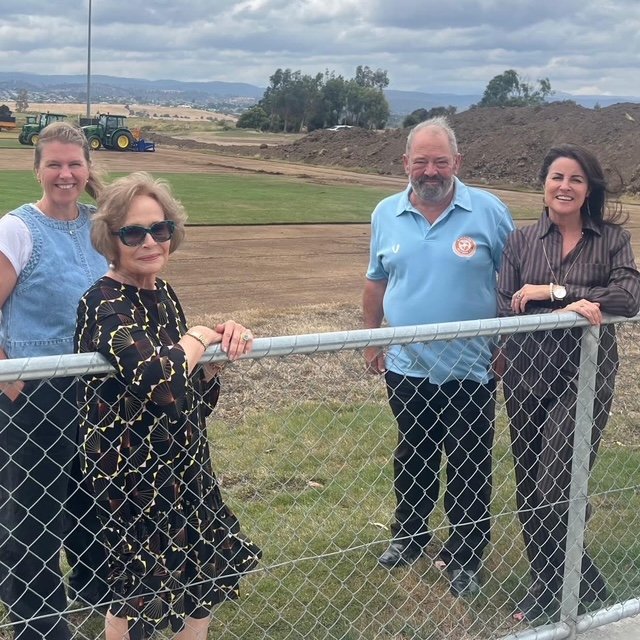
From left: Riverside Olympic Club Secretary Natalie Brown, West Tamar Council Mayor Christine Holmdahl, Riverside Olympic President Stuart McCarron and The Honourable Jo Palmer MLC, Member for Rosevears and Minister for Education, inspect the latest stage of the Windsor Park redevelopment. Photo courtesy of Riverside Olympic.
When we talk about football clubs, we often focus on what happens between the white lines.
The goals.
The trophies.
The premierships.
But some of the most important stories in football aren't about the 90 minutes on a Saturday afternoon. They're about the generations of volunteers, committee members, councils and governments who quietly build the places where those matches are played.
Riverside Olympic Football Club is one of those stories.
Today, Windsor Park has developed into one of Tasmania's most significant football precincts, supporting one of the state's largest football clubs. It has taken almost six decades of vision, patience and hard work to reach this point.
Humble Beginnings
Riverside Olympic was founded in 1967, although its football heritage reaches back even further.
When the historic Patons & Baldwins club ceased operations, Riverside Olympic purchased its playing strips and equipment, carrying forward a football tradition that stretched back to the pioneering days of the game in Northern Tasmania during the 1920s and 1930s.
The club initially competed as Ravenswood Olympic, based at Kings Meadows High School, before moving to Ravenswood Recreation Ground in 1970.
Success came quickly.
In 1973, Olympic claimed its first major honour by winning the Northern Combined League before finishing runner-up in the State Championship.
Yet perhaps the most important decision in the club's history came a few years later.
Finding a Home
In 1978, Riverside Olympic secured Windsor Park as its permanent home.
Initially, football was played inside the athletics track while the club worked with the council to create something far more ambitious than simply another playing field.
The vision was to build a football home.
The main pitch was later relocated to its current position, while in 1981 the club borrowed $5,000 to begin construction of its clubhouse. A Government sports loan later helped complete the facilities that continue to serve the club today.
Looking back now, those decisions changed everything.
Building for Generations
In 2016, Riverside Olympic reached another milestone by merging its junior and senior clubs into a single organisation, creating a complete pathway from junior football through to senior men's and women's teams.
Today, the club has more than 600 participants taking the field each week.
More than 50 teams call Windsor Park home.
More than 85 training sessions are conducted every week.
Few football venues in Tasmania would host more activity in a typical week.
That is a remarkable logistical challenge, but it also reflects the extraordinary growth of football in Northern Tasmania.
The Next Chapter
The latest redevelopment at Windsor Park is another significant step in that journey.
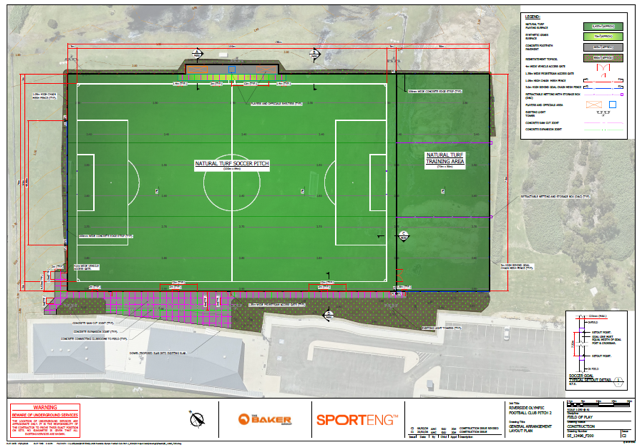
A new full-sized natural grass pitch is nearing completion, together with three caged five-a-side training pitches that will significantly increase the club's training and playing capacity.
President Stuart McCarron says the project is about much more than another field. It is about creating capacity for the next generation of footballers.
"This development will provide a first-class pitch that will be our major training area while also providing the opportunity for further games to be played on a football-designated pitch.
"The development also includes three caged five-a-side pitches. This will not only provide first-class training opportunities but also allow us to host small-sided competitions that will enhance the experience not only for Riverside players, but for the Launceston community as a whole."
Partnerships That Make It Possible
Major sporting facilities don't happen by accident.
They require long-term partnerships.
McCarron is equally quick to acknowledge the role played by West Tamar Council and the Tasmanian Government.
"The West Tamar Council provides a tremendous amount of support, not only for our club but for the West Tamar sporting community as a whole.
"In the past five years they have contributed over $4 million in funding for the development of grounds and change rooms. They also contribute significantly with the maintenance of nearly the equivalent of four full-sized football pitches.
"The State Government has not only provided $500,000 for this latest development but also previously provided an interest-free loan to the council to enable the clubroom complex to be built."
Those investments are creating facilities that will benefit thousands of footballers for years to come.
More Than Football
While football is at the heart of Windsor Park, the precinct has become much more than a sporting venue.
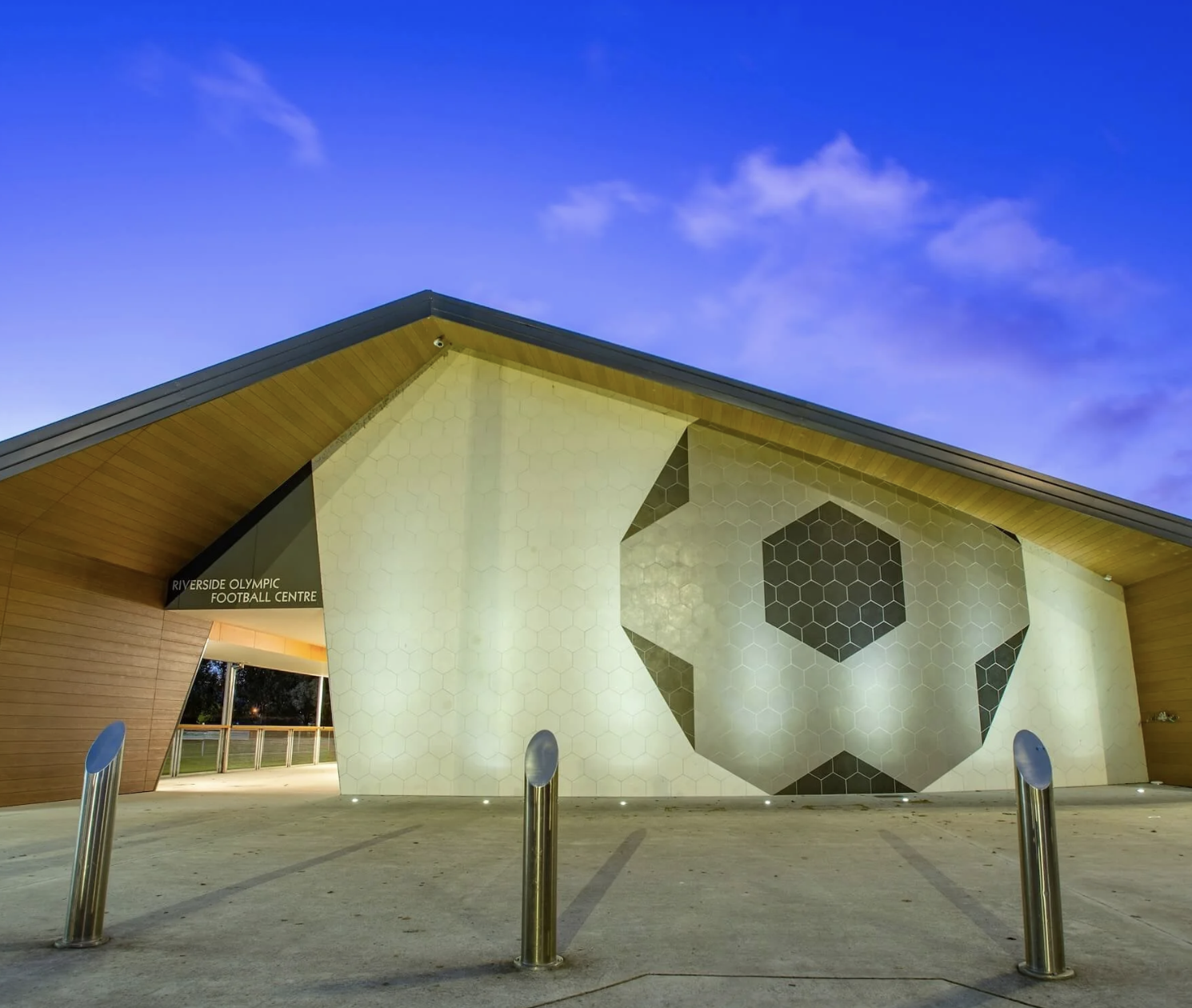
The clubhouse now features four change rooms, a commercial kitchen and a function room capable of seating around 150 people.
It has evolved into a genuine community hub, hosting schools, other sporting organisations and local community events.
McCarron believes that is one of the club's greatest achievements.
"I am most proud of the position that Riverside Olympic holds in the West Tamar community as the largest sporting club in the municipality.
"The Riverside Olympic Football Centre has become a community hub used by other sporting clubs and schools, while also providing a great space for local families to celebrate milestone events."
Looking Ahead
Like every successful club, Riverside Olympic isn't standing still.
McCarron hopes to see further expansion of the precinct, including additional playing space, an all-weather training area, more change rooms and improved undercover spectator facilities.
It is a vision measured not in seasons, but in decades.
Appreciating What Has Been Built
One of the privileges of spending more than twenty years involved in football administration is seeing how clubs grow over time.
I have to admit, I sometimes look at clubs like Riverside Olympic and Kingborough Lions with a touch of envy.
Not because of the football they play, but because of the room they have to grow.
I know exactly what another pitch means because I've spent years juggling training schedules, moving sessions between grounds and trying to fit more football onto the same patch of grass.
In the City of Hobart, land is scarce. There is very little green space left for major sporting developments, and every improvement seems to take years of planning, funding applications and patience.
Sometimes all you can think is, imagine what one more full-sized pitch would mean.
Or a clubhouse.
Or another training area.
I've watched South Hobart enjoy remarkable success on the field over the past twenty years, but the facilities have never quite matched that success. A new clubhouse is finally on the way, but like so many community projects, the wheels turn slowly. Wellesley Park took seven years to become a reality, and anyone involved in football soon learns that patience is simply part of the journey.
That's why I genuinely appreciate what Riverside Olympic has achieved.
Facilities like Windsor Park are not created by a single funding announcement or one committee.
They are the product of thousands of volunteer hours, countless committee meetings and a willingness to keep planning for the next generation.
They are built over decades by volunteers, club leaders, councils and governments all pulling in the same direction.
When I look at Windsor Park today, I don't just see another football ground.
I see nearly sixty years of people believing their club could always be a little better.
Every clubhouse began as an idea.
Every football pitch was once just an empty paddock.
Every major redevelopment started with someone asking, "What if we could make this better?"
The next time you walk into a football club, take a moment to look beyond the white lines.
Because chances are, you're standing in the middle of someone else's dream.