Tony Pignata: The Decisions That Shape Tasmanian Football - Part Three
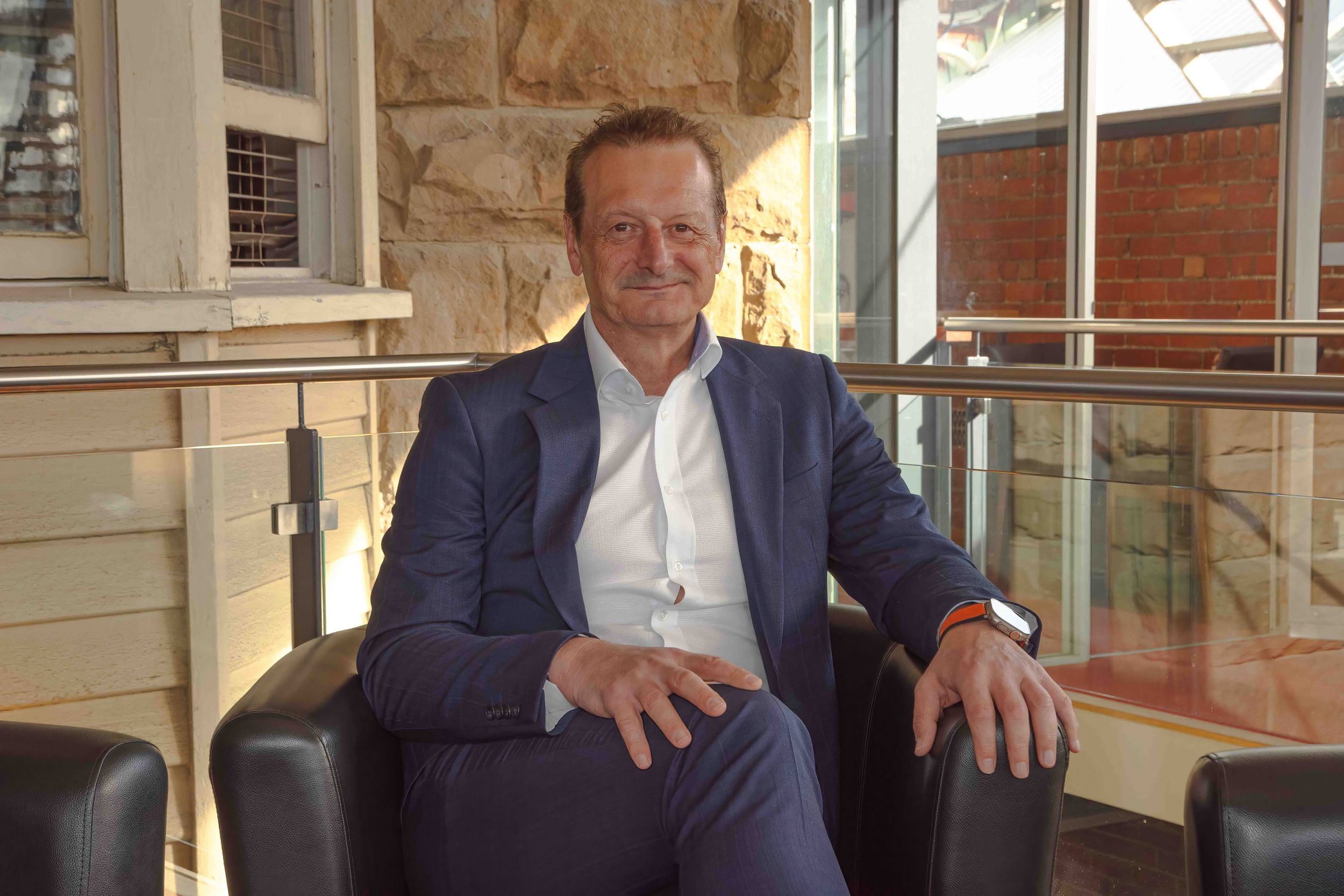
Photo Credit: Nikki Long
The first two parts of this interview were about understanding Tony Pignata.
Who he is.
How he leads.
And where he believes Tasmanian football needs to go.
This final part is different.
It's about decisions.
The decisions that shape competitions.
The decisions that affect clubs, players, coaches and volunteers.
The decisions that attract support from some and criticism from others.
Leadership in football is rarely tested when everyone agrees.
It's tested when change is proposed.
When long-held traditions are questioned.
When people worry about what they might gain, or what they might lose.
That's where our conversation went next.
One of the biggest pieces of work currently underway at Football Tasmania is its Competition Review.
It has generated plenty of discussion throughout the football community and, understandably, plenty of questions.
What is Football Tasmania trying to achieve?
Why now?
What might change?
And how will those decisions ultimately shape the future of football in this state?
They were questions I wanted answered.
So I asked them.
Competition Review: Meet the Chosen Ones
Coaching and pathways both feed into a bigger question.
How are our competitions built, and who gets to decide?
Football Tasmania is currently reviewing its competition structures, and it's fair to say not everyone is comfortable with that.
I wanted to understand what the review is actually trying to solve.
"The review needs to consider whether our competitions are structured in a way that supports quality, sustainability and player development," Tony told me.
He spoke about a wide range of issues.
Team numbers.
Season length.
Promotion and relegation.
Travel and financial pressures.
Youth pathways.
Competitive balance.
The relationship between senior and youth competitions.
And, importantly, the different circumstances facing clubs in the north, north west and south of the state.
That last point matters more than it might first appear.
A structure that works for a Hobart club, with multiple grounds close by, may not work for a club in the north west where away trips can involve hours on the road.
I then asked why he had chosen a small advisory group to lead the review, rather than opening the discussion to the broader football community from the outset.
His answer was blunt.
The old model, bringing together large numbers of club presidents, simply hadn't worked.
"It was more like a love-in," he said.
Nothing got decided.
So he built something smaller, and he was refreshingly open about how it came together.
"I chose them," he told me.
During our conversation, he referred to them as "the chosen ones."
I'll admit, hearing those words stopped me for a second.
It's the title I gave a piece I wrote questioning who gets a seat at the table in Tasmanian football, and who doesn't.
Whether Tony meant it as a knowing nod to that article or simply arrived at the same phrase independently, I genuinely don't know.
He didn't say.
And I didn't ask.
What I do know is that the phrase perfectly captured the issue I'd been writing about.
Ten people sitting around a table can work through detail that two hundred people in a room often can't.
I understand that logic.
But who gets chosen, and who doesn't, shapes what the review recommends just as much as the terms of reference do.
Tony's response to that tension was equally direct.
"Not every club will agree with every decision," he said. "But the process must be transparent and focused on what is best for Tasmanian football as a whole."
That's easy to say before the recommendations are released.
The real test comes when a club feels it has lost something it values, whether that's a place in a competition, a long-standing tradition or a degree of independence, in the name of what's best for the game as a whole.
Tony told me he wants a competition structure that clubs "understand and believe in" and one that "can remain sustainable over the long term."
Whether that happens will depend less on what is said during the review and more on what the chosen ones ultimately recommend, and whether the clubs affected feel they were genuinely heard rather than simply spoken to.
Communication: The Word That Keeps Coming Back
I said earlier in this series that communication was a word Tony returned to again and again.
Now we've arrived at it properly.
I asked him directly how well he thought Football Tasmania communicated with the clubs it serves.
He didn't claim it was solved.
"Communication can always improve, particularly when you are dealing with a large and diverse football community," he said.
He pointed to several initiatives already in place.
A monthly newsletter to all clubs.
Meetings with NPL and WSL presidents twice a year.
Regular communication through Football Tasmania staff.
"However, it can still be difficult to ensure every decision reaches everyone, is clearly understood and is communicated at the right time," he said. "I am always available to talk to clubs and will always be transparent in my dealings with them."
That last line is easy to say.
It's harder to test.
Being available isn't the same as involving people before decisions are made.
A club finding out about a decision through a newsletter after the fact has technically been communicated with.
It hasn't necessarily been consulted.
I put that distinction to him, and it's where the Competition Review Working Group came back into the conversation.
"That is one reason we established the new competition working group," he said. "A smaller group can meet more regularly, examine issues in greater detail and engage directly with clubs to gather feedback. I believe that will create a more effective two-way flow of information than relying solely on larger meetings."
The chosen ones again.
Smaller, in Tony's view, means faster and more genuine engagement.
I understand the theory.
But it also places a great deal of responsibility on a small group of people to carry information in both directions, from clubs to Football Tasmania and back again, accurately and without it getting lost or reshaped along the way.
Tony was equally honest about where he believes the real challenge lies.
"The challenge for us is to continue communicating earlier and explaining not only what decisions have been made, but why they have been made," he said. "Clubs may not always agree with every decision, but they should understand the reasoning and feel they have had an opportunity to contribute."
That's a high standard to set.
Not just for Football Tasmania.
For any sporting organisation.
It's also the standard against which Football Tasmania will inevitably be judged.
Not by what Tony says about communication today.
But by whether clubs genuinely feel better informed, better consulted and, in Tony's own words, "have had an opportunity to contribute" before the next difficult decision arrives.
Communication, after all, isn't measured by what is sent.
It's measured by what is received.
National Second Division: What Really Happened
This is the issue I probably approached with the least neutrality anywhere in this series.
I was President of South Hobart for sixteen years and part of the collaborative group that worked on the club's National Second Division bid.
When Football Tasmania declined to support our request for government funding, I was disappointed, and I said so publicly at the time.
So I put the question to Tony directly.
I even told him he was welcome to answer it off the record if he preferred.
He didn't.
He answered every part of it on the record.
His position was clear.
"Football Tasmania's position was never about opposing South Hobart. I supported their ambition and respected their willingness to pursue the opportunity."
The issue, he explained, wasn't the bid itself.
"Their application was a club-led bid, and it needed to be funded on that basis, by the club."
Football Tasmania, he said, would not approach government seeking substantial funding for one individual club, "particularly when doing so could affect government support for other important football projects across Tasmania."
"The same position would apply to any other Tasmanian club," he wrote. "There was no discrimination against South Hobart, it was about applying a consistent principle and protecting the interests of football across the entire state."
I understand that principle.
I also understand why so many people at South Hobart found it difficult to accept.
This wasn't simply about one person or one club.
Over two years, countless hours were invested by directors, volunteers and many others associated with South Hobart in preparing what was widely regarded as a credible National Second Division bid.
It was the only Tasmanian club to submit a National Second Division bid.
Government investment was always likely to form part of the equation.
No National Second Division bid anywhere in Australia was ever going to be funded entirely by one club.
At the time, asking why Football Tasmania couldn't support that approach felt like a legitimate question.
It still does.
Tony also left the door open for the future.
"A genuine statewide bid may be viewed differently," he wrote, "and if that opportunity arose in the future we would assess the opportunities based on their merits and their benefit to Tasmanian football as a whole."
Whether that door eventually opens is something only time will answer.
Tony's explanation helped me better understand Football Tasmania's position.
It didn't erase my disappointment.
Too many people invested too much time, energy and belief in that bid for it to simply become another chapter in Tasmanian football history.
If a future statewide bid ever emerges, Tasmanian football will once again face the same question.
Who will back ambition when the opportunity arrives?
Government and Advocacy: Football's Case for Itself
If the National Second Division discussion was about one bid, this part of our conversation was about something much bigger.
How does football make its case to government?
I asked Tony where he thought that case currently falls short.
"Governments sometimes underestimate football's scale, diversity and reach," he told me.
He made the point simply.
"Football is played in communities across Tasmania by people of all ages, cultural backgrounds and financial circumstances. It is also one of the most accessible ways of engaging young people, improving health and connecting increasingly diverse communities."
Participation, he said, has grown strongly.
Infrastructure hasn't kept pace.
"Too many clubs are dealing with limited pitch access, ageing facilities and inadequate amenities, particularly for women and girls," he said.
Anyone involved in grassroots football knows exactly what he is talking about.
Whether it's ageing clubrooms, inadequate lighting, poor drainage or a shortage of quality pitches, these are conversations taking place in clubs right across Tasmania.
What interested me most, though, was how Tony framed football's argument.
"Football should not be viewed only as a sport asking for funding," he said. "Investment in football is investment in health, inclusion, youth engagement, tourism and community infrastructure. That is the message we have to get across to the Government."
It's a persuasive argument.
It's also one that other sports make just as confidently, often with greater success.
Football has the participation numbers to support its case.
What it hasn't consistently achieved is converting those numbers into the level of government investment many within the game believe they justify.
Tony didn't shy away from that reality.
He framed it as a challenge of advocacy rather than evidence.
Football already has the numbers.
The task is convincing governments that those numbers should translate into greater investment.
Whether that's the whole story is a fair question.
Advocacy matters.
Relationships matter.
Political timing matters.
So does presenting governments with projects that are well planned, broadly supported and ready to deliver.
Those are challenges that belong not only to Football Tasmania, but to clubs, councils and governments as well.
If there was one message I took away from this part of our conversation, it was that football's case has probably already been made.
The challenge now is turning that case into outcomes.
Participation numbers, on their own, don't build changerooms, install lights or improve pitches.
People do.
Governments do.
And ultimately, so does leadership.
Looking Ahead: What He Hopes People Will Say
I asked Tony the same question I ask everyone I interview.
When it's all over, how does he hope people will remember his time leading Football Tasmania?
His answer was straightforward.
"I hope people will say I helped leave Tasmanian football stronger, more ambitious and better positioned for the future," he wrote.
He described what that would look like.
A Home of Football.
Stronger player and coach pathways.
Competitions that remain sustainable.
Better facilities.
And deeper relationships with clubs, government and the wider football community.
None of that is guaranteed.
Some of it, as we've discussed throughout our conversation, remains contested.
"I would also hope people say that I brought energy, experience and belief to the role," he wrote. "Leadership is never perfect, and not every decision will be popular. But I want it to be clear that I cared deeply, made decisions for the right reasons and worked to give Tasmanian football the profile and opportunities it deserves."
Near the end of our coffee, I asked him one final question.
Does football spend too much time arguing with itself?
And could we become better at disagreeing while still working together?
"Yeah, absolutely," he said.
"We do."
There was no hesitation.
No qualification.
Just a simple acknowledgement.
Then he made a small request of me.
He'd like to see me write something positive one day.
Fair enough.
I do write positive pieces.
I'd like to think this is one of them, whatever else people may see in it.
But I'll admit something too.
Difficult questions are often easier to find than good news.
That's as true for me as it is for Football Tasmania when it's trying to convince governments to invest in the game.
Finishing Up
Three parts, one long coffee, and a lot of follow-up questions later, I don't agree with every decision Tony has made or defended.
I said that at the start, and it's still true now.
But I understand his reasoning better than I did before I asked him directly, instead of writing about him from a distance.
That was always the point of doing this.
Since these pieces started going up, I've been sending Tony each one as it's published. We've agreed to keep talking, on the record and off, about the issues that matter to Tasmanian football.
That doesn't mean the questions stop.
If anything, it means there will be more of them.
Understanding someone isn't the finish line.
It's just where the next conversation starts.