Romeo Frediani – Football, Family and Loyalty
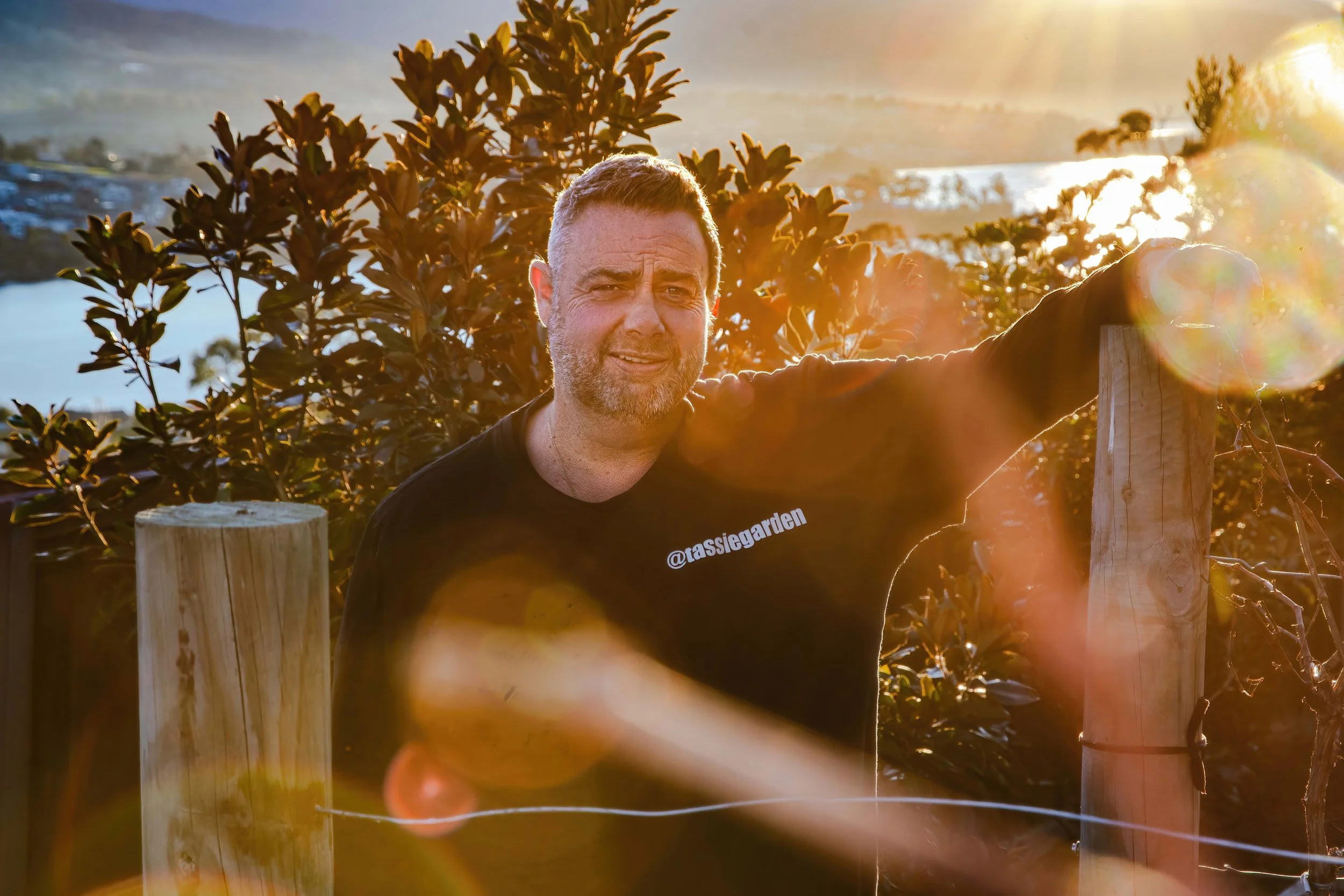
Romeo Frediani - photo Nikki Long
Before I sent Romeo Frediani my questions, I asked him whether he would be willing to be interviewed.
His reply made me smile.
"Not sure what story I would have but sure."
I've learnt over the years that the people who quietly get on with life are often the ones with the most remarkable stories to tell.
They don't see themselves as extraordinary.
They simply do what they love, help where they can and get on with the next job.
Romeo Frediani is one of those people.
As I worked my way through his answers, it quickly became obvious this wasn't simply the story of a former Hobart Juventus striker, coach or one of the driving forces behind Futsal Tasmania.
It was the story of an Italian family who made Tasmania home.
A little boy who always seemed to have a football at his feet.
A lifetime of unwavering loyalty to one football club.
A devastating injury that could easily have ended his football journey.
And a man who found another way to give back to the game he loves.
By the time I reached the end of Romeo's story, I realised something.
The people who think they don't have much of a story are often the very people whose stories deserve to be told.
I think you'll enjoy meeting Romeo Frediani.
From Carrara to Tasmania
Like so many football stories in Tasmania, Romeo Frediani's story begins somewhere else.
Long before he was born.
Long before he kicked a football.
Long before he ever dreamed of wearing the famous black and white shirt of Hobart Juventus.
It begins in Carrara, a city in northern Tuscany famous throughout the world for its magnificent white marble.
It was there that the Frediani family story began before Romeo's father made the journey to Tasmania in 1966, following his sister who had already settled here.
A few years later he met a young Tasmanian woman who would not only become his wife, but embrace the traditions and values of an Italian family.
Growing up, Romeo says he never really appreciated just how fortunate he was.
"My mother was Tasmanian, but she embraced so much of the Italian way of life through my father's heritage," he said.
"She was, and still is, an incredible cook."
His father worked long hours.
His mother kept the family together.
Together they built a home where family always came first.
"There was always plenty of food, family and friends around," Romeo recalled.
"Our home was always full of people."
And somewhere amongst all that food, laughter and conversation, football quietly became part of everyday life.
Not because anyone insisted on it.
Because it simply belonged there.
The Italian Club was also a huge part of Romeo's childhood, bringing together family, friends and a community that shared the same love of football and their Italian heritage.
Minestrone and Muddy Boots
As Romeo reflected on his childhood, I expected to hear stories about memorable goals or famous victories.
Instead, he talked about soup.
Regional tournaments.
Cold mornings.
Mud.
A frantic race home between games.
Waiting on the table would be a huge bowl of his mother's homemade minestrone.
While Romeo sat down to eat, his mother would already be washing muddy football clothes, cleaning his boots and drying everything so he was ready for the next game.
Then it was straight back into the car and off to another football ground.
Looking back now, Romeo sees those memories very differently.
"They're the kind of sacrifices and acts of love that stay with you forever."
Every football family has their own version of those moments.
Long drives.
Early mornings.
Cold sidelines.
Parents quietly doing everything they can so their children have the chance to play the game they love.
For Romeo, that was simply normal life.
A Ball at His Feet
Football wasn't introduced to Romeo.
It had simply always been there.
Television coverage of European football was limited in those days, but within Tasmania's Italian community the game was never far from conversation.
The great Italian clubs.
The leagues back home.
The players everyone admired.
Romeo believes football found him long before he understood what it really meant.
"I'm sure my connection to football started before I could even walk."
One of his earliest memories is of his father giving him a full-sized Size 5 football.
Not a little junior ball.
A proper football.
"My dad gave me a size five football when I was very young.
"I always had a ball at my feet.
"Wherever I went, the ball came with me.
"I'd get in the car and the ball would come along too."
Then he laughed as he remembered his first opponents.
"My best training partners were my dogs.
"My challenge was to keep the ball away from them for as long as possible."
It's such a simple image.
A little boy.
A football.
Two determined dogs.
Long before organised coaching, that's where Romeo Frediani's football education really began.
A Father's Quiet Influence
When I asked Romeo who had influenced him most, there wasn't even a moment's hesitation.
"My biggest influence was my father.”
"Not only in football, but in life."
He never pushed.
Never demanded.
Never forced.
"He was always there."
Every junior game.
Almost every Zebras match.
Every step of Romeo's football journey.
Romeo said his father rarely missed a game, whether he was playing or later coaching, until his health simply no longer allowed him to stand on the sidelines.
Sometimes the people who shape our lives the most aren't the loudest voices.
They're simply the ones who keep turning up.
Romeo also speaks with enormous respect about the coaches who influenced him throughout his career.
Ozzie Fitzgerald was one of the first to leave a lasting impression.
Then came Ken Morton.
"My dad took me to every clinic Ken ran when I was a young kid," Romeo recalled.
"Being coached by him left a lasting impression on me."
Football has a funny way of bringing people back into your life.
Years later, Romeo would play against Ken before eventually coaching against him as well.
His first senior coach, Peter Irving, also played an important role in his development.
Romeo still remembers the conversation.
As a 15-year-old breaking into senior football, Peter Irving challenged him to score 12 goals for the season.
"If you achieve that," he told him, "you've done your job.
Romeo finished the season with 13.
Sometimes all a young footballer needs is someone who believes they can.
The Black and White Dream
Every footballer remembers the club they first fell in love with.
For Romeo Frediani, there was never another choice.
From the time he was a little boy kicking a football around the backyard, he dreamed of one day wearing the famous black and white shirt of Hobart Juventus.
"My earliest memories of Tasmanian football are of going to games at D'Arcy Street in South Hobart," Romeo said.
"I probably spent more time kicking the ball against the fence than actually watching to start with, but it was always packed and always had a great atmosphere."
Those memories didn't stop at D'Arcy Street.
As he grew older there were countless nights spent at KGV.
Cold Tasmanian evenings.
Wrapped up against the winter weather.
Watching senior football and imagining what it might feel like to one day be part of it all.
Like so many young footballers, Romeo wasn't simply watching the game.
He was dreaming about his own place in it.
Waiting for the Black and White
Patience wasn't one of Romeo's strengths.
"I think I played in an under eights team when I was only five because I just couldn't wait to play," he laughed.
"I'd run out of the house and straight down to the ground and turn up for any team that would let me play."
Football was different then.
Most young players began through school football before moving into club football when they reached the under-13 age group.
For Romeo, that seemed like a lifetime away.
"I couldn't wait to play in the black and white.
"It was always my dream."
His family travelled back to Italy whenever they could and each trip usually ended the same way.
Another Juventus shirt found its way into his suitcase.
He wore them everywhere.
Long before he officially became a Juventus player, he already felt connected to the club.
So when he finally pulled on the black and white shirt as an eleven-year-old, it wasn't just another game.
It was the moment a childhood dream became reality.
"I just couldn't wait to put that shirt on."
The Only Club
These days it's common for players to represent several clubs during their career.
Romeo's football journey was very different.
"It was the only club I ever played for.
"And the only club I've ever coached."
As we spoke, one word kept appearing.
Loyalty.
"I've always believed strongly in loyalty," Romeo said.
"I felt that going anywhere else would have been disloyal."
He quickly adds that loyalty has to work both ways.
"The club was very good to me over the years, so I stayed committed throughout."
There was never any great plan to play somewhere else.
No ambition to wear another club's colours.
Juventus wasn't simply where Romeo played his football.
It was where he grew up.
Where he made lifelong friendships.
Where he celebrated success.
Where he experienced disappointment.
Where football became part of who he was.
Looking back now, it's difficult to separate Romeo Frediani from the black and white shirt.
One helped shape the other.
Dreaming Bigger
As Romeo settled into life at Hobart Juventus, his ambitions grew with him.
Like so many young footballers, his dreams evolved as each one was achieved.
First, he wanted to play for Juventus.
Then he wanted to represent Tasmania.
Then Australia.
And one day, he hoped to coach.
"My ambition as a young player was first to play for Juventus, then to play for my country and then to coach," Romeo said.
"I achieved two of those three."
There is no disappointment when he reflects on that today.
Just gratitude.
Because every dream he chased demanded the same thing.
Hard work.
"I trained hard throughout my younger years and rarely missed a session.
"If I didn't have team training, I'd still find somewhere to train.
"There were no excuses.
"I just wanted to play."
It's a simple statement, but it probably says everything about Romeo's approach to football.
Nothing was ever handed to him.
If he wanted to improve, he trained.
If there wasn't a session organised, he found somewhere to kick a ball anyway.
Football wasn't something he did.
It was simply who he was.
Heroes Became Teammates
Like every young footballer, Romeo grew up with heroes.
As a striker there was one player he admired above all others.
"Bruce Ward.
"That's what I wanted to be.
"I used to love going to watch him."
He also remembers watching Peter Brine, Steve Craven and Ken Morton, along with many of the outstanding Italian footballers who helped shape Tasmanian football, including Frank Genovese, Nick Lapolla, Defelice and many others.
Then something remarkable happened.
The players he had admired from the sidelines became teammates.
Sergio Pace.
Carlo Ambrosino.
Neil Connell.
Nick Di Martino.
Frank Genovese.
Romeo Fabrizio.
Dominic Longo.
"I felt privileged to play in an era of such high standard, with so many quality players around."
It was a wonderful era for football in Tasmania.
Quality overseas players arrived and immediately lifted the standard.
Training became more demanding.
Matches became more physical.
Every week tested you.
Nothing came easily.
"You had to work for everything."
When asked about the best players he shared the field with, Romeo smiled.
"I could go on forever."
Michael Lapolla.
Steve Kannageiser.
Steve Walker.
Massi Fernandez, who Romeo still describes as an outstanding footballer despite spending only a short time in Tasmania.
There were representative teammates too.
David Stoddart.
Ian Parker.
Snowy Compagne.
Anthony Guilbert.
Brendon Lakoseljac.
Every name sparked another memory.
Another game.
Another reminder of just how fortunate he felt to play in one of the strongest eras Tasmanian football has seen.
Representing Tasmania
Representative football became another important chapter in Romeo's journey.
He proudly represented Tasmania from Under 13s through to Under 16s, experiences that not only tested his football ability but broadened his horizons.
Every time he pulled on the Tasmanian strip, he was representing much more than himself.
He was representing his club.
His family.
His teammates.
And the football community that had shaped him.
One match, in particular, has never left him.
Playing against Japanese powerhouse Nagoya Grampus Eight.
"It was an unbelievable experience."
Representative football also created lifelong friendships.
Players who had spent the season trying to beat each other suddenly became teammates.
The rivalries disappeared.
For a little while, everyone was pulling in the same direction.
Like so many talented young footballers, Romeo dreamed of taking the next step.
Playing for Australia.
He attended national training camps alongside some of the country's brightest young talent.
Dominic Longo.
John Markovski.
Zoran Ilic.
Sean Murphy.
Mark Bosnich.
John Filan.
Steve Refenes.
Carl Veart.
And many others.
"I attended the national camps but never quite made the final squad."
There is no sense of regret.
Only appreciation for the opportunity.
Looking back now, Romeo speaks with pride about having represented Tasmania and tested himself against the very best players of his generation.
The Toughest Opponents
Football in Tasmania during that era was fiercely competitive.
Every weekend presented another challenge.
When asked which teams were the hardest to play against, Romeo didn't hesitate.
"White Eagles."
Then he laughed.
"I'm not a tall person, and they always seemed like giants when they walked out of the change rooms."
The matches were always physical.
Always demanding.
Always memorable.
Then there was Olympia.
The Juventus and Olympia derby was one of Tasmanian football's great rivalries.
Passion.
Pride.
Bragging rights.
They were never just another game.
Devonport also featured among the toughest opponents Romeo encountered.
"They were always hard-fought matches."
Looking back now, Romeo doesn't remember those games because of the result.
He remembers the people.
The players.
The friendships.
The respect that grew between fierce competitors over many seasons.
Those memories, he says, will stay with him forever.
As I read Romeo’s answers about those years, one thing became increasingly obvious.
He had achieved almost everything he had set out to achieve as a young footballer.
He had worn the black and white shirt he had dreamed about since childhood.
He had represented Tasmania.
He had tested himself against some of Australia's best young players.
Football had given him more than he could ever have imagined.
Then, on what began as a perfectly ordinary trip to Launceston, everything changed.
The Day Everything Changed
Football has a funny way of convincing us that next week will look much like last week.
Another training session.
Another game.
Another trip up the highway.
For Romeo Frediani, the day that changed his life began exactly like that.
A normal drive to Launceston.
A trip to play Riverside.
He even drove that day so his aunt and uncle could come along and watch.
Nothing suggested this would be any different from countless other away trips.
Until one moment changed everything.
"The thing I can only remember at the time was lying on the ground holding my leg, thinking, 'Is it, or isn't it, broken?'"
"It was."
Even now, Romeo can still recall the strange events surrounding that afternoon.
The ambulance seemed to take an eternity to arrive.
By then there had already been several other injuries during the match.
One player had suffered a broken or dislocated collarbone.
Another needed stitches after a head injury.
Someone else had even been stung by a bee while sitting on the bench.
"What a day that was," Romeo reflected.
Then, despite everything, his football humour surfaced.
"I did score that goal.
"But the goalpost came off better than I did."
Only football people could probably laugh at a line like that.
Behind the humour, however, lay an injury that would change the course of Romeo's football life forever.
A Month That Changed Everything
Romeo was taken to hospital in Launceston.
At first, it seemed straightforward.
The broken bone was repaired with a rod and screws.
Like many footballers, Romeo immediately began thinking about getting back onto the pitch.
"I was up the next day thinking, 'Okay... six or eight weeks and I'll be back to normal.'"
He couldn't have been more wrong.
The swelling continued to worsen.
Doctors became increasingly concerned.
Eventually they diagnosed compartment syndrome, a serious condition where pressure builds within the muscles and threatens blood flow to the affected limb.
Romeo was rushed back into surgery.
The pressure was released.
But the danger wasn't over.
Over the following days he underwent more operations.
Each time he was taken into theatre, surgeons prepared him for the possibility that they might not be able to save his leg.
"I broke down a few times over that period.
"Every time I went in for surgery they reminded me there was a possibility I could lose my leg below the knee."
It is almost impossible to imagine what those conversations must have been like.
One week earlier, Romeo had been chasing a football.
Now he was wondering whether he would keep his leg.
Learning to Walk Again
Eventually the danger passed.
His leg was saved.
But life would never be quite the same.
"It took me nearly a year to learn how to walk again."
For months he couldn't drive.
He couldn't work.
Simple everyday tasks suddenly became enormous challenges.
Romeo also had to come to terms with permanent damage.
"I lost the tendons that allow you to lift your foot."
"It was something I just had to learn to live with."
It wasn't simply a football injury anymore.
It had become a life-changing injury.
Then came another difficult realisation.
Football, as he had always imagined it, was over.
"It was a difficult time because football was basically my life.
"It's all I wanted to do.
"I wanted to get to the next stage of my career.
"That was no longer possible as a player."
For someone whose entire life had revolved around football, that acceptance may have been the hardest challenge of all.
The Club That Stood Beside Him
When Romeo speaks about his recovery, he rarely talks about himself for very long.
Before long, he starts talking about other people.
His club.
The Italian community.
The people who refused to let him face the journey alone.
"The club was very supportive.
"And the Italian community was also very helpful during my recovery."
Those acts of kindness have never been forgotten.
One person, in particular, remains deeply important to Romeo.
George Marino.
George was President of Hobart Juventus at the time.
"George and his family helped me a lot by keeping me involved.
"Looking back now, I think that probably helped my mental health."
Sometimes people don't realise the difference they're making.
A phone call.
A visit.
An invitation to stay involved.
For Romeo, those simple acts of support became a lifeline.
Life Had Other Plans
Like anyone who has experienced a life-changing injury, Romeo admits he still wonders what might have been.
"Yes, I always thought about it.
"And I still do sometimes."
Then he paused.
"But life has a plan for all of us.
"Obviously going further as a player was not the plan that was set for me."
It's a remarkably accepting way to look back on what happened.
There is no bitterness.
No anger.
Just acceptance.
As I read Romeo's words, it struck me that perhaps football hadn't finished with him at all.
It simply had a different role planned for him.
Romeo just didn't know it yet.
A Second Football Life
For many footballers, the end of their playing career also marks the end of their involvement in the game.
That was never going to be the case for Romeo Frediani.
If he couldn't play the game he loved, he would find another way to stay involved.
"If I couldn't play, I wanted to coach and share the knowledge I had been given by the coaches during my playing career."
His first coaching role came while he was still recovering from his injury.
"I remember my first coaching job after the accident. I had a walking stick."
It wasn't the picture he had imagined.
But he wasn't about to let that stop him.
One of his closest friends, Spiros, stepped in to help.
"I did all the planning and coaching, and Spiros did all the practical work and running around. I was so grateful for his help."
Football has always relied on people quietly helping each other.
This was one of those moments.
The team also travelled well beyond the football pitch.
"We used to go around picking the kids up, taking them to the games and dropping them home afterwards."
Then Romeo smiled as another memory surfaced.
"My father used to do exactly the same thing back in the 1970s."
"It was a full-circle moment."
Sometimes football has a remarkable way of connecting generations.
One More Challenge
Despite everything he had been through, one thought never really left him.
Could he play again?
Around six years after the accident, Romeo decided to find out.
A group of mates invited him to play social indoor football.
He became the goalkeeper.
"I couldn't kick a ball properly, so I thought being a keeper might be fun."
Before long, another opportunity appeared.
A Zebras social team was formed, bringing together many of the legends of the old Juventus era.
Nick Di Martino.
Nick Lapolla.
Fraraccio.
And many more familiar names.
Slowly, Romeo's confidence began to return.
"I had to learn how to run again.
"I had to learn how to kick a ball again without dorsiflexion."
It wasn't easy.
There were setbacks.
Minor injuries.
Frustrations.
But he kept training.
He became fitter.
He returned to the reserves alongside players such as Michael Lapolla, Frank Mainella and Chris Cox.
For many people, that would have been enough.
For Romeo, there was still one more goal.
"I wanted to play first-team football again."
He trained harder than ever.
Eventually, his opportunity arrived under coach Nick Lapolla.
"It was the best year."
Romeo reels off the names almost instinctively.
Mainella.
Lapolla Junior.
Chris Cox.
Mark Falzon.
Brett Pullen.
Aaron Brazendale.
Ryan Smith.
Ricky Self.
Michael Connolly.
"It was a great team."
Together they achieved something special.
The Summer Cup.
The League.
The State Cup.
The treble.
Only then did Romeo feel ready.
"That was when I decided it was time to retire.
"On my terms."
After everything he had endured, those three words carry enormous weight.
Football had taken so much away.
In the end, it also gave him the opportunity to walk away exactly as he wanted.
Building Futsal Tasmania
Romeo's playing career may have ended, but football still had another chapter waiting for him.
Ironically, his first taste of futsal came many years earlier.
"When futsal first started at the YMCA in the late 1980s and early 1990s, a few of us used to race over from KGV after games to play."
It was fun.
Fast.
Something different.
Years later, around 2009, Romeo decided he wanted to make football more than simply a weekend passion.
He applied for a position with Football Federation Tasmania.
It didn't eventuate.
Not long afterwards, another opportunity appeared.
"Our sons had been playing futsal, so I gave my résumé to Corey Smith in case anything came up."
Something did.
More than sixteen years later, Romeo is still helping shape the game through Futsal Tasmania.
"I've seen lots of ups and downs," he said.
"But now I can honestly say there have been a lot more ups."
One thing became very clear as I worked through Romeo's story.
He doesn't see the success of Futsal Tasmania as his own.
He sees it as something built by many people.
A Team Effort
Ask Romeo what he is most proud of and he doesn't start by talking about himself.
He starts by talking about others.
"Building the profile of futsal in Tasmania has been a big part of its growth.
"But it's not only because of me.
"It's because of our loyal coaches and our futsal family."
Then he speaks about someone who has shared that journey every step of the way.
His wife, Raelene.
"For the past 13 years she's been instrumental in the growth of futsal in Tasmania."
Through marketing.
Photography.
Social media.
Community engagement.
Promoting players.
Promoting events.
Creating opportunities.
Today, Raelene's role extends across the wider Australian organisation, but Romeo says she remains a huge part of everything Futsal Tasmania continues to achieve in Tasmania.
Listening to Romeo, it's obvious that he measures success differently.
Not by what he has achieved alone.
But by what a committed group of people has built together.
Changing Young Lives
Of all the achievements Romeo could have chosen, it wasn't a championship or a trophy that stood out.
It was the schools program.
"The schools program is probably the one I'm most proud of."
It began with just a handful of teams on a single court.
The following year there were more.
Then more again.
The program expanded into the North West.
Then into Launceston.
Participation continued to grow.
This year more than 300 teams took part, making it the largest schools futsal tournament Futsal Tasmania has ever delivered.
Romeo believes it will continue to grow.
Just as importantly, Futsal Tasmania has created opportunities for young players to represent Tasmania at national championships and international events.
"With the support of our loyal coaches we've come a long way.
"We've gone from being the whipping boys to winning national titles."
For Romeo, however, the greatest reward isn't measured by medals.
It's watching young people discover a love for football.
The Indoor Game's Greatest Lesson
Romeo firmly believes futsal deserves greater recognition within Australian football.
"I wish futsal had been around when I was young."
Not simply because it's enjoyable.
Because it develops footballers.
"It's a passing game.
"You have to create space.
"You have to think quickly."
He talks about first touch.
Decision making.
Ball control.
Creativity.
Playing under pressure.
The constant involvement every player has in both attack and defence.
The discipline the game demands.
"It's taken a long time for some outdoor coaches to embrace what futsal can do.
"But they're starting to understand."
Listening to Romeo, it becomes obvious that he doesn't see futsal as competing with outdoor football.
He sees it as helping young footballers become better players.
How Do You Measure a Football Life?
As I reached the final pages of Romeo Frediani's story, I found myself thinking back to the title of this interview.
Football.
Family.
Loyalty.
They aren't just three words.
They are the threads that run through every chapter of Romeo's life.
His family's journey from Italy to Tasmania.
A little boy with a football at his feet.
A lifetime devoted to one club.
A career interrupted by an injury that changed everything.
A second football life built through coaching and Futsal Tasmania.
And thousands of young people who have benefited from the opportunities he has helped create.
When I asked Romeo how he hoped people would remember him, his answer said everything.
"I hope people remember me for who I am as a person.
"My loyalty to the football club I grew up with.
"My family.
"And for giving their child an opportunity in football or futsal in a positive way."