Daniel Syson - Character, Perspective and Connection
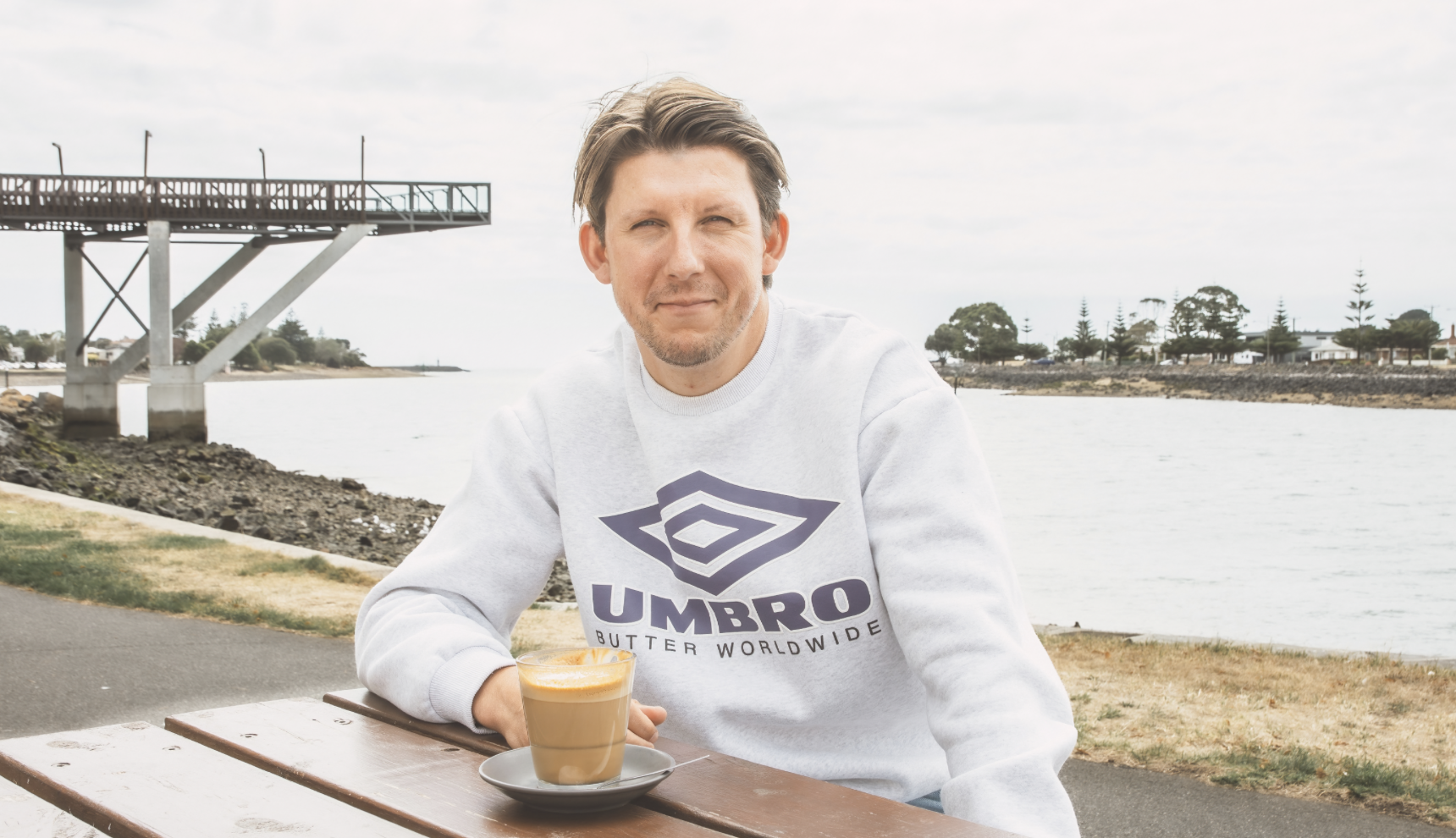
Photo credit: Nikki Long
I wasn’t quite sure Daniel would want to be interviewed by me.
My son Max moved to Melbourne to coach at Northcote City FC and a few players Daniel had coached in 2025 at Launceston City FC moved with him. Daniel and Max had coached against each other last season, so I wondered if that might feel awkward.
Instead, Daniel was kind and professional and separated all of that from our conversation. He gave me a thoughtful and generous insight into his life in and out of football and it reminded me again of the generosity and spirit that still sit at the heart of our small, close-knit football community in Tasmania.
Here is Daniel Syson, in his own words. The coach, and Daniel.
Street football
When Daniel looks back at his early football years, what shaped him most was not organised sessions.
It was street football.
Finishing school and staying out every evening until it got dark. Playing with older friends. Learning quickly because you had to. Adapting because there was no other choice.
Those early moments were fundamental to who he is today.
Football was everything to him. It was who he was. It was never too much. It never lied to him. It was pure enjoyment and a place that always felt like home.
Whether it was playing on a rough triangle of grass surrounded by trees, using tree trunks as goalposts, training at Blackburn Academy, or representing his school, football gave him identity. It gave him belonging. It shaped his standards and his mindset.
Looking back, he says, he is where he is today because of that relationship with the game.
Football mirrors life.
Development through adversity.
Loyalty.
Low moments that force you to respond.
Moving to the next achievement without living in the past.
Lifelong relationships.
He still speaks to players he shared a pitch with more than twenty years ago.
Football gives you more than results. It gives you character, perspective, and connection. Those lessons stay with you long after the final whistle.
Growing up together
Winning the Lancashire Football Association Cup with his school team in Year 11 still stays with him.
They had played together nearly five years, growing up side by side. That trophy represented years of development, setbacks, hard work and shared belief.
He remembers not just winning, but seeing the joy on his teammates’ faces.
They had built towards that moment together.
That mattered more than the cup.
Devonport
Eight years as a player at Devonport Strikers shaped him in a different way.
There were ups and downs, highs and tough moments.
“An environment can be created by coaches,” he says, “but it must be embodied by players.”
During that time, no matter who the coach was, they were a group of young men who understood standards. With the core of the group aged 25 plus, they knew every session mattered. Sometimes training was tougher than Saturday matches.
You could see the health of the environment in a cage game. Competitive. Relentless. No one giving an inch.
Standards were set by peers. Challenged daily.
The culture was one of the best he experienced as a player. Bus journeys. Nights at the club. An us-against-the-rest mentality.
Devonport was well liked until they won the double in 2016. After that, opposition players did not like them much. That was normal. They had a squad built on that edge and they embraced it.
What stayed with him most was the support from teammates through difficult personal moments.
“I belonged to my teammates,” he says. “I will forever be thankful for the support they gave me.”
Responsibility
For Daniel, coaching was never simply the next step after playing.
It was responsibility.
From his first Under-10 team to being an NPL head coach today, he has always felt accountable for outcomes.
“Responsibility in coaching is not selective. It doesn’t switch on only when results are positive.”
When his team plays well, he asks if they prepared correctly. When they fall short, he asks if he prepared them tactically, physically and mentally in the best possible way.
He has lost sleep over minor details. Replayed sessions in his head. Reviewed games to see if a detail they emphasised came to life.
Not for ego. Not for recognition.
“Players deserve preparation. They deserve clarity. They deserve honesty. They deserve an environment that gives them the best chance to succeed.”
Once you choose to coach, he says, you are no longer just part of the game. You are accountable for shaping the experience of others within it.
He becomes the coach Monday to Sunday.
No one puts more pressure on him than he puts on himself.
Mentors
He has worked under several outstanding coaches in Tasmania.
Different personalities. Different methods. One common thread, a relentless winning mentality.
One coach influenced his analytical side, studying opposition build-up patterns, final-third penetration, transition moments, individual strengths. Everything calculated.
Another coach was exceptional on the training ground, demanding focus and pushing players through intensity and repetition, correcting types of runs and positional platforms.
A third coach taught defensive discipline, structure and resilience. He believes 2016 was Devonport’s most significant year not just because of success, but because of what it catalysed for the club.
He connects with an older generation mindset, standards, toughness and clarity, while also understanding the demands of modern NPL football and what today’s players require.
From another coach he struggled to connect with personally, he learned something powerful.
“I didn’t run for him. I ran for my club and my teammates.”
Respect must be mutual. Earned, not demanded.
Reputation travels quickly in football. The way you treat players matters. Respect and honesty toward your squad must match the respect and honesty you show your board and employers.
He still speaks to one mentor twice a week, Tuesday and Thursday.
Players can sense when someone is trying to be something they are not.
You must be yourself.
Training margins
Ask what matters most in training.
Quality.
A genuine desire to get better every session.
Improvement does not happen in dramatic moments. It happens in small details repeated consistently.
Body positioning.
Receiving on the furthest foot.
Angle of approach.
Playing to the back foot in a half space.
Football is decided in the margins.
A player receiving square instead of half-turned changes the next action. A pass to the wrong foot slows the tempo. An angle half a metre off removes the next option.
So he repeats himself. Because standards are built through repetition.
When quality becomes a habit, performance follows.
Standards
At Launceston City FC, non-negotiables are written in the changeroom.
Standards connect the group. Create accountability. Players enforce them peer to peer.
He hates accepting mediocre standards.
Nothing grows there. Nothing changes there.
Comfort is not where you want to be in a competitive environment.
Leadership and ego
He comes back to a saying.
“People may not remember what you said, but they’ll always remember how you made them feel.”
He has had moments where he had to check himself, not arrogance, but attachment to ideas, systems, being right.
Players can be your greatest teachers if you create a platform where they can speak, within clear standards and boundaries.
Some of his biggest growth moments came from listening more than instructing.
Leadership is not authority. It is influence, consistency, and how people feel in your environment.
Managing himself
He holds very high standards for himself and the environment. Sometimes he expects others to see things as quickly as he does.
Leadership is not everyone operating at his tempo. It is bringing people with you.
He cares deeply about players. Their growth. Their wellbeing. Their performance. When a player he coached leaves without conversation, it is hard not to take that personally.
Vulnerability matters too. Teams can feel like family, but with standards.
Leadership is intensity with control. High standards with emotional discipline.
Family
Coaching takes time, headspace and emotional energy.
“You cannot do it properly without sacrifice.”
“Football gives me purpose.”
He drives 800 to 1000 kilometres a week, calling family in the UK. They do not just listen. They challenge him. They remind him to find solutions rather than sit in frustration.
If he is not working on football, he is watching games or studying analysis.
At home, with his partner and their two dogs, he resets. Leadership is something he does, not everything he is.
Isolation
Coaching can be isolating.
When you win, you are praised. When you lose, you are questioned, often by people who have not seen the hours behind the scenes.
Analysis. Opposition preparation. Conversations with players and agents. Travelling for courses. Unpaid planning time.
Football invites opinion.
Where he finds perspective is in people who understand the process. They remind him he can only control effort, clarity and behaviour.
Sometimes, after doing everything you can, that must be enough.
Football Tasmania and the future
He is grateful to Football Tasmania for delivering C and B Licences locally.
But higher licences require interstate travel, flights, accommodation and time away from work. For part-time coaches, that is a significant barrier.
If A Licence and Pro Licence courses were delivered in Tasmania, coaching standards would rise.
Better coaches → better development → better players → stronger competition.
He believes the NPL Tasmania competition can be as competitive as other states outside budget differences. He has seen Tasmanian teams compete well nationally.
He believes in retaining local talent and creating pathways to national and OFC opportunities.
He is working toward becoming a full-time professional coach.
Through consistency. Through development. Through contribution.
The unseen weight
Supporters see ninety minutes.
They do not see three or four years of kilometres. Late dinners. Getting home at 10pm and still preparing team sheets. Reviewing analysis.
They do not see logistical frustrations like not training at a home ground, extra travel, small margins that add up across a season.
They do not see how responsibility follows you home.
When results go badly, he carries it for days, not because of ego, but because he cares.
The weight comes with caring.
And if you lead properly, you must be willing to carry it.
Tasmania
“I’m proud to be involved in football in Tasmania,” he says.
He believes in the quality of players here and what clubs have built. There will always be negatives in sport, but the more people build each other up through connection, collaboration and shared love of football, the higher the level will rise.
The coach and Daniel
Daniel Syson’s story runs from street football in England, through Blackburn Academy, bus trips in Devonport, long drives across Tasmania and nights replaying sessions in his head.
It is a story about belonging, responsibility, sacrifice, family and ambition.
The coach, and Daniel.
Still learning. Still preparing. Still trying to give players what football once gave him.
Character. Perspective. Connection.
The things football gives you, long after the final whistle.