Football 101: How the Premier League Fixture List Is Really Created
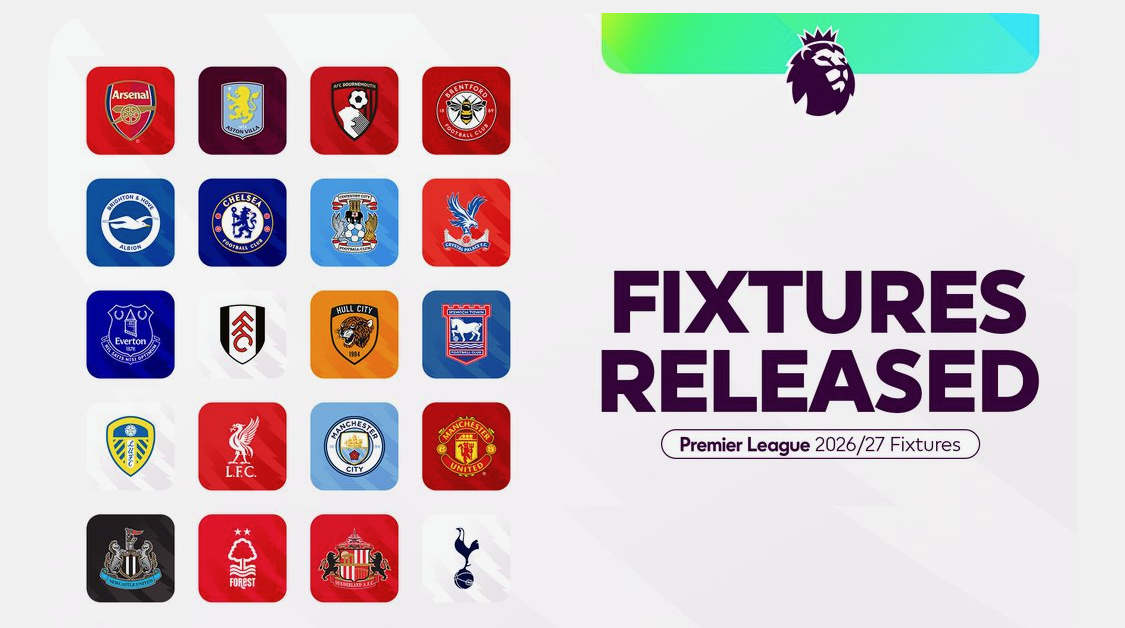
When the Premier League released its fixtures this week, I did what most football supporters do.
I looked for the opening weekend.
I looked for the big derbies.
I looked for the Christmas fixtures.
I looked to see who had the easiest start and who had been handed a nightmare run.
Then I moved on.
To be honest, I had never really given much thought to how the fixture list was actually created.
I assumed somebody sat in an office somewhere, pressed a few buttons and out came 380 matches.
As it turns out, I couldn't have been more wrong.
The Premier League fixture list is one of the most complicated scheduling exercises in world sport.
And the really surprising part?
The Premier League isn't even the first thing they schedule.
The Premier League Doesn't Come First
That was the first thing that surprised me.
When work begins on a new Premier League season, the Premier League itself effectively joins the queue.
Before a single league fixture can be allocated, other competitions get priority.
First come FIFA international windows.
Then UEFA competitions.
Then domestic cup competitions.
International windows are protected.
Champions League dates are protected.
Europa League dates are protected.
Conference League dates are protected.
FA Cup dates are inserted.
Only once all of those dates have claimed their place on the calendar can the Premier League begin fitting its own fixtures around them.
Imagine trying to complete a jigsaw puzzle after somebody has already glued hundreds of pieces into place.
That's essentially where the process starts.
Even The Season Start Date Isn't Random
I assumed the Premier League simply started in August because that's when football starts.
Not quite.
The 2026/27 season actually begins a week later than the previous campaign because the Premier League wanted to allow 89 clear days from the end of the previous season and 33 days from the FIFA World Cup Final.
Even the first day of the season is part of a carefully managed process.
Then Came The Next Surprise
The people building the Premier League fixture list aren't really building a Premier League fixture list at all.
They are coordinating more than 2,000 professional matches across England's top four divisions.
In fact, the process involves scheduling approximately 2,036 fixtures across the Premier League, Championship, League One and League Two.
The Premier League's 380 fixtures are only one piece of a much larger puzzle.
Suddenly Arsenal v Coventry doesn't seem quite so important.
The UEFA Problem
The job became significantly harder in recent years when UEFA expanded its competitions.
More Champions League matches.
More Europa League matches.
More Conference League matches.
More dates disappearing from the calendar.
The puzzle didn't get bigger.
The space available to solve it got smaller.
This season there are nine Premier League clubs playing in Europe.
Five are involved in the Champions League.
Four are playing in the Europa League or Conference League.
Every one of those clubs creates additional restrictions.
A club cannot play a European fixture and a Premier League fixture during the same midweek.
Every restriction removes options.
Every removed option makes the puzzle harder.
There Are Only So Many Dates Available
After all the FIFA, UEFA and domestic cup dates have been protected, the Premier League is left with surprisingly few opportunities to schedule its matches.
This season there are only 33 weekends and five midweek rounds available.
That's it.
Thirty-eight rounds in total to fit 380 fixtures.
And that's before the clubs start making requests.
Then The Clubs Get Involved
Around April, Premier League clubs are invited to submit requests.
Some want particular home dates.
Others request to be away.
Some stadiums are hosting concerts.
Others are preparing for NFL matches.
Some clubs may be undertaking stadium works and need extra time before hosting their first home fixture.
Not every request can be accommodated.
But every request must be considered.
Supporters Get A Say Too
This was another surprise.
Supporter groups are consulted during the process.
The Premier League discusses the season calendar and scheduling challenges with supporter representatives and other stakeholders before the fixture list is finalised.
Supporters don't get to choose who plays whom.
But they are not entirely absent from the conversation either.
Then The Police Get Involved
This was probably my favourite discovery.
Certain clubs cannot both be at home at the same time.
Arsenal and Tottenham.
Chelsea and Fulham.
Manchester United and Manchester City.
Everton and Liverpool.
Newcastle United and Sunderland.
Why?
Police resources.
Local authorities do not want multiple major matches requiring significant operations in the same area at the same time.
Again, another set of restrictions gets added to the puzzle.
Then The Computer Finally Gets A Turn
Only after all of these constraints have been entered does the scheduling software begin its work.
The Premier League works with specialist fixture software developed specifically for the task.
The objective is not perfection.
Perfection is impossible.
The objective is to create the least imperfect fixture list.
The software attempts to balance home and away matches.
It tries to avoid long runs of home fixtures.
It tries to avoid long runs of away fixtures.
It works towards a fair balance over the season.
It considers supporter travel.
It attempts to share Christmas and New Year scheduling fairly.
And it somehow manages to squeeze 380 Premier League fixtures into the spaces that remain.
One Change Can Trigger Forty More
This was the statistic that stopped me in my tracks.
According to the Premier League, changing a single fixture can sometimes trigger around forty other changes.
Forty.
Move one game.
Another club loses a date.
Move that game.
A policing issue appears.
Move that one.
A European clash emerges.
The entire process resembles a giant set of dominoes.
Suddenly it becomes much easier to understand why fixture scheduling is such a specialised job.
Humans Still Check Everything
The computer does not simply print a fixture list and send it to the clubs.
The proposed schedule is reviewed.
Requests are checked.
Potential conflicts are examined.
Alternative solutions are considered.
Only after that process is complete are the fixtures released.
So Who Actually Creates The Fixtures?
Former commentator Richard Keys looked at Arsenal hosting Coventry City on opening night and asked a simple question.
"Who makes these decisions?"
The reality is that no single person does.
The fixture list is the final product of months of planning, hundreds of restrictions and thousands of calculations.
Richard Keys asked who makes these decisions.
After reading about the process, I think the better question might be:
"How on earth do they make any of it work at all?"
Because once you understand what sits behind those 380 fixtures, the remarkable thing isn't that supporters complain about the draw.
It's that a draw exists in the first place.