SBS keeps the World Cup. Again.
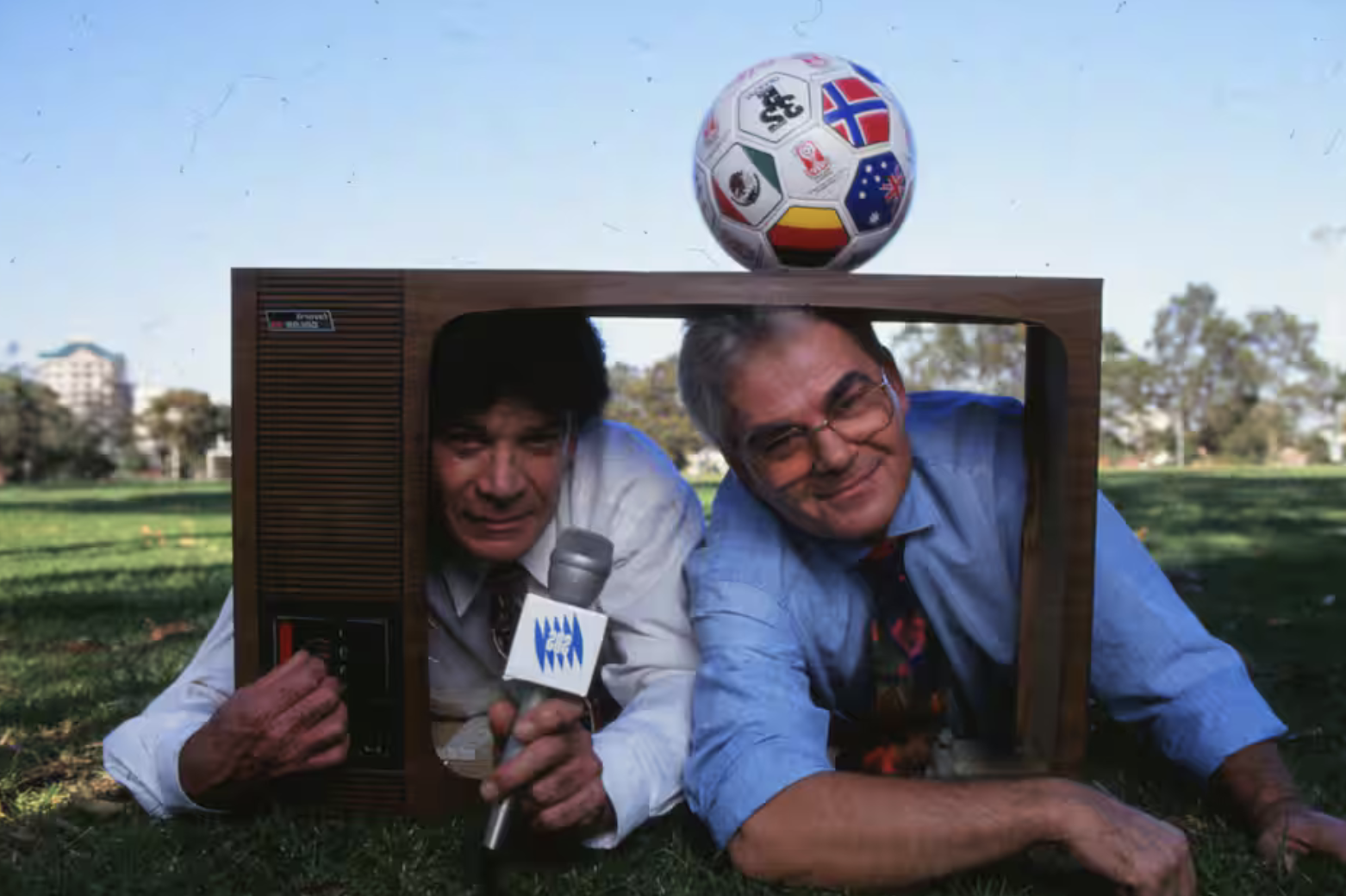
Photo credit: SBS
Free to air, and still free
Free to air football is still a thing in this country.
Say what you like about Australian TV, but SBS, the Special Broadcasting Service, just delivered every single match of the 2026 World Cup live and free.
All 104 games. No subscription. No paywall. No having to explain to your kids why the biggest tournament on the planet lives behind someone else's login.
In our house that meant every match, watched on the couch, with the volume up too loud for a school night more times than I'll admit to.
That matters more than people give it credit for.
A quick 101 on SBS and football
For anyone who's ever wondered why SBS and football go together like that, here's the short version.
SBS started broadcasting in 1980. From very early on it leaned into football hard, at a time when the code was still seen by a lot of Australia as an "ethnic" game rather than a mainstream one.
That wasn't an accident. Post war migration had brought huge numbers of Southern European fans to Australia, and football was the game they'd grown up with. SBS built its football coverage around those communities, at a time when almost nobody else in Australian media was interested.
Les Murray and Johnny Warren became the faces of it. For decades they were "Mr and Mrs Soccer" to a whole generation of fans, and they carried SBS's World Cup coverage from the mid-1980s onward.
SBS has held the World Cup rights on and off for close to forty years now. Along the way it's been credited with helping drag football from the margins into the mainstream, particularly through moments like the Socceroos' famous run at the 2006 World Cup.
So when people ask why SBS bothers fighting so hard to keep these rights, that's why. It's not just a broadcaster with a sports package. It's the network that backed this game before anyone else would.
The timezones will be brutal
Let's talk about the timezones for 2030, because that's where the real story is now.
This one needs a bit of explaining. The 2030 World Cup will be spread across six countries on three continents, which has never happened before.
Spain, Portugal and Morocco will host the bulk of the tournament. Then, to mark the World Cup's 100th birthday, Uruguay, Argentina and Paraguay will each host one commemorative opening match, since Uruguay hosted the very first World Cup back in 1930.
Once those three opening matches wrap up in South America, the tournament shifts entirely to Spain, Portugal and Morocco for the rest of the way.
Here's the thing though, checking that against Hobart properly, it's not the easy run it sounds like. An early afternoon kickoff in Spain lands around 9 or 10pm here, which is perfectly watchable. But a typical evening kickoff, 7pm or 9pm local, lands at 3am or 5am the next day in Hobart. Same brutal territory as the North American tournament we just survived.
So it's a mixed bag. Some matches at a sane hour. Plenty more in the middle of the night. Set your alarms accordingly, because I'll be setting mine.
Tough break for the rest of South America
Here's a quirk worth knowing about this format. All six host nations qualify automatically, not just the three main hosts.
So Spain, Portugal and Morocco get their spot as tournament hosts, and Uruguay, Argentina and Paraguay get theirs as centenary hosts.
Argentina would likely have qualified on merit anyway given their current squad. But Uruguay and Paraguay both walk in with a guaranteed place they'd otherwise have had to earn through South American qualifying.
Which means everyone else in that confederation is now fighting over fewer open spots. If I were a South American nation outside those three, I'd be more than a little annoyed. Qualifying just got harder through no fault of your own.
The bit that got my attention
Turns out SBS had already locked in the rights for the 2030 World Cup months ago. Quietly. No press release, no fanfare.
It only came out via the Australian Financial Review, days after SBS wrapped up its most watched World Cup on record.
When asked by the AFR about it, SBS wouldn't comment.
What did SBS actually pay?
What I really want to know is what SBS paid for it.
The 2026 rights reportedly went for something like $30 million, after three rounds of bidding. SBS has said the gap between the top two bids wasn't huge.
Which raises the obvious question, who else was in the room. Streaming platforms have been circling live sport for years now.
Are we really meant to believe none of them wanted a piece of the biggest sporting event on earth. But to be fair its ok with me because football on mainstream TV is a wonderful thing!
Why the quiet approach probably makes sense
Rights negotiations are commercial deals.
Confidentiality clauses, competitive tension with other bidders, timing around FIFA's own announcements, all of that is normal in this world.
So I'll say it plainly. SBS didn't do anything wrong here, and I'm not going to pretend otherwise just because the timing looked awkward.
What I do know is this. Free to air football is a genuine public good, and SBS has backed this game for longer and more consistently than anyone else in Australian media.
And in the end, who really cares how it happened. Football is mainstream in our loungerooms now, and that's the bit that matters. Bring on 104 games and 48 countries.
Just don't get me started on Gianni Infantino's talk of 64 teams.
Gianni, we've got enough games. We've got enough spectacle. We've got enough of you turning up in every camera shot wanting more content, more matches, more everything.
How many more games is he trying to shove into our homes before someone tells him enough is enough?
At least one thing's certain for 2030. Unless the American Constitution gets rewritten between now and then, we won't have to watch that clown Trump hovering over the trophy presentation this time either.