The Big Show
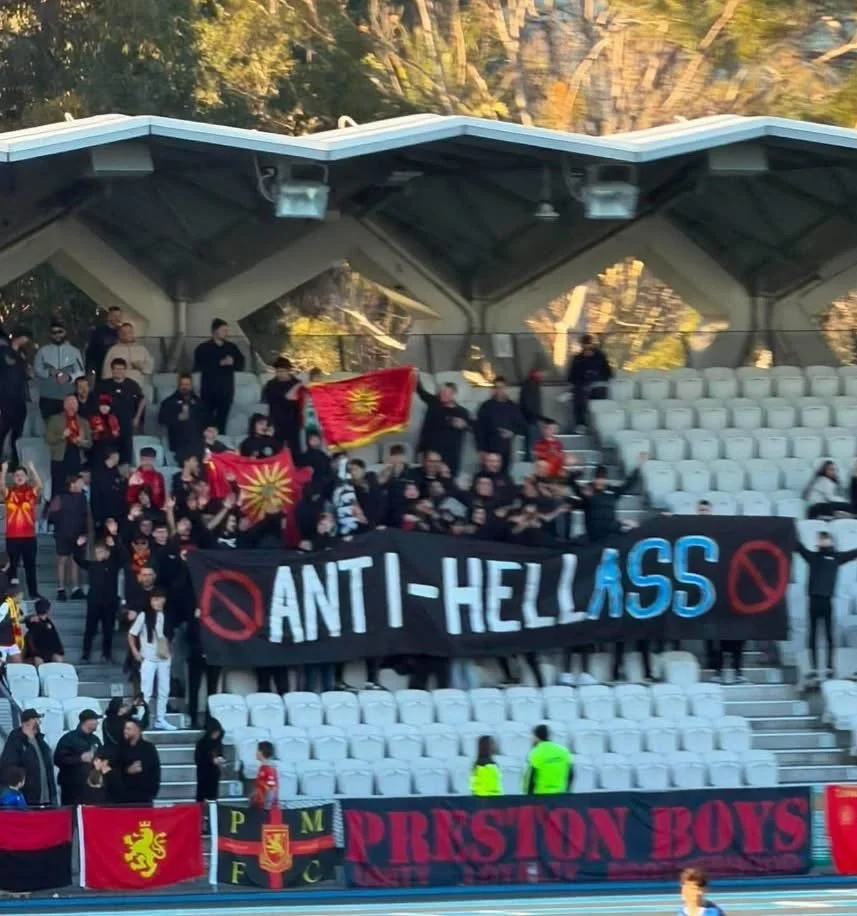
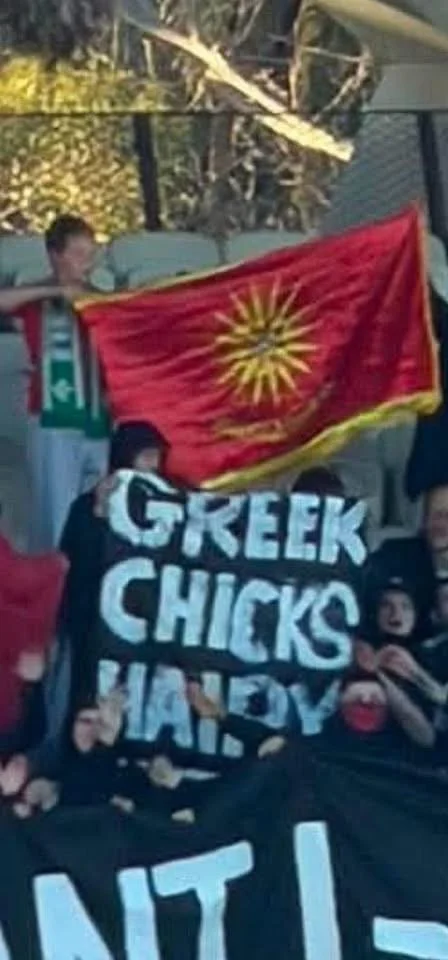
Editor's note: The following photographs contain banners that some readers may find offensive. They were displayed publicly at the match and are already widely available online. I have included them so readers can see the evidence for themselves and make up their own minds.
A 0-0 draw that left Australian football asking much bigger questions.
They called it The Big Show.
It was hard to argue with the name.
South Melbourne versus Preston Lions isn't just another NPL Victoria fixture. It is one of the competition's showcase occasions.
Two historic clubs.
Two clubs built by proud migrant communities.
Two passionate supporter bases.
A rivalry stretching back generations.
The build-up reflected the occasion.
Tickets were sold in advance.
Supporters were directed to separate entrances.
Additional security was brought in.
Police were on hand.
Everyone understood this wasn't going to be just another Saturday afternoon in Victorian football.
This was The Big Show.
A celebration of two clubs whose history helped shape Australian football.
Long before kick-off, supporters filtered into Lakeside Stadium.
Scarves.
Flags.
Friends catching up before finding their place on the terraces.
Families.
Long-time supporters.
People who understood the history of the occasion.
The atmosphere built steadily.
The colour.
The noise.
The anticipation.
This is football.
For ninety minutes, two proud clubs fought out a tense contest.
The match finished 0-0.
Yet by the final whistle, the scoreline had almost become irrelevant.
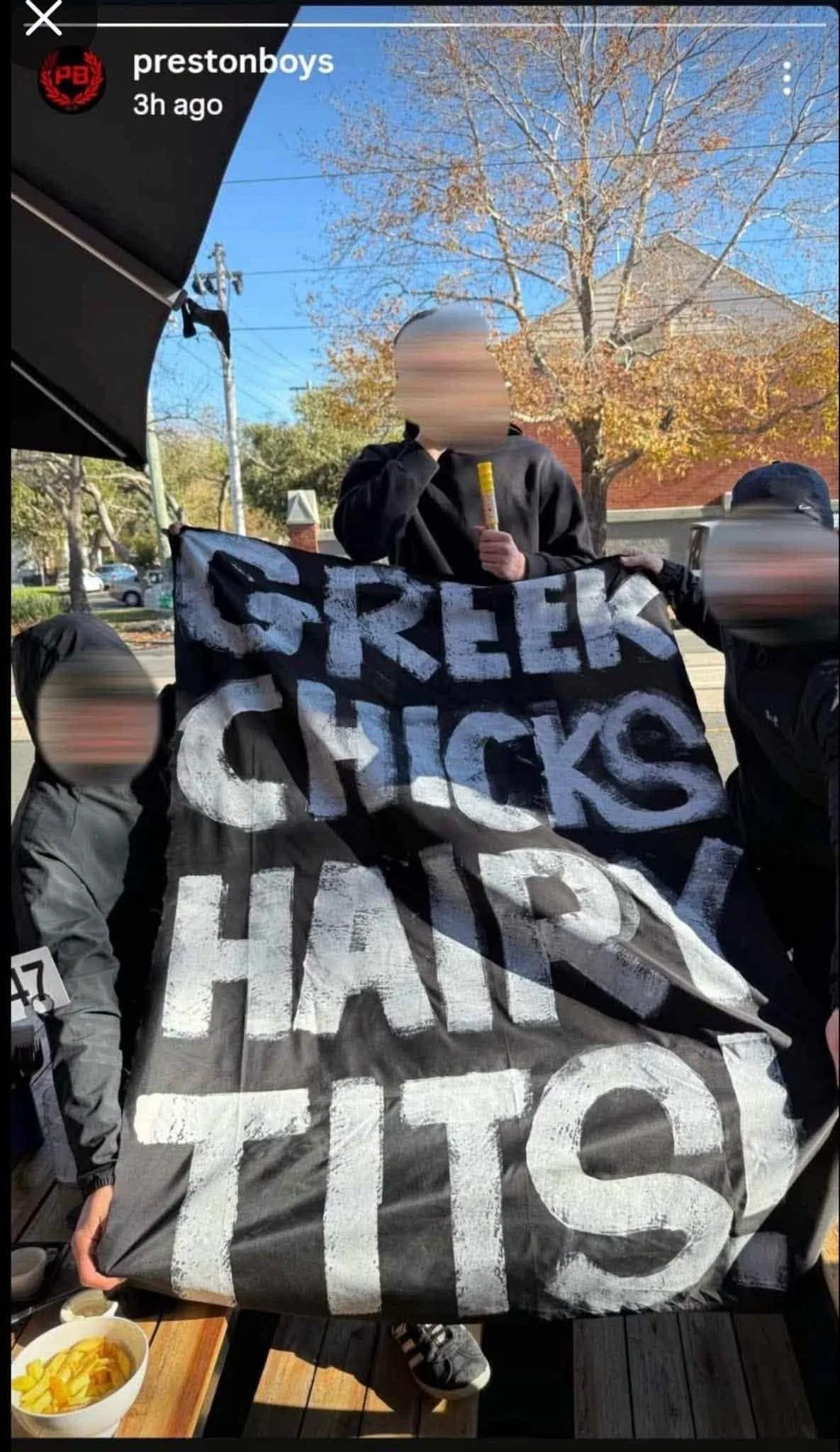
Instead of talking about the football, much of the conversation centred on several banners displayed by supporters.
I'll let readers look at the photographs and make up their own minds about whether they crossed the line.
A rivalry older than football
The origins of this rivalry lie not in football, but in a decades-old dispute over history, identity and the name "Macedonia".
Like many migrant communities, supporters brought their heritage to Australia.
For the overwhelming majority, that heritage is something to celebrate. It has enriched Australian football beyond measure.
Occasionally, however, old political and cultural tensions spill into football.
That history helps explain why emotions can run so high.
It doesn't excuse behaviour that crosses the line.
The clubs that built Australian football
Before anyone thinks this is an attack on migrant clubs, let me be absolutely clear.
Without clubs like South Melbourne, Preston Lions, Heidelberg, Melbourne Knights, Marconi, APIA Leichhardt, Sydney United and many others, Australian football would not be where it is today.
These clubs built facilities.
Developed junior players.
Produced Socceroos and Matildas.
Created communities.
Kept football alive through the commitment of generations of volunteers.
Their contribution deserves enormous respect.
This article isn't about those clubs.
It's about what happens when the actions of a small number of supporters threaten to overshadow everything generations before them built.
Frank Lowy's big gamble
Frank Lowy wasn't an outsider looking in.
He wasn't someone who failed to understand traditional Australian football.
Quite the opposite.
Before becoming one of the most influential administrators in Australian sporting history, Lowy was deeply involved in one of Australia's great migrant clubs.
He served as president of Hakoah Sydney City, a club founded by Sydney's Jewish community. Like South Melbourne, Preston Lions, Heidelberg, Marconi and so many others, Hakoah wasn't simply a football club. It was a place where migrants found community, friendship and identity in a new country.
Lowy lived and breathed that culture.
He understood the passion.
He understood the pride.
He understood what those clubs meant to the communities that built them.
That is what makes his vision for the A-League so fascinating.
It wasn't born from a desire to erase football's history.
It was born from someone who knew that history intimately.
Lowy believed Australian football could honour the contribution of its migrant clubs while creating a national competition that appealed to every Australian.
Twenty years ago, he and Football Federation Australia CEO John O'Neill made a bold decision.
They wanted Australian football to appeal to everyone.
City-based clubs.
Family-friendly environments.
A competition that represented modern Australia rather than individual ethnic communities.
Looking back, Lowy wrote:
"We built on this and removed all trace of ethnicity for the new top league."
He also reflected:
"Instead of being an ethnic fight between various ethnic groups in Sydney and Melbourne, soccer has become a national sport in Australia."
Whether you agree with that vision or not, it fundamentally changed Australian football.
Which raises an interesting question.
Did we sanitise football too much?
Football is different.
Supporter culture is part of its identity.
The songs.
The chants.
The colour.
The tribalism.
The rivalry.
Without those things, football loses something that makes it unique.
Anyone who has stood on the terraces in England knows exactly what I mean.
As the opposition goalkeeper prepares to take a goal kick, thousands of supporters join together with the familiar chant:
"You're just a fat bastard... ahhh!"
Is it classy?
Probably not.
Is it part of football culture?
Absolutely.
It's tribal.
It's designed to put the opposition off their game.
It's echoed around English football grounds for decades, and most people understand it for what it is - football banter.
Football without rivalry isn't football.
Liverpool versus Manchester United.
Boca Juniors versus River Plate.
South Melbourne versus Preston Lions.
Passion is not the problem.
But there is a line.
There is a difference between trying to distract an opposition goalkeeper and targeting someone's ethnicity.
There is a difference between football banter and sexist abuse.
There is a difference between celebrating your own heritage and denigrating someone else's.
Perhaps that is the balance Australian football is still trying to find.
Football Victoria's dilemma
Football Victoria now finds itself in an unenviable position.
Its Spectator Code of Behaviour exists for a reason.
It also has a responsibility to create an environment where everyone feels welcome at football.
If Football Victoria concludes those standards were breached, does it take disciplinary action?
If it does, some will argue it is punishing two proud clubs for the actions of a small number of supporters.
If it doesn't, others will ask why the rules exist in the first place.
Neither option is easy.
Doing nothing sends a message.
Taking action sends a message too.
This debate is much bigger than one match.
I wonder what the clubs think
I also wonder how the volunteers, administrators and countless good people at both clubs are feeling today.
They worked incredibly hard to promote The Big Show.
They wanted people talking about one of Victorian football's showcase occasions.
Instead, the conversation drifted away from football.
I suspect that's not how anyone wanted this weekend to be remembered.
The real legacy of The Big Show
Frank Lowy didn't reject ethnic football.
He emerged from it.
Perhaps that's why his vision still deserves to be debated today.
He recognised that football's greatest strength was its diversity.
He also feared that its greatest weakness was allowing old political and ethnic divisions to overshadow the game itself.
Twenty years later, perhaps we're still searching for the right balance.
Football should be loud.
It should be colourful.
It should be tribal.
Supporters should sing.
Wave flags.
Celebrate their history.
Create an atmosphere that makes people want to come back.
But football should also be welcoming.
It should unite communities more than it divides them.
Football has always reflected society.
It brings together people from every culture, every background and every generation.
Maybe that's why getting this balance right matters so much.
The Big Show deserved to be remembered for the football.
Instead, a hard-fought 0-0 draw has left Australian football asking a question that still doesn't have an easy answer.
Not whether football should become sanitised.
Not whether rivalry should disappear.
But whether we can preserve everything that makes football the world's game while leaving behind the divisions that have nothing to do with it.
Perhaps Victorian football doesn't have an atmosphere problem.
Perhaps it has a balance problem.
How do we protect the passion that makes football unique while ensuring the next generation inherits the best parts of our history, not the divisions that belong in the past?
That, perhaps, is the real legacy of The Big Show.