The Four Most Dangerous Words In Football
"They stacked their team”
I thought I was writing about a cup final.
Apparently I was writing about one of football's oldest sins.
Last week I did what I normally do.
A review of the latest NPL Under 21 results.
A preview of the weekend ahead.
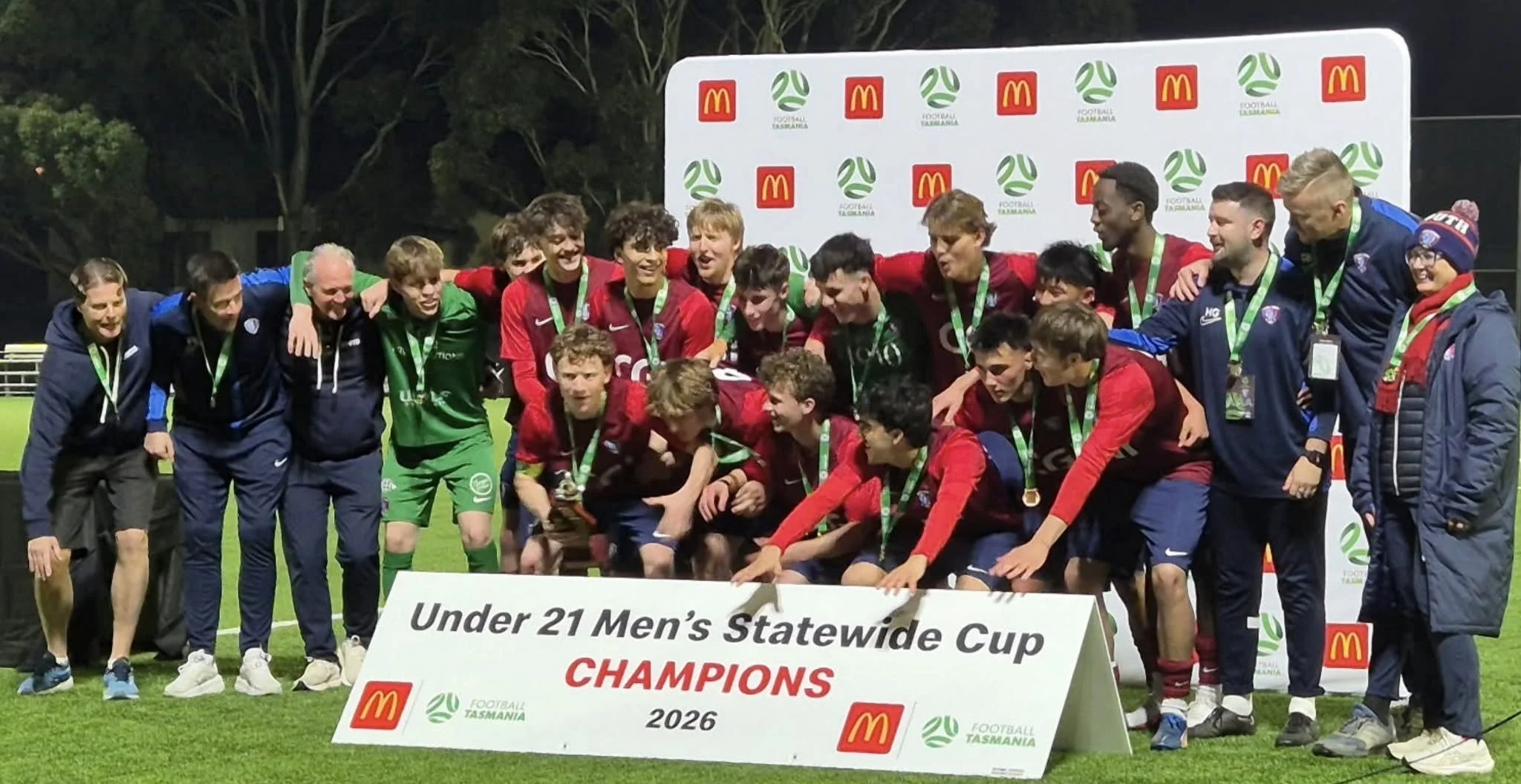
It just happened to include South Hobart winning the Under 21 Statewide Cup Final against Kingborough.
Nothing unusual.
A cup final had been played.
A trophy had been won.
The competition was returning to league football.
Job done.
Or so I thought.
Within hours the comments section had exploded.
Questions were asked.
Accusations were made.
People demanded team sheets.
Others demanded explanations.
One person appeared ready to launch a judicial inquiry.
It was glorious.
I have written about governance.
I have written about Football Australia losing millions of dollars.
I have written about stadiums.
I have written about promotion and relegation.
I have written about board elections.
Yet somehow an Under 21 review generated more discussion than half of those topics combined.
Go figure.
Team Stacking: Football's Original Sin
There are few accusations in football more serious than:
"They stacked their team."
Football people are remarkably forgiving.
They will survive poor refereeing.
They will survive bad weather.
They will survive administrators.
They will survive VAR.
Somehow they even survive social media.
But accuse somebody of stacking a team and suddenly everybody becomes an expert witness.
Rules are quoted.
Eligibility regulations appear.
People who haven't watched an Under 21 game all season suddenly become specialists in player movement between squads.
Facebook comment sections become the modern equivalent of a Royal Commission.
Football people will forgive almost anything.
But they never forget team stacking.
The Predictable Part
Let's be honest.
South Hobart is my club.
South Hobart won the cup.
And yes, I probably should have known what was coming.
The comments quickly split into familiar camps.
One group was convinced South Hobart had committed football's equivalent of grand larceny.
Another pointed out every player selected was eligible under the competition rules.
A third group appeared determined to put the entire Under 21 competition itself on trial.
At one point I wasn't entirely sure whether we were discussing a cup final or rewriting the Football Tasmania competition regulations.
The Comments That Caught My Eye
Some comments questioned how many players regularly play Under 21 football.
Others argued the cup-winning side looked very different from some of the teams South Hobart had fielded during the league season.
Others responded that every player was age-eligible and selected entirely within the rules.
Some pointed out that clubs operate very different structures.
Kingborough, for example, do not have the same Championship and Championship One pathways available to them as some other NPL clubs.
Another argument was that if clubs develop players capable of playing senior football at 17, 18 or 19 years of age, surely that should be celebrated rather than criticised.
And somewhere in amongst all that, I realised something.
We weren't actually arguing about South Hobart.
We weren't even arguing about the cup final.
We were arguing about what the Under 21 competition is supposed to be.
What Exactly Is The Under 21 Competition?
Because I am not sure Tasmanian football has ever fully answered the question.
Is it a development competition?
Is it reserve grade football?
Is it a pathway competition?
Or is it all three at once?
Because depending on how you answer that question, you will probably land on a different side of the debate.
A development competition suggests a stable group of young players developing together over a season.
A reserve grade competition suggests movement between teams based on form, fitness, opportunity and pathway progression.
Those are not necessarily the same thing.
Yet we often talk about the Under 21 competition as though they are.
Perhaps that is why the same argument appears every season.
The Irony
The funny thing is that almost everybody in the comments was partly right.
Kingborough have been the benchmark league team this season.
The ladder says so.
South Hobart won the cup fairly.
The scoreline says so.
South Hobart's cup-winning side was different to some of the teams fielded during league matches.
That is also true.
Every player selected was eligible.
Also true.
All of those statements can exist at the same time.
Which is why people end up talking past each other.
Everyone thinks they are arguing about the same thing.
Often they are not.
The Working Group Question
What fascinated me most wasn't who was right.
It was how many people clearly have different views about the purpose of the competition.
Football Tasmania's Competitions Working Group is currently considering the future shape of competitions.
Promotion and relegation.
League structures.
Pathways.
Competition formats.
Perhaps the Under 21 competition should be part of that conversation.
Because if half the football community thinks it is a development competition and the other half thinks it is reserve grade football, then maybe we have uncovered something important.
Not a problem with clubs.
Not a problem with players.
But a lack of shared understanding about what the competition is actually trying to achieve.
The Real Story
In the end, South Hobart winning the Statewide Cup was not really the story.
The real story was what happened afterwards.
One cup final.
One Facebook post.
Lots of comments.
And suddenly Tasmanian football was debating youth development, player pathways, reserve grades, eligibility rules and the future of the Under 21 competition.
Which tells me one thing.
The real story wasn't who won the cup.
The real story is that nobody seems entirely sure what the Under 21 competition is supposed to be.
And perhaps that's a question worth answering.