The Politics of the Urinal
There is a quiet mistake football keeps making when it talks about women in leadership.
It confuses visibility with power.
A woman on a panel.
A woman on a poster.
A woman invited to speak at a breakfast.
A woman featured during a themed week.
All of these things matter, but none of them are the same as influence.
Visibility is being seen.
Power is being listened to.
And the gap between the two is where progress often stalls.
When Being the Only Woman Becomes “Normal”
Over many years, I was often the only woman in the room at presidents’ meetings. There were female employees from Football Tasmania present, but they did not hold leadership roles. Occasionally another woman would appear around the table, but more often than not, it was just me. I became accustomed to it. It felt normal, because it had to. But it wasn’t representative of normal life, and it shouldn’t have been normal for football either.
At the time, I didn’t dwell on it. You don’t survive long in leadership if you constantly focus on what sets you apart. You adapt. You get on with the job. You stop noticing the imbalance, because noticing it doesn’t change it.
But distance brings clarity.
And with it, the realisation that what felt normal inside football was anything but normal outside it.
What I Didn’t Question at the Time
When you are inside a system, you don’t always question it. You adapt to it. You learn its rhythms, its language, its expectations. You focus on doing the work well, because that feels like the only thing you can control.
For a long time, I didn’t question why the imbalance existed. I didn’t stop meetings to ask where the other women were. I didn’t frame my experience as unusual. I assumed that if I worked hard enough, stayed long enough, and proved myself often enough, the system would eventually shift around me.
That is how normalisation works. What begins as noticeable becomes background. What once felt odd becomes familiar. And familiarity has a way of dulling critique.
It was only with distance that the questions surfaced. Not as anger, but as clarity. Why had leadership looked so narrow for so long? Why was representation treated as optional rather than essential? And why were women so often present in football, but rarely powerful within it?
These are not questions I ask with regret. They are questions I ask with perspective.
Standing Just Off to the Side
I often tease my husband about his status in football. Ken has had an illustrious coaching career and is well known in football circles and beyond. I joke that he is a “minor celebrity”. People recognise him. They know his name. They have stories ready before he even extends his hand.
By contrast, I am often introduced as Ken’s wife.
Not because people mean to diminish me, but because familiarity follows reputation. When we arrive at new clubs or football events, Ken is the first handshake. The known quantity. I stand slightly to the side, waiting my turn.
I have learned to be his wing woman.
That dynamic can be deflating at times, even when it is understandable. Ken’s recognition is earned. His career speaks for itself. I don’t begrudge it. But being less visible, less immediately recognisable, can still sting. Especially when your own contribution exists quietly, without a headline or a backstory attached to it.
Over time, you get used to it. You don’t correct the introduction. You don’t make a fuss. You step forward when the moment comes and do the work in front of you.
You suck it up.
And perhaps that, too, is something many women learn early. To wait. To adapt. To accept that recognition often arrives later, if at all.
Learning to Be Seen, Even a Little
I have always been photo shy. There aren’t many photographs of me, particularly from earlier years. I was usually the one taking the picture, standing just outside the frame, making sure everyone else was captured.
It is only in the past few years that I stopped and thought about that. That one day my grandchildren might look back and wonder what I looked like. That there might be very little visual record of me at all.
So I started taking a few photos. The occasional selfie. Nothing staged or dramatic. Just proof that I was there.
It wasn’t about vanity. It was about presence. About leaving some small marker that said I existed in these spaces, in this life, at this time.
Perhaps that says something about leadership too. How often women are present without being visible. How easily we step aside, behind the camera, out of frame. How rarely we think to document ourselves, because we are so busy holding everything else together.
Being seen does not always come naturally. Sometimes it is something you have to choose, deliberately and a little awkwardly, even later in life.
How Governance Is Supposed to Work
For people outside football, it is probably worth explaining how this works.
Football in Australia is overseen by a national governing body, Football Australia. Beneath it sit state federations and competitions. Clubs that want to compete at the highest semi-professional level, known as the National Premier Leagues, must meet a set of licensing requirements. These cover governance, finances, facilities, junior development and administration.
In theory, club licensing exists to lift standards across the game. It is meant to ensure clubs are well run, sustainable, and representative of the communities they serve.
In recent years, Football Australia has also promoted a gender balance principle for boards and committees, commonly referred to as 40-40-20. The idea is simple enough, aim for at least 40 per cent women, at least 40 per cent men, and allow flexibility beyond that.
On paper, it sounds like progress.
Where the System Falls Short
The difficulty is that, in most cases, there are no meaningful consequences for clubs that do not meet it.
There is encouragement.
There is policy language.
There are expectations expressed in documents and presentations.
But there are very few penalties, and no consistent enforcement.
A club can fall well short of gender balance and still meet licensing requirements in every other respect. The mandate exists, but the accountability often does not.
Targets without consequences can create the appearance of action without changing behaviour. They reassure those outside the room that something is being done, while those inside know very little has shifted.
That gap between policy and practice matters.
Representation Without Authority
I have seen women invited into leadership spaces where decisions are discussed but not decided.
They are consulted, but not empowered.
Included, but not trusted.
Visible, but not influential.
This is not always deliberate. Often it is cultural. Familiar voices, long-standing habits and informal networks quietly reassert themselves.
The room looks different.
The outcomes remain the same.
When that happens, the burden of progress is placed on the woman in the room, rather than on the system that put her there without support.
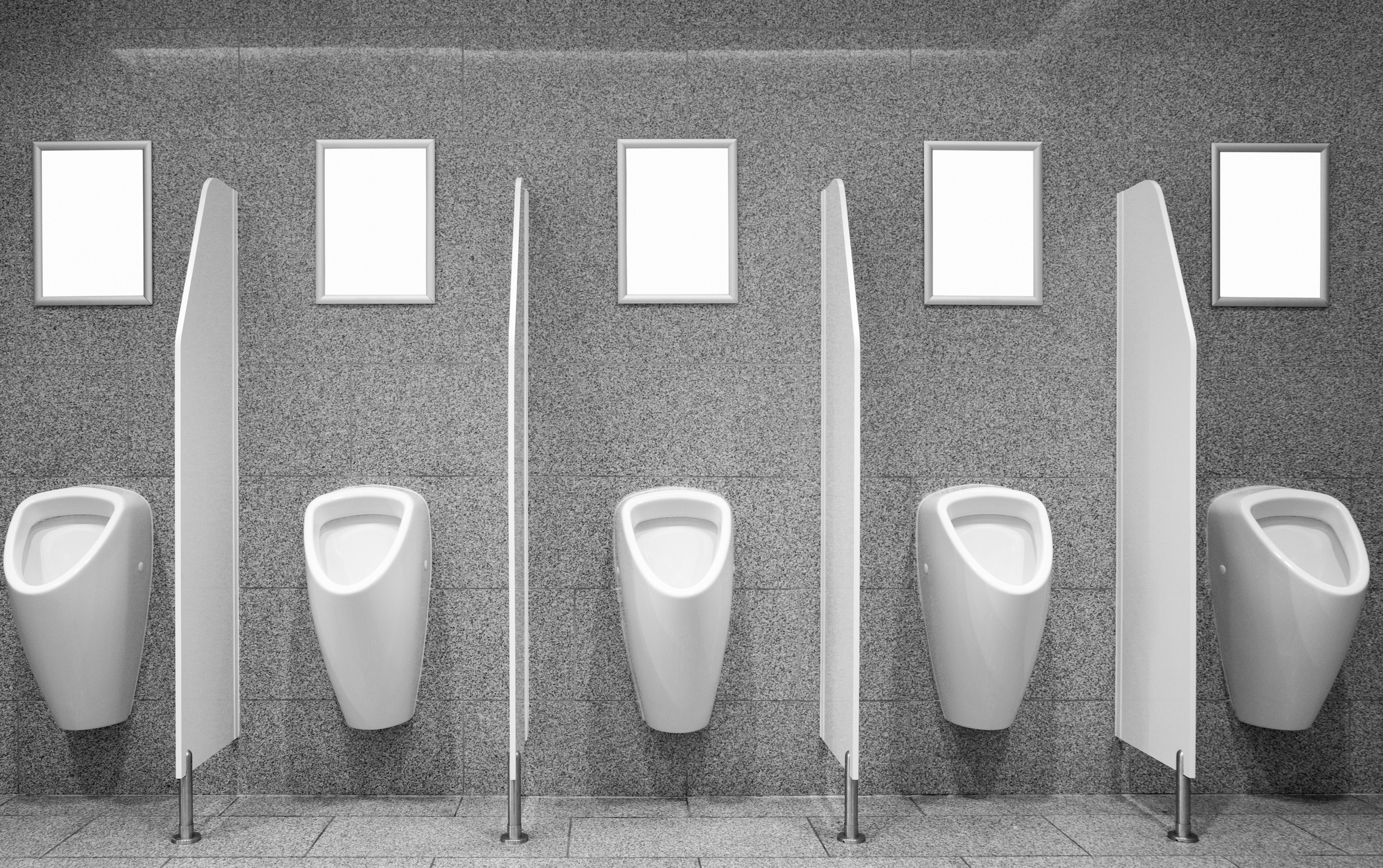
The Politics of the Urinal
It took me a while to work this one out.
I would come to meetings prepared for discussion, only to realise the decision had already been made. The conversation would unfold politely enough, but the outcome felt predetermined. At first, I assumed I had missed something. A meeting I hadn’t been invited to. A phone call I hadn’t been included in.
Then the penny dropped.
Some of the real conversations weren’t happening around the table at all. They were happening beforehand. Informally. Casually. Often in places I wasn’t part of.
The decision had already been made at the urinal.
What followed at the table was process, not power. Discussion without influence. Inclusion without agency.
Once you see it, you can’t unsee it. And it explains so much. Why rooms can look inclusive on paper, yet feel closed in practice. Why being present doesn’t always mean being part of the decision.
It wasn’t malicious. It was cultural. Long-standing habits operating quietly in plain sight.
But it mattered. Because power that operates informally is almost always power that excludes.
The Cost of Being “The First” or “The Only”
Being the first woman, or the only woman, in leadership carries an invisible cost.
You become representative, whether you want to or not.
Your mistakes feel magnified.
Your success is framed as exceptional rather than expected.
And when you step away, the absence is often treated as proof that women do not stay, rather than a sign that the environment was never designed to sustain them.
Token representation does not create pathways.
It creates pressure.
From Symbolism to Substance
I do not want to see fewer celebrations of women.
I want to see fewer excuses for why power remains concentrated.
Visibility should be the starting point, not the finish line.
Until women are present where strategy is set, resources are allocated and priorities are decided, equality remains an idea rather than a reality.
Football does not need more moments.
It needs meaningful shifts.
Until then, I will keep loving this sport fiercely.
Fiercely enough to expect better from it.