The Warm-Up Area Wars
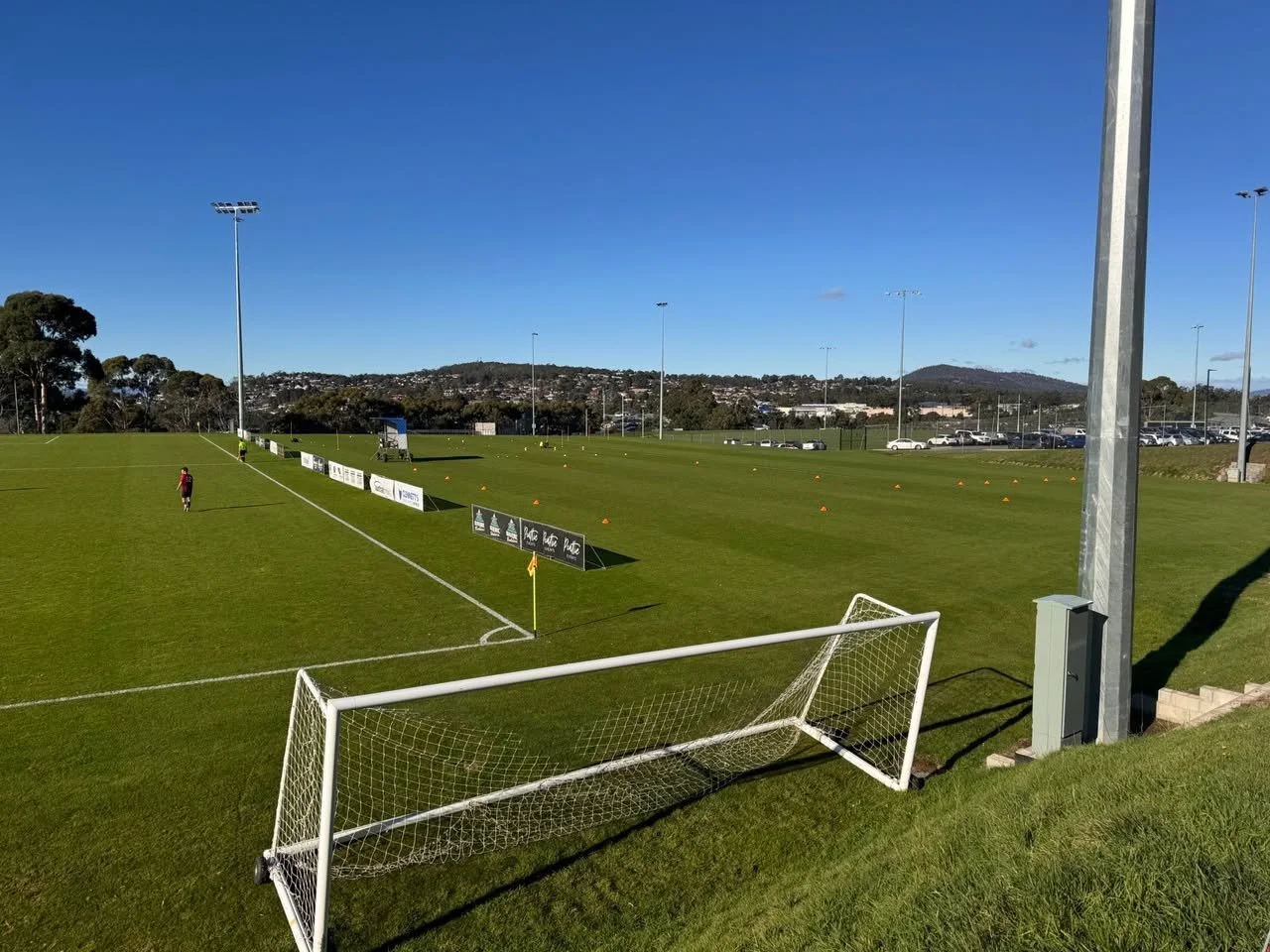
Photo courtesy of Matthew Rhodes
A post on Tassie Football Central yesterday about South Hobart's trip to Lightwood Park sparked one of the livelier football debates I've seen for a while.
The issue?
The pre-match warm-up area.
Some believed both teams should have access to the area beside the main pitch.
Others felt the home club had every right to decide how the facility was used.
Some people dismissed it as a storm in a teacup.
Others were genuinely unhappy about it.
I should say from the outset that I wasn't at the game.
I'm relying on what I read in the Tassie Football Central discussion and the conversations that followed.
For years when South Hobart visited Lightwood Park, both teams appeared to use the same warm-up area. To be honest, it always looked big enough to me.
Perhaps there are reasons I don't know about.
Perhaps there is more to the story.
But what fascinated me wasn't the warm-up area itself.
It was the reaction.
Because within minutes football people from all over Tasmania were sharing their views.
And suddenly a discussion about a patch of grass became a discussion about football gamesmanship.
Football Has A Long Memory
The comments quickly moved beyond Lightwood Park.
Some people questioned whether the decision was necessary.
Others argued it was simply home-ground advantage.
A few were frustrated by what they saw as an attempt to gain an off-field edge.
Reading through the discussion reminded me of things I have experienced and witnessed over many years in football.
I have seen sponsor banners suddenly appear over whiteboards in away changerooms.
I have experienced music being turned up so loudly that coaches struggled to conduct team talks.
I have seen visitors allocated the least convenient facilities available.
I have seen arguments over warm-up areas, access arrangements and all sorts of little inconveniences that appeared designed to make life just a little more difficult for the opposition.
None of those things ever seemed particularly important at the time.
Yet football people remember them.
The fact that a discussion about a warm-up area on Tassie Football Central immediately triggered such strong reactions tells you something.
Football has always had a curious fascination with gamesmanship.
Football's Small Wars
The funny thing about football is that some people spend enormous amounts of energy looking for tiny advantages that probably make very little difference at all.
Not better coaching.
Not better players.
Not better preparation.
Just little inconveniences for the opposition.
The sort of things that make people feel clever.
Cover the whiteboard.
Turn up the music.
Give the visitors the awkward dressing room.
Make them take the longer walk.
Send them somewhere else to warm up.
The objective is always the same.
Create a small edge.
The question is whether those edges actually exist.
The Big Names Did It Too
If you think this is unique to Tasmania, think again.
Some of the biggest names in football history have been associated with gamesmanship.
Sir Alex Ferguson's Manchester United became famous for creating an intimidating environment at Old Trafford. Opposition managers regularly complained about the away dressing room and the treatment they received on match day.
Jose Mourinho built much of his reputation on searching for every possible advantage. Opposition teams often accused his clubs of manipulating pitch conditions, watering schedules and match-day environments to suit their style of play.
Marcelo Bielsa, one of the most respected coaches in world football, became the centre of the famous "Spygate" scandal when it emerged he had sent someone to observe an opponent's training session before a match.
For years Arsène Wenger and Ferguson traded accusations about psychological warfare as Arsenal and Manchester United battled for Premier League titles.
Across South America, stories about transport delays, noisy hotels, fireworks, dressing-room conditions and hostile environments have become part of football folklore.
The funny thing is that very few people remember who won most of those individual battles.
What people remember are the stories.
Even The Stadiums Have Changed
One thing that struck me during our recent trip to the United Kingdom was hearing stadium tour guides talk about how much football has changed.
At several grounds we were told that UEFA requirements now mean home and away dressing rooms must meet the same standards for European competition.
Gone are the days when clubs could provide themselves with luxurious facilities and squeeze the opposition into a broom cupboard.
In some cases, clubs actually had to renovate facilities to meet UEFA requirements.
The principle is simple.
If two teams are competing in the same match, they should be provided with the same standard of environment.
Listening to those stories, I couldn't help but think of football's long history of gamesmanship.
The tiny away dressing room.
The uncomfortable seats.
The inconvenient facilities.
Many of those old traditions have gradually disappeared as the game has become more professional.
Sir Alex Ferguson probably wouldn't have approved.
Some of those old psychological advantages were part of Old Trafford folklore.
But modern football increasingly recognises that the contest should be decided on the pitch rather than in the dressing room.
The Difference Between Gamesmanship And Respect
One example has always stayed with me.
It wasn't about tactics.
It wasn't about football.
It was about respect.
Ken was around 75 years old at the time. He was still coaching.
We were visiting a club where he had previously coached.
He wasn't just another visitor turning up on match day.
Yet he wasn't allowed to drive the van close enough to the changerooms to unload the gear.
Instead, he had to park outside and carry everything in himself.
Now perhaps there was a reason.
Perhaps there was a policy.
But hearing what had happened I remember thinking it wasn't clever.
It wasn't creating a competitive advantage.
It wasn't gamesmanship.
It simply felt disrespectful.
Football is a small community.
Players become coaches.
Coaches become volunteers.
Volunteers become life members.
People move between clubs all the time.
The score is forgotten remarkably quickly.
The way people are treated is often remembered for years.
Let The Football Do The Talking
During my sixteen years as President of South Hobart, I saw all sorts of examples of football gamesmanship.
Some aimed at us.
Some suggested by people on our side.
My reaction was usually the same.
Why?
If you're good enough, you shouldn't need any of it.
Ken's response was even simpler.
Just get on with it.
Let the football do the talking.
The funny thing is that many of these little tricks seem to backfire anyway.
Nothing motivates players quite like feeling they've been disrespected.
Nothing creates a stronger "us against the world" mentality than believing someone is trying to gain an advantage away from the pitch.
Football history is full of examples where the side trying to be clever simply provided the opposition with extra motivation.
The Reality
Did Sunday's result have anything to do with where either team warmed up?
Almost certainly not.
The game was decided by the same things football games are always decided by.
Taking chances.
Defending well.
Making good decisions.
Executing under pressure.
The things that happen between the first whistle and the last.
The teams that usually succeed aren't the ones worrying about warm-up areas, whiteboards, parking spots or loud music.
They're the ones focused on playing better football.
Perhaps that's why Ken never worried much about any of it.
He had coached too long and seen too much.
He knew matches weren't decided by warm-up areas.
Or parking spots.
Or sponsor banners.
Or loud music.
They were decided by players.
The tricks create headlines.
The football wins championships.