Today We Are All Belgian
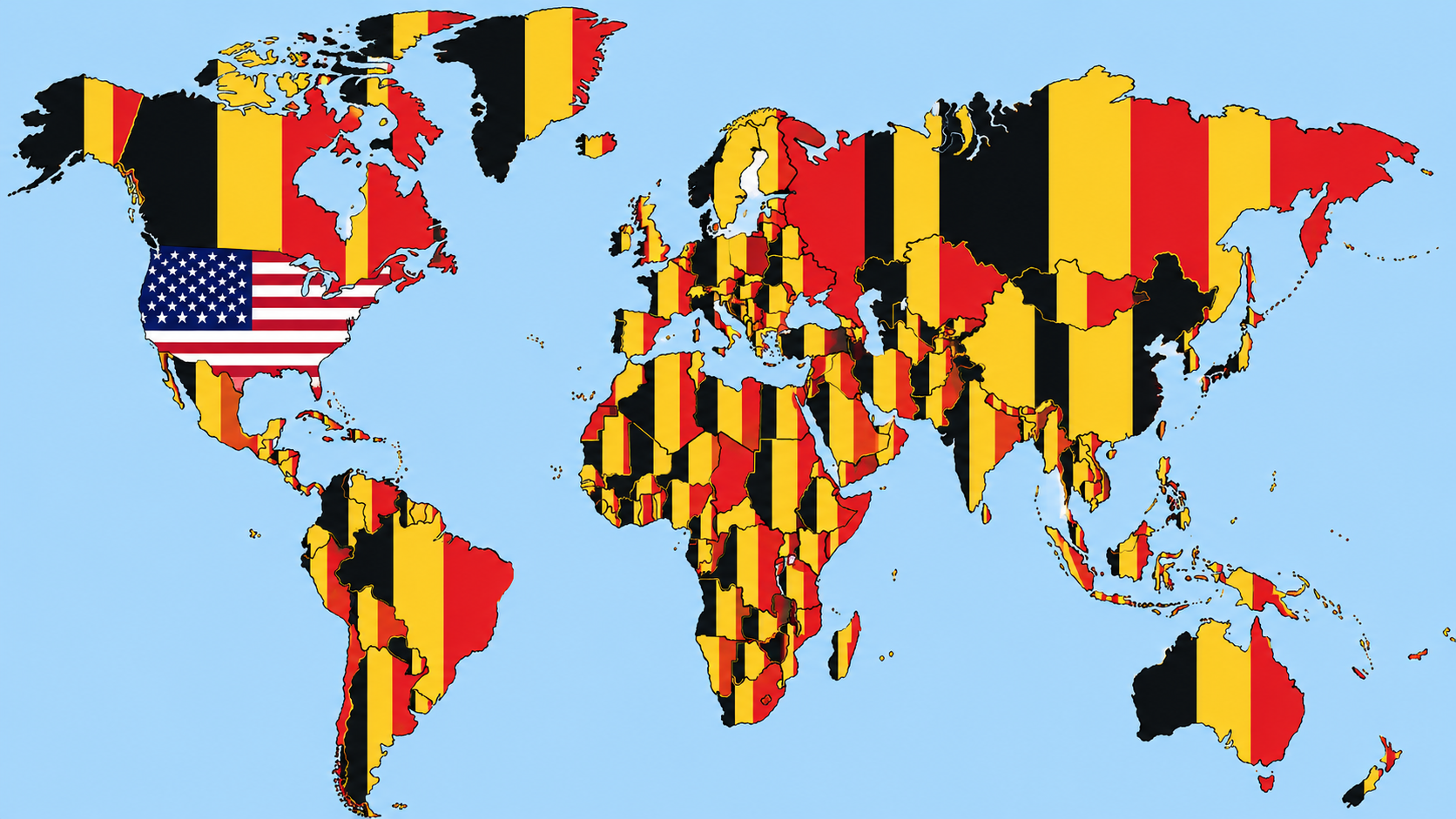
Yesterday I wrote a satirical blog about Folarin Balogun.
It was meant to make people smile.
I joked that perhaps every football club in the world should now start appealing red cards.
I joked that maybe every club president should ask FIFA to suspend an automatic suspension.
I joked that perhaps all we needed was Gianni Infantino's phone number.
The joke didn't last long.
Less than twenty-four hours later, football stopped laughing.
Today...
We are all Belgian.
Not because we suddenly support Belgium.
Not because we want Belgium to beat the United States.
But because Belgium has become the nation asking the question every football supporter, every referee, every coach, every club president and every football administrator around the world is now asking.
Do the rules still mean what they say?
This is no longer about one player
This story has outgrown Folarin Balogun.
It has outgrown Belgium.
It has even outgrown Donald Trump.
It has become a story about whether football still believes in one of its oldest and simplest principles.
The rules apply equally to everyone.
That is the question now hanging over this World Cup.
It started with one red card
Balogun, one of the United States' key attacking players, was sent off against Bosnia and Herzegovina.
The referee produced a red card.
VAR reviewed it.
VAR agreed.
Red card.
For everyone involved in football, that has always meant one thing.
An automatic one-match suspension.
Not maybe.
Not depending on circumstances.
Automatic.
Then something football had never seen before happened.
Donald Trump has publicly confirmed he contacted FIFA because he did not believe the challenge deserved a red card.
Gianni Infantino has publicly confirmed he received that phone call.
Infantino says he explained there was an independent judicial process and insists FIFA's judicial bodies acted independently and according to their powers.
Then FIFA announced that Balogun's suspension itself had been suspended.
Not overturned.
Not rescinded.
Suspended.
Football immediately began asking questions.
Belgium refused to stay silent
Belgium's Football Association didn't simply complain.
It produced one of the strongest statements I have ever read during a World Cup.
It said it was "astonished."
It pointed to FIFA's own Disciplinary Code.
It pointed to FIFA's own World Cup Competition Regulations.
It pointed to FIFA Circular No. 16 distributed before the tournament.
Every one of them said exactly the same thing.
A red card results in an automatic suspension for the next match.
Belgium says it still hasn't received the written reasons for FIFA's decision.
It says it hasn't received the referee's report.
It says it hasn't received the disciplinary committee's reasoning.
Instead, it found itself arguing over a decision that had already changed the course of the tournament.
Then football spoke
At first it was Belgium.
Then UEFA.
Europe's governing body described FIFA's decision as:
"Unprecedented."
"Incomprehensible."
"Unjustifiable."
Read those words again.
They weren't written by a disappointed supporter.
They weren't written by a newspaper columnist.
They were written by one of football's most powerful governing bodies.
UEFA went even further.
It reminded FIFA that a one-match suspension following a red card is "not a discretionary option."
Then came perhaps the most damning sentence of all.
"When the certainty of rules is no longer guaranteed by its guardians, the integrity of the game is at stake."
That should send a chill through everyone who loves football.
Then came the football people
Wayne Rooney.
Ståle Solbakken.
Thomas Tuchel.
Jürgen Klopp.
José Mourinho.
Different countries.
Different personalities.
Different football philosophies.
Yet they all arrived at remarkably similar conclusions.
Rooney cut through every legal argument.
If the red card was wrong...
Overturn the red card.
If the red card was right...
The suspension stands.
Don't invent a third option.
Solbakken asked the question every referee in the world is probably asking.
"What about the next red card?"
Exactly.
Because if this one can be treated differently...
Why not the next?
Klopp questioned whether politics had any place in football's disciplinary process.
Mourinho reportedly summed it up in the simplest football language imaginable.
"If the red card is a red card, it stays a red card."
And then...
Even Sepp Blatter.
For younger readers, Blatter was FIFA President from 1998 until 2015.
His presidency ended amid the biggest corruption scandal in FIFA's history.
He remains one of the most controversial administrators football has ever known.
Which makes this almost impossible to believe.
Even Sepp Blatter thinks FIFA got this wrong.
Read that again.
When even Sepp Blatter is questioning FIFA's handling of a disciplinary decision...
Football has entered extraordinary territory.
My satire became reality
Yesterday I joked that every federation would start appealing cards.
Today...
France has appealed Michael Olise's yellow card.
Moroccan football figures are openly asking whether they should challenge yellow cards too.
Belgium continues fighting.
Exactly the precedent Belgium warned about has already begun.
Pandora's box has been opened.
And it may prove impossible to close.
Twenty years in football
There is one reason this story has struck such a chord with me.
For more than twenty years I have been involved in football administration.
As a club administrator and president, I have had countless players, coaches and parents ring after a red card.
Some pleaded.
Some argued.
Some were convinced the referee had made a terrible mistake.
Some were absolutely right.
But my answer never changed.
"I'm sorry. A red card means an automatic one-match suspension."
Sometimes they didn't like the answer.
Sometimes I didn't like giving it.
But everyone accepted it because that was football.
The rule was the rule.
There were no special circumstances.
No phone calls.
No exceptions.
No "let's suspend the suspension."
Just certainty.
Today, for the first time in more than two decades in football...
I'm not sure I'd know what to tell them.
Because if the World Cup can suspend an automatic suspension...
Why couldn't every player ask the same question?
Mauricio Pochettino has a chance to make a statement
FIFA says Folarin Balogun is eligible to play.
That doesn't mean he has to.
Mauricio Pochettino has spent his life in football.
He understands dressing rooms.
He understands respect.
He understands that football's greatest strength has always been that the same laws apply to everyone.
No one is suggesting he has done anything wrong.
His player has been declared eligible.
But sometimes leadership isn't about asking, "Can I?"
It's about asking, "Should I?"
Imagine the statement it would send if Pochettino left Balogun out.
Not because FIFA told him to.
Not because Belgium demanded it.
But because he wanted the result decided without anyone questioning whether one team had received special treatment.
Imagine the respect that decision would earn across world football.
It would say:
"We'll win with the players who were always eligible to play."
Would it cost the United States one of its best forwards?
Perhaps.
Could it restore a little faith in the integrity of this World Cup?
I believe it could.
Football remembers moments of sportsmanship just as much as it remembers trophies.
This could become one of them.
FIFA has a credibility problem
This World Cup has produced magnificent football.
Wonderful stories.
Extraordinary crowds.
Record television audiences.
And yet, around the football world, people are talking about lawyers.
Rules.
Appeals.
Politics.
Phone calls.
Not because supporters want to.
Because FIFA has allowed the conversation to move away from the pitch.
That should concern every football administrator on the planet.
Because trust is football's most valuable asset.
Once supporters begin believing the rules depend on circumstances rather than certainty...
Once they begin wondering whether "automatic" really means automatic...
Once they begin questioning whether every nation is truly treated equally...
Football has a problem far bigger than one controversial disciplinary decision.
Today we are all Belgian
This isn't really about Belgium anymore.
It isn't about the United States.
It isn't even about Folarin Balogun.
It's about every football nation that wants to believe the same rules apply to everyone.
Today it's Belgium asking the questions.
Tomorrow it could be Australia.
Or England.
Or Brazil.
Or Morocco.
Or New Zealand.
Because once one automatic suspension becomes negotiable...
Every automatic suspension becomes negotiable.
The irony is that Belgium may never win this argument.
They may lose on the pitch.
They may lose in the hearing room.
But they have already achieved something important.
They have forced the football world to ask a question FIFA can no longer ignore.
Not whether Balogun should play.
Not whether Donald Trump should have made the call.
Not even whether Gianni Infantino influenced the decision.
Those arguments will continue.
The bigger question is much simpler.
When the governing body of world football says a rule is automatic...
Can every football nation still trust that it is?
Because once that certainty disappears...
Football loses something far more valuable than one World Cup match.
It loses trust.
And today...
We are all Belgian.