Tom Ballantyne, The Work Behind the Sideline
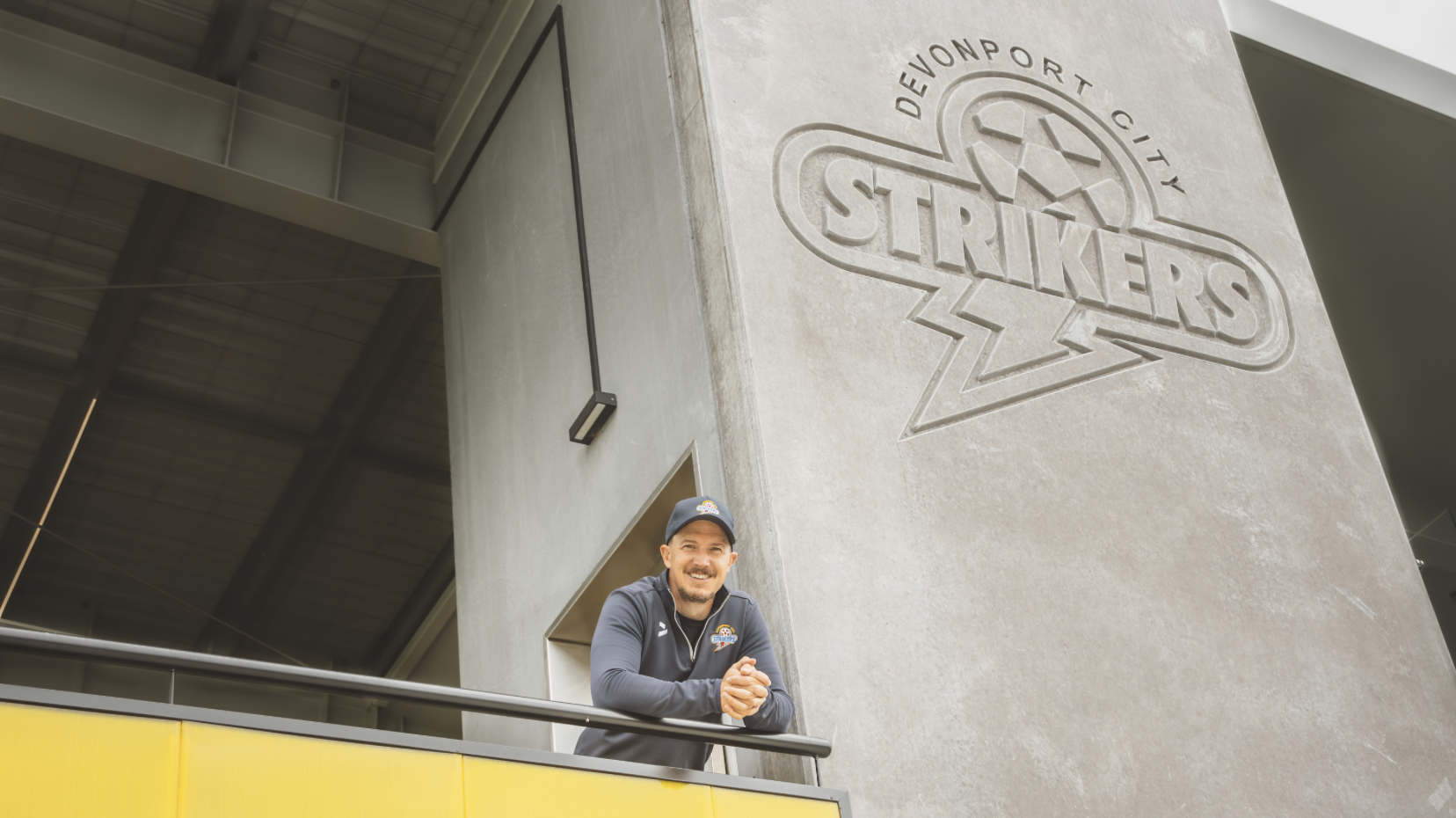
Tom Ballantyne photographed by Nikki Long
Tom Ballantyne is not a coach who spends much time explaining himself.
He is intense on the sideline. He is direct. He is, by his own admission, deeply private. And in a football community that often forms quick opinions, he is a figure who can divide them.
From the sideline, he has always seemed tough, driven, something of an enigma.
Results at Devonport under Ballantyne have been consistently strong, including a dominant title-winning first season and sustained success across both the men’s and women’s programs.
But beyond the touchline, and beyond the noise, there is a different picture. One shaped by family, by an almost complete immersion in the game, and by a simple, uncompromising view of the job.
Winning matters. Standards matter. And what happens inside the group matters far more than what is said outside it.
In his own words, this is how he sees it.
Who is Tom Ballantyne away from football?
In the very short time that I am away from football, I try and spend all of it with my family.
I am a deeply private person, which is why my answers will most likely be short and concise.
Family, pressure and perspective
Yes, I am a husband and dad, but football is football and family is family.
Any head coach will tell you that it is a seven-day-a-week role, with coaching, relationships, conversations, reviewing games, planning, and everything in between. Double that with NPL and WSL, plus my role with Melbourne Victory, and it gets hectic.
Family life can help with the pressures of everything. I come home to two young children, one of which has zero care about whether the teams have won or lost that day, just that dad’s home.
Switching off
Short answer, no.
It’s laughable, but watching other football.
Early influences
My parents and family. They both worked very hard.
I was fortunate to travel and have some incredible experiences when I was young.
Why coaching
I’ve been obsessed with football for as long as I can remember. My mother has always told me that as soon as I could walk, I was kicking a football.
When I played growing up, I was always interested in the ‘why’ with regards to sessions and tactics and was always questioning my coaches from an early age.
I spent time as a volunteer coaching and through that met some amazing people who kept challenging me to do more and encouraging me to take any opportunities that came my way.
There was a period of around four years in the UK where I said yes to every opportunity. By the end of that period, I was pretty much full-time. I guess that’s when it hit that I could do something I genuinely love as a job.
Coaching philosophy
My job is to win games. Let’s face it, if I stopped winning games altogether, I wouldn’t have a job.
But beyond winning, it’s about trying to help players become the best they can be, as well as develop and grow as people.
Through the game, I’ve not deliberately set out to make friends, but I’ve ended up with a trail of people at previous clubs that I remain in contact with. They reach out to me for advice 14 years on, and at least five of my previous players are now coaching themselves.
Sideline intensity
Winning the game is going through my head. I’m not really thinking about what other people are thinking of me.
All coaches are intense in their own ways and all trying to battle and help their team in the moment. We are all trying to get a result, protect our players and manage the situation. Our intensity just comes across in different ways.
How players see him
I didn’t know how to answer this question, so I reached out to a former player who is now coaching himself.
“Away from match day emotion, I think the boys would describe him as professional, organised and extremely knowledgeable about the game.
He’s technically very strong and his preparation is always spot on. Every session had purpose, every game plan was clear, and he communicates it in a way that makes sense, so as players you always feel like you’re going into games prepared.
What I respected most was the balance struck. We worked closely together and had a strong relationship, but there was always a clear boundary between friendship and professionalism. When it came to football, standards were standards. He demanded a lot, but he was fair and consistent, and you always knew where you stood.
I think the group would say he backs his players, empowers his leaders, and creates an environment built on accountability and respect. He cares about winning, but he also cares about developing players and building a strong culture.”
To be honest, this wasn’t the response I was expecting from this individual, as we had numerous quite heated discussions over the years.
Standards and growth
As a coach, I have a few non-negotiables. They are respect, hard work and attitude.
If anything, over the years my belief in those has only become stronger. The teams that have been successful have all had those traits.
Intensity and pressure
It comes from my desire to win, plain and simple.
Coaching men and women
I don’t think many people realise, but I’ve coached women’s football on and off since 2009, more often than not in conjunction with a men’s team.
There’s a quote I saw many years ago by Mia Hamm, that women athletes should be coached like men but treated like women. This is how I’ve worked with the teams ever since.
Just like the men, the women are there to play football and to win. The coaching of the football is the same across both leagues. The difference is in the communication and language used.
Difficult conversations
No, my approach hasn’t really changed.
I remember when I first coached a senior team and had to drop a player that was older than me. It was a hard conversation, but they need to be had.
Some would say ‘tough love’, but wherever possible I’ve always tried to provide honest feedback, even if it’s not received well at the time.
The environment he describes is one built on standards and consistency. At Devonport, that has translated into sustained success.
Devonport Strikers
Relentless drive to improve on and off the field.
Advice to young coaches
Coaching courses don’t teach you about the sacrifices, loneliness and pressure that you have to face. They don’t teach you about people management.
Being a head coach is 80% HR and 20% X’s and O’s.
I would encourage young coaches to watch as many sessions as they can, listen to how coaches coach, read and listen to podcasts from people in different fields that might have crossover.
I have just finished a book by Brené Brown and have now started one by Will Storr on The Science of Storytelling.
Steal ideas, make them your own, and be brave enough to experiment.
What people might not see
To be honest, I’m not worried about what other teams and opposition players think.
Inside the walls of the “Portress”, the players know the real me.
Closing
His answers do not try to soften that picture.
They are short. Direct. At times, deliberately guarded. But they are also consistent.
A coach driven by winning. Grounded, in his own way, by family. And largely uninterested in how he is perceived beyond the players and staff he works with every day.
Perhaps that is why he can seem difficult to read from the outside.
Or perhaps the answers say exactly what they need to.