When Did Football Become So Complicated?
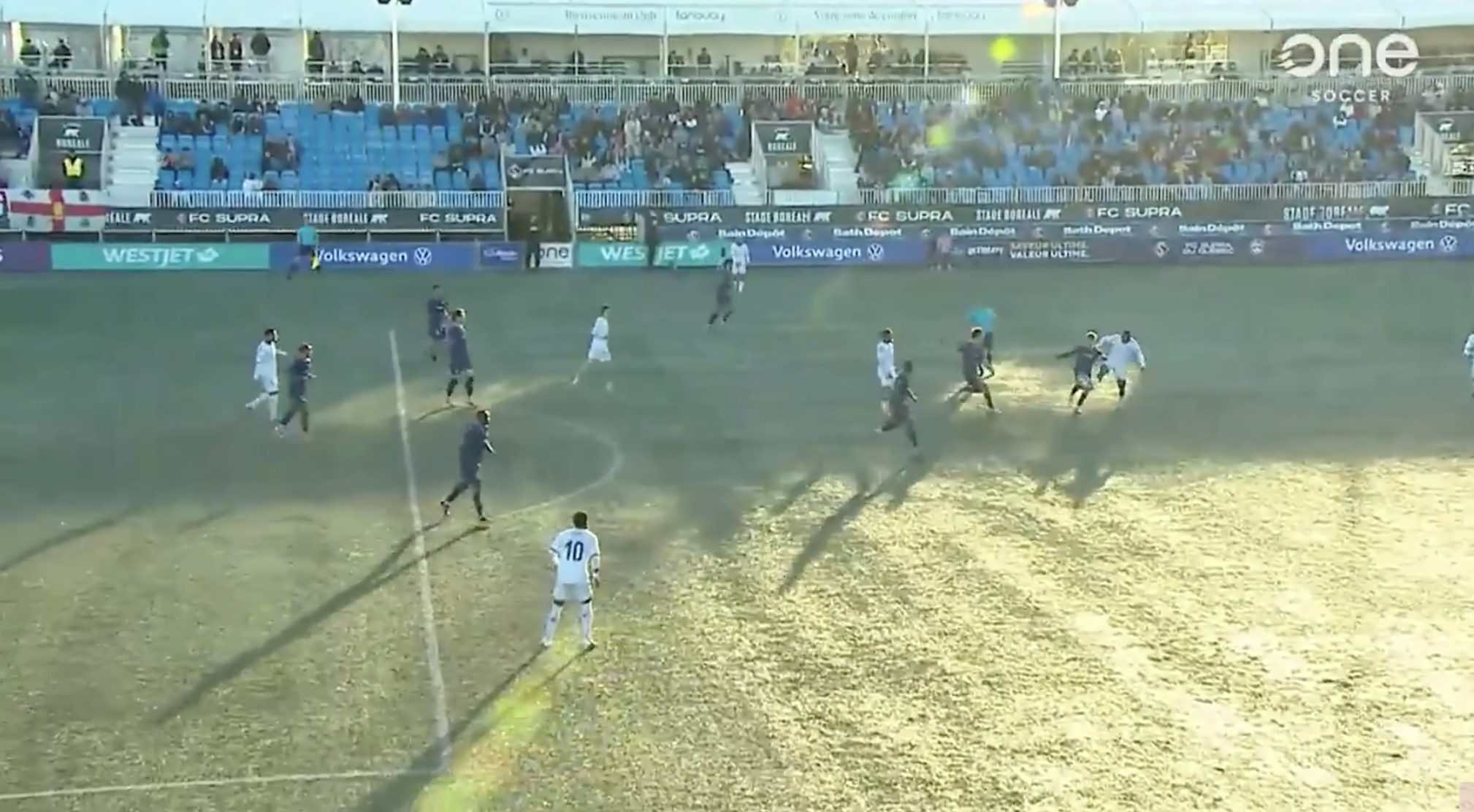
Offside? Not under Wenger's new daylight rule. Terran Campbell's equaliser for Vancouver FC on 10 October 2026. And just when we thought we'd got used to the offside lines!
Seventeen Laws of the Game. More than 150 years of changes. And a growing question about whether we're making football better or just harder to understand.
I wanted to blog this morning.
I could have written about the merry-go-round of coaches in the Tasmanian NPL right now. There's plenty to say because that merry-go-round is well and truly still going round and round.
But I'm saving that for another day.
So I thought about the rules of the game instead.
The Laws of the Game. Not exactly a page-turner, is it?
How do you make that interesting?
I've had a go.
I've been reading a lot about football's latest rule changes.
It does my head in.
The A-Leagues are starting the new season with another round of changes on time-wasting, injuries, substitutions and VAR. In Canada they're trialling Arsène Wenger's offside law, and the clips keep turning up on my feed.
Then there are referees explaining decisions over microphones. Debates about what VAR can and can't review. More interpretations for players, coaches and supporters to get their heads around.
I've been around football a long time. Committee rooms. Board meetings. Sidelines in the rain.
And I still find myself stopping to work out what the latest change actually means.
So how is everyone else getting on?
Here's something that surprised me.
Football has just 17 Laws of the Game.
Seventeen!
So why does understanding them sometimes feel like studying for a law degree?
Football has always changed
It's easy to imagine football was once a beautifully simple game.
It wasn't. Football has been changing its laws almost from the start.
The original laws were written in 1863. Over the following decades came the crossbar, the penalty kick and plenty more that shaped the game we know today.
Some of those changes were controversial too.
So the question isn't whether football should change. Of course it should.
The question is whether each change makes the game better.
1925: The offside revolution
One of the biggest changes in football history came in 1925.
Before then an attacker needed three opponents between themselves and the goal line to stay onside.
One man was blamed for what happened next.
Newcastle United's Bill McCracken turned the offside trap into an art form. He'd step up at just the right moment and catch attackers out again and again.
Other teams copied him. Games were strangled. Goals dried up.
So the lawmakers cut three opponents to two.
It sounds like a small tweak. It wasn't.
Attackers suddenly had more freedom. Defenders had to rethink their positioning. Teams changed their tactics.
In England's Football League, goals jumped dramatically the following season.
The lawmakers wanted more attacking football. They got it.
A century later we're still chasing the same thing.
Only now we're experimenting with something those early lawmakers could never have imagined.
1990: Level is onside
For years the offside law still favoured defenders in tight situations.
In 1990 that changed. An attacker level with the second-last opponent was now onside.
Again, the aim was more attacking play.
A simple principle.
Level is onside.
But what does level actually mean?
Once technology got involved we started examining whether a shoulder, a knee or a toe was a fraction beyond the defender.
Which brings us to one of the most extraordinary experiments in football today.
Wenger's offside experiment. Here we go again.
Did anyone else see the footage from Canada doing the rounds?
The Canadian Premier League has been trialling Wenger's daylight rule all season.
In April, Pacific FC's Alejandro Díaz scored the first goal under the trial. Anywhere else in the world it would have been chalked off.
Then in September, Inter Toronto were losing 3-2 to Vancouver FC. Ninety-seventh minute. Tomasz Skublak scores the equaliser.
Clearly offside under the laws the rest of the world plays by.
Goal.
After years of shouting "FFS, he's offside by his eyelashes!", we're now looking at the exact opposite.
A player can be almost entirely beyond the defender. If that trailing foot is still level, he's onside.
Wow.
My brain has only just got used to players being measured against lines and grids to see if they're a fraction offside. Now we're going to measure them against lines and grids the other way around?
Golly.
I understand what Wenger is trying to do. He wants to give attackers more of an advantage, get more goals and cut down those marginal offside calls that drive everyone mad.
I can see the argument.
But watching the Canadian examples I couldn't help thinking, here we go again.
We've spent years getting used to one interpretation. Now we're shown something that looks completely wrong to our eyes, even though it's perfectly legal under the trial.
And surely we'll still have marginal decisions? Instead of hunting for the toe that's offside, we'll be hunting for the toe that's keeping someone onside.
Maybe it will work brilliantly. Maybe we'll see more attacking football and more goals.
Or maybe not. Deep into the trial, the BBC pointed out the goals haven't really gone up.
So how long will it take our brains to adjust?
And how many more lines will we have to look at before we can just celebrate a goal?
1992: A change that really worked
Not every big change has caused more confusion.
The back-pass rule in 1992 is one of the best examples.
Before then a defender could kick the ball back to the goalkeeper, who could pick it up.
My husband Ken played and coached on the front foot. He can't remember ever coaching a team to waste time.
But in the last few minutes? Of course they went to the corner flag.
Everyone did.
And everyone knew the other trick. Pass it back to the keeper. Keeper picks it up. Rolls it out. Back it comes again.
Over and over until the clock ran down.
The 1990 World Cup in Italy was the low point. Ireland v Egypt finished 0-0 and became a byword for dull football. Packie Bonner spent an extraordinary amount of time with the ball in his hands. Egypt were even worse, passing back to their keeper again and again.
It was legal. It was frustrating. It was dreadful to watch.
So the lawmakers changed it.
The 1992 FA Cup final between Liverpool and Sunderland was one of the last big English matches played under the old law. Steve Nicol could still pass back to Bruce Grobbelaar, and Grobbelaar could still pick it up.
After that, keepers had to use their feet.
A simple change with huge consequences.
Goalkeepers had to become better footballers. Defenders had to think differently. Teams lost their favourite way of wasting time.
Today we expect goalkeepers to be comfortable on the ball, pass under pressure and help build attacks.
The back-pass rule helped transform the position.
No video technology. No complicated reviews. No multiple interpretations.
There was a problem. Football changed the law. The game got better.
Isn't that what we should be aiming for?
1997: Football tried to simplify the laws
Here's something worth remembering.
In 1997 the Laws of the Game were given a major rewrite.
The aim was to modernise the language, clarify the wording and make the laws easier to understand.
Nearly thirty years later we're still adding explanations, protocols and amendments.
Football has changed a lot since 1997. I get that.
But simplification was once the goal.
Maybe it should be again.
Handball: Does anyone really understand it?
If offside is football's most technical law, handball might be its most frustrating.
Back in the day it felt simple.
Ball hits your arm. Handball.
Now look at Euro 2024.
Spain v Germany. Quarter-final. Extra time. 1-1.
Jamal Musiala shoots. The ball hits Marc Cucurella's arm in the box.
Referee Anthony Taylor waves play on. VAR doesn't step in.
Spain score in the 119th minute and Germany are out of their own tournament.
At the time UEFA said it wasn't a penalty. Their head of referees had shown almost the exact same clip before the tournament as an example of what isn't handball.
Two months later UEFA's Referees Committee said the opposite.
Penalty. And VAR should have intervened.
So which was it?
If UEFA can't agree with UEFA, what hope does the bloke in the stands have?
Ken asks whether the naked eye would do a better job.
He might be right.
It's all so micromanaged.
Natural and unnatural arm positions. Making the body bigger. Deliberate movement towards the ball. Whether the arm is justified by the player's movement.
And after all those explanations, we're still arguing.
The problem isn't necessarily the referee.
It may be what we're asking the referee to interpret.
Technology: When did getting it right become so complicated?
There are two very different kinds of technology in football.
Remember Frank Lampard at the 2010 World Cup?
England v Germany. Lampard chips the keeper. The ball hits the bar, bounces well over the line and spins back out.
No goal.
Everyone watching the replay could see it had crossed the line.
The officials couldn't.
Two years later goal-line technology was approved.
It answers one question.
Did that chipped ball cross the line?
Yes it did. Or no it didn't.
Black and white.
VAR is something else entirely.
It came into the Laws of the Game in 2018. And we had our own disaster here that year.
The 2018 A-League Grand Final. Newcastle Jets v Melbourne Victory. Ninth minute. Kosta Barbarouses scores. Replays clearly show the build-up was offside.
VAR didn't intervene.
The next day the FFA admitted the video feed had crashed 30 seconds before the goal. By the time it came back, it was too late.
Victory won 1-0.
The technology meant to fix the mistake was the mistake.
Then VAR spread across the football world.
Endless waiting. Grid lines. Players standing around with their hands on their hips.
Waiting.
Waiting.
It has sped up since. But in those early days everyone was exasperated.
And look at what we're still arguing about.
Was the contact enough for a penalty?
Was the referee's original decision clearly and obviously wrong?
Did the defender deliberately play the ball or was it a deflection?
Did the attacker interfere with an opponent?
Where did the attacking phase of play begin?
Could VAR even review it?
Why can VAR step in on one incident but not another that looks just as important?
We added technology to improve accuracy. We also created a whole new language of football controversy.
I don't doubt VAR has fixed some important mistakes.
But has it made football more enjoyable to watch?
I'm not convinced.
There was something wonderful about celebrating a goal the moment the ball hit the net.
Now, in the professional game, there's that pause.
Will it stand?
And when the decision finally comes, we're still arguing about whether the technology was used properly.
2026: More countdowns, more protocols, more explanations
Which brings us to the A-Leagues this season.
Some of the changes are to the Laws of the Game themselves. Others are A-League trials.
Some are sensible.
The mandatory concussion stand-down has gone from eight days to twelve. Players must complete a graduated return-to-play program and get medical clearance.
I have no problem with stronger concussion protection.
Player welfare comes first.
But other changes show just how detailed football's procedures have become.
Substituted players now have ten seconds to leave the field once the board goes up.
If they don't, their replacement has to wait until the first stoppage after a minute of play.
Referees can start a five-second countdown when players deliberately delay a throw-in or goal kick.
A delayed throw-in goes to the other team. A delayed goal kick becomes a corner.
Goalkeepers already have an eight-second limit on holding the ball.
Then there's the A-League trial on goalkeeper injuries.
You've all seen it. Team under pressure. Keeper goes down. Physio runs on. Coach calls the players over for a team talk.
Leeds manager Daniel Farke accused Manchester City's Gianluigi Donnarumma of bending the rules by doing exactly that.
So now, if a keeper needs treatment or stops play with an injury, the A-League captain has to leave the field for a minute after play restarts.
There are exceptions, including when the keeper has been fouled or may be concussed.
And if the keeper is the captain? Another player is named before the match to go off instead.
I understand the problem.
But think about what the referee now has to manage.
The injury. Whether an exception applies. Which player has to go off. The restart. The one-minute clock. And everything else happening in the match.
Outfield players who need treatment, or whose injury stops play, also have to go off for a minute. Again, with exceptions.
I can see why football wants to stop players using injuries to waste time.
But what if someone is genuinely hurt?
Another judgement for the referee.
Then there's a new VAR trial in the A-League Men for fouls committed before a corner or free kick is taken.
Remember Haaland at the World Cup? He fouled Elliot Anderson while England and Norway were lining up for a set piece, and the goal was chalked off.
Now the A-League can do the same.
The ball goes in. The crowd goes up. Then the referee walks to the screen to look at something that happened before the ball was even kicked.
Try explaining that to the supporter who has just celebrated a goal.
On top of all that, VAR can now review some clearly wrong second yellow cards.
I understand why football wants to deal with time-wasting, tactical injuries and wrong decisions.
But every new protocol is another demand on officials, players and coaches.
And another thing supporters have to keep up with.
What about the referees?
This is where I have a lot of sympathy for match officials.
Referees are constantly criticised for being inconsistent.
Yet we keep adding to the judgements we expect them to make.
Contact. Intent. Positioning. Player safety. Cards. Time-wasting. A growing list of procedures.
At the professional level they may have VAR, assistant referees, a fourth official and headsets.
Even with all that help, decisions are still controversial.
Now we're seeing referees explain decisions over the stadium microphone.
There's a fair argument for transparency. If a referee can explain a decision clearly, maybe supporters will understand it better.
But look at it another way.
Have the laws become so complicated that we need referees to explain them to the crowd during the match?
And what happens when the explanation is technically correct but still makes no sense to the people watching?
Maybe the problem isn't a lack of explanation.
Maybe some of the decisions have just become too complicated.
And what about grassroots?
Professional football is a small part of the game.
Most football is played without VAR, headsets, replays or teams of officials.
Think about a young referee taking charge of a junior match on a Saturday morning.
They're expected to know the Laws of the Game, keep up with the amendments and apply the rules of their own competition.
Some of the new measures are changes to the Laws themselves. Others are trials or rules for professional competitions only.
That difference matters.
The A-League's goalkeeper injury trial won't be turning up at a junior match in Tasmania.
But what about the countdowns and the ten-second substitutions?
They're part of the Laws, although competitions can make some changes of their own.
We'll have to wait for our referee boss, Nathan, to let us know how these changes will apply to our local competitions. I expect communication will be forthcoming.
And that raises another question.
How do we make sure young referees, volunteer coaches, players and parents all understand what has changed?
We already struggle to recruit and keep referees.
Parents and coaches can be quick to criticise decisions, sometimes without knowing the laws themselves.
And I wonder how many of us who have been around football for years could confidently explain every one of the latest changes.
I certainly couldn't without doing some homework.
Are we making the job harder than it needs to be?
Seventeen laws. Endless interpretation.
Football has changed enormously since 1863.
Some changes have been outstanding.
The 1925 offside change brought more attacking football. The 1992 back-pass rule transformed goalkeeping and tackled time-wasting. Goal-line technology solved one specific problem.
Others have been far more contentious.
Handball is still a source of frustration despite all the clarifications.
VAR has fixed errors but created new arguments about interpretation, intervention and consistency.
And now we're trialling an offside law that flips the marginal decisions we've grown used to.
I don't want football to stand still.
If a change makes the game safer, fairer or more enjoyable, let's look at it.
But we should also ask whether a solution creates more problems than it solves.
Will Wenger's offside law really get rid of marginal decisions? Or will we simply be drawing the lines at the other end of the player's body?
Will more countdowns and procedures improve the flow of matches?
Will more VAR make decisions more consistent, or just give us more incidents to review?
And most importantly, are we making football easier or harder for the people who love it?
Football has just 17 Laws of the Game.
Maybe it's time we spent a little less effort adding to them and a little more effort making sure everyone understands them.
Because you shouldn't need a law degree to enjoy the beautiful game.