Women in Football Leadership: Progress, Reality, and What Comes Next
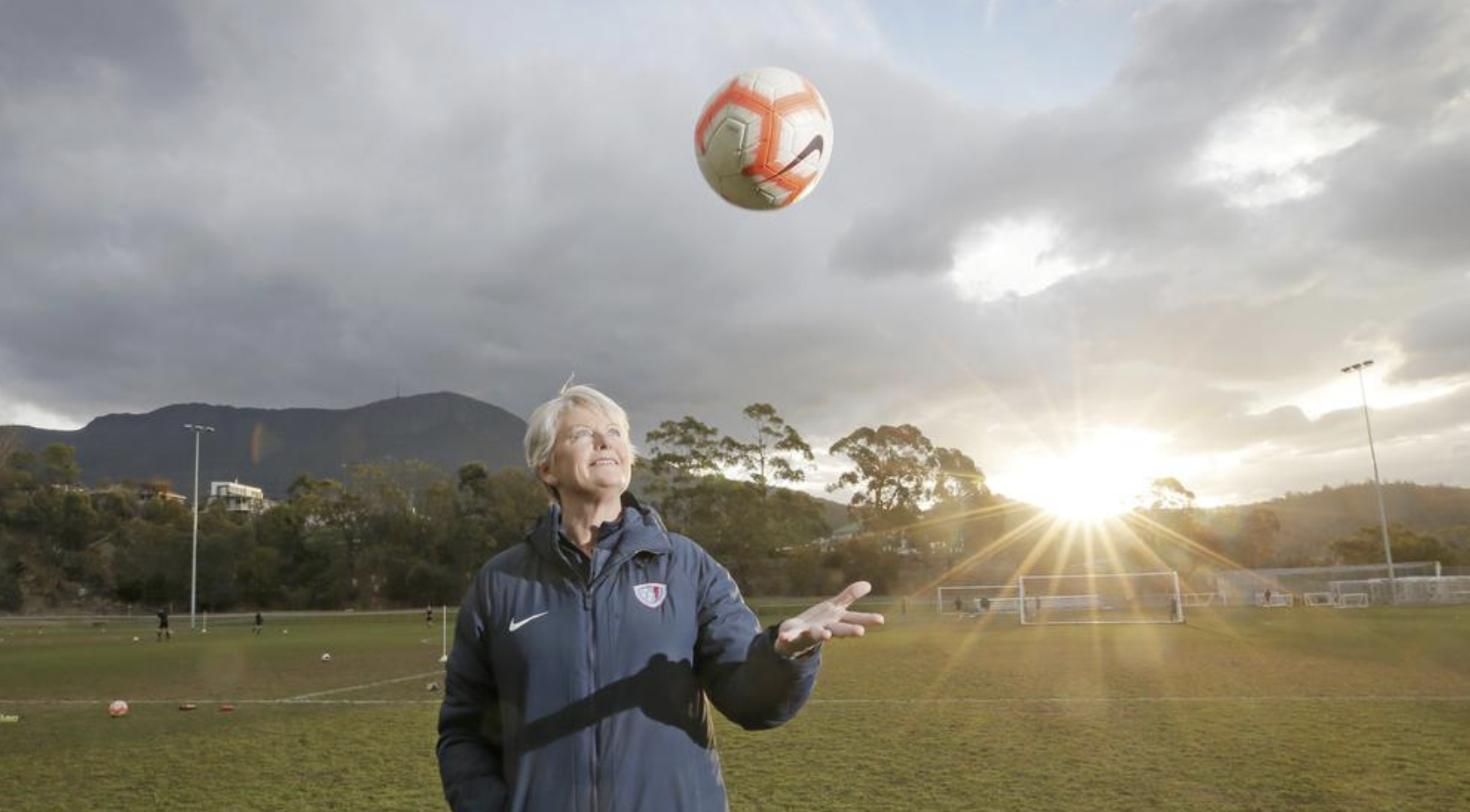
Photo credit Patrick Gee
When Equality Isn’t a Theme Week
If there is one thing football has taught me, it’s that progress rarely happens by accident. It happens because people are prepared to say the uncomfortable thing out loud.
In 2019, I did exactly that when I stood in a room of football people and politicians and delivered a speech at a breakfast for Female Football Week organised by Football Tasmania. It raised eyebrows and, I suspect, made a few people shift in their chairs.
It wasn’t meant to shock anyone. It was simply the truth as I saw it then, and still see it now.
Here is an excerpt from that speech:
“Thank you for considering me for this award.
I am a woman and I don’t just wash the shirts.I want to preface the comments I am about to make. I love this game. I have a great working relationship with my male colleagues, and I respect the administrators of our game at Football Tasmania. I am sorry if the following might appear inappropriate while we are celebrating the wonderful women in the room. Oh, and I might add, I like men very much.
Unfortunately, I don’t feel particularly special, because in reality how many female football administrators are there in Tasmania? Three? Five? Ten?
This is my ninth year as President of South Hobart Football Club and my sixteenth year at the club. My club is 108 years old and I am only its second ever female President. In that time there has been no female CEO of Football Tasmania, no female technical director, no female NPL coaches, and only a handful of women on the Football Tasmania Board. We cannot accept this as normal.
Why do we need Female Football Week? Who created this week? When is Male Football Week? Who decided that women needed to be celebrated separately?
I don’t want to be a quota or a percentage. I don’t want to be celebrated because I am female. I want to be recognised because I am a club President, not a female club President, just a club President.
Women make up 51% of the population and we want 51% of the jobs in football. Not because we are women, but because we do a good job.
So to the young women in the room, I hope you are not the best female anything. I hope you are the best referee, the best player, and I hope one day I am just the best administrator.”
At the time, those comments surprised some people. They still do.
The truth is, Female Football Week has always felt tokenistic to me. Well-intentioned, perhaps, but ultimately superficial. A way to say “we’ve acknowledged women” without changing the structures that keep them out of leadership the rest of the year.
Celebrating women for seven days does not fix the reality that we are under-represented in leadership 365 days a year.
I don’t want a themed week. I want equality embedded into the culture of the game.
What Has Improved Since 2019
There has been progress, and it deserves to be recognised.
Football Australia now has its first female Interim CEO. Several state federations have appointed women as Presidents or Chairs. More women are appearing on boards and governance committees. Pathways for referees, coaches and administrators are slowly opening, and young women can now see female leaders where once they saw none.
I’ve also witnessed moments of genuine progress: young female referees taking control of senior matches with confidence, women joining committees as contributors rather than tokens, and coaches stepping into leadership roles that simply did not exist when I started.
These aren’t symbolic wins. They are signs of a sport beginning, slowly, to grow up.
But We Are Still a Long Way from Equality
The uncomfortable truth is that women remain largely absent from the rooms where decisions are made.
Most state federations still have male CEOs. Technical and football leadership roles remain overwhelmingly male. Club presidencies and high-performance coaching roles are still dominated by men. Female leaders are often praised symbolically, but rarely supported structurally.
Women are not missing from leadership because they lack ability. They are missing because the path remains steeper and narrower than it should be.
Until we say that plainly, nothing changes.
What Leadership Has Taught Me
Leadership has shaped me in ways I didn’t expect. It has made me sharper, more resilient, more strategic, more patient, and occasionally more tired than I’d like to admit.
It has also made me very clear about the game we could have if we stopped accepting the bare minimum as progress.
Football doesn’t need women to be grateful.
It needs women to be visible, respected, and supported.
Acknowledging the Men Who Support Equality
I have worked with many male colleagues who have been supportive, respectful and collaborative. Men who understand that equality is not a threat, but an asset. They have never treated my leadership as a novelty or an inconvenience.
Their presence proves that cultural change is possible.
I have also encountered attitudes and behaviours that made leadership harder than it needed to be. Both realities can exist at the same time, and acknowledging one does not cancel out the other.
As I Step Down, What I Hope Comes Next
Stepping down from my role at South Hobart has given me space to reflect.
I never wanted to be “the female President” or “the only woman in the room.” I wanted to lead because I cared, because I worked hard, and because I was capable.
What I want now is simple: more women in positions of influence.
Women setting direction.
Women shaping competitions.
Women running clubs.
Women leading football departments.
Not as exceptions. Not as gestures. As a normal, expected part of the game.
Football doesn’t need more symbolism.
It needs women in roles that actually matter.
Where My Voice Goes From Here
I will continue to speak openly about these issues, because football in Tasmania will never reach its potential while half its participants remain under-represented in leadership.
If you are a club administrator, parent, coach or player, ask yourself:
Does leadership at your club reflect the people you represent?
If the answer is no, then ask the next question.
What are you prepared to do about it?
Football will be better, stronger and fairer when leadership reflects the people who love the game.
When women stop being the exception and finally become the expectation, then we will know the sport has grown up.
Until then, I will continue to love this game fiercely.
Fiercely enough to demand better from it.