Buying Content
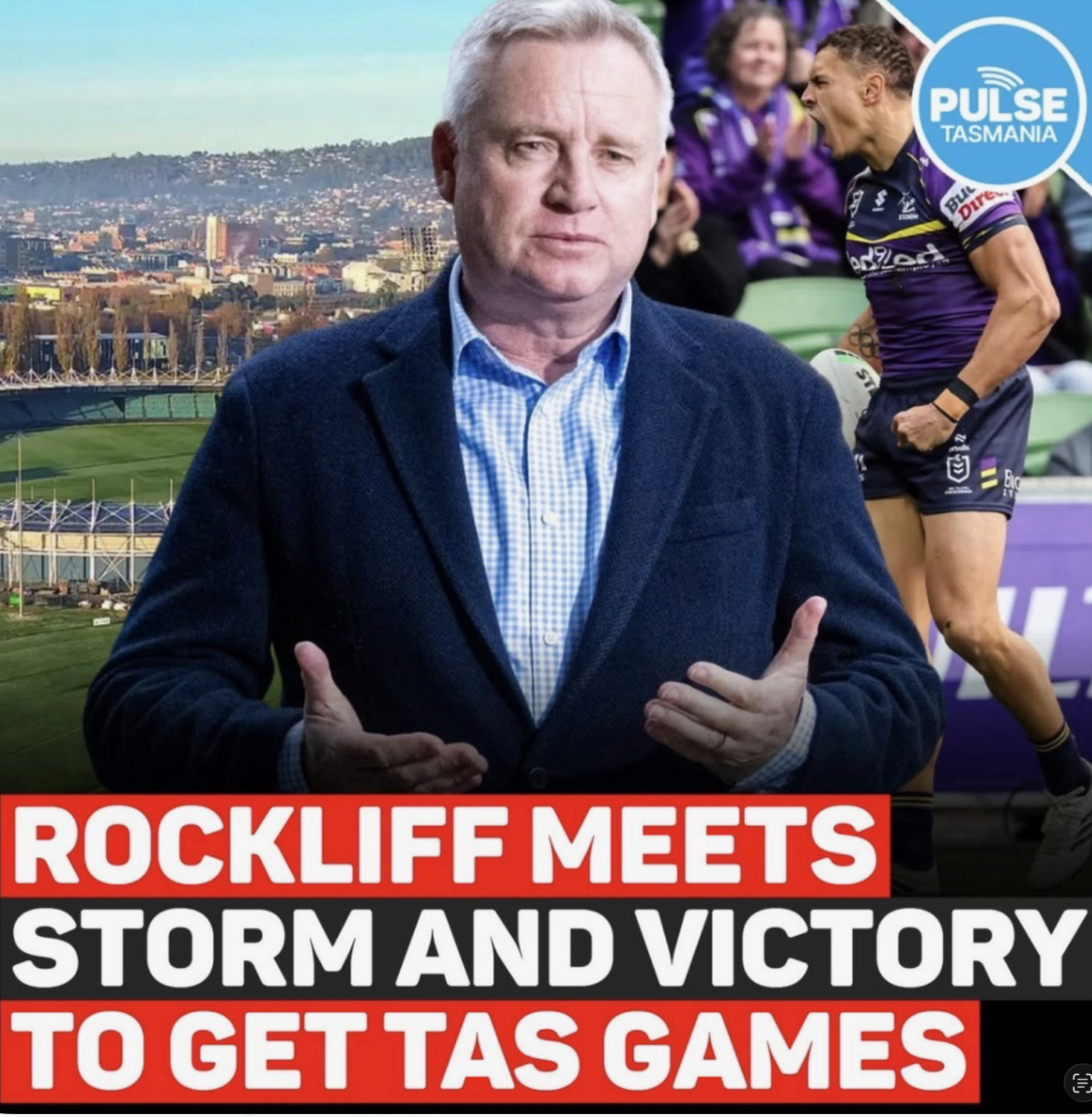
Photo Credit - Pulse Tasmania
Tasmanian football loves a silver bullet.
Not football itself.
Football people are generally too busy coaching, refereeing, marking lines, organising teams and trying to keep grounds open.
No, it is the people around football who seem to love silver bullets.
Every few years a new answer arrives.
A football precinct.
A Home of Football.
A national competition.
A new stadium.
A new strategy.
A new vision.
This week it was content.
Speaking in Melbourne after meetings with Melbourne Victory and Melbourne Storm, Premier Jeremy Rockliff said:
"Certainly in that interim period we need good content."
And honestly, I have not stopped thinking about that sentence.
Not because it is wrong.
Because it accidentally reveals how sport is increasingly viewed.
A football match becomes content.
A rugby league match becomes content.
A concert becomes content.
A stadium becomes a content platform.
The public becomes an audience.
The objective becomes acquiring content.
I understand the logic.
What I am less sure about is whether it is a strategy.
Content 101
Let's start with something obvious.
Content is not free.
When governments talk about attracting content, they are usually talking about attracting events.
Events rarely arrive because organisers wake up one morning and decide Tasmania looks nice.
More often than not there are negotiations.
Venue deals.
Marketing support.
Government funding.
Event attraction packages.
Financial guarantees.
The details vary.
The principle does not.
Somebody pays.
Usually taxpayers become part of the equation.
That is not necessarily a criticism.
Governments fund events all the time.
The question is whether the return justifies the investment.
And every dollar spent attracting content is a dollar that cannot be spent somewhere else.
That is simply how budgets work.
We Have Bought Content Before
The funny thing about buying content is that Tasmania has already bought some.
Nearly half a million dollars worth of it.
In 2021 the Tasmanian Government committed $480,000 to bring Western United A-League matches to Tasmania.
At the time the language sounded familiar.
Growing football.
Elite pathways.
Community engagement.
Economic benefits.
Exposure to professional football.
The games were played.
The crowds attended.
The photos were taken.
The media releases were issued.
The content was consumed.
Five years later, a simple question remains.
What remains?
Not what happened.
What remains?
Can we point to a facility?
Can we point to additional football capacity?
Can we point to a lasting football asset?
Can we point to something permanent?
Because that is ultimately how public investment should be judged.
Not by attendance figures.
Not by social media posts.
Not by smiling politicians and ribbon cuttings.
By what is left behind after everybody goes home.
Perhaps there is a legacy.
Perhaps there is something obvious that I have missed.
But if nearly half a million dollars created a lasting football revolution in Tasmania, it has been remarkably well hidden.
I Have Heard This Before
Twenty years in football gives you a strange advantage.
You start recognising old conversations.
In 2018 I sat on the Tasmanian A-League Task Force.
I remember discussions about facilities.
I remember discussions about bringing elite football to Tasmania.
I remember discussions about Melbourne Storm.
I remember discussions about what Tasmania needed to become a destination for football and rugby.
At one point the answer was a rectangular venue.
Build the infrastructure and opportunities would follow.
That seemed sensible.
To be fair, this is not really about Jeremy Rockliff.
If anything, he has simply inherited Tasmania's favourite football tradition.
Looking for the next big thing.
I remember similar discussions during the Hodgman years.
Will Hodgman always struck me as someone who genuinely liked football. He was a Chelsea supporter and seemed more engaged with the game than many politicians before him.
But politics has its own league table.
And while Hodgman may have enjoyed Chelsea, the pull of securing Tasmania's own AFL team always appeared considerably stronger.
Football kept finding itself in the conversation.
AFL kept sitting at the top of the agenda.
Looking back, perhaps the only thing that has really changed is the branding.
The conversations remain remarkably familiar.
Then came football precincts.
Then came stadium debates.
Then came Home of Football discussions.
Now we appear to be discussing how to buy content.
Round and round we go.
The Week Football Stopped
Perhaps the timing is what struck me.
Last week much of football across southern Tasmania simply stopped.
Grounds closed.
Training was cancelled.
Junior matches were washed out.
Volunteers scrambled.
Clubs searched for alternatives.
Parents refreshed Dribl and checked their phones hoping for updates.
Thousands of players lost football.
The conversations in football last week were not about Melbourne Victory.
They were about drainage.
They were about lighting.
They were about surfaces.
They were about capacity.
How do we keep grounds open?
How do we create more opportunities to train?
How do we get through winter without losing weeks of football?
Those seem like football questions.
At exactly the same time Tasmania's sporting conversation shifted to buying content.
Neither conversation is wrong.
But one feels considerably closer to the reality experienced by most football people.
The Stadium Reality
There is another layer to this discussion.
York Park, now operating as UTAS Stadium, has just received a $130 million upgrade.
Macquarie Point is on its way.
Once governments invest that sort of money in stadiums, there is enormous pressure to ensure they look busy.
Empty stadiums invite questions.
Busy stadiums create headlines.
Which means the search for content never really ends.
In fact, it probably intensifies.
Because once a stadium is built, somebody has to fill it.
And if the events do not arrive naturally, governments often find themselves negotiating, attracting and purchasing content to make sure they do.
That is why Premier Rockliff's comments are so interesting.
They may not simply be about the next few years.
They may be a glimpse of the future.
A future where Tasmania is constantly searching for more events, more games and more content to justify the stadiums it has built.
The more money we spend on stadiums, the more pressure there is to buy content to justify them.
Which is how infrastructure projects can quietly become content acquisition projects.
Content Versus Capacity
A Storm game lasts eighty minutes.
An A-League game lasts ninety.
The headlines last a few days.
The photos last a little longer.
Then everybody moves on.
Capacity is different.
Capacity is a ground that stays open.
Capacity is lights that allow another training session.
Capacity is facilities that support thousands of players every week.
Capacity is boring.
Which is probably why politicians do not stand in front of it for photographs.
Nobody cuts a ribbon on a drainage pipe.
Nobody poses proudly beside improved subsoil.
Nobody launches a social media campaign celebrating a field that remained open after heavy rain.
Yet those things often matter far more than the content.
Imagine what $480,000 might buy today.
Drainage upgrades.
Lighting improvements.
Additional training capacity.
Synthetic surfaces.
Facility improvements.
The sort of investments that remain long after the final whistle.
Tasmanian Football's Favourite Administrative Activity
I sometimes wonder whether Tasmanian football's favourite administrative activity is chasing the next big thing.
Not building.
Chasing.
We are remarkably good at creating visions.
Master plans.
Strategies.
Task forces.
Working groups.
Consultations.
Announcements.
Launches.
Media releases.
Tasmanian football has a habit of confusing movement with progress.
We announce.
We launch.
We consult.
We strategise.
We rebrand.
Then we hold another meeting to discuss why nothing much seems to have changed.
That is why this latest discussion feels strangely familiar.
Not because Melbourne Victory is new.
Not because Melbourne Storm is new.
Not because attracting events is new.
Because we have been standing at this intersection before.
Many times.
Different Premier.
Different CEO.
Different stadium debate.
Same search for the next big thing.
Content Or Legacy?
Perhaps that is why the word content bothered me.
Content sounds modern.
Content sounds exciting.
Content sounds strategic.
But content is something you consume.
Football is something you build.
The content leaves.
The crowd leaves.
The cameras leave.
The headlines leave.
What remains is what we built while everybody was watching.
And after a week of closed grounds, cancelled training sessions and waterlogged surfaces, that feels like a far more important question than how much content we can buy.
Not what content we can attract.
What legacy we intend to leave behind.
Looking back, I am not sure we have been following a roadmap.
It sometimes feels more like one of those airport travelators.
There is plenty of movement.
Lots of announcements over the loudspeaker.
People appear to be heading somewhere important.
Yet every so often you look up and realise the view is remarkably familiar.
In 2018 I was sitting on the Tasmanian A-League Task Force discussing Melbourne Storm, elite football, facilities and attracting major events.
Today we are discussing Melbourne Storm, elite football, facilities and attracting major events.
At this rate, the next strategic plan could save time, money and consultant fees by simply photocopying the last one.