Christmas Day 1914 - When the War Paused and Football Was Played
Christmas Day carries a strange weight.
It is meant to be about peace, family and generosity, yet history reminds us that it has often arrived in the middle of humanity’s darkest moments.
One of the most extraordinary Christmas stories comes not from celebration, but from war.
In late December 1914, during the first winter of World War One, fighting stopped in parts of the Western Front.
Not by command.
Not by treaty.
But because ordinary soldiers chose, briefly, to recognise each other’s humanity.
The Setting
By Christmas 1914, the belief that the war would be “over by Christmas” had long disappeared.
British and German troops had been entrenched for months. The ground between them, No Man’s Land, was a churned mess of mud, wire and fear.
Then, in some places, something unexpected happened.
German soldiers placed small Christmas trees and candles along their lines and sang carols, including Stille Nacht, Silent Night.
Across the lines, British troops listened. Then they replied.
The Guns Fell Silent
In places, the shooting stopped.
Men climbed cautiously out of their trenches and met in No Man’s Land. They shook hands. They exchanged cigarettes, food and small souvenirs.
In some sectors, the pause also allowed something deeply human and deeply sobering, the retrieval and burial of the dead who had been lying between the lines.
It didn’t happen everywhere.
But where it did, it remains one of the most striking moments of shared humanity in modern history.
And Then There Was Football
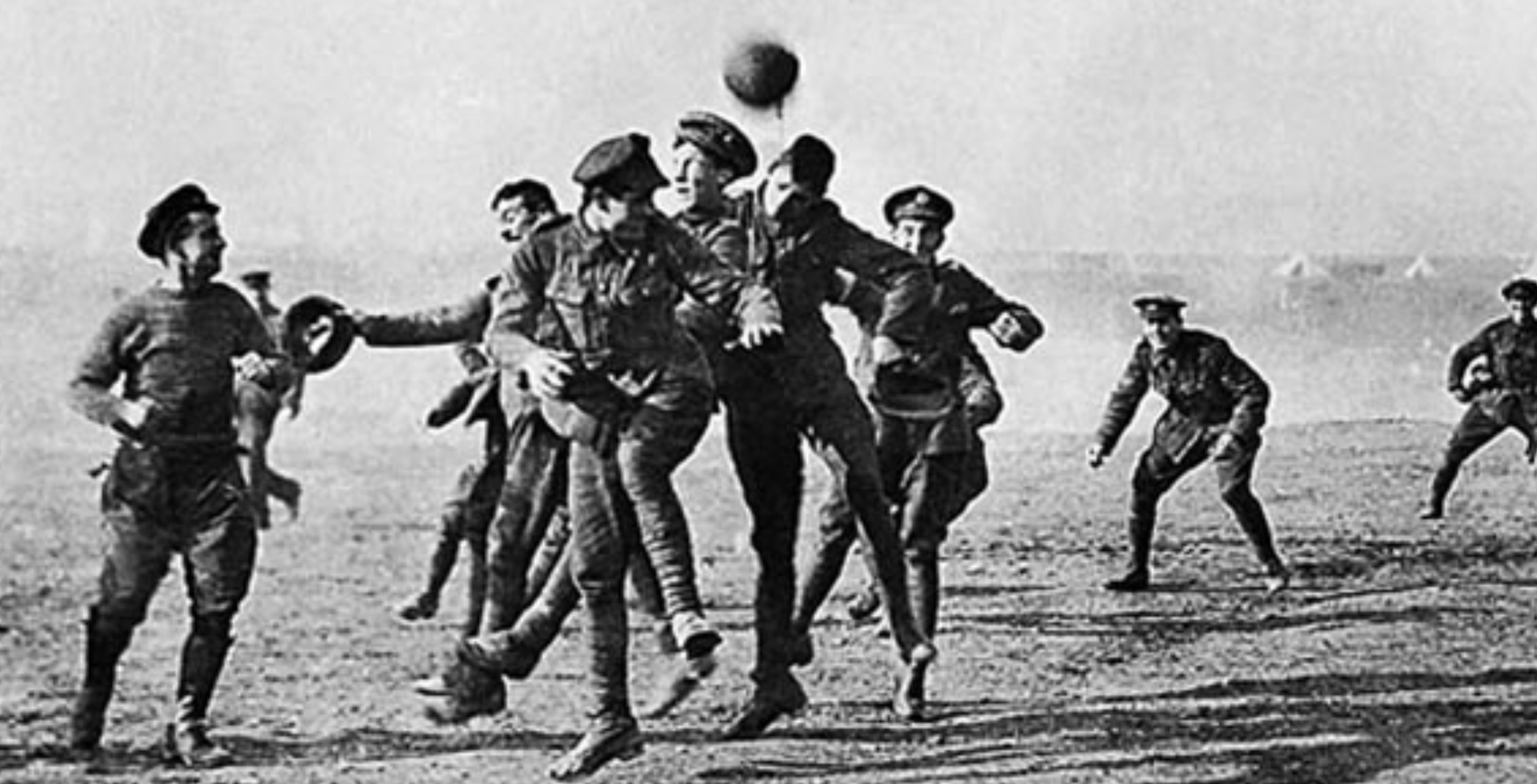
The image most people remember from the Christmas Truce is football.
Soldiers in uniform, boots muddy, kicking a ball where bullets had flown the day before.
And yes, football did happen.
Not neat matches. Not scoreboards or referees. Just informal kick-abouts, described in letters and diaries as impromptu games with whatever ball was available.
The football is real. The myth is the tidiness of it.
Why Football Matters Here
Football mattered because it was familiar.
It needed no shared language, no explanation, no orders.
Just a ball and a little space.
In a landscape defined by division, it created connection.
For men trained to see those opposite them as enemies, it offered a reminder that they were very much the same.
Young men. Far from home. Missing Christmas.
The Aftermath
The truce did not last.
Fighting resumed, and senior commanders were uneasy about what had happened. In the years that followed, any repeat was discouraged.
But the memory remained.
Many soldiers carried that Christmas with them for the rest of their lives.
Why This Story Endures
The Christmas Truce of 1914 matters not because it ended the war.
It matters because it shows what people are capable of despite war.
That peace does not always come from leaders or agreements, but sometimes from individuals choosing empathy over hatred.
And that football, so often dismissed as “just a game”, can be a human language, capable of cutting through fear and division.
A Christmas Wish
So this Christmas, I wish everyone who loves football the chance to have a simple kick-about.
No scores.
No pressure.
No expectations.
Just people together, sharing space, laughter and a ball at their feet.
For a moment, forgetting the noise, the worries and the divisions of everyday life, and remembering the quiet joy of being together.
That, perhaps, is the real gift of football.