
Why the Matildas Feel Safe - And Men’s Football Still Doesn’t
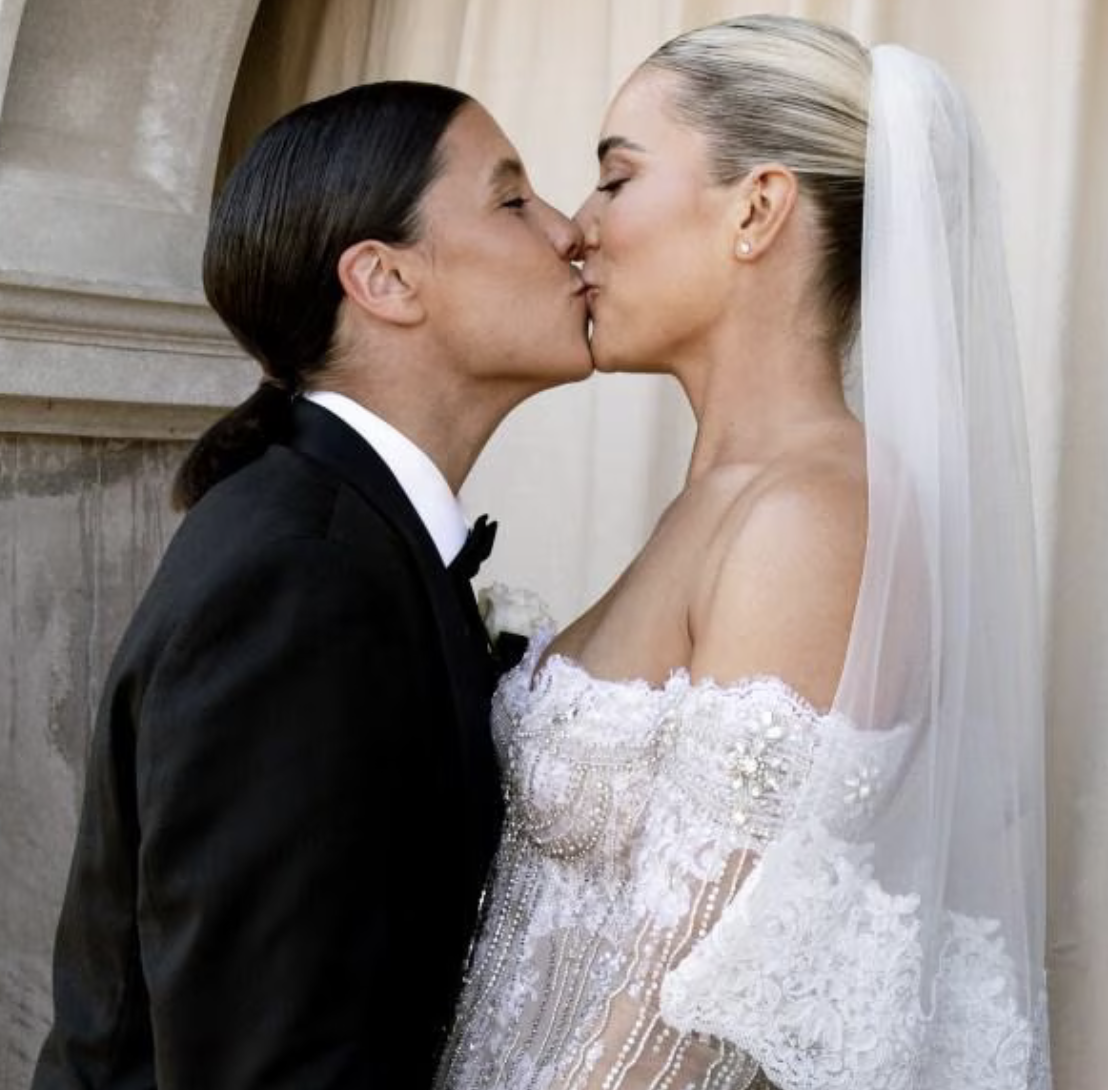
Photo Vogue Australia
Why Sam Kerr Is Celebrated and a Socceroo Would Still Be a Shock
We all saw the joy around Sam Kerr’s wedding.
Celebration. Pride. Love. Visibility.
She is openly gay. It was not framed as bravery. It was simply life.
Sam Kerr’s wedding showed what acceptance can look like in football. It also quietly showed us where the men’s game has not yet arrived.
Now ask yourself this.
If a current Socceroo, in his prime, came out tomorrow, would the reaction feel the same?
We know the answer.
That difference is not really about sexuality.
It is about gender, power, masculinity, and the culture men’s football still carries.
The history men’s football still carries
Ken often talks about earlier decades in football. The 60s and 70s. He says there were players “everyone knew” about. Nothing was said openly. Just whispers, sniggering, coded comments behind hands.
That silence was not acceptance. It was containment.
Then in 1990, Justin Fashanu came out in England. The first male professional footballer to do so publicly. The reaction was brutal. Media frenzy. Isolation. Stigma. His story ended in tragedy.
That moment mattered.
Men’s football absorbed a lesson, not about inclusion, but about risk. The message that travelled through the game was simple, this is dangerous.
Women’s players have faced their own battles for respect, funding and legitimacy. But the cultural fight around sexuality unfolded differently in their game. Women’s football did not carry that same public trauma point. That difference still echoes.
Cultures remember, even when they don’t speak about it.
Where I sit in this story
Andy Brennan has been part of our football life since he was four years old. My son’s best mate. In and out of our home. One of “our boys”.
He is also a very good footballer. He came through South Hobart, earned a move to South Melbourne and later played in the A-League with Newcastle Jets. He has lived inside elite men’s football environments.
When he told me he was gay and that he was going to come out publicly, my first instinct was not judgement. It was fear.
Fear of crowds. Fear of headlines. Fear of what football environments can be like and what they would do to him.
That protective, mother reaction says as much about men’s football culture as any analysis does.
Andy went on to be more resilient than I imagined. Happier. More confident. More himself. But my first response was shaped by the history this game carries.
Women’s football grew differently
Women playing football were already stepping outside traditional gender expectations. The sport developed fighting for recognition, not protecting a long-established identity.
LGBTQ+ visibility became part of the culture early. Not as a campaign, but because players existed and did not hide.
So now:
Matildas share partners on social media
Sponsorship campaigns include same-sex relationships
Fans celebrate it as normal
The Matildas have been allowed to be whole people in public. Male players are still expected to be only footballers.
That visibility does not destabilise the identity of women’s football. It fits the story the game tells about itself.
The commercial contradiction
Women’s football is marketed around authenticity, diversity, community and relatability.
Men’s football has long been marketed around power, toughness, tradition and the “alpha” image.
LGBTQ+ visibility sits comfortably in the brand story of the Matildas.
It disrupts the traditional brand story of men’s football as it has been packaged for decades.
So you see visibility in the women’s game.
And near invisibility in the men’s.
Not because gay male players do not exist. But because openness is still treated as commercial and cultural risk.
Why men’s football reacts differently
Homophobia in men’s football is rarely just about sexuality. It is about policing masculinity.
Being gay has wrongly been treated as being “less of a man.” That idea lingers in dressing rooms, terraces and commentary culture.
A gay female player does not threaten a straight man’s identity.
A gay male player challenges the narrow definition of masculinity that sport has carried.
That discomfort sits underneath a lot of reactions, even when no one says it aloud.
The role model burden in men’s football
In the men’s game, coming out rarely stays a private act.
A player does not just remain a winger, a defender, a teammate.
He becomes “the gay footballer,” a spokesperson, a symbol, a headline.
His identity becomes part of his public job, whether he wants it to or not.
That is exhausting.
Women’s football has reached a point where sexuality is increasingly just part of who someone is, not the defining narrative. In men’s football, the story still attaches itself to the person.
That added pressure, media attention and expectation to represent a whole community is another reason some players stay silent.
Silence in men’s football has often been less about shame and more about survival.
Crowd culture matters but not in the way people think
Go to a Matildas game and you will see just as many men as women. Dads. Brothers. Young boys. Older men. Hardcore football fans.
Men who support the Matildas. Men who take their daughters. Men who cheer openly for gay players without hesitation.
So the issue is not that men cannot accept gay athletes.
It is that men’s professional football has historically built a performance culture in its terraces where aggression, banter and intimidation are part of the ritual. That culture developed over decades in men’s leagues.
Women’s football crowds grew in a different way. Not softer, but less tied to proving masculinity through confrontation. That difference shapes what behaviour feels normal in the stands.
It is culture of environment, not gender of spectators.
Progress, but slow
Things are changing. Younger players grew up in a different world. Many dressing rooms today are more open than they were even ten years ago.
Clubs talk more about inclusion. Teammates often privately support each other more than people realise.
But football is tradition-heavy. Culture change often arrives with a generation, not a policy.
So progress exists. But for the individual player considering coming out, “things are better now” still does not feel like certainty. It still feels like stepping into the unknown.
That gap between progress on paper and safety in practice is where hesitation lives.
Why this matters
Somewhere there is a young girl watching the Matildas and seeing herself reflected.
Somewhere there is a young boy in football who still feels he must hide.
The difference is not talent.
It is culture.
And culture can change.
Before we hear personal stories, we need to understand the environment those stories sit inside.

It All Started at Meercroft Park

Danelle Last. It all started at Meercroft Park.
Danelle Last: Devonport Junior Soccer Association
I have known Danelle Last for many years, and I have lost count of the times I have called her for advice.
Usually it has been around the messy, high-pressure stuff, administering big junior events like the Hobart Cup, sorting systems, schedules and solving problems before anyone else even realises they exist.
Danelle is one of those people who makes junior football work.
Not with noise.
With competence.
With care.
And with a steady hand.
Football Faces Tasmania interview -
I love stories like Danelle Last’s because they are so recognisable.
Not the “born with a football at your feet” stories.
The real ones.
The ones where football comes barging into a family’s life, almost by accident, and then never really leaves.
Danelle didn’t grow up in football.
She grew up in an oval shaped football family, which is Tasmania in a nutshell.
But once her boys stepped onto the grass at Meercroft Park, it was over.
Saturday mornings became the rhythm of their family.
And eventually, so did committee meetings, team management, state team travel and all the invisible work that holds junior football together.
Since this interview was first done, Danelle has stepped away from her formal role at Devonport Junior Soccer Association, but in the way that so many good volunteers do, she hasn’t stepped away from the people.
She continues to mentor those who have taken on the roles behind her and she is still right there in the background, supporting her family as they chase their own sporting journeys.
That says as much about her as anything in this interview.
First football memories
My first football memories came from my boys.
Growing up we were an oval shaped football family. I knew absolutely nothing about the round football.
When our children got to an age where they could participate in a team sport, our first chose football.
In 2007 our Saturday mornings at Meercroft Park started with one playing and the other three following in the years to come.
My husband was always involved with coaching one of their teams.
Who instilled my love of football?
Most definitely watching my four boys play.
How long have you been involved and what roles have you played?
My personal involvement started in 2013.
It was the first year of the new Port Sorell Primary School and I was asked to coordinate the school teams. A joint role at the time with Ian Davies.
In 2014 I was asked to attend a Devonport Junior Soccer Committee meeting.
In 2017 I stepped into the role of Secretary, knowing I had big shoes to fill with the amazing job my predecessors, Marlene Crabtree and Bonnie Phillips, had done.
As my boys reached high school, I also filled roles as team manager for Youth Strikers teams.
What was football like in Tasmania when you started, and how has it changed?
I knew nothing about football when our boys started to play.
But in the time I have been involved, I have seen lots of good progressions and a few regressions.
The development and priority of women and girls has been encouraging.
There is now, for most people, a bigger emphasis on development.
How has football affected you and your family?
When football came along and became such a big part of my life it was quite a surprise.
The people who are now lifelong friends.
The DJSA committee (former and current) that are, in my biased opinion, the best committee in the state.
Friendships made at the Strikers, other associations, the boys state teams and through Football Tasmania.
Regardless that two of our boys have eventually chosen different sports, football has been a big part of all their lives.
Playing, reffing, coaching, state teams, the year of travelling to Hobart two to three times a week.
The friendships, the mentors, the coaches, the managers.
The people that have supported, encouraged, celebrated, and commiserated.
Which Tasmanians have affected your involvement in football, on and off the field?
When I saw this question, my thoughts went to the people that have made me want more for the game, more for Devonport, and made me want to be a part of the progression.
They have become my close friends, the people that have shared so much of this football journey with me.
Richard and Jayne Bidwell.
The other person is someone who has always been there for Justin and myself as a go-to person for advice, but more importantly as a mentor and role model for my boys.
Chris McKenna.
If you could change anything in Tasmanian football, what would you do?
Playing, training, coaching, refereeing would be accessible and welcoming to everyone.
Looking back, what do you think your legacy might be?
I hope it is a while before I leave a legacy as such!
I have been fortunate that football has enriched my life personally and as a Mum.
So many highlights, proud moments, and experiences.
Those first under six games to NPL and everything in between.
Standouts being, a manager for a team DJSA took to the Kanga Cup in Canberra, watching my eldest son coach my youngest and a special recent NPL game.
But it all started for us at Meercroft Park.
I would hope that I have helped make a difference in ensuring that each and every player, coach and referee attend on a Saturday morning and at the Devonport Cup, feeling safe, supported, included, and looking forward to the fun they will have.
I cannot take credit for the success of Devonport Junior Soccer Association, but I can be proud to be part of such a great team.

Don’t Swear, It’s Not Ladylike. For Fuck Sake.

You are probably wondering why I have become so noisy.
Why I have become so busy in the advocacy space.
Why I keep writing.
Why I keep speaking.
Why I keep turning up.
Why I don’t just let it go, move on, step back, enjoy the quiet life.
Some people will say I am outspoken.
Some will say I am loud.
Some will say I am difficult.
Some will say I make everything about myself.
I’ve heard it all before.
But what I am doing now is not new.
The truth is, I have always had opinions.
I have always had strong instincts about fairness.
I have always noticed who holds power, who gets listened to, who gets dismissed and who gets told to be grateful.
The difference is that now I am saying it out loud.
And that shift did not happen overnight.
It took a lifetime.
This post is not directly about football.
But it is absolutely connected to football, because sport reflects culture and football reflects culture as loudly as anything.
If you want to understand why women hesitate before speaking in meetings, why they soften every sentence, why they apologise before disagreeing, why they get labelled “emotional” or “difficult”, here is one version of that story.
Mine.
I was taught to be quiet
When I was a girl, I was told to be quiet.
Not because I had done something wrong.
Not because I was being rude.
Because I “didn’t know what I was talking about”.
It’s amazing how early girls learn that speaking is risky.
That having an opinion is something you should earn.
That the safest thing to be is pleasant and silent.
I learnt it early.
And I learnt it well.
What school trained into me
At school you had to put your hand up to speak.
Even that simple rule teaches something deeper.
You don’t speak when you think of something.
You speak when you are permitted.
You wait.
You consider whether it’s worth it.
You measure whether the room will approve.
I went to boarding school.
We were made to go to chapel.
And you had to be quiet.
Quiet was not just behaviour.
It was virtue.
Quiet meant good.
Quiet meant obedient.
Quiet meant acceptable.
The kind of quiet that keeps the peace
I got married young.
Actually, more than once.
I got married young.
Actually, more than once.
And in those marriages (not Ken, he is my wonderful number 3) I stayed quiet for the sake of happiness and peace.
Not my own.
That sounds noble when you say it like that.
But it’s not.
It’s not peace if one person is always swallowing their own thoughts.
It’s not happiness if you are constantly managing yourself so the atmosphere stays calm.
It’s compliance.
It’s self-erasure dressed up as maturity.
It’s the quiet women do to survive.
“You’re loud.” “You’re outspoken.”
All my life I was told I was loud.
Or outspoken.
As if that was a character flaw.
As if it was a warning.
As if my job was to soften, not to speak.
I look back now and realise something.
“Loud” is rarely about volume.
It’s about permission.
Women are “loud” when we stop whispering.
Women are “outspoken” when we stop editing ourselves to keep everyone comfortable.
The careful years
When I became President of South Hobart Football Club, I had to be careful.
Careful not to bring the game into disrepute.
Careful not to say the wrong thing.
Careful not to upset someone important.
Careful not to ruffle feathers.
Careful not to offend a politician who might one day decide to give us money.
Careful.
Careful.
Careful.
If you’ve ever sat in leadership as a woman, you know this feeling.
You can feel the invisible line.
Speak too plainly and you’re “unprofessional”.
Speak too strongly and you’re “emotional”.
Speak too often and you’re “dominating”.
Speak at the wrong time and you’re “difficult”.
So you learn to manage yourself.
You learn to read the room.
You learn to phrase truth like a question.
You learn to use the polite voice.
And you become very, very good at it.
I was good at it.
Weaponising speech
At a Football Tasmania AGM I was told it was all about me.
Not my points.
Not the substance.
Not what I was raising.
Me.
That line is designed to do one thing.
Shut you up.
It’s a tactic.
A way to turn advocacy into ego.
To make the person speaking the problem, instead of what they are saying.
To embarrass you in public and warn others not to align themselves with you.
It is not a rebuttal.
It is not leadership.
It is speech used as a weapon.
And I have seen that tactic used on women over and over.
Not just in football.
In meetings, in organisations, in families.
You keep speaking and instead of engaging with the issue, someone says you’re “making it about yourself”.
It is a cheap line.
It works because it creates doubt.
And doubt is often enough to silence a woman who has spent her entire life trying to stay acceptable.
The fear underneath
I was afraid to speak.
Afraid to have an opinion that seemed loud.
Afraid that speaking up would backfire.
Afraid of the consequences.
Afraid of being disliked.
Afraid of being “that woman”.
I let myself be pushed around.
I heard versions of the same message over and over.
You better not do that.
It might backfire.
What will people think?
Maybe just let it go.
Maybe don’t stir things up.
And because I was trained to seek approval, I listened.
What happens when you get older
And then something happens.
You get older.
And you stop caring.
Not in a sad way.
Not in a defeated way.
In a free way.
You stop caring if your clothes aren’t perfect.
You stop caring if you carry too much weight.
You stop caring if you say the wrong thing.
You stop caring if someone thinks you’re too much.
You stop living your life like a performance for other people’s comfort.
You stop shrinking.
You stop apologising.
You stop editing.
You stop asking permission.
And at some point, you look back at all the years you spent trying to be “good”, trying to be “nice”, trying to be “ladylike”, trying to be quiet and acceptable and palatable and manageable, and you just think:
Fuck me.
I am not available for silence anymore
This is not just my story.
It’s a story many women will recognise.
Women who were raised to be good.
To be polite.
To be modest.
To not make it about themselves.
To keep the peace.
To smooth things over.
To be grateful.
And if they ever stepped out of that role, they were called loud.
Outspoken.
Hard work.
Too intense.
Too much.
But “too much” is often just what a woman looks like when she’s finally living in full size.
I’m not interested in being quiet anymore.
Not for comfort.
Not for permission.
Not for approval.
Not for peace that only exists when I swallow myself.
I have opinions.
I have earned them.
I have lived them.
And I will say them.
Football taught me many things.
One of them is this:
Silence protects power.
Football, Before Anything Else
Before I write more about governance, I want to remember why I love this game and why it is more important than meetings, policies or power.
Because football is not a document.
Football is not a spreadsheet.
Football is not an email chain.
Football is laughter.
It’s the kind of nerves that make you hide in the changerooms, not because you don’t belong, but because you care so much it’s almost unbearable. It’s the nerves that make you find something practical to do, like taking photos, just to keep yourself steady.
Sometimes the best way to cope with the moment is to give your hands a job so your heart can calm down.
Football is the most dramatic emotional training ground you can imagine.
Winning at the last minute.
Conceding at the last minute.
Turning up expecting to lose because everyone has tipped you to lose, then somehow, unbelievably, you win.
Pride and relief and disbelief all at once.
It’s hugging friends at full time.
It’s receiving messages you never expected, the kind that remind you people noticed and people care.
The Purest Bits
Football is also the small, ridiculous, beautiful things.
Five-year-olds running the wrong way and kicking a goal into the opposition’s net, then celebrating like they’ve just won the World Cup.
No embarrassment.
No self-consciousness.
Just pure delight.
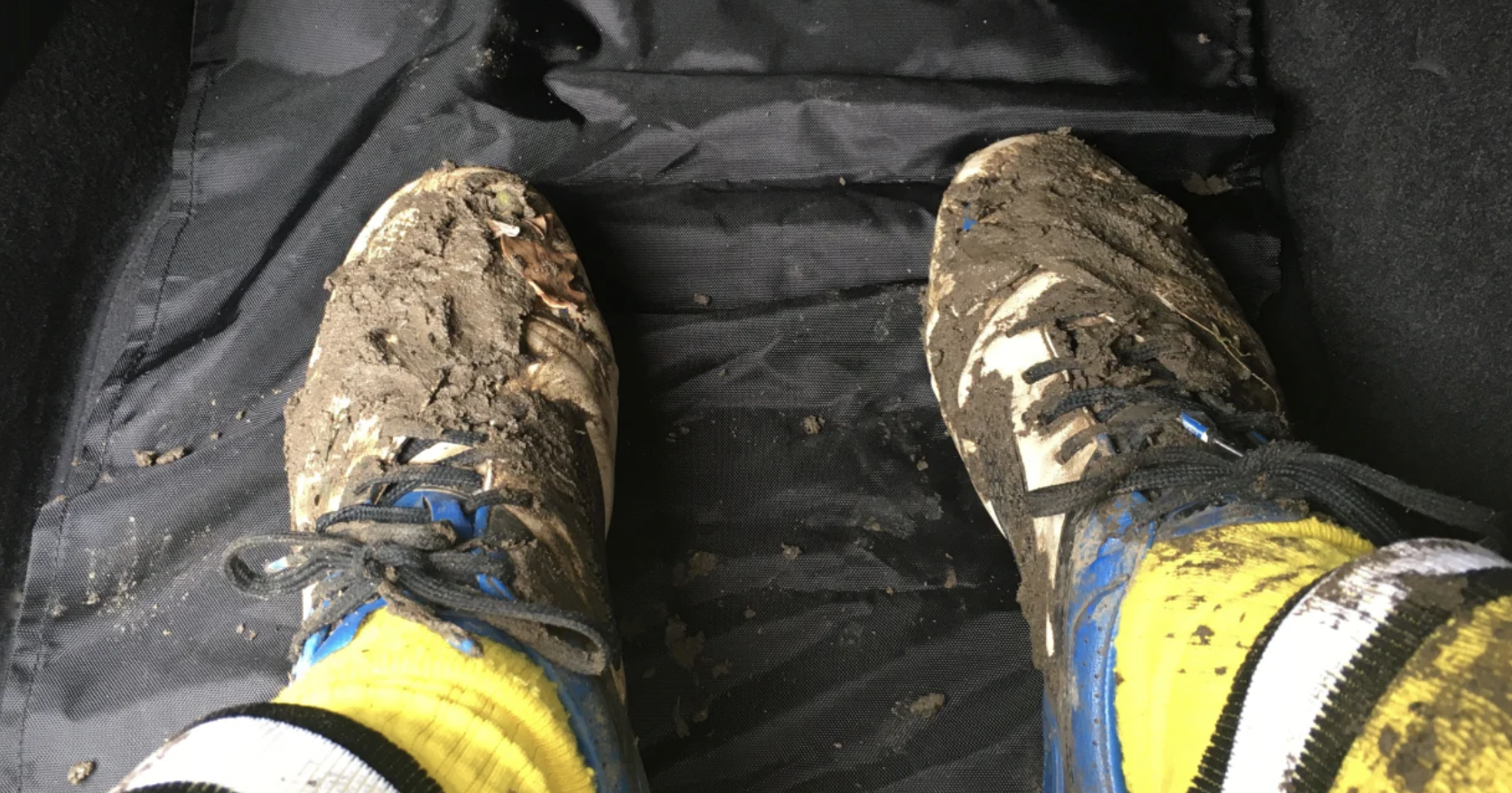
Football is wet grounds and muddy boots and the smell of dirty socks in the car after a long weekend away. It’s the gear bag sitting in the back a day too long.
It’s excited chatter.
The banter.
The noise.
The endless energy.
It’s the food at games and the small moment of giving myself permission to just eat the hot chips. Not because it’s healthy. Not because I’ve “earned” them. Just because football weekends are long and joy is allowed.
Football is a sunset at Launceston City on those 4:45pm kick-offs, when the light goes gold and the game feels bigger than the scoreboard.
It’s stepping onto the fabulous surface at Lightwood Park and thinking, this is what football should feel like.
The Things Only Football People Understand
Football is checking Tassie Football Central because you just have to know what is going on at other grounds.
Not because you’re nosy.
Because you’re invested.
Because football is a living ecosystem and you can’t help caring about it.
Football is Brian welcoming me with, “What news?”
Not hello.
Not small talk.
Just straight into it.
Because in football, you don’t just attend the game.
You live it.
Football is Clare making sure everyone is decked out in merch.
Wearing our colours.
Looking like a club.
Football is Darrin volunteering, and somewhere along the way becoming a friend for life.
Football is going to Valley Road and bringing home three points when it is so damn difficult to do.
Football is also the generosity of other clubs.
The food for the opposition.
The kind words offered after.
The moment where you remember that underneath the competition, football people understand each other.
Football Is Identity
At some point, football stops being something you do.
It becomes part of who you are.
You don’t just go to games.
You plan your weekends around fixtures without even thinking.
You know which grounds are windy and which ones are cold.
You carry the game with you all week.
Football becomes a second language.
And one day you realise you don’t even know how you would live without it.
Not because you can’t.
Because you don’t want to.
Football Is Pride (And Time)
Football is pride in your club.
Pride in your team.
Pride in the kids you’ve watched grow up from tiny uniforms into young adults who can handle pressure, disappointment, responsibility.
Pride in my family too.
A family that has lived football properly, not as a hobby, but as a craft.
Advanced coaching qualifications.
Decades of learning.
Decades of teaching.
Decades of giving.
And then one day you look up and realise football has become generational.
Players you once coached are now bringing their own children to training.
Kids are turning up with the same surnames on their backs.
Old stories are repeating in new ways.
It makes me feel proud, and it makes me realise just how long I’ve loved this game.
Not just watched it.
Loved it.
Football Is Quiet Service
Football is also the work nobody sees.
It’s washing bibs.
Sorting balls.
Packing cones.
Unlocking sheds.
Chasing keys.
Borrowing equipment.
Marking lines.
Texting team managers at night.
Trying to solve problems before anyone else even realises there was one.
It’s volunteering for things you don’t actually want to do, because you know if you don’t do it, the whole thing falls over.
It’s being the person who holds the detail so others can just enjoy the game.
And most of the time nobody notices.
But clubs are built on this kind of quiet service.
This is what football is made of.
Football Is Women Carving Out Space
Football is watching girls fill the grounds.
Not being included.
Belonging.
Owning space.
Some chasing high performance.
Some just there for fun.
It doesn’t matter.
They’re there.
And every season it becomes more normal.
More expected.
More obvious.
Like it should have been all along.
Girls in club colours.
Girls with confidence.
Girls with swagger.
Girls who don’t ask permission.
That makes me happy.
Because once you’ve seen it, you can’t unsee it.
This is what the future of football looks like.
Football Is Legacy
Football is the generosity of people who understand that clubs outlast all of us.
Tony Chaffey remembered the club in his will.
Such a generous thing to do.
Not for attention.
Not for applause.
Just because some people love football so deeply they want to protect what they helped build, even after they’re gone.
That stays with you.
Football Is Memory
Football is being able to laugh about how absolutely shit Manchester United are at the moment, while still remembering how glorious they were when Sir Alex was in charge.
That era wasn’t just winning.
It was identity.
It was standards.
It was belief.
And sometimes football is ridiculous in the best way.
Like when the underdog does you a favour and takes points off your nearest rival.
You don’t even pretend to be neutral.
You celebrate like it was your own win.
Football Is Big Days and Old Stories
Football is Launceston United and the brilliant Hudson Cup days.
Football is the Hobart Cup.
Not just as a tournament, but as an experience.
A weekend where thousands of children get to feel what it’s like to play in something bigger than their own weekly routine.
Rain, hail or shine.
It doesn’t matter.
They turn up anyway.
Umbrellas blowing inside out.
Freezing hands.
Freezing feet.
People huddled on the sidelines trying to look like they’re coping.
Volunteers who looked half-frozen but kept going anyway.
That weekend is exhausting.
It is also magic.
Football Is Chaos, Courage, and Characters
Football is red cards and big moments.
Jimmy James taking heart medication at Kingborough because we just have to win.
Goals scored from halfway.
The kind of goals that make everyone stop and look at each other like, did that just happen?
Football is Richard yelling “Carn Souf”.
Not in a polished, corporate way.
In the real way.
The way that sounds like home.
And football is 63 games undefeated.
Then finally breathing a sigh of relief when Eagles beat us.
Not because losing is good.
But because the weight of defending that record every week is finally gone.
You can breathe again.
Football is also John Boulos sitting at Mt Nelson with the League Winners trophy.
Not knowing whether to go South or East.
Kick-offs at the same time on the last day.
That moment where the whole season squeezes into ninety minutes, and everybody is waiting, and nobody wants to be the one who says it out loud, but everyone knows what is at stake.
Football is suspense.
It’s nerves you can barely contain.
It’s hope that feels reckless.
It’s people holding their breath together.
Football Is The After
Football is also what happens after.
The silence in the car.
The replaying of moments you can’t stop thinking about.
The anger that fades into perspective.
The sadness that sits quietly next to you on the drive home.
The win that doesn’t even feel real until later.
The tiredness.
The calm.
The reflection.
And sometimes the message that arrives that night, long after the crowd has gone.
Well done.
Proud of you.
Thank you.
Football doesn’t end at full time.
It follows you home.
Why This Matters
And this is the point.
When you’ve lived football like this, when you’ve watched it build children and friendships and belonging in real time, you stop being able to tolerate governance that treats the game like numbers on a spreadsheet.
Because football isn’t a product.
It’s people.
It’s volunteers and families and kids in muddy boots.
And if the people who sit above the game can’t see that, or won’t protect it, then it becomes the responsibility of those of us inside it to speak up.
This isn’t complaining for sport.
This is advocacy for the thing that deserves better.
Football is too important to be governed poorly.
So yes.
I’m going to talk about it.
Because I love this game.
When the Australia Cup first arrived
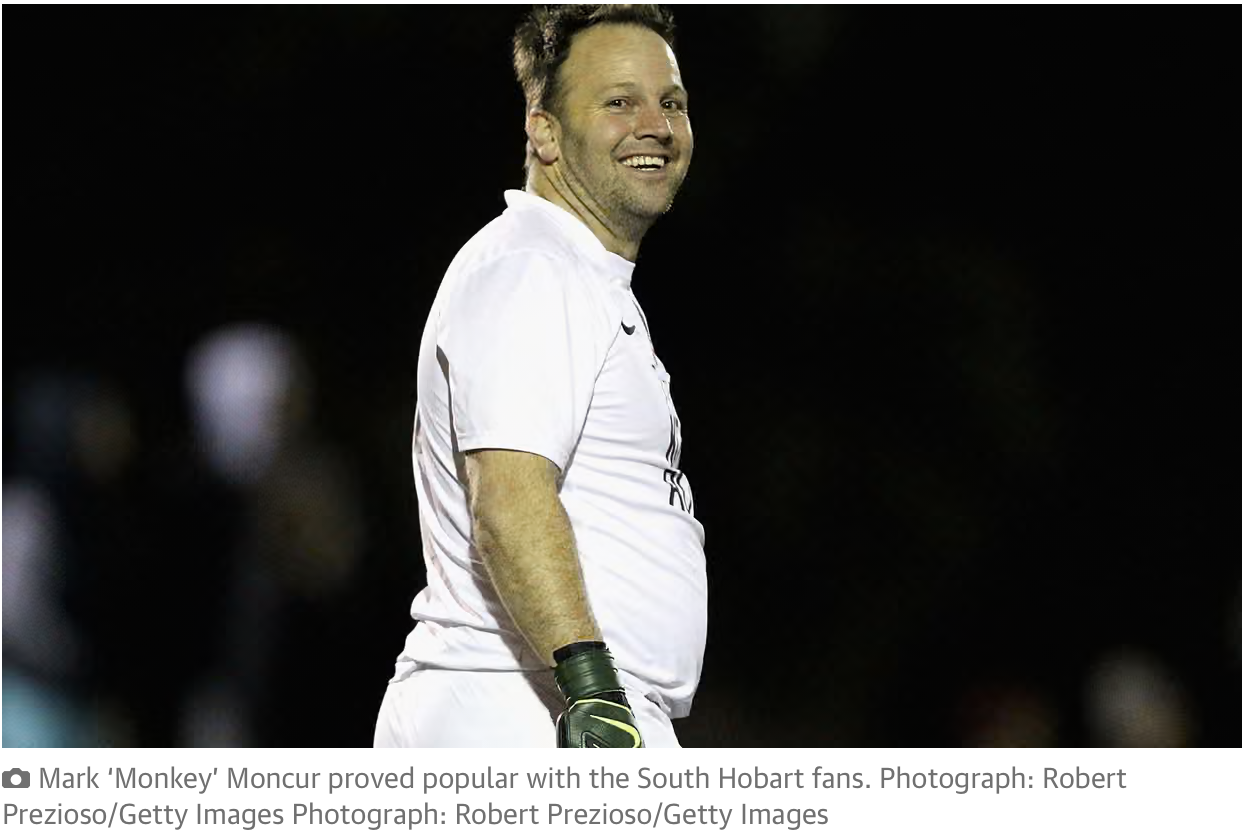
August 2014
I was at this match.
It was the inaugural year of what was then the FFA Cup, now known as the Australia Cup. At the time, we were still working out what it meant. A national knockout competition. A genuine round of 32. A brief sense that Tasmania was no longer quite so far from the centre.
As Joe Gorman wrote in his piece for The Guardian at the time, “I’m here for the football… it’s at these local games where you find the most wonderful of football anoraks.”
That line has stayed with me, because it describes the people who carried nights like this long before anyone else was paying attention.
We were there because we had won the Lakoseljac Cup. That alone felt significant. It placed us into the round of 32 of a brand-new national competition, one that continues today and is now embedded in the Australian football calendar.
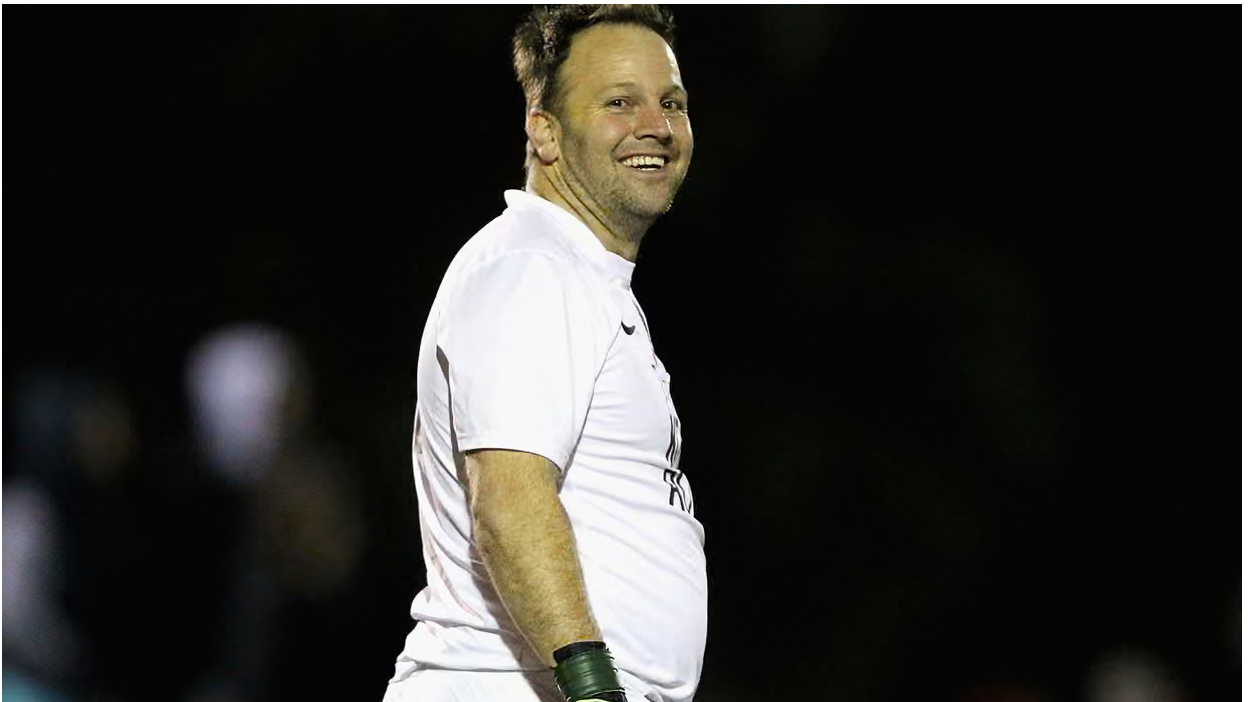
I remember being terribly nervous, mostly about the game itself. The occasion, the stage, the sense that this night mattered more than most. Mark being in goal added another layer to it, of course, but it wasn’t the source of the nerves. It was everything wrapped around the match that made it feel heavy.
Our regular goalkeeper, Kane Pierce, had been sent off the week before for bad language. We fought like mad to see if we could get him cleared. We argued the case. We appealed. But to no avail. Rules were rules, and Kane was out.
He was devastated. But we had no choice. The reserve goalkeeper stepped in and did a wonderful job, as people so often have to do in Tasmanian football.
One of the most memorable parts of that first Australia Cup experience had very little to do with what happened on the pitch.
The administrative and organisational workload was on another level. As a volunteer-run amateur club, we were suddenly required to operate at something approaching a professional standard. The volume of paperwork was daunting. Compliance, documentation, deadlines, processes we had never encountered before at that level.
Frances, our club secretary, carried the bulk of that work. She spent hours and hours making sure every box was ticked and every i dotted.
As Frances said to me at the time, “The workload was enormous and completely new for us, but we weren’t doing it in isolation. Mal was terrific to deal with, and John was very supportive. That made a big difference when you’re trying to meet standards you’ve never been held to before.”
In hindsight, it was formative. We built a strong working relationship with Mal Impiombato, who was our direct FFA contact throughout the process, and were well supported by the FFT CEO at the time, John Boulos. That first experience quietly set us up for our next two Australia Cup appearances and later for the yet-to-be-commenced Australian Championship, which brought similar levels of compliance and administrative load.
Those hours don’t make the highlights reel, but they are part of the story.
We couldn’t play at home either. We don’t have lights at our ground. We didn’t then, and we still don’t. The Australia Cup is played mid-week to fit within the national football calendar, so the match had to be moved. We played at KGV Park, a ground we knew well from league football, but one that felt different under lights, with that added sense of occasion.
Mark Moncur went in goal that night. He is now a board member and life member of the club, but on that evening he was simply someone stepping up when needed. He wore Kane’s white goalkeeper kit, which was very much not what he would have chosen himself. That detail has stayed with me. You wear what is available. You do what needs to be done.
There was also a familiar dread. The curse of penalties seemed to hang over us in the Australia Cup, even if it hadn’t yet fully announced itself that night. It would surface again in later years, most memorably against Sydney United 58. Once penalties enter your club’s story, they never really leave it. God, I hate penalties.
What strikes me now is this. What Kane was sent off for in 2014 would not even be a bookable offence in 2026. The rules of the game have changed. The interpretations have changed. The moment, though, remains fixed in time.
Later in his article, Gorman wrote that “cold weather, hot food and passionate support make for a memorable evening.”
That line captures it perfectly. Even in defeat, those nights mattered. They still do.
You can read the full article here:
https://www.theguardian.com/football/blog/2014/aug/06/ffa-cup-shines-its-light-on-tasmanias-proud-football-tradition
Reading it now, years later, I feel the nerves again. I also feel how quickly the light moves on. The competition endures. The pride endures. The questions about infrastructure, compliance, and what follows the moment have endured too.
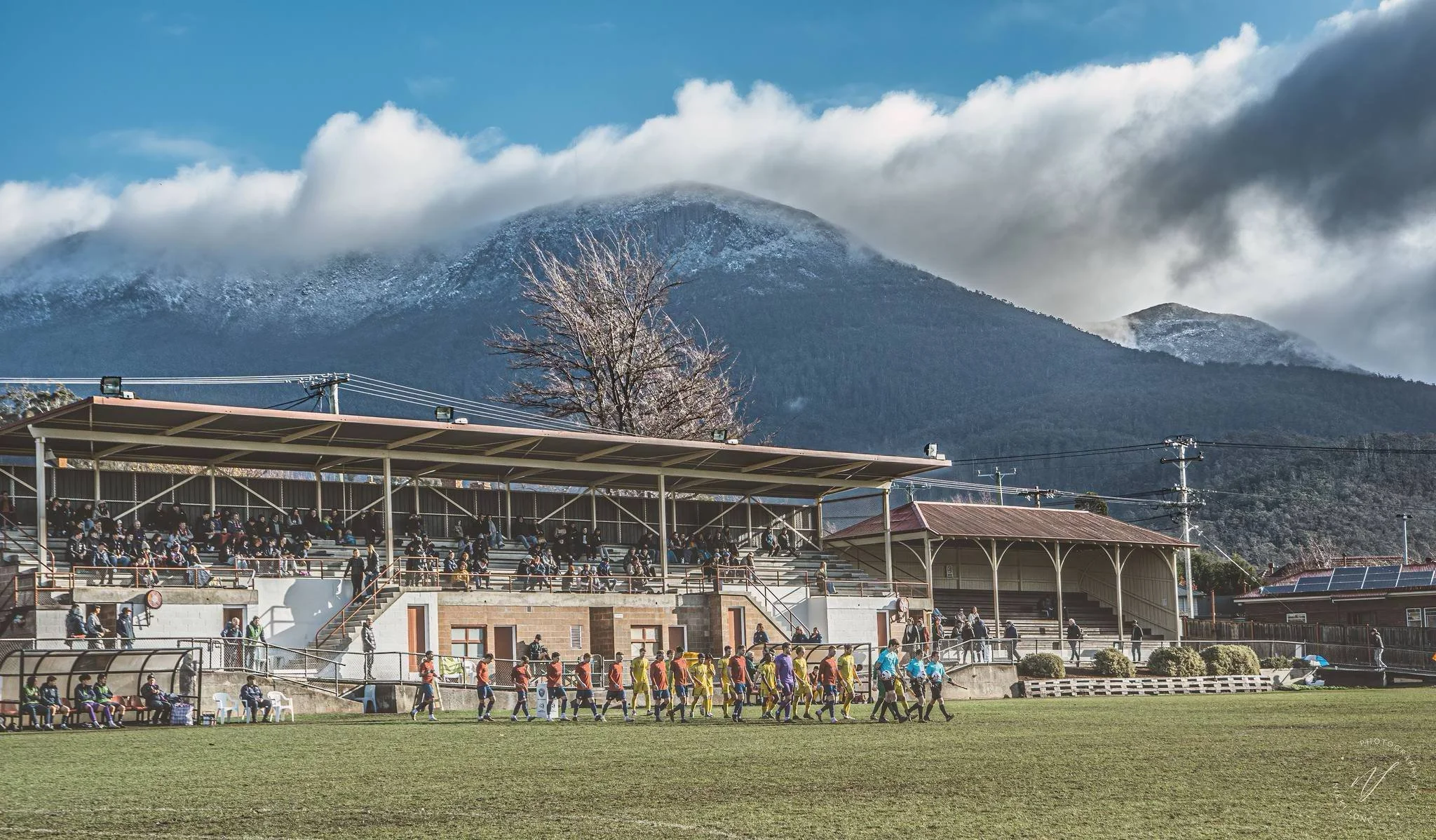
Goodbye 2025. Welcome 2026
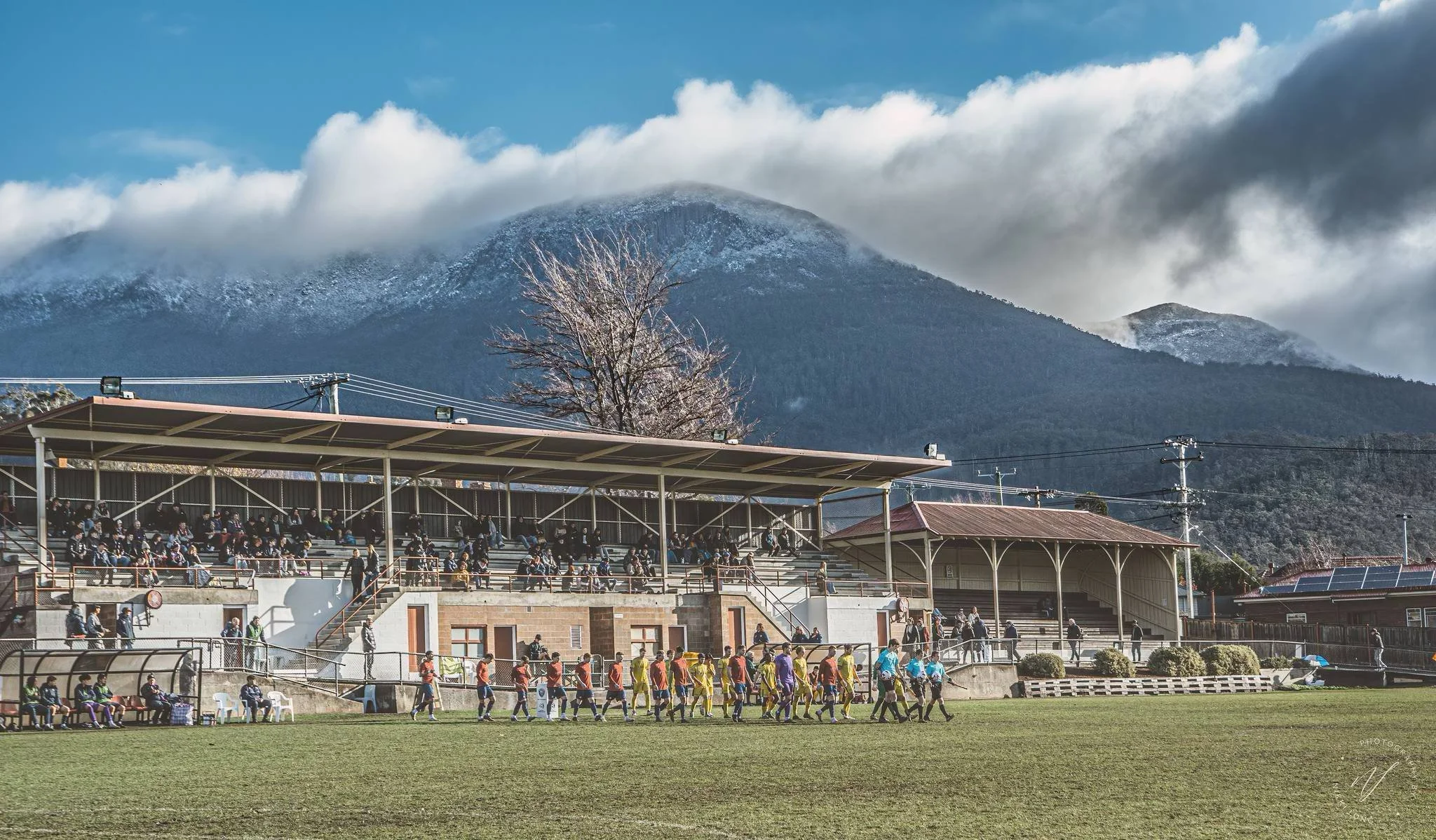
One of Nikki’s fab photos
I want to write this down in case I forget.
Not the events, they are easy enough to list but the texture of the year. How it felt to live inside it.
2025 was a big year for me.
Stepping away
I stepped away from the Presidency of South Hobart Football Club after seventeen years. That sentence still lands heavily. Not because I regret the decision but because it marked the end of a long season of responsibility. The kind that seeps into your thinking and stays there long after the meetings end.
I am still learning who I am in football without a badge or a title attached.
Ken stepped back too, giving up senior coaching roles after more than fifty years in football. Watching someone who has shaped his entire adult life around the game feel a little lost has been confronting. There is grief in that, even when the decision is right.
We are learning, together, what it means to still belong without being central.
Max left for Melbourne, chasing opportunity and growth in his coaching. That was a proud moment and a tender one. You don’t spend decades building something as a family without feeling the pull when one of you needs to step beyond it.
I am glad he went. I miss him too.
The joy alongside it
The trips away this year were genuinely fun. Nikki came with us and at one point Ken said he felt like he was travelling with two wives. He was constantly fussed over, checked on and looked after.
It became a running joke but there was something quietly lovely in it too.
Those trips were for Australian Championship games, Wollongong, Marconi and Heidelberg. It was fabulous to see other clubs competing in the NPL system and to experience the level they operate at.
The gap is not huge. The football certainly isn’t. The money, perhaps, is.
Those shared moments, away from home, reminded me how much joy still sits alongside responsibility.
Building and sustaining
Ned continued to do an outstanding job as Academy Director, providing consistency, structure and calm leadership. He has been trusted by players, parents and coaches alike and the Academy numbers this year reflect that.
Parents are choosing organisation, professionalism, certainty and child safety for their children and they are prepared to pay for it. That tells its own story about where community football is heading.
Pete Edwards joined South Hobart Football Club and Morton’s Soccer School later in the year, after what he described as the longest interview process he had ever experienced for a coaching role.
His arrival added depth and energy to the program and complemented the foundations already in place.
On the field, the club competed in the Australian Championships. We travelled to watch them play. We hosted powerhouse clubs at home. We welcomed South Melbourne to KGV in the Australia Cup after winning the Lakoseljac Cup.
There were moments when I stood back and simply took it in.
Not pride exactly. Something quieter. A sense of perspective.
Nick won a third Best Player award this year. Three in a row. Watching that level of consistency, professionalism and resilience never gets old. He goes about his football with standards that don’t waver.
He also fielded offers from clubs in Tasmania and interstate. Recognition like that doesn’t happen in isolation. It is earned over time, through work, behaviour and care for the game.
The work and the weight
I also want to acknowledge the Board of South Hobart Football Club. Working alongside them this year has been one of the quiet strengths of 2025.
They love the game as deeply as I do and they carry that love with resilience and care.
Over the past two years we worked relentlessly on our bid for inclusion in the Australian Championships as a foundation member. The volume of work was immense. There were knockbacks, moments of limited support and long stretches where it felt like we were carrying the weight alone.
We can pretend that being knocked back is fine.
We can rally, regroup and carry on.
But the truth is, it wears you down.
There was a familiar feeling too. The here we go again sense of coming close, of almost making it, of being asked to prove ourselves one more time. It exposed divisions in the game that are hard to ignore.
And yet, through all of it, the Board remained engaged, principled and committed. That kind of resilience doesn’t happen by accident. It is earned, collectively, over time.
There was, however, one issue this year that cut deeply. It wasn’t a football issue, but it affected everything. It gnawed away at me and triggered a constant sense of unfairness, of asking, over and over, why is this happening to my club?
It tested my mental resilience in ways I didn’t expect and at times it was genuinely damaging.
Ten years of criticism and blame will do that to a person. Ten years of having to justify your existence, to answer every complaint directed at you.
Continuing as I was became unsustainable.
I’m not ready to name it yet, but I carry it with me into 2026 with clearer boundaries than before.
Scale and momentum
Both South Hobart and CRJFA continue to face the daily challenge of fitting thousands of children onto too few grounds. It is a constant exercise in compromise, goodwill and logistics.
Football is thriving. Participation is strong. Demand keeps growing. The system around it strains to keep up.
I would be remiss not to mention the Hobart Cup. The biggest Junior and Youth tournament in Tasmania (of any sport) and one that still takes my breath away each year.
In 2025 we held our breath over the weather, as always, knowing how much rides on a few days in September. This year it held.
Record numbers entered.
Record numbers attended.
Grounds full from morning to night.
Kids everywhere.
Families everywhere.
It was a fabulous showcase of football and of what is possible when the game grows beyond what can realistically be run as a purely volunteer event.
There are signs of movement. A new building at D’Arcy Street. New lights at Wellesley. Projects that take years to materialise and even longer to advocate for.
They represent progress, even when it arrives slowly.
Looking ahead
Some of my favourite moments of the year are imagined ones, still forming. Sitting in the new clubhouse, hopefully in 2026, having a drink with Murray and looking out over a space shaped by decades of effort and belief.
I remain in awe of those who support the club financially and of those who turn up, quietly and consistently, to do the work that keeps football alive.
The people who make the whole thing function rarely ask to be noticed.
I have written a lot this year. To remember. To make sense of more than twenty years spent inside football, governance and community life.
Writing has become a way of choosing how I stay connected, without losing myself in the process.
As I move into 2026, I feel something I didn’t expect.
Optimism.
Not the glossy kind. Not optimism that ignores structural problems or hard truths. But a steadier sense that change is possible and that I can choose how close I stand to the fire.
So this is my goodbye to 2025.
A year of endings, shifts and recalibration.
And my welcome to 2026.
A year that feels open, lighter and full of possibility.
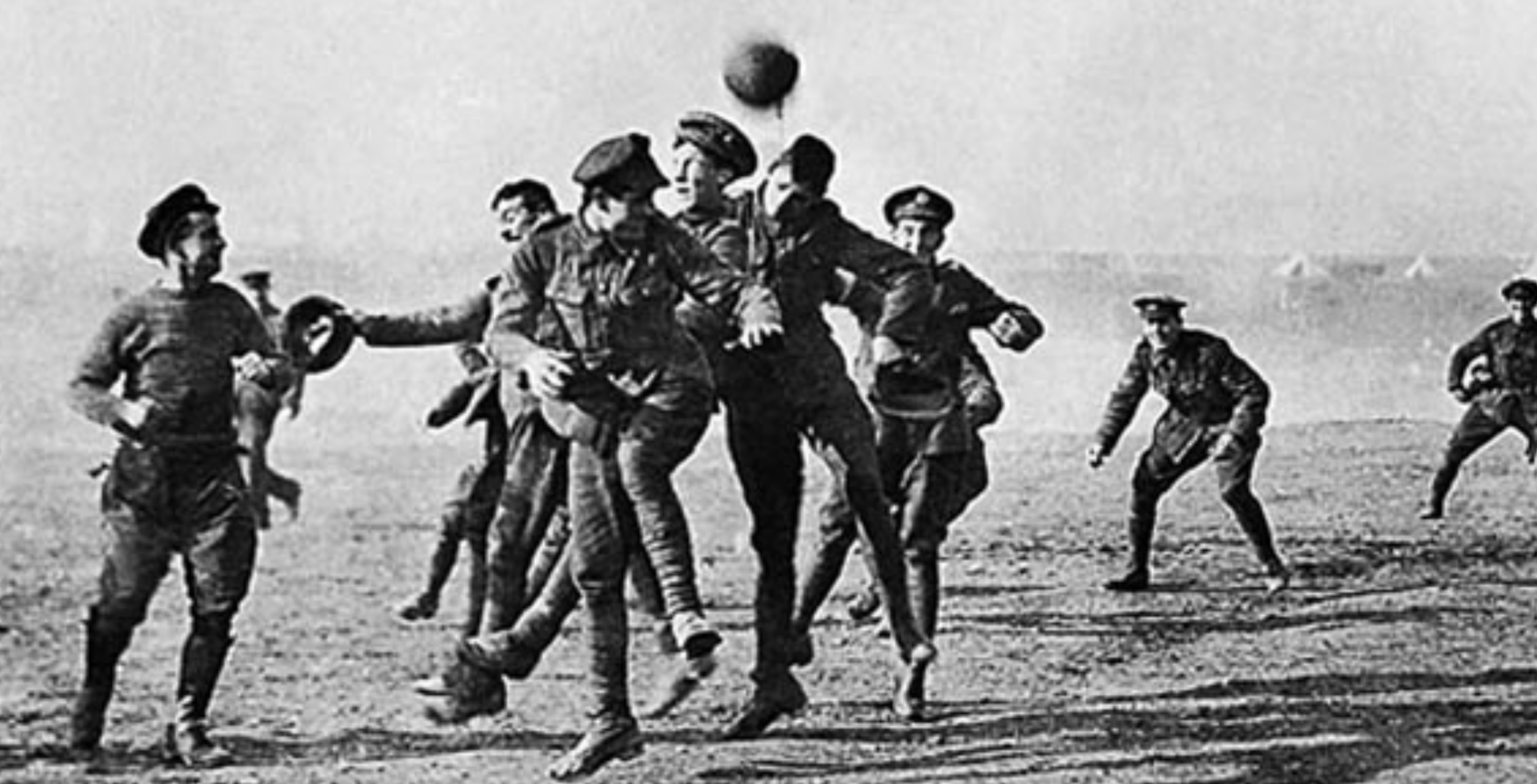
Christmas Day 1914 - When the War Paused and Football Was Played
Christmas Day carries a strange weight.
It is meant to be about peace, family and generosity, yet history reminds us that it has often arrived in the middle of humanity’s darkest moments.
One of the most extraordinary Christmas stories comes not from celebration, but from war.
In late December 1914, during the first winter of World War One, fighting stopped in parts of the Western Front.
Not by command.
Not by treaty.
But because ordinary soldiers chose, briefly, to recognise each other’s humanity.
The Setting
By Christmas 1914, the belief that the war would be “over by Christmas” had long disappeared.
British and German troops had been entrenched for months. The ground between them, No Man’s Land, was a churned mess of mud, wire and fear.
Then, in some places, something unexpected happened.
German soldiers placed small Christmas trees and candles along their lines and sang carols, including Stille Nacht, Silent Night.
Across the lines, British troops listened. Then they replied.
The Guns Fell Silent
In places, the shooting stopped.
Men climbed cautiously out of their trenches and met in No Man’s Land. They shook hands. They exchanged cigarettes, food and small souvenirs.
In some sectors, the pause also allowed something deeply human and deeply sobering, the retrieval and burial of the dead who had been lying between the lines.
It didn’t happen everywhere.
But where it did, it remains one of the most striking moments of shared humanity in modern history.
And Then There Was Football
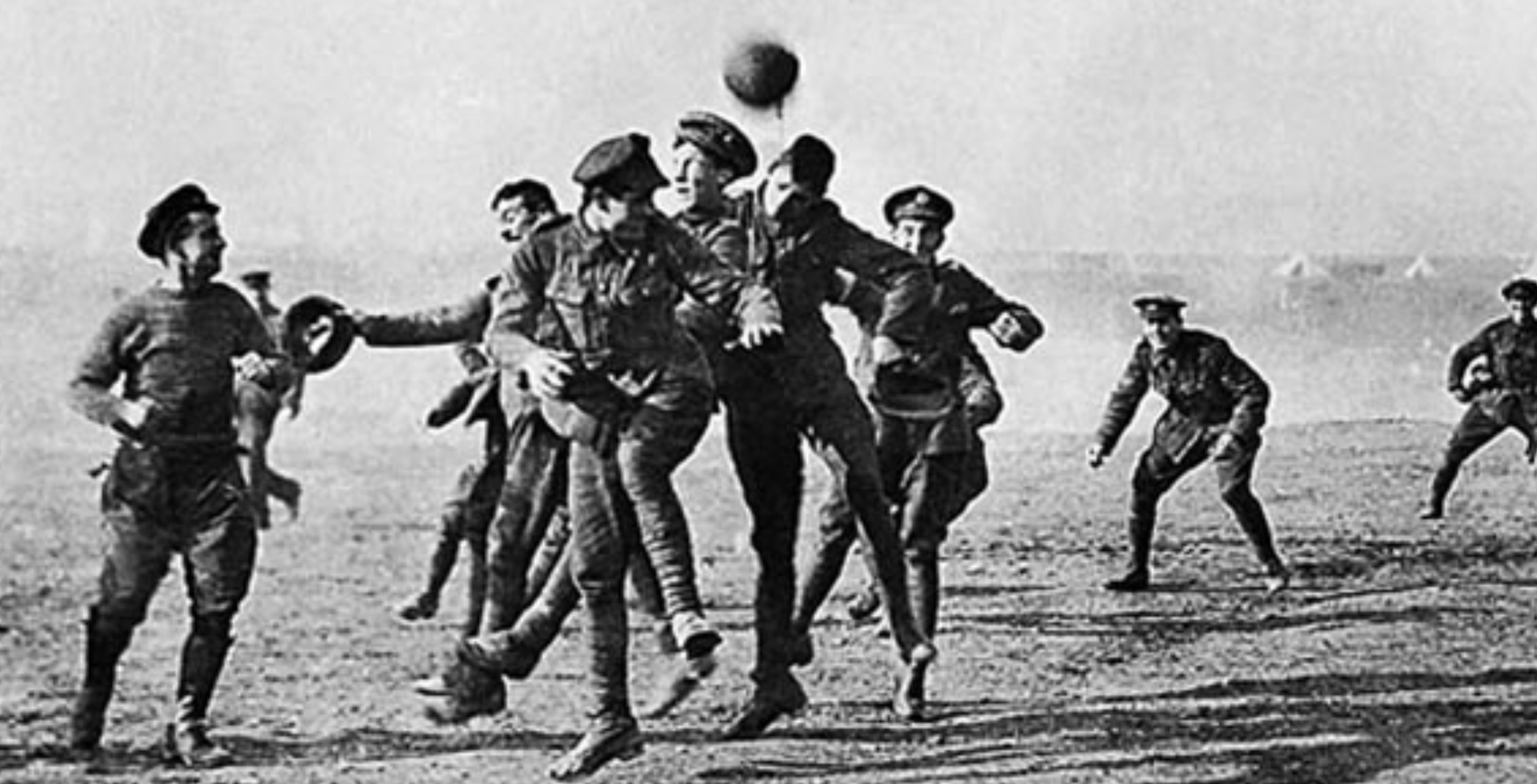
The image most people remember from the Christmas Truce is football.
Soldiers in uniform, boots muddy, kicking a ball where bullets had flown the day before.
And yes, football did happen.
Not neat matches. Not scoreboards or referees. Just informal kick-abouts, described in letters and diaries as impromptu games with whatever ball was available.
The football is real. The myth is the tidiness of it.
Why Football Matters Here
Football mattered because it was familiar.
It needed no shared language, no explanation, no orders.
Just a ball and a little space.
In a landscape defined by division, it created connection.
For men trained to see those opposite them as enemies, it offered a reminder that they were very much the same.
Young men. Far from home. Missing Christmas.
The Aftermath
The truce did not last.
Fighting resumed, and senior commanders were uneasy about what had happened. In the years that followed, any repeat was discouraged.
But the memory remained.
Many soldiers carried that Christmas with them for the rest of their lives.
Why This Story Endures
The Christmas Truce of 1914 matters not because it ended the war.
It matters because it shows what people are capable of despite war.
That peace does not always come from leaders or agreements, but sometimes from individuals choosing empathy over hatred.
And that football, so often dismissed as “just a game”, can be a human language, capable of cutting through fear and division.
A Christmas Wish
So this Christmas, I wish everyone who loves football the chance to have a simple kick-about.
No scores.
No pressure.
No expectations.
Just people together, sharing space, laughter and a ball at their feet.
For a moment, forgetting the noise, the worries and the divisions of everyday life, and remembering the quiet joy of being together.
That, perhaps, is the real gift of football.
The people football puts in your life
Football has brought an extraordinary range of people into my life.
Some have stayed for decades.
Some passed through briefly.
Some challenged me.
Some supported me quietly.
Some never agreed with me at all.
And that, I have come to realise, is exactly what community football does.
Football is a game. It is fun and it is meant to be enjoyed.
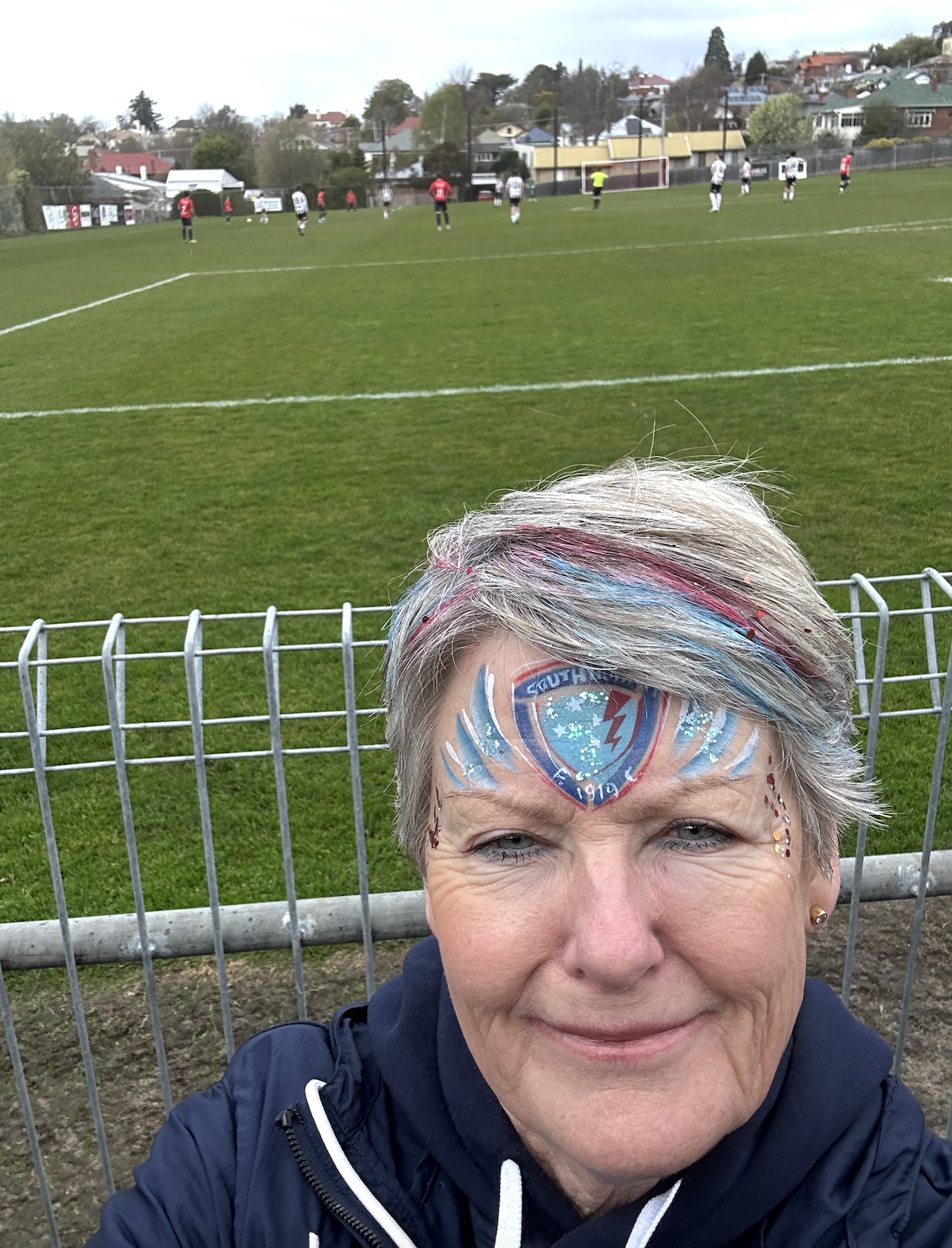
For me, football has always been lived on the sidelines, on winter mornings, behind fences, and in places that slowly become part of your life.
Football is about people first
It’s easy to talk about football as competitions, pathways, structures and results. But anyone who has spent real time in the game knows that football is, first and foremost, about people.
People who give their time.
People who show up week after week.
People who care deeply about their children, their teams and their clubs.
It is emotional. It is personal. And because of that, it brings out the very best, and sometimes the very hardest, parts of people.
The supporters you don’t always see
Some of the most meaningful support I have received over the years has been quiet.
A message sent privately.
A conversation on the sidelines.
A nod of understanding after a difficult decision.
Not everyone wants to be visible. Not everyone feels comfortable speaking publicly. But that does not mean they are not there, watching, caring, and appreciating what is being built.
Those moments matter more than people realise.
Learning to live with disagreement
I have also learned that leadership does not come with universal approval.
In football, decisions are rarely simple, and they are never made in a vacuum. People see situations through their own experiences, fears and hopes for their children. That is human.
Not everyone will like you.
Not everyone will agree with you.
Not everyone will understand decisions made under pressure.
That does not mean those decisions were wrong, and it does not cancel out the good that exists alongside the criticism.
Learning to sit with that has been one of football’s greatest lessons for me.
Speaking while we are still here
I have always found funerals a strange process.
They are not really for the dead. They are for those left behind. A place where people gather to say kind things when the person they are speaking about is no longer there to hear them.
I have often wondered why we wait. Why we save gratitude, honesty and reflection for the end, rather than speaking more openly while people are still here.
I was born in New Zealand, and one of my strongest childhood memories is of tangi. Growing up around Doubtless Bay, tangihanga was not something rushed or contained. It took time. People stayed. They talked. They cried. They sat in silence.
What stayed with me was that people spoke directly to the person who had died, as if they were still present. Stories were shared honestly. Gratitude was spoken plainly. There was space for emotion, humour, regret and love, without polish or performance.
That memory has stayed with me.
It has shaped how I think about community, and about the importance of speaking while people are still here, not just when something ends.
Gratitude, often expressed late
As I step away from the Presidency of South Hobart Football Club after sixteen years, I have found myself reflecting on the people, moments and lessons that have shaped that time.
One of the unexpected things about stepping aside from a role is the messages that arrive afterwards.
Words of thanks.
Reflections shared.
Thoughts people perhaps did not know how, or when, to express earlier.
I am grateful for those words. But I am even more grateful for the everyday conversations, the quiet support, and the relationships built along the way, when they mattered most.
Service, not sacrifice
Sometimes people would ask me why I did so much for the club. They would say, couldn’t someone else step up, or surely there were other things I would rather be doing. The truth is, doing something you love, for a cause you care deeply about, does not feel like sacrifice. It feels valuable.
If my path had not crossed with football, and with South Hobart, I would not have met Ken. Our lives intersected through service to the game and to the club, and from that came a family, friendships, and a shared life shaped by community sport. That alone makes every hour worthwhile.
Serving a cause bigger than myself, in this case my club, has been one of the most valuable experiences of my life. It has given me purpose, perspective and connection, and I would not trade that time or those years for anything.
Looking back
A long time from now, when I am older than I am today, I hope to look back on this day and remember the children who played for my club, their parents, and all the people along the way who loved football for what it truly is, a game that creates community.
How a Coaching Interview, a Swear Word, and a Soccer School Altered My Life
I didn’t arrive in football with a plan. I wasn’t chasing a title, a presidency, or a platform. I was a parent with a football-obsessed son and nowhere for him to play.
My youngest, Max, showed promise from the moment he could kick, a wicked left foot, but his school didn’t offer football for children under Grade 2. No teams. No pathway. Nothing.
So, like thousands of parents before me, I went looking.
I contacted the Central Region Junior Football Association (CRJFA), spoke to Tony Chaffey and John Barker, and before long I was standing at South Hobart Primary School training sessions, surrounded by children who simply wanted to play. At that point, South Hobart Football Club didn’t have junior teams. That came later. So we stayed put until my boys were old enough to transition into SHFC at youth level.
And that’s how football gets you. Not by ambition, but by proximity. Once you start standing on sidelines, you’re in the system before you even notice.
I Didn’t Come from Football
Most people in Tasmanian football aren’t born into it. They simply find themselves there. I was one of them.
I wasn’t a player, referee, or coach. I was a restaurant owner, a single parent, and a small-business operator who made cakes and desserts so I could work around my sons’ schooling, sport, and activities.
Hospitality was in my blood, not football. I’d owned two restaurants, worked in some of the biggest hotels in Australia in banqueting, and organised events far larger and more demanding than Saturday morning kick-offs.
Football was never the plan.
But like countless parents before me, I didn’t choose football.
Football chose me.
Despite my accidental entry into the sport, football didn’t just shape my life, it shaped my family. Two of my sons, Ned and Max Clarke, grew up on the sidelines with me. What began as something to keep them busy became a passion that defined their futures. Both now hold AFC A-Licence coaching qualifications and teaching degrees, and both work in football.
Football isn’t something you watch from a distance. It pulls you in.
The Tap on the Shoulder
Training nights became routine. Too far to go home. Too cold to sit in the car. Too interesting to ignore what was happening.
One night, someone tapped me on the shoulder and asked if I’d join the board. I can’t remember if it was Brian Roberts, Rod Hill, or John Barker, but the tap came.
And I said yes.
Not because I understood football governance or politics, but because I was there. That was more than twenty years ago. I started as Secretary. The gateway role. Innocent enough.
Until it wasn’t.
The Day Everything Changed
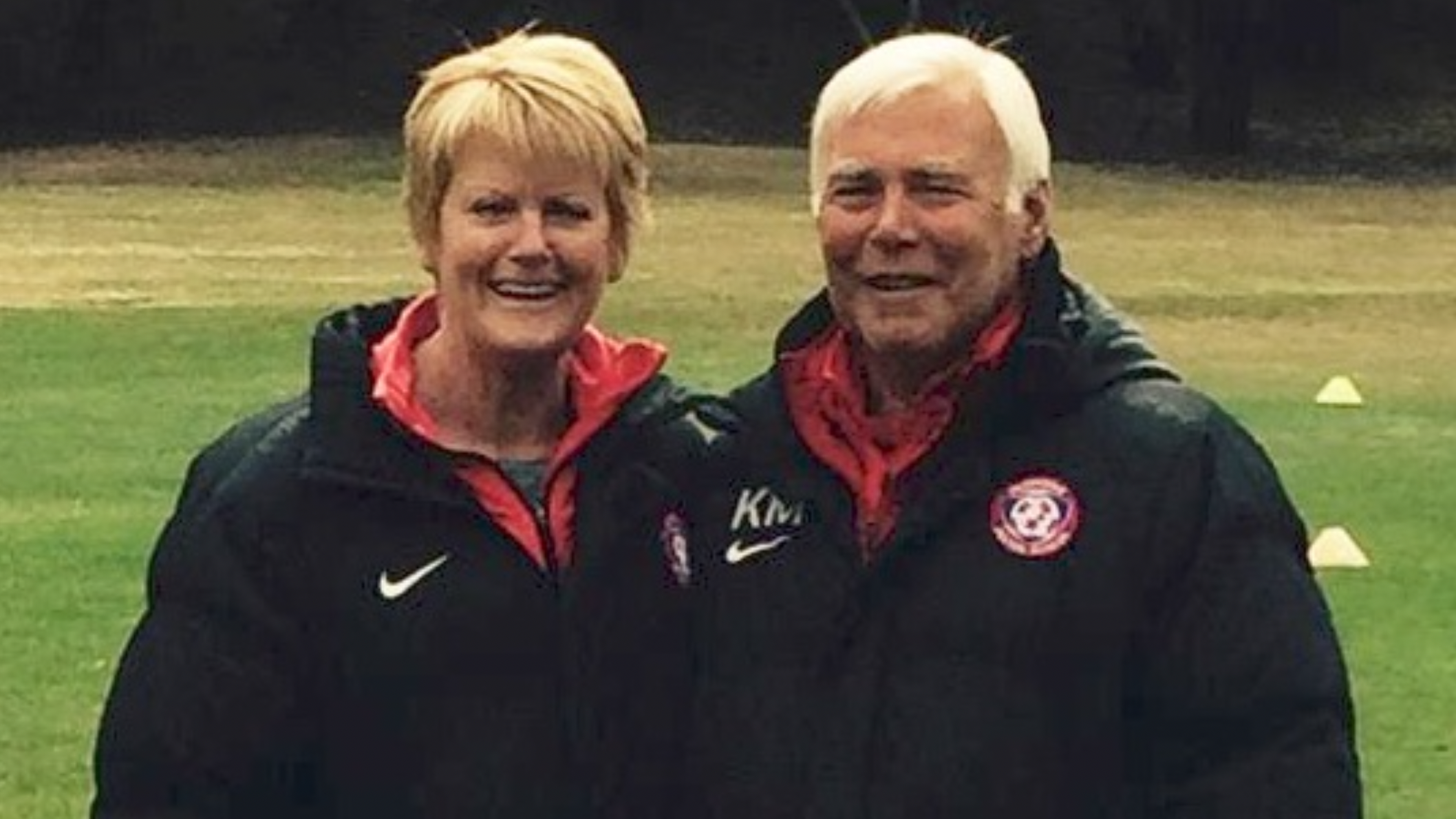
In 2007, I found myself interviewing a man named Ken Morton for the senior coaching role.
He had played for Manchester United and coached across England, Ethiopia, New Zealand, Malaysia, Vietnam, and in the old National Soccer League for Wollongong Wolves and Heidelberg United. He also had a long history with Tasmanian clubs.
And he was offering to take the South Hobart job for free.
The board hesitated.
They debated. They stalled. They questioned whether he was the right choice.
My filter vanished.
“You have got to be fucking joking,” I said. “This man played for Manchester United, has coached all over the world, and you’re not going to give him the job?”
Not subtle.
Very effective.
Ken was appointed.
I didn’t know it that night, but that moment would change everything, not just for the club, but for me.
The Presidency I Didn’t Ask For
By 2009, conversations about leadership became pressure. Ken and Jed, the Division One men’s coaches at the time, cornered me after training.
“You have to do it. We need change.”
I didn’t feel ready. Women rarely do unless every box is ticked. Men tend to look at the same checklist and think, “I’ll be right.”
I stepped forward anyway.
Reluctantly.
Awkwardly.
Completely unprepared, and exactly what the moment required.
I became President of South Hobart Football Club in 2009.
How Morton’s Soccer School Was Born
After Ken’s appointment, there was no payment for senior coaching and no income to support staying in Tasmania. Ken’s son Nick was 11, and Ken wanted to stay to see him grow up.
One afternoon he said, “I’ve always wanted to start a soccer school.”
So we did.
Morton’s Soccer School began with 16 players. Four were our own sons.
Not exactly a lucrative start.
The rest paid $50 a month for four sessions a week. Skills-based, not team-based. Proper coaching. Real development. Something Tasmania hadn’t seen before.
People criticised us for charging fees.
They saw cost.
We saw value.
The following year, the school doubled.
Now, nearly every club uses some version of the model we were criticised for creating.
Progress is always called a problem before it becomes a standard.
The Cold Nights No One Talks About
While the school grew and the club evolved, I spent countless hours waiting. Standing. Sitting. Freezing.
If you were ever at Wellesley Park in the old days, you’ll understand when I say it was the worst building in football.
One toilet. No heat. No privacy. No consideration for women. I used to hold on, not because I was busy, but because I couldn’t face the facilities.
I remember thinking, surely this can get better. Surely someone is going to fix this.
That someone, apparently, was me.
Years later, when the new clubhouse opened, I put a sign on the toilet door:
“Female Staff Only.”
It sounds trivial. It isn’t.
It was the first time I’d walked into a football toilet without wondering what might crawl out.
If you want people to stay in football, stop treating them like they’re lucky to be uncomfortable.
That’s a whole post of its own.
Football, Accidentally, Became My Life
Somewhere between board meetings, player pathways, and cold nights in tin sheds, I found more than a club.
I found purpose.
And I found Ken.
The coach I swore the board into appointing became my partner in football and in life. We’ve been together since 2007.
I came for my son.
I stayed because the game needed me.
Somewhere along the way, football became my world.
Why I’m Writing This
After sixteen years as President, I’m stepping down in December 2025. I’ll remain on the board for a time, not because I can’t let go, but because knowledge in football isn’t passed on. It has to be extracted.
When Brian Roberts died, an ocean of history went with him. I wish I’d written more down.
I’m not making that mistake again.
This blog is my attempt to document what I know, the stories, the battles, the politics, the wins and the failures, before they’re lost.
If You Love Football, You’re in the Right Place
If you’ve ever stood in the rain for football, stayed late to lock rooms, carried cones, bibs or dreams, fought councils for space, coached because no one else would, defended volunteers, or believed this sport deserves more than it gets, then this isn’t just my story.
It’s ours.
This isn’t a farewell.
It’s a beginning.
Football didn’t just give me a club.
It gave me a voice.
And now, finally, I’m using it.