D’Arcy Street: The History of a Football Ground
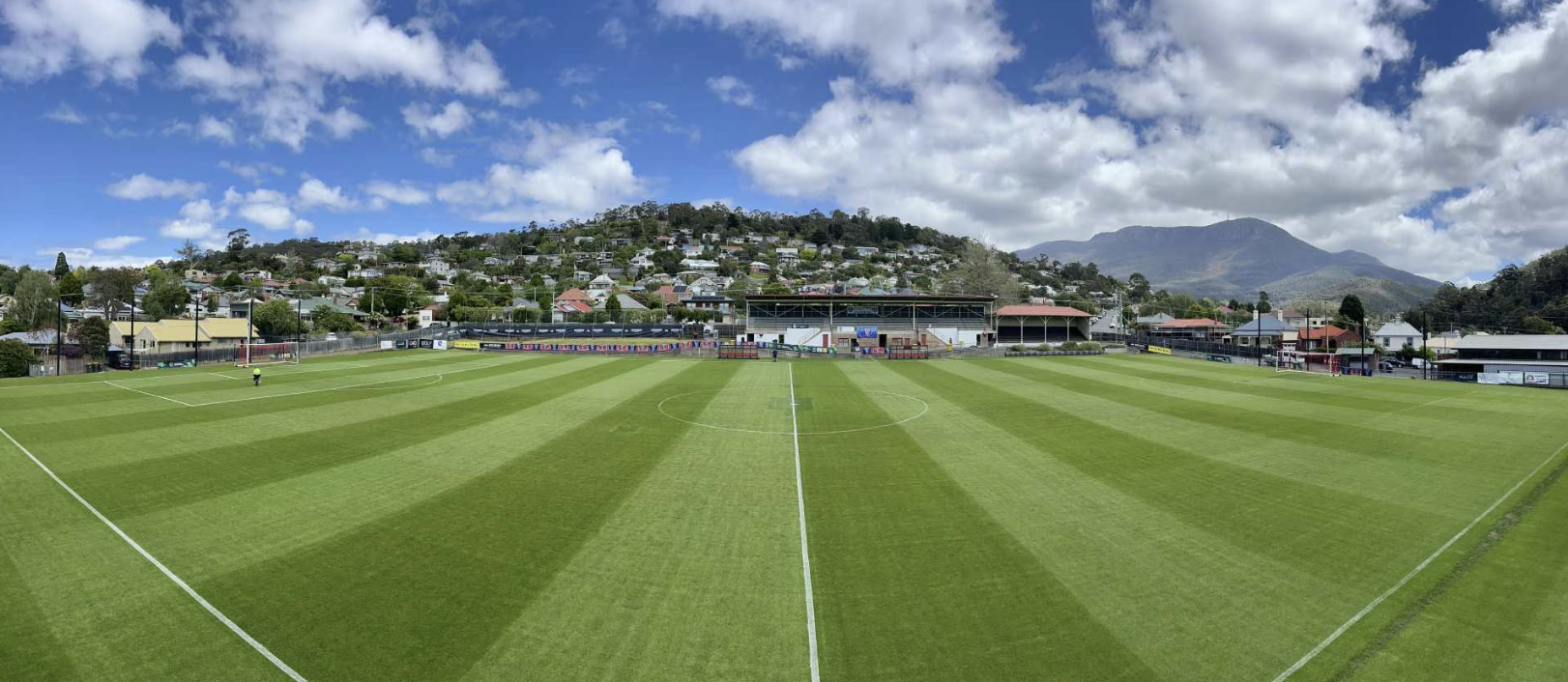
D’Arcy Street - Photo credit Nikki Long
Part 1: The Ground Beneath the Mountain
There are some places where football simply belongs.
D’Arcy Street is one of them.
For more than a century football has been played on the hillside beneath kunanyi. Since 1910 the ground has been associated with South Hobart Football Club, and generations of players have taken the field there.
Children learning their first touches.
Teenagers chasing dreams.
Volunteers arriving early on match days, checking the goals and nets, making sure everything is ready before the first players step onto the pitch while the mountain sits quietly above the ground.
It has always been more than just a patch of grass.
It is a football ground.
And to understand why that matters, it helps to understand the history of the place itself.
The creation of the South Hobart Recreation Ground
The site we now know as South Hobart Oval (D’Arcy St) was established in the late nineteenth century as the South Hobart Recreation Ground.
Government records from the 1880s show public funds being allocated for the purchase of land for the South Hobart Recreation Ground. The site was deliberately set aside for organised recreation and sport.
Recreation grounds of that era were not simply open parks.
They were usually governed by trustees or local boards, established under legislation regulating recreation reserves across Tasmania. These trustees were responsible for overseeing the ground, maintaining it, and ensuring it served the purpose for which it had been created.
Records from the 1890s refer to trustees managing the South Hobart Recreation Ground, demonstrating that the site was treated as a formal community sporting reserve from its earliest years.
What a recreation ground meant
Today the phrase recreation ground can sound vague.
Historically it was not.
Across Britain, Australia and New Zealand the term was widely used to describe municipal sporting venues.
Football grounds.
Cricket ovals.
Athletics fields.
Hobart had several such grounds.
What is now known as North Hobart Oval was historically described as a recreation ground.
West Hobart had its own recreation ground as well, known locally simply as The Rec.
The language reflected the civic belief that organised recreation, particularly sport, was an important part of community life.
South Hobart Recreation Ground was created in that same tradition.
A ground of many names
Over time the ground has been known by several names.
A South Hobart Progress Association newsletter describing the history of the site notes that when the ground was formally established around 1904, its official name was South Hobart Recreation Ground.
Locals referred to it in various ways.
D’Arcy Street Recreation Ground
Wentworth Street Recreation Ground
The Rec
In more recent decades it has also been known simply as:
D’Arcy Street
SHO
South Hobart Oval
Official place-naming records also reflect the sporting purpose of the site. The Tasmanian place-naming authority, formerly the State Nomenclature Board of Tasmania, recorded the venue as South Hobart Sports Ground, a title that appears in government mapping including the Tasmanian Town Street Atlas.
The nomenclature system for officially recording place names in Tasmania dates from 1953, when the Nomenclature Board was established to manage geographic names across the state.
Names change over time, but the use of the ground has remained remarkably consistent.
A place where sport is played.
Football arrives
By the early twentieth century organised football was already being played at the ground.
Newspaper reports from the 1910s and 1920s refer to matches taking place at the South Hobart Recreation Ground, including league fixtures and representative games.
Spectators gathered on the hillside overlooking the pitch.
At a time when Hobart had relatively few football venues, grounds like South Hobart often hosted several matches in succession across a single day.
Clubs shared facilities.
Football simply made use of the limited infrastructure that existed.
Why it is called an oval
The ground is also commonly referred to as South Hobart Oval. In Australia the term “oval” is widely used to describe municipal sporting fields, even when the playing surface itself is rectangular. Many recreation grounds historically hosted cricket during the summer months and football during winter, and the oval terminology remained part of everyday language. Over time the name South Hobart Oval became a common local reference for the ground at D’Arcy Street, even though the field itself has long been configured for rectangular football.
A ground used by the wider football community
Although strongly associated with South Hobart, the ground has never belonged only to one team.
For generations it has hosted visiting clubs from across Tasmania.
Teams from Launceston, Devonport, Glenorchy, Kingborough and many other communities have travelled to play there.
Players arrive by bus and car, walk down D’Arcy Street, and step onto the same pitch where generations before them have competed.
In that sense the ground belongs not just to one club, but to the wider football community.
Thousands of footballers across Tasmania have played at the ground.
Hobart’s only rectangular football ground
South Hobart Oval is also unique within the city.
It is the only dedicated rectangular football ground within the City of Hobart.
That matters because football is played on rectangular fields, not the oval surfaces used by other codes.
Across Australia many football clubs have historically been forced to adapt to oval grounds designed primarily for cricket or Australian Rules football.
South Hobart Recreation Ground was different.
Its rectangular layout allowed the game to be played properly.
Because of that, it has become one of the most important football venues in Hobart.
A venue for top level football
Over the decades the ground has hosted football at the highest levels played in Tasmania.
It has staged:
State League matches
major cup competitions
representative fixtures
national level games
When Tasmania has needed a rectangular venue capable of hosting high level football in Hobart, South Hobart Oval has often been the place.
The ground has also hosted memorable visiting teams.
Manchester United legend George Best once played an exhibition match there, drawing one of the largest crowds the venue has seen.
Years later the Japanese club Nagoya Grampus visited Tasmania with England striker Gary Lineker.
Tasmanian football historian Walter Pless recalls interviewing Lineker at South Hobart Oval during that visit.
Global football has passed quietly through this small hillside venue beneath the mountain.
The people who care for the ground
But the real history of South Hobart Recreation Ground is not only about famous names or historic matches.
It is about the people who care for it.
Like many community sporting venues, the playing surface itself is maintained by the City of Hobart.
But the life of the ground depends on volunteers.
Coaches.
Managers.
Parents.
Club members.
People who organise matches, set up equipment, welcome visiting teams and ensure the game can be played.
For generations those volunteers have been part of the story of this ground.
Why this history matters
South Hobart Recreation Ground is not simply an open green space.
It is part of Tasmania’s football history.
A ground established in the nineteenth century.
A venue where generations of footballers have played.
A place that has hosted local leagues, visiting teams and international footballers.
And a ground that continues to serve the wider football community today.
Because before it became a debate, before it became controversial, it was simply what it had always been.
A football ground.
Have Your Say
The City of Hobart is currently consulting on the future management of South Hobart Oval.
Submissions are open until 18 June.
Anyone who has played at the ground, visited it, or cares about football infrastructure in Hobart is encouraged to make a submission. Please take two minutes to appreciate the ground by having your say.
You can make a submission here: