Darren “Frosty” Frost, New Town Eagles, football, resilience and life in a wheelchair
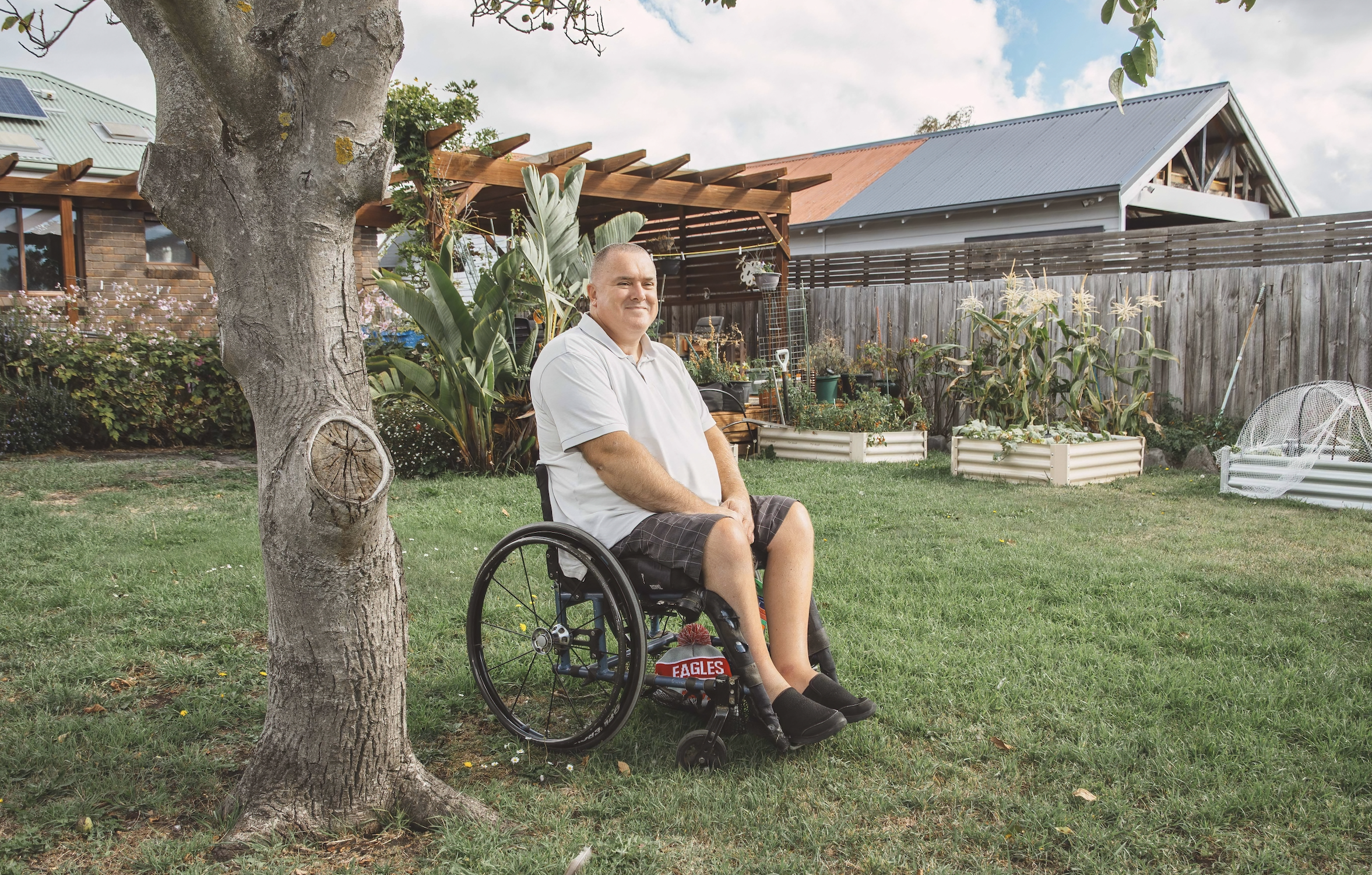
Darren Frost - photo by Nikki Long
I have known Darren Frost, “Frosty” to most football people, through years of President meetings, sideline conversations and those old Southern Championship battles before the Victory League and NPL era changed the landscape of Tasmanian football.
To be honest, I was a little nervous about asking the personal questions.
The wheelchair questions.
Should I be direct?
Should I skirt around it?
Would I upset him by asking openly about his chair and what life in football looks like now?
Frosty made that easy almost immediately.
No question was out of bounds.
So we decided to tell the story honestly.
Football and disability.
Clubs and infrastructure.
Community football and what happens when life changes in an instant.
What followed was one of the most open and candid interviews I have done.
Because underneath all of it, the committees, the Presidents meetings, the old league structures, the accessibility frustrations and the wheelchair, is simply a football person.
And Frosty is unquestionably that.
Green Point, Brighton, Metro and two games every Saturday
Football started early for Frosty.
He began as a goalkeeper for Green Point Primary School Under 8s before moving to Brighton, where he played in goals until Under 12s.
From there he moved to Metro, where he played Under 13s, Under 14s and Under 15s as an outfield player while representing Tasmania at Under 14 and Under 15 level under coach David Smith. He was also playing high school football at the same time.
Two games every Saturday.
And he loved it.
There was a season at Juventus before the move that would shape the rest of his football life.
White Eagles.
He joined the club at 17 and, apart from one season in Queensland playing in the Toowoomba District League, he has been there ever since.
He remembers that Toowoomba competition fondly, especially one game in Dalby played in 40-degree heat.
“It was the slowest game of Football I have ever been apart of. Lol.”
The White Eagles family
At White Eagles, Frosty walked into a football culture that immediately felt different.
His first year was in the State League reserves under Les Ware, with Bobby Rybak around the senior side and players such as David Stoddard, Craig Pitt, Andrew, Mark and Richard Leszczynski and “Slugger” around the club.
“Some great players to train alongside & learn the game from.”
The senior and reserve teams were successful for many years through the 1990s and Frosty remembers everyone heading back to the Polish Club after games to celebrate those victories.
But what stayed with him most was not just the football.
It was the feeling around the place.
“It was a club that always felt like a true family club where the players looked after each other.”
The mums helped with food after games.
Families were encouraged to come back to the club after matches.
That feeling of football club as extended family sits underneath almost every answer Darren gives.
And for older Tasmanian football people, especially those connected to ethnic clubs, it will feel very familiar.
Tasmanian football in the 1990s
Ask Darren about football in Tasmania during the 1990s and the names immediately begin rolling out.
Collin Sheppard, David Stoddard, Craig Pitt, Ian Parker, Romeo Frediani, Mark Falzon, Marty Collins, Warren Iles, Tim Dale, the Huigsloots, the Furjanics, the Browns, Brett Pullen, Ben Hardbinson, the Scottish imports Metro brought in. Olympia even had a player with German Second Division experience who Frosty says was “amazing to watch”.
“Some will disagree with this, but I believe Football back then in the 90’s was the best Football has been in this State.”
And then comes one of his strongest observations.
He believes that if Tasmanian players of that era had the opportunities players have today, many could have gone further than playing only in Tasmania.
That is not nostalgia for nostalgia’s sake.
That is someone remembering the standard.
The packed grounds.
The atmosphere.
“The ground would be packed at KGV for Olympia v Juventus or White Eagles v Croatia.”
He remembers stronger connections between clubs and communities.
Clubs had local identities.
They had ethnic identities.
There were more supporters and more atmosphere.
It is hard not to read that and think about what modern football has gained, and what it may have quietly lost.
The accident
In 2002 Darren’s life changed dramatically after a motorbike accident.
He broke his back at Thoracic 4, sustained a mild ABI and had many other broken bones.
He spent six months in rehabilitation in Melbourne.
When he returned to Tasmania, he tried to stay connected to Eagles and to sport as much as possible.
But returning to football was hard.
He attended a few Eagles games but found it difficult at first.
“I so wanted to be out there kicking the ball with my mates & to help the club out.”
At the time, Eagles had lost a lot of senior players the season before, so the club was rebuilding too.
He jokes that he did not miss the freezing cold nights at Clare Street.
But the thing he missed most was not quite what people might expect.
“The funny thing with that was, while I missed playing, I actually missed training more.”
“Hanging with your mates, kicking a football around Clare Street twice a week & having a laugh while you did it.”
That feels instantly recognisable to football people.
Not trophies.
Not status.
Training.
Routine.
Belonging.
Friendship.
He also found himself still coaching from wherever he was.
“Going to games was hard for a while as I found myself yelling in the car at players to move into different positions or yelling at them to pass. Lol.”
Some friends were awkward at first because they did not know what to say.
But once they realised Darren was still Darren, still ready to laugh at himself and at them, things settled.
They treated him as they always had.
Becoming President
Football was never going to disappear from Darren’s life.
He says he always knew he would stay involved in some way.
He had even thought about committee work while he was still playing.
A year after his accident, he was asked to become President of White Eagles.
He admits he knew very little about that side of the game.
Then came balance sheets.
Sponsorship.
Responsibility.
“Seeing the balance sheets & understanding that you need to get out & sell the club to potential sponsors to get monies in made it really hit home that you are in charge of something bigger & that people rely on you.”
That line will resonate with just about every volunteer football administrator in Tasmania.
Moving from player and coach into committee and President roles changed how he saw the game.
He suddenly understood how clubs were run, how much they depended on volunteers, how Football Federation Tasmania decisions could affect clubs and leagues, and how much impact councils could have over clubs too.
“It really was an eye opener.”
As a player, he says, it is easy to grizzle about fees going up or extra charges being added.
As an administrator, you start to understand the costs, rules and regulations behind those decisions.
Darren would go on to win many trophies at Eagles, at both senior and reserve level.
He also won the Southern Tasmanian Under 23 Coach of the Year award, back when Tasmania had Under 23s.
He was awarded Life Membership of White Eagles, something he sees as a massive honour.
And he was part of a rebuild that produced some outstanding young senior players.
Andy Clarke.
Ben Whitehall.
Alex Leszczynski.
Nathan Pitchford.
Cormac Collins.
Just to name a few.
The Victory League and what changed
When asked about the hardest decision of his Presidency, Darren immediately goes to the formation of the Victory League, now the NPL.
White Eagles had seven junior teams, six senior male teams and two female senior teams at the time.
The club believed it had ticked all the required boxes for inclusion in the new competition.
Missing out had a devastating impact.
Many players who had grown through the club left for teams accepted into the new league.
“It really did rip our club apart.”
Darren believes there was greater competition and togetherness when football was run through Southern and Northern Leagues, or even the old State League.
After Eagles missed out, he says the Southern Championship became a strong and competitive competition.
Players who were not getting regular NPL game time moved across to clubs in that league.
But then FFT added NPL reserve teams into the Southern Championship the following season.
Frosty is blunt.
“It kind of ruined that league.”
And he is just as blunt about how clubs outside the NPL often feel.
“FT only seem to care about the NPL & not the clubs outside of that.”
Keeping clubs alive
Darren does not pretend running community clubs is easy.
When asked what people outside clubs do not understand, he starts with lack of money.
“One thing. WOW. Lack of funds that come into a club, unlike other sports.”
He talks about the time and effort spent each year trying to bring sponsors on board.
He talks about how difficult it is to find volunteers now because families have so much happening on weekends.
And importantly, he says most clubs in Tasmania survive because of volunteers.
Then there is Andrew Leszczynski.
Darren calls him “the biggest hero of the club”.
Andrew has been treasurer for as long as Darren can remember and still is.
He has basically kept the proud club running through tough times and is always at Clare Street whenever needed.
He was also a great player and coach.
“He is one of the nicest people you will ever come across in the Football landscape.”
“I have never heard a bad word said about him by anyone.”
That is a football tribute.
Simple.
Local.
And deeply earned.
Darren says Eagles have been asked several times about merging with other clubs.
But they want to stand on their own.
“We are a very proud club that have won a lot.”
It has been tough.
But they are bouncing back.
For Darren, getting the right people into a club is the key.
So is getting former players and members back involved.
So is bringing in new faces.
He also makes a point that matters.
Having both men and women involved in club decision-making is vital for growth.
Eagles now has its first female President.
He believes clubs should attract sponsors that align with the morals of both the club and the wider community.
And there is one line that probably sums up the reality for community clubs.
“You cannot sit still or you get left behind.”
Accessibility, football grounds and the everyday reality
The accessibility part of this interview matters because Darren speaks about ordinary things most able-bodied football people never think about.
Car parks.
Mud.
Steps.
Shelter.
Viewing areas.
Toilets.
Simple things that determine whether someone can comfortably attend football or not.
While access to grounds is improving, some grounds are still difficult.
Some grounds in Tasmania, Darren says, are not accessible at all.
Car parking is an issue.
So are viewing areas.
So are toilets.
KGV once used its accessible toilet as a storage room, meaning Darren could not use it.
At Clare Street, the car park was gravel for many years.
In winter, Darren’s wheels and clothes would be covered in mud on a wet day.
That car park has now been sealed, which is a major improvement.
But the council only installed one accessible parking space.
And some accessible spaces are simply too narrow to physically get a wheelchair out beside the car.
If Darren arrives on a big game day and someone else is already parked there, there is often nowhere suitable for him to park.
KGV has two accessible parking spots, which is good.
But Darren remembers attending Presidents meetings and finding a former referee parked in one of them.
“It did make me laugh.”
Then comes the important qualifier.
“Now I’m not saying I want everything done for me.”
He is asking for practical thought.
A wider space to get a wheelchair out.
Somewhere dry to watch from.
A toilet that can actually be used as a toilet.
He says accessible toilets being used as storage spaces is common.
“Mops, buckets, general office equipment.”
He has even seen disability companies use accessible toilets as storage rooms too.
There have been times when it was cold or raining and there was nowhere undercover to watch from.
Sometimes getting into the clubroom was not an option because it was locked, including at KGV.
Darren says councils in some regions could do much more with simple accessibility improvements.
Small things matter
Darren repeatedly returns to one simple point.
Small things matter.
“Most people go about their day & not realising how one small thing can have an impact on someone with mobility issues.”
He points out that many accessible parking spaces are not actually designed well for wheelchair users.
He has had many conversations with councils about on-street accessible parking and why many spaces do not work for someone in a wheelchair.
His suggestion is simple.
If you are developing grounds or clubrooms, include someone with accessibility issues in the design process.
He also points out that accessibility issues extend beyond football grounds.
Scooters left on footpaths.
Cars parked across driveways and blocking footpaths.
Small obstructions for some people.
Big barriers for others.
Darren believes facility grants should absolutely require accessibility standards.
“Sports grounds need to be made more accessible to everyone.”
Tasmania has an ageing population too.
If football wants older supporters to keep attending games, grounds must be easier to access.
Not just for wheelchair users.
For everyone.
He also believes clubs themselves should keep putting pressure on councils and politicians to improve accessibility.
What better looks like
When asked what three things he would change about Tasmanian football facilities, Darren does not ask for luxury.
He asks for sealed car parks.
Because wet, muddy car parks mean filthy wheels, filthy clothes and mud taken back into the car.
He asks for good undercover viewing areas.
Because people with mobility issues should still be able to sit and watch when it rains.
And he asks for all games to be filmed and shown on YouTube.
Not as a replacement for attending.
As another way to stay connected.
On horrible weather days, people could still watch from home and feel part of the club and the game.
It would also allow people who no longer live in Tasmania to stay connected with their former clubs.
That last point matters.
Because access is not only about ramps and toilets.
It is also about connection.
Darren says YouTube coverage has made it easier for him to keep up with local football, but at the moment it is really only NPL games that are covered.
That circles back to the earlier point.
The clubs outside the top tier matter too.
Their people want to stay connected too.
Grounds that have improved
Darren is fair when talking about facilities.
He recognises improvement where it has happened.
Clare Street has had a makeover.
The car park is sealed now.
There are accessible toilets.
But there is still only one accessible parking space.
KGV being sealed is also a positive because it makes moving around the facility easier.
But even there, small design issues remain.
The shed behind the goal has a roof, which is good, but there is a step to get into it.
Someone in a power wheelchair cannot access that area if it starts to rain.
He has also looked around Metro’s new clubrooms and was impressed.
They are well designed, with lift access between the two floors and good viewing areas inside and outside.
He is not sure whether the top ground is accessible, and says he could be wrong.
He has not yet seen Kingborough’s new upgrades, but is keen to have a look.
Again, that detail matters.
This is not Darren complaining from the sidelines.
This is Darren observing football infrastructure with lived experience.
Football people looking after football people
Despite the frustrations, Darren repeatedly returns to one thing.
The football community.
He says the football community as a whole has always been welcoming.
Because he already knew many people at different clubs, when he went to their grounds or clubrooms they generally made him feel welcome and helped where needed.
The Polish Club physically modified its building to support him.
The Polish Committee put money into a concrete ramp at the front door.
They created an accessible toilet.
They also installed a small lift so he could get down into the function area of the Polish Club.
That is practical inclusion.
Not a slogan.
Not a policy document.
A ramp.
A toilet.
A lift.
There is also a wonderfully Tasmanian football story from a Presidents meeting at the Hellenic Hall.
The meeting had been booked upstairs.
So a few of the people attending carried Darren and his chair up the stairs.
They laughed about it.
Imperfect.
Chaotic.
Human.
Football people simply figuring things out together.
Family, football and belonging
Darren’s family sits quietly underneath the entire story.
His dad became his coach at Under 8 level because nobody else wanted to do it.
He knew nothing about football, so he learned on the go.
His mum was always there.
Every game.
And then comes one of the great community football images of the whole interview.
“Mum always made Scones, Jam & Cream for the KGV night games to share amongst the Eagle parents. Lol.”
His poor sister was dragged along too.
When Darren talks about how his injury affected family life, he says from his perspective it did not change things too much.
But then he pauses on his mum.
“It was hard on my Mum I guess as no one expects their child to have a spinal cord injury & their life get turned upside down.”
He also says that question might be better answered by his family because he was in Melbourne for rehab and did not fully see the impact it had on them.
After the accident, before Darren got his licence back and could drive again, he relied on his mum or friends to get him to games.
Whether he could attend also depended on where the game was being played and whether he could access that ground.
What mattered most to him was not pity.
Not sympathy.
Just honesty and normality.
“The things that have meant the most, & this goes for friends too, is when they have asked questions about my disability but also not treated me like I have disability.”
His daughter and the football life she did not see
Darren’s daughter has never seen him play football.
That line stopped me for a moment.
“She has seen some photos of me back then & gets a smile on her face & asks questions.”
He says it is hard to explain things about the game because he cannot physically show her.
She is not especially interested in sitting through a full game, so he does not really take her to football.
But she watches Liverpool highlights with him on YouTube.
She knew he was President of the club.
But she did not really understand what that meant.
Quietly, this might be one of the saddest and most revealing parts of the interview.
There is a whole football life that existed before her.
A version of her dad she knows through photos, stories and a smile.
More than just playing
At the end of the interview I asked Darren what he would say to someone newly injured who thinks football is no longer part of their life.
His answer was immediate.
“Football offers you many roles outside of playing. Playing is just a small part of it.”
Then came the line that probably sits underneath this entire interview.
“The club needs to keep connected with the player.”
He believes players also need to get around an injured teammate and keep them involved.
That might mean coming to watch a game.
Helping in the kiosk.
Joining a committee.
Taking on an executive role.
Whatever the role, the point is the same.
A player who has given years to a club should still feel supported by that club after injury.
Darren also makes a generous offer.
If a player or club wants to talk to him about access needs, or if a player has been injured and wants to talk about their new life, he is more than happy to have a chat.
That tells you something about him.
Not just what he has lived through.
But what he is willing to give back.
How he hopes he is remembered
When I asked Darren how he hopes people remember his time at New Town Eagles, his answer was simple.
He hopes people saw him as someone committed to the club.
Committed to every team he played in.
Passionate about White Eagles.
Someone who gave his all, “most of the time,” he laughs, to the club as a player, coach and committee member.
That probably tells you everything you need to know about Darren Frost.
A football person.
A White Eagles person.
A community person.
Someone who stayed connected to the game after life changed completely.
And someone who still wants football to be a place where others can belong too.