Football Faces Tasmania
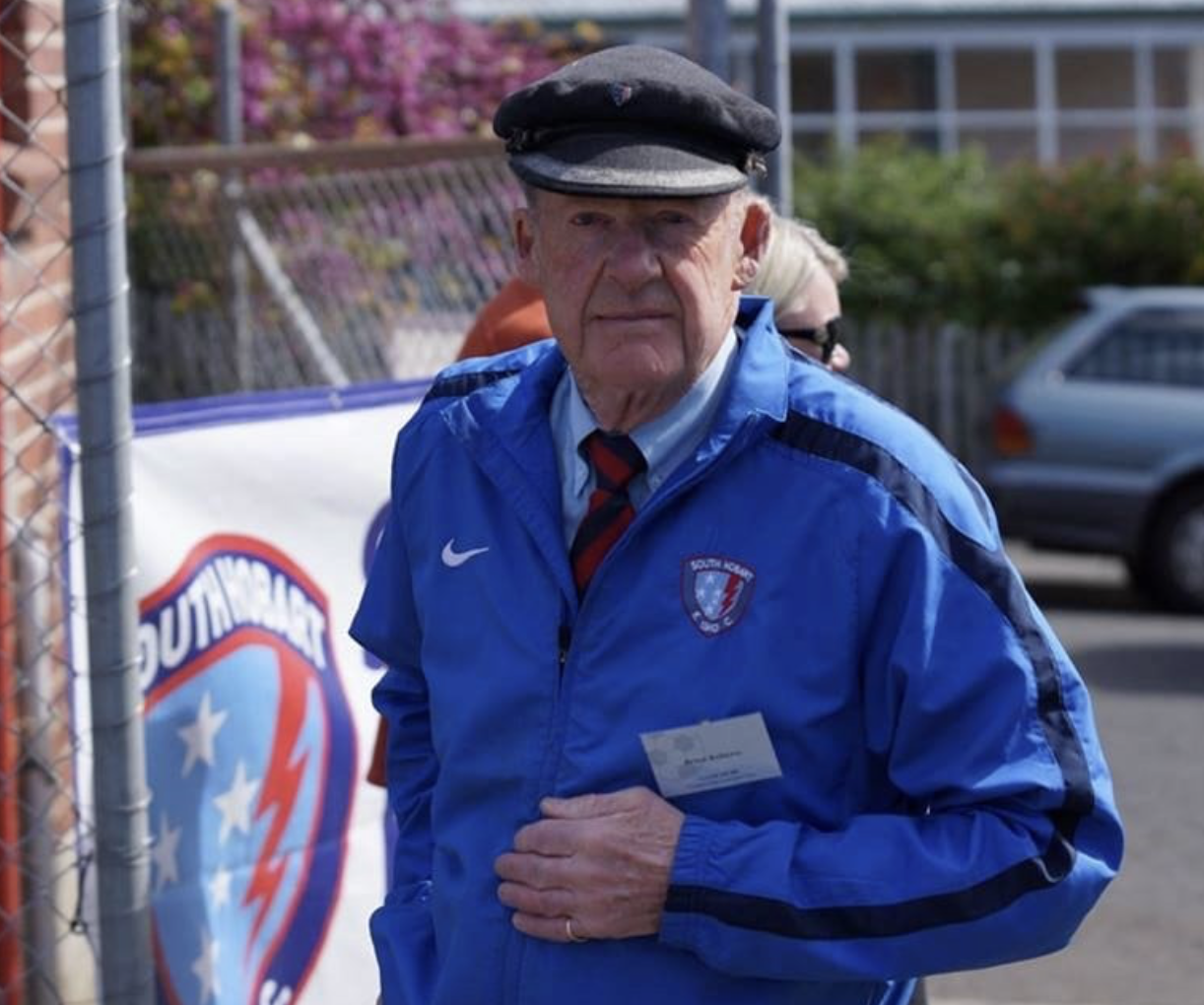
Brian Roberts - much missed by myself and those in football.
Sitting around my kitchen table with my friend, photographer Nikki Long, we talked about something that has bothered me for a long time.
So many people who are deeply loved, deeply committed, and deeply embedded in football in Tasmania are largely invisible. They are known within their clubs and communities but rarely beyond them. Their work is constant, often exhausting and almost always unpaid. And yet their stories are seldom told.
We wondered what might happen if we simply made them visible.
That conversation became a Facebook page called Football Faces Tasmania.
We started interviewing people from across the game. Coaches, volunteers, administrators, parents, quiet achievers. People who have given years, sometimes decades, to football here.
What struck me immediately was this: almost without exception, every person we interviewed said some version of the same thing.
“I’m not really worthy.”
“My story isn’t anything special.”
“There are plenty of others more important than me.”
That reflexive modesty is telling. It says a lot about the culture of football in Tasmania and about who feels seen and who does not.
I disagree with every one of those assessments.
These stories are special. They are worthy. They are the story of the game.
I conducted the interviews and transcribed them. Nikki took the photographs. Together, the words and images capture people as they actually are, thoughtful, generous, worn, proud, funny, uncertain, committed.
I will be publishing these interviews here, with their photographs, as a record and a recognition.
Not to elevate anyone above others.
Not to create heroes.
But to say, clearly and publicly: you matter, your contribution matters and this game does not exist without you.
This is Football Faces Tasmania.
BRIAN ROBERTS
What are your first football memories and did any person instill a love of football into you?
My first memories are during my childhood being taken to watch Wrexham F C and Rhyl Athletic play on Saturday afternoons. I also played for my preparatory school Oriel House where I obtained my colours. I subsequently attended Repton Public School where I played for my house The Mitre.
I do not think anyone instilled a love of the game it was a way of life. My father played for the family firm.
How long have you been involved in football and what roles have you played?
In 1951 we came to Tasmania settling at 7-mile beach where we ran the shop. I tried out with Caledonians but did not make it, to unfit and slow.
Football when we came to Tasmania was going through a transition. the influence of the migrant was being felt accordingly the style of the game was changing from that akin to Australian Football to that which we see today.
You held some influential roles in Tasmanian Football how has it changed from when you were in charge? Tell us what football was like in Tasmania when you first got involved, was it better, worse, different? How has it changed?
After moving to town, I was with the Southern Tasmanian Soccer Federation as their new club’s officer. I had to contact migrant groups to see if they could start a soccer team. I arranged a match between Italian and Greek migrants but their clubs didn’t come to life until later. I only succeeded once assisting in the foundation of Hollandia a Dutch team. I subsequently joined them and played in their reserve side most of the time after a while I moved to Hydro a team based in their drawing office. I played in their 1st team. We were not very successful. Hydro them changed their name to Rangers and started importing players from Scotland. I continued to play for them in the reserves.
I then took a break I cannot remember why. Later a typewriter mechanic Tom McLoughlin who had played with Rangers and used to service our office equipment persuaded me to join him as assistant Coach at Rapid. This was step up as they were one of the better teams. I also used to play in the reserve team.
One of my workmates Jurgen Webb was with South Hobart and he pestered me constantly to join him at South. I eventually did so as all my English-speaking friends had left Rapid, so I moved clubs. Rapid were not very happy.
On joining South, I was immediately recruited on to the committee where I served as Treasurer for 13 or 14 years. At the same time, I coached the underage sides the first and reserve sides and played in the reserves (we were a pretty awful side full of old men). I get tired thinking about those years. I was probably about 55 when I played my last game in Alps a side that had been absorbed into the South machine. One of my happiest recollections is when we won the league under Tony Skaro. It was a very good team. We went to the Cascade where all these old players or supporters kept putting money on the bar. More of that later.
During my time with South, I took a spell of leave and was elected as a director of Soccer Tas. I served for about 6 years rising to Chairman. Due to a difference of opinion, I resigned and returned to South in an advisory role.
Which Tasmanians have affected your involvement in football both on and off the field and why?
One of our chairmen who had a major impact on our club was Les Richardson. Through his influence we acquired the Clubrooms at Wellesley Park. They had originally been built by the South Hobart Cricket Club. They moved to Queenborough, so the rooms were not occupied full time. We purchased the key to the door for $10000 payable in 5 instalments. Through economy and struggle we met the payments though the last year we were late so had to pay an additional penalty. At the time we were the only football club to have permanent office and headquarters. The licensed bar that came with the purchase materially helped our financial management. I do not know how many hours I spent swinging a mattock digging the trenches for the floodlighting of Wellesley Park.
Soccer then went through what I would call the lunatic stage. The first state league was formed. South did not make it. However, that was just as well as professional football hit the state. Money flowed like water. This did work to our benefit as those senior players who were displaced by imports came to South, so we had a very good Div. 1 side. Then the bubble burst the league collapsed and we were all back to square one. Things were pretty tough as all the players we had signed left so the ranks were pretty thin. Nevertheless, we struggled through and survived.
Did you have a role model or football heroes or anti-heroes for that matter?
I do not have any heroes or otherwise however three persons who have had the most impact on South are Brett Anderton, Victoria and Ken Morton. When Brett arrived, we were just a club. He changed our routines and introduced a professional aspect to us on our on and off field standards. Ken took over a few years after Brett departed. He lifted our standards and expectations to a higher standard which continue to this day. Victoria Morton has also made a major contribution to our clubs standing in the football community. I cannot let this pass without mentioning Pam Clarke, her son played for South, so she graduated to the committee then chairperson. She was at the helm during some of our most trying times and worked extremely hard for the club. Another stalwart that comes to mind is Paul Roberts, no relation. How he came to join us I cannot recall probably through junior ranks. Paul was a tower of strength, he maintained the clubrooms, set up the field when we had home games at Wellesley. He used to set up for our home games as dawn broke. Eventually we persuaded him that such early starts were unnecessary. His constant topic of conversation was the drums. We eventually found out that he had a store full of 44 gallon drums in which he stored his collection of cans, cordial, and milk bottles.
Which recalls one of our fundraisers. One Sunday when we were not playing the committee, players and supporters canvased the South Hobart area for milk, cordial bottles, and cans. We would then deliver to the Cascade bottle department for money.
Hilarious happenings, in 1977 we won the Div. 1 league under our new coach Tony Skaro. It was the event of the decade as we had little success for a long time. We obtained a supply of port from an individual whose name is etched in my memory. “You will be OK as long as you only sell it to club members”. It was stored under my house. Well, it took off like a house on fire, perhaps it was the novelty but there was a stream of “supporters” calling for a bottle or two. We presented the licensee of the Cascade hotel with a bottle as sign of our appreciation of his support. His wife was delighted, he not so much. What we did not realize that there was a representative of the licensing board at the bar. Next thing there was a knock on the door and a port collector asked if he could buy a bottle for his collection. OK I said. Next thing cars appeared, and all these detectives spilled out and I was arrested for running a “sly” grog shop.
A friend of mine who was a solicitor in town heard of my situation and decided he would defend the case as a bit of a lark. We spent close to a day in court to the surprise of the prosecuting counsel. The guy who sold us the port gave evidence with an angelic expression on his face. I could have!!!!!!!!! him. The case was adjourned as the magistrate could not give decision. Eventually I had to return, and a conviction was recorded under the probationary offender’s act. The port which had been seized was returned on condition it was stored and consumed in the club house. I still have a bottle.
How has football affected you and your family?
Football must have affected my family though with the passage of time it has faded away. I must say that when things were thin on the ground for the club, I probably spent 4 or 5 nights working for the club. How I kept my domestic life up to scratch I do not know
If you could make any changes to Tasmanian football, what would you do?
Now what changes would I make? Well promotion and relegation for a start. I would examine the cost structures and try to make the game as inexpensive as possible. I would review the FFT staffing structure. Tasmania is too small for us to ape mainland structures. I would try to expand our game by encouraging the formation of Div. 5 or 6 clubs. Large oaks from small acorns grow.
Looking back on your football life what do you think your legacy to the game in Tasmania might be?
How will I be remembered, well for about a fortnight or so then perhaps at the occasional football reunion?