What is a Constitution, really, and why it matters that ours is hard to find
We use the word constitution a lot.
In football.
In governance.
In moments of frustration when people talk about boards, decisions, and power.
But we rarely stop to explain what a constitution actually is.
That matters more than most people realise.
Constitution 101
A constitution is the founding rulebook of an organisation.
It is the document that decides:
who holds authority
how decisions are made
who gets a vote
how leaders are chosen and removed
what members can and cannot do
Everything else sits underneath it.
Policies.
Regulations.
By-laws.
Codes of conduct.
If there is a conflict, the constitution wins.
That is not theory.
That is how incorporated organisations work.
This document exists for members, clubs, volunteers, and anyone who wants to understand how football power actually works.
What “incorporated” actually means
Football Tasmania is an incorporated entity.
That means it exists as a legal body in its own right, separate from the individuals involved in it.
Incorporation allows organisations to:
enter contracts
employ staff
hold insurance
protect volunteers from personal liability
But there is a trade-off.
An incorporated body must operate according to its constitution.
Not by custom.
Not by habit.
Not by who has always been there.
By the document.
Why constitutions exist at all
Constitutions exist because of power.
Whenever groups grow beyond a handful of people, the same questions emerge.
Who decides.
On what authority.
According to which rules.
A constitution is meant to answer those questions before conflict arises.
It replaces personality with structure.
It limits arbitrary decision-making.
It creates predictability and accountability.
In sport, this matters deeply, because passion often runs ahead of process.
What a constitution does not do
A constitution does not run competitions.
It does not select teams.
It does not schedule fixtures.
It does not deal with day-to-day operations.
Those things sit with staff, regulations, and policies.
What the constitution does is decide who has the authority to do those things.
That distinction is critical, and often misunderstood.
Good practice, not perfection
Constitutions are not meant to change every year.
Good governance practice is not constant rewriting.
It is:
periodic review
updates when laws or structures change
clarity about whether amendments have occurred
transparency for members
Many constitutions last decades.
That alone is not a problem.
Uncertainty is the problem.
Members should be able to tell, without effort:
which constitution is in force
when it was adopted
and where to find it
Why visibility is not a small thing
Because the constitution is foundational, it should be easy to locate.
Not buried.
Not obscured.
Not treated as insider knowledge.
This is not about website design.
It is about legitimacy.
You cannot engage meaningfully with a system you cannot see.
And you cannot hold a structure to account if you do not know how it is meant to work.
Whether intentional or not, difficulty of access has the same effect as opacity.
What a reasonable person would expect
A reasonable person, looking for the governing document of football in Tasmania, would expect to find it:
under Governance
under Official Documents
or clearly within About Us
They would expect it to be clearly labelled and easy to identify as current.
That is not demanding.
That is standard practice.
What actually happens
In practice, the constitution is difficult to find.
It is not listed alongside regulations or official documents.
To locate it on the Football Tasmania website, you must:
hover over Football Tasmania in the main menu
click About Us
scroll right down the page - almost to the bottom
locate a small text link labelled “View our Constitution”
open a PDF
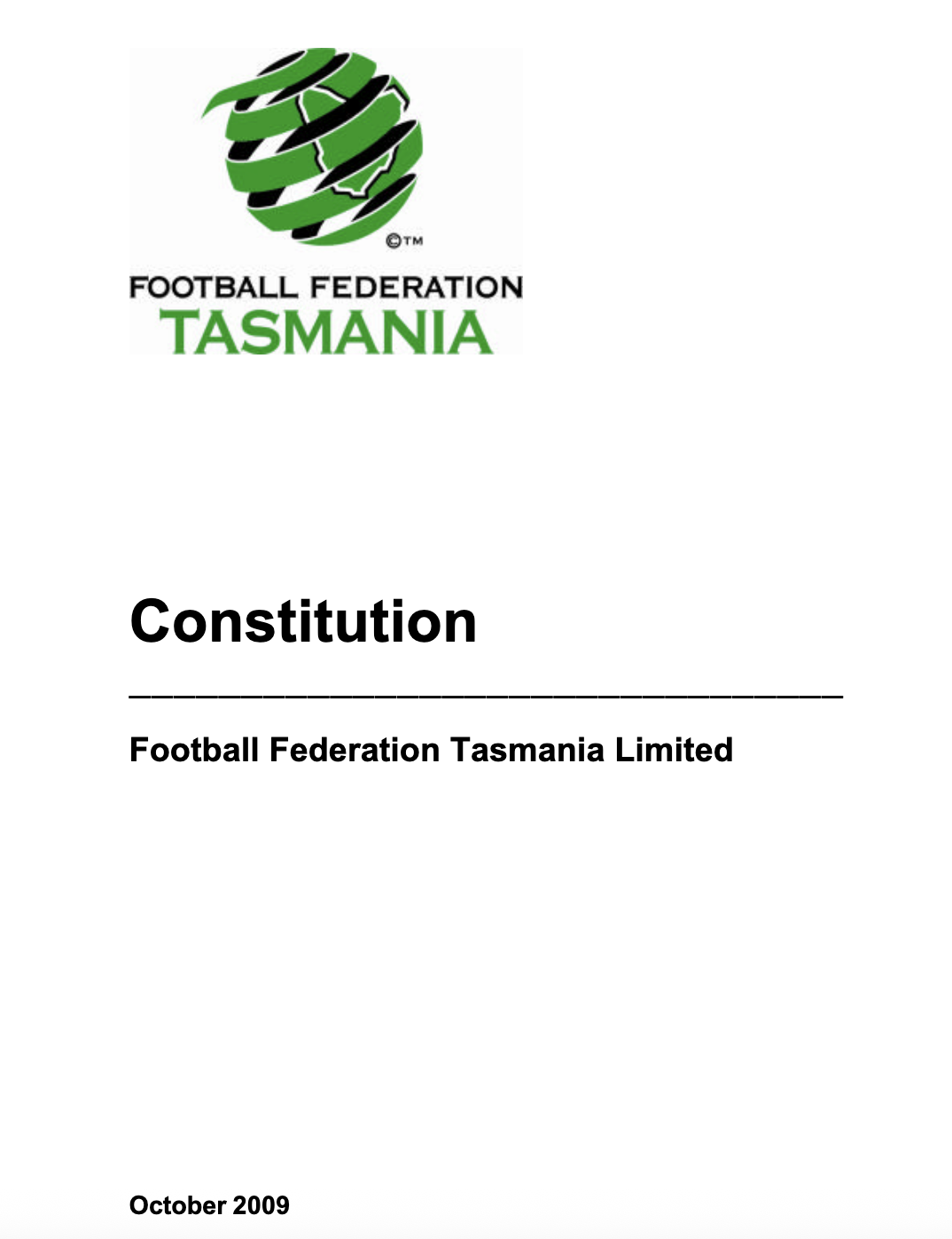
When you do, you discover the document is dated October 2009.
It still refers to Football Federation Tasmania.
This is the document currently guiding football governance in Tasmania.
Why this should give us pause
This is not about blame.
It is about systems.
The constitution determines:
how the Board is elected
who gets a vote
who is excluded
how authority flows
where accountability sits
When that document is hard to find, governance becomes abstract.
Abstract governance favours insiders.
Even when no one intends it to.
A challenge, not a complaint
If we want better governance conversations in football, we need better governance literacy.
That starts with making the constitution:
visible
clearly identified
treated as the foundational document it is
Not hidden.
Not assumed.
Not reserved for those who already know where to look.
Clear systems invite engagement.
Opaque systems shut it down.
What comes next
Once you understand what a constitution is, the next question is unavoidable.
If you are unhappy with football governance, how do you actually influence it.
That requires understanding Board elections, voting rights, and eligibility.
That is a separate post.
And it is one we should probably be brave enough to read.
Governance only works when the rules are visible to the people governed by them.