Where God’s Tears Landed - A conversation with Helder Manuel Dos Santos Silva
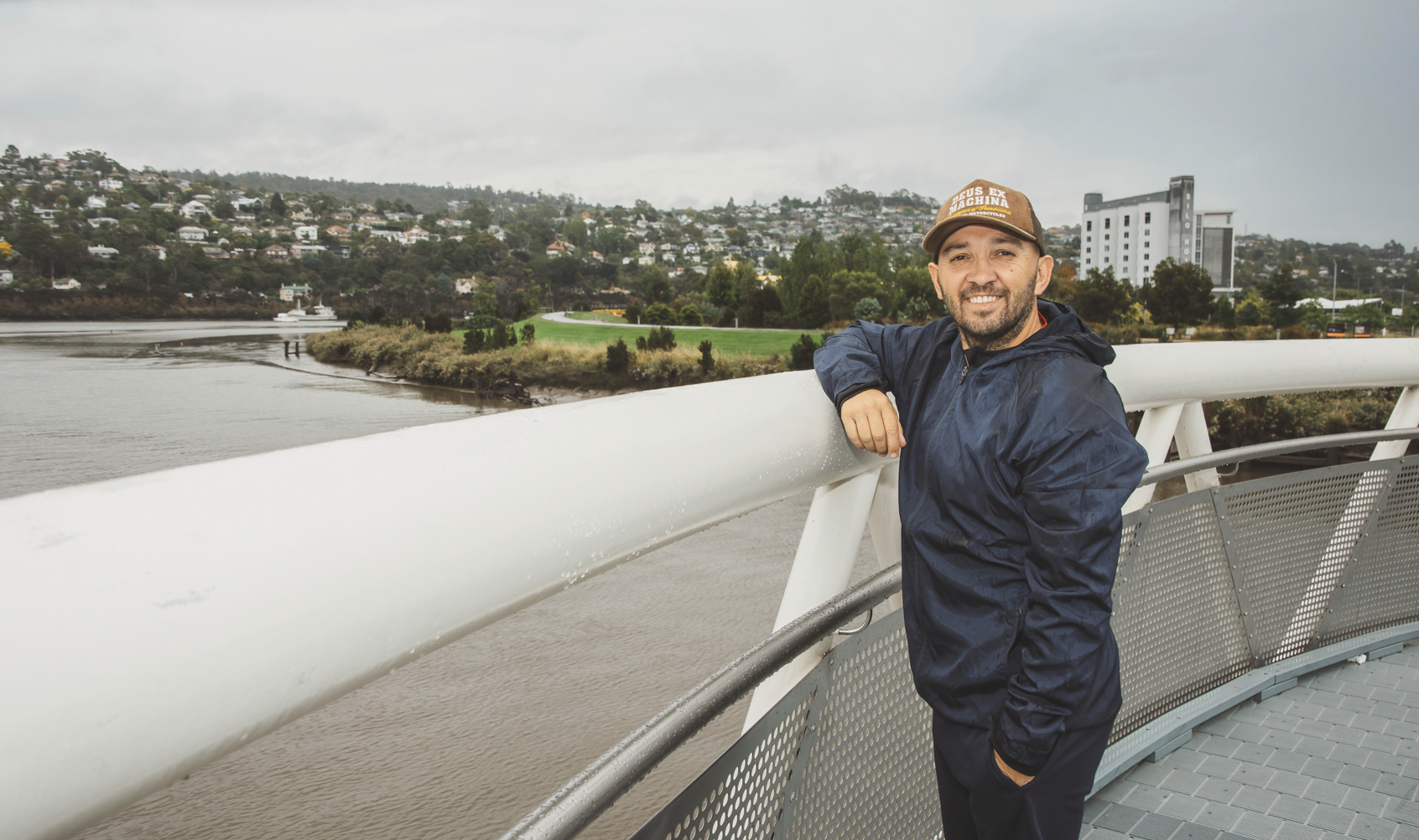
Helder over the Tamar photographed by Nikki Long
There are interviews that feel like short exchanges.
And then there are interviews that arrive as something much larger.
When Helder sent his responses, they did not read like brief answers. They read like chapters.
From a tiny Portuguese village shaped by Moorish history and coal mines, to professional football, to what he calls “wasted potential”, to rebuilding his life through healthcare and microbiology, to championships in China where five million people is considered a small town, and now to Tasmania.
He did not give quick replies.
He gave a life.
When someone takes that kind of time, the least you can do is carry it properly.
This is Helder, in his own words.
Mourama
I grew up in a tiny village called Mourama - a very specific name that comes from the Moorish conquest that once populated the region.
It is a place rich in history, surrounded by coal mines and plenty of gold. I never saw any.
There was nothing glamorous about it.
If I didn’t catch the only bus we had, I would have to walk ten kilometres just to get to school. I would get lost on the way because all my mates were playing football.
I played football since before I can remember — on goat roads, with whatever ball we could find, against whoever was around.
That’s where it started.
Not on a proper pitch. Not in an academy. On dirt tracks in the middle of Portugal.
In Portugal, you breathe football. You eat it. You fight over it. It’s in your blood.
I can’t really describe it, and I wouldn’t compare it to any other country. Every nation has its own cultural relationship with the game.
Football isn’t something you choose. It chooses you.
Professional football and hard lessons
I was a professional footballer, but I made bad decisions along the way - the kind you don’t fully understand until it’s too late.
Those choices took me from the professional game down to semi-professional and even amateur level.
I had to rebuild, combining football with a career in healthcare and microbiology.
That period taught me humility, discipline, and what it truly means to waste potential.
I finished playing at twenty-eight due to health issues, and I just couldn’t walk away from the game.
Football was all I knew. All I loved.
So I threw myself into studying — coaching badges, tactical analysis, anything I could get my hands on.
I started networking, knocking on doors. Many of them shut. I built relationships with people in the game and learned from anyone willing to share their knowledge.
One thing led to another, and coaching became not just a second career but my true calling.
From Western Europe to Eastern Europe, then across to East Asia, and now here in Oceania.
Every step reinforced my belief that football is an educational tool, and that developing the person always comes before developing the player.
China and scale
One of the most memorable moments of my career was winning a championship in China that hadn’t been won in sixteen years.
On the return to the city, there was a parade waiting for us.
I had never seen so many people gathered in one place in my life.
When I say many, five million people in China is considered a small town, so I leave you to your imagination.
People came to greet us with tears in their eyes, saying thank you.
I had never experienced anything like that before, and I never will forget it.
But I’ve had painful experiences too. Experiences I wouldn’t wish on anyone.
That’s the reality of this game.
You take the beautiful and the brutal together.
Family
Every move I’ve made has been made together.
Portugal. England. Eastern Europe. China. Australia.
We sit down, we talk, we weigh it up honestly.
It’s never just me saying yes. It has to be all of us saying yes.
That’s non-negotiable.
Because if your family isn’t right, you’re not right.
The hardest part is always being far from home.
Our journey here didn’t start well — and I’m not talking about football.
Off the pitch, those early days were genuinely hard to digest.
But we looked at ourselves. We acknowledged it. We took responsibility. And we moved forward.
That’s what families do.
Tasmania
Growing up in Portugal, Tasmania only existed in geography books.
That was it.
But when we arrived, we couldn’t believe how beautiful it is.
The natural habitat. The wildlife. The landscapes.
It’s unreal.
We have a saying in Portugal for places like this.
“When God cried, His tears landed in the right spots.”
That’s Tasmania.
We’ve made close friends here. People we can call family.
When you’re far away from your own, that means everything.
My father
Before coaching courses, before championships, there were hills.
My father coached me when I was young.
We would run together up those hills, pushing through the burn and the breathlessness.
At the top, we would scream at the top of our lungs.
“I’m a champion.”
Like madmen.
My favourite film was Rocky. Still is.
Those runs shaped me more than any coaching course ever could.
They made me resilient.
You don’t find out who you are on easy days. You find out on the climb.
My father is my hero.
Everything I am, everything I stand for, he taught me.
Listening
Some of the greatest lessons I’ve had in football weren’t on the pitch.
They were in conversations.
Meeting coaches and individuals who had won World Cups and lifted Champions League trophies.
Sitting with them. Listening.
When I arrived here and Ken Morton — a Busby Babe, one of the true legends of the game — sat down and talked with me, I was like a kid in a candy shop.
You just listen.
The same goes for Peter Sawdon and Lynden Prince.
These are people with so much to teach, so much history in their hands.
That education is priceless.
Football philosophy
I believe in football that is brave.
Structured, but with freedom inside that structure.
Every pass should have intention. Every movement should create something.
But values come first.
People first. Players second.
I don’t care how talented you are if you’re not a good person.
Work ethic. Respect. Humility. Willingness to learn.
I can coach technique.
I can coach tactics.
I can’t coach character.
Football is an educational tool.
My job is to develop better people first, and better footballers second.
Development and winning
At a club like Riverside Olympic, development must be the priority.
We can’t buy squads full of ready-made players every season.
Our strength is our pathway.
But development does not mean accepting losing.
You develop players by putting them under real pressure.
I won’t sacrifice a young player’s long-term growth for a short-term result.
If you develop players properly, the winning takes care of itself.
League structure
Eight teams was a good starting point.
Ten is a step forward.
It should be twelve.
More opponents. More variety. More games.
Tasmania should send two teams to the FA Cup representing the state.
Yes, financially it’s a stretch.
But money can bring titles for one or two seasons.
After that, what?
Where are the young players?
Sustainable success comes from what you build underneath.
Coaching education
If I could change one thing tomorrow, it would be mentoring.
Not another online module.
Real mentoring.
Football is not a book.
You can’t be a kitchen chef, go to bed, wake up and decide you’re a football coach.
It doesn’t work like that.
Badges are important.
But a licence doesn’t prepare you for dressing rooms, egos, parents, politics.
Federations sometimes give badges because they need coaches.
Some pseudo coaches don’t want to listen to older coaches.
They think they know everything.
Experience matters.
Humility matters.
Passion
I am passionate.
I won’t apologise for that.
In three years here, I’ve had four yellow cards.
In Portugal and England, visible emotion is normal for a coach.
Here it can be misread.
My passion isn’t a personality flaw. It’s where I come from.
But I respect referees.
We are in positions of responsibility.
I want players to solve problems themselves.
Passion is not chaos.
It’s commitment.
Loneliness
Football is a lonely place.
It’s hardship. Sacrifice. Long stretches where the only peace is on the grass with the players.
I’m far from home.
The touchline is sometimes the one place everything makes sense.
I don’t switch off.
That’s not a burden.
That’s the calling.
The quiet thank you
Through everything — goat roads in Mourama, professional mistakes, healthcare shifts, championships in China, early struggles in Tasmania, new beginnings at Riverside — the lesson is simple.
It’s not trophies.
It’s a quiet thank you at the end of a session.
That’s what endures.
Wrap
What stays with me is not just the parade in China.
It is not even the image of five million people being considered a small town.
It is the hills.
A father and a son running through scrub, shouting “I’m a champion” into the wind.
It is the honesty of “waste potential.”
It is the refusal to apologise for passion.
It is the quiet admission that football can be lonely and still be a calling.
From Mourama’s goat roads to a place where, as he says, God’s tears landed in the right spots, the game remains the same.
Climb the hill.
Do the work.
Listen.
And keep going.