Streaming the game, but losing the story
Update – 30 March 2026
Since publishing this, I’ve had a number of messages and have seen similar examples from around the country.
This isn’t isolated.
Australian football journalist Joey Lynch summed it up bluntly, describing the rollout of AI camera systems as a cost-cutting measure that “isn’t meeting the standards and shouldn’t be rolled out further.”
That matters, because this isn’t just a Tasmanian issue.
Across multiple examples, the same issues keep appearing. Key moments missed. Goals not captured properly. Substitutions missed. Even incorrect scorelines being recorded.
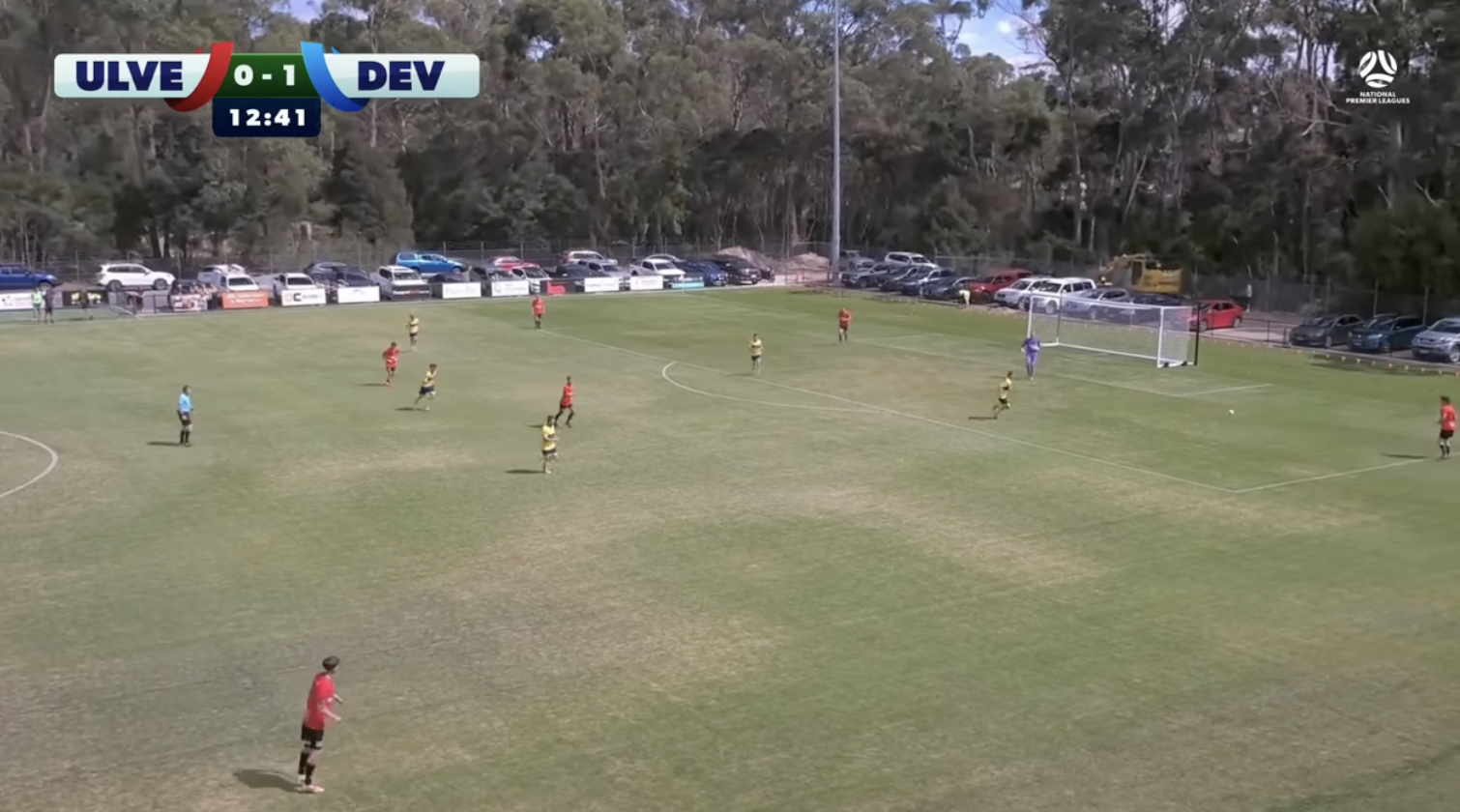
One example doing the rounds shows a goal in an NPL match where the camera simply doesn’t follow the play. You’re left trying to piece it together.
Feedback from the Northern Territory describes the same problems over the past two years, missed goals, missed substitutions, and even incorrect scorelines.
And more broadly, the reaction from people watching these games is consistent. The experience is being described as unwatchable, frustrating, and in some cases, taking away from what should be moments worth sharing.
That’s the story. And it’s the point.
This isn’t about resisting technology. It’s about whether the current version is good enough for the game we’re trying to present.
I’ve left the original piece below unchanged.
The state of livestreaming in Tasmanian football
I tuned into a Devonport home game recently.
And within minutes, I turned it off.
Not because of the football. Because I couldn’t see it properly. I couldn’t tell who anyone was. The lighting made it harder. The angle, high on the new grandstand, felt distant and detached.
Maybe that is on me as well.
I am getting older. My eyesight is not what it once was.
But I suspect I am not alone.
I can’t quite believe I am about to say this, but I will.
The old setup at Clarence, with a camera mounted on the back of a ute, was easier to watch.
That is not something I ever thought I would say.
If people are turning streams off within minutes, then the coverage is not doing its job.
And it says more about where we are right now than any technical explanation ever could.
What is actually happening
Across Tasmania, and increasingly across Australia, football has moved to AI-based camera systems, most commonly through companies like Veo.
These cameras:
sit in a fixed position
use software to track the ball
automatically follow play
produce a livestream without a human operator
There is no camera person.
There is no director.
There is often no commentary.
What you are watching is a machine doing its best to interpret a football match.
Why it is being rolled out
It is easy to criticise this shift. Harder, but more useful, to understand it.
There are three main reasons this model is being adopted.
Cost
Traditional broadcasting is expensive.
Even a basic setup requires:
a camera operator
a commentator
someone managing the stream
equipment and setup time
For a full season of statewide football, those costs add up quickly.
AI cameras remove almost all of that.
One installation. Minimal ongoing cost.
From an administrative point of view, it is an obvious decision.
Coverage
The second reason is scale.
Without automation, many games would not be streamed at all.
With AI:
every game can be covered
every club has access to footage
families, players and supporters can watch remotely
That matters in a state like Tasmania, where travel is part of the game and not everyone can be everywhere every weekend.
More access is a genuine positive.
Convenience and development
There is also a football reason.
Clubs and coaches now have:
full match recordings
clips for analysis
tools for player development
That is valuable.
The same system that produces a public stream also feeds the coaching and analysis side of the game.
Where it starts to fall down
Understanding the reasons does not mean ignoring the outcome.
Because what we are seeing now is not just different.
It is, in many ways, worse.
The camera cannot read the game
Football is not just movement. It is anticipation.
A human camera operator:
sees the switch before it happens
anticipates the run
holds the shot in a crowded box
An AI camera reacts.
Often a fraction too late.
The result is what many of us have already experienced this season. Moments missed. Play developing off screen. The feeling that you are always slightly behind the game.
The angle creates distance
Most of these cameras are positioned high and central.
That gives coverage.
But it removes connection.
You are far from the action. You lose detail. You lose the physicality of the game. You lose the sense of occasion.
It becomes harder to feel the match.
You also lose something else.
The crowd.
Because the camera is positioned above and often behind where spectators gather, you rarely see them.
You do not see the numbers. You do not feel the presence.
And that matters.
Because part of football is not just the game.
It is the people watching it.
There is no voice
This is the biggest gap.
There is little to no commentary.
No one explaining what is happening.
No one building the moment.
No one telling you who these players are or why the game matters.
Without commentary, a football match becomes quiet. Flat. Detached.
It is watched, not experienced.
It is not a broadcast
This is the key point.
What we have now is not a broadcast product.
It is a recording.
No commentary. No replay. No narrative. No production layer.
The game exists on screen, but it is not being presented.
Even the basics are inconsistent.
In one recent match, goals were reflected on the scoreboard well after they were scored.
Not seconds. Long enough to notice.
Long enough to disconnect what you are watching from what the screen is telling you.
That is not a criticism of the person updating it.
It simply highlights the reality.
This is not a live, integrated system.
It is a camera, with elements added around it, when someone is available to do so.
And when even the score cannot keep up with the game, it becomes very hard to take the rest of the coverage seriously.
The moments we are missing
There is another problem with these streams.
And it is not technical.
It is emotional.
When a goal is scored, the camera follows the ball.
But the ball is no longer the story.
The player is.
The celebration. The reaction. The connection with teammates, with supporters. That is the moment.
That is the reward.
And too often, it is missed completely.
Because the camera is still trying to find the ball.
Football is not a high-scoring game.
Goals matter.
They are rare. They are earned. They are felt.
And the celebration is part of that.
It is the release. The joy. Sometimes the relief.
It is one of the purest parts of the game.
And right now, we are not seeing it.
If you miss the celebration, you miss the moment.
And in football, the moments are everything.
Why this matters more than it seems
It is easy to dismiss this as a technical issue.
It is not.
It is about perception.
The way a competition is presented shapes how it is valued.
By players.
By sponsors.
By supporters.
By the wider football community.
And this is not accidental.
It is a choice about how the game is presented.
When the top competitions in the state are shown with:
a single wide camera
no commentary
inconsistent graphics
no production
then the message, whether intended or not, is clear.
This is not being treated as a priority product.
Falling behind
This becomes even clearer when you look outside football.
Other sports understand that presentation matters.
Even at comparable or lower levels, you will see:
commentary, even if volunteer
basic graphics and overlays
a focus on telling the story of the game
Because they understand something fundamental.
The game is not just played.
It is presented.
Right now, football is falling behind.
The tension
Football Tasmania would argue, reasonably, that:
more games are available than ever before
access has improved
costs are being managed responsibly
All of that is true.
But there is another truth sitting alongside it.
More games online means very little if people are not watching them.
Coverage without quality is not progress.
This is our shopfront
You could argue this matters even more for football in Tasmania.
Because we receive little, if any, mainstream media coverage.
There are no regular TV broadcasts. Limited print coverage. Very little consistent visibility outside our own channels.
Which means this is it.
This is how the game is seen.
For many, this will be their first impression of the competition.
For others, their only connection to it.
That makes these streams more than just a convenience.
They are the shopfront.
And if the shopfront is difficult to watch, hard to follow, and missing the moments that matter, then it does not just affect the viewing experience.
It affects how the game is perceived.
If this is how we are presenting our game, then this is how our game will be judged.The bigger question
Streaming is here.
It is not going away.
But it raises a question that football needs to confront.
If people are watching at home instead of attending games, particularly on cold winter days and nights, how does that benefit clubs?
Clubs rely on:
gate takings
canteen sales
local engagement
If streaming replaces attendance, rather than supporting it, then there is a real risk.
A quieter ground.
Less revenue.
Less connection.
It is not just about how the game looks on screen.
It is about what happens off it.
Where to from here
Many clubs in Victoria, including Northcote City FC where my son Max coaches, are using their own Veo cameras to livestream games.
It is still AI.
But the difference is in the setup.
The camera is closer to the pitch. The angle is more natural. You can actually tell who the players are. You feel closer to the game.
And yes, you can hear the bench. The voices. The language at times.
But that is football.
It is raw. It is real. It is part of the experience.
It connects you to the game in a way a silent, distant camera never will.
It is a small shift, but it changes everything.
Maybe that is part of the answer.
Not abandoning the technology, but using it better.
At minimum, a top-tier competition should expect:
a watchable camera angle
a consistent and accurate scoreboard
basic commentary
coverage that captures the key moments of the game
That is not excessive.
That is the standard.
The simple truth
And don’t get me wrong.
I value technology. I use AI tools myself. They are powerful and they are here to stay.
Streaming is no different.
But it has to serve the game.
Right now, we have chosen access over experience.
And in doing so, we have lost something important.
If the experience of watching our top competition is something people switch off within minutes, then something is not working.
If we want people to watch, to care, to connect with the game, then we need to show it properly.
Not just stream it.