From Wallaby Gold to Hobart Grass
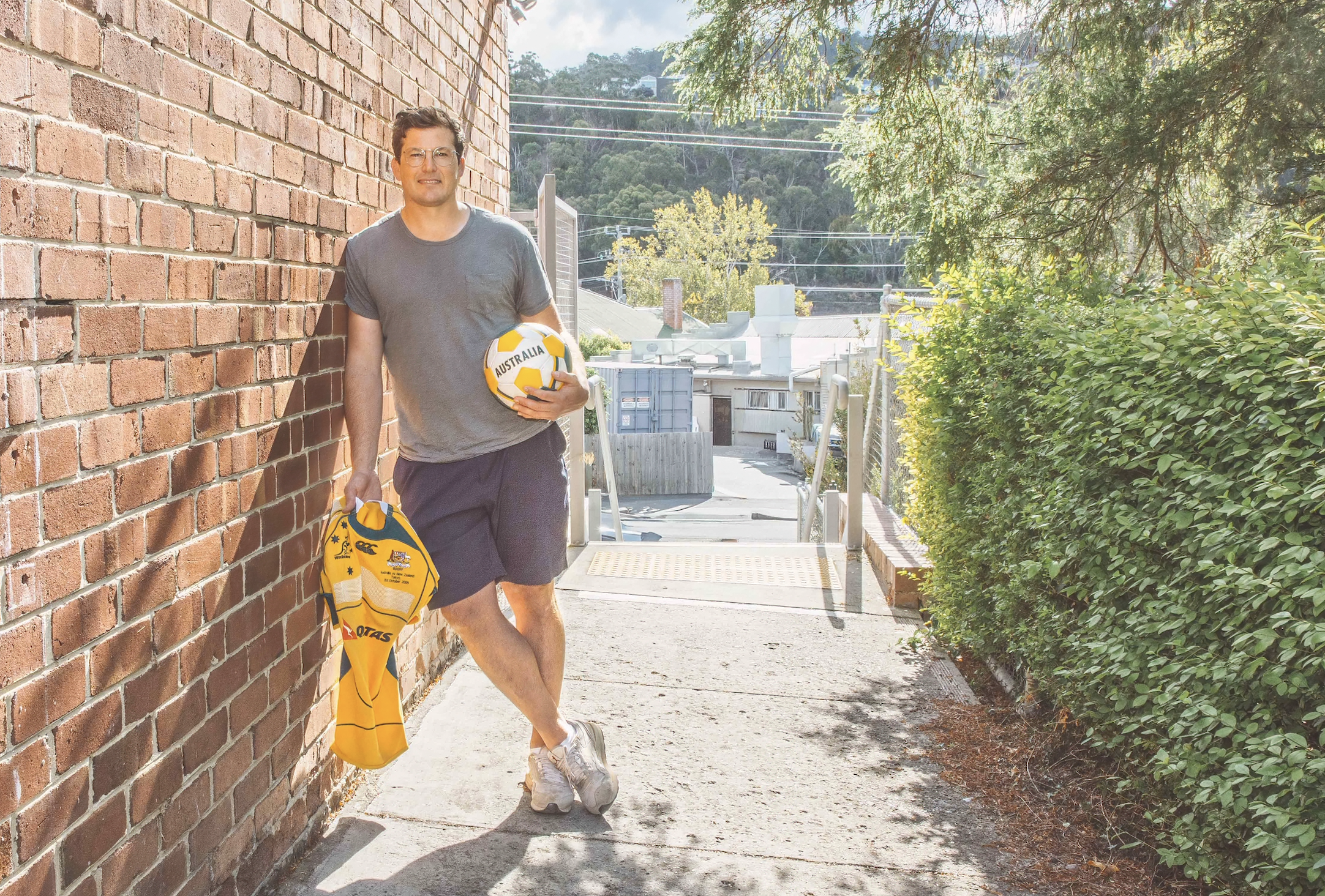
Luke Burgess photographed by Nikki Long
A personal note
When I was growing up, rugby union was my church.
I supported the All Blacks and had a big crush on Andy Irvine, the Scotland fullback. I even wrote to him once when Scotland were touring New Zealand and asked if he would come over for a lamb roast dinner. Unsurprisingly, he never replied.
I looked him up on Wikipedia recently and he’s 74 now. That made me pause for a moment. When did that happen?
Rugby was such a big part of my childhood. So when I heard we had a former Wallaby running around in the Over-35s team at South Hobart, I have to admit a bit of mist came over my eyes.
Sending Luke the interview questions was a joy, and reading his answers even more so.
I’ll be back on the sideline soon enough, camera in hand, waiting to see if he tries another overhead kick.
Luke Burgess – From Wallaby Gold to Hobart Grass
Every football club has a quiet story walking around inside it.
Sometimes it is a volunteer who has been there for thirty years.
Sometimes it is a kid who will go further than anyone expects.
And sometimes it is a former Wallaby scrum-half, Golden Boot in the Over-35s, still chasing a ball because football was his first love.
Luke Burgess wore the Wallaby jersey 37 times.
But his first memory is Cook Hill Square Park in East Maitland, a smiling coach called Mr Crawford, and lollies after the game.
He thought football must be heaven.
Cook Hill Square Park
“My earliest memories of football are of attending training at Cook Hill Square Park in East Maitland for the mighty U6 Maitland Magpies.
I remember running around and having a ball with Mr Crawford our coach. He always had a smile on his face and was the most lovely first coach you could have.
I vividly remember being hit flush in the face with a ball on a cold morning and I thought my world was caving in. The shock was seismic.
We played Gala days all over Newcastle and the Hunter Valley and I loved every second of it. Dad would always buy me lollies after games and I thought playing football must be heaven.
My nickname was ‘Killer’. I’d sulk for days if we lost or I didn’t score.”
Football was his first love.
It still is.
How rugby arrived
“Absolutely my first love was and is football. Football will always have my heart.
Rugby entered my world when my brother went to boarding school and came home with videos of rugby. We went to St Joseph’s College Hunters Hill which was a strong rugby school. Dad had gone there too.
I was probably a little worried I would be left out so I started playing rugby when I was 10.”
He never expected what came next.
“I was always in the B teams. I never thought I’d play professional rugby union. I was too small. It was a pipe dream.”
From the B teams to the Wallabies.
Football stayed with him.
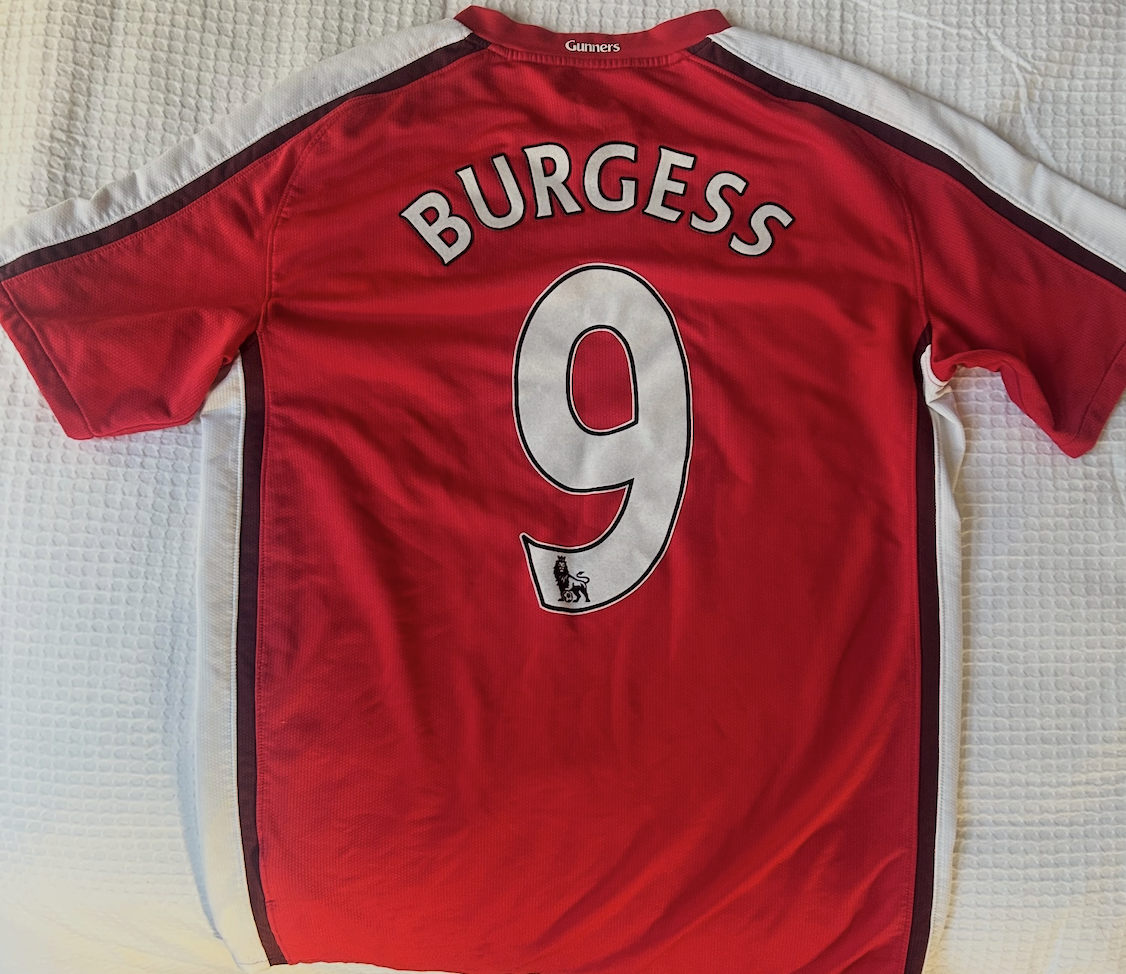
“My daughters and I are mad Arsenal fans. When I was playing for the Wallabies I was sponsored by Nike UK and my liaison gave me an Arsenal jersey with my name on it. I can’t really wear it around because people will think I’m a Wally with my own name on an Arsenal jersey, but it’s a treasured piece of nostalgia.
When I was playing rugby in France at Toulouse we would warm up with a bit of football. I loved those kick-abouts.”
If he had played football?
“I’d be hiding in midfield, constantly out of position and turning the ball over with touch like a trampoline.”
The travelling circus
Luke talks less about crowds and more about people.
“Day to day with the Wallabies is like being part of a travelling circus. Fly Sunday, camp and meetings, train Monday, gym Tuesday, lighter Wednesday, train Thursday, captain’s run Friday, test match Sunday.
You make great friendships. It’s tough to see guys get injured or dropped. We saw teammates go through divorce and personal challenges. There were countless moments of guys looking after each other.
Singing the national anthem arm in arm with teammates stirred something special.”
He remembers mentors.
“Todd Louden took me from a skinny third-grade Colts player to a professional in 18 months.
Phil Waugh demanded the best but cared about everyone.
Tom Carter and Berrick Barnes were just mates. Still are.”
Pressure, failure, and perspective
“A coach once said there’s no such thing as pressure. He was partly right.
Some guys were buying houses for their parents. Some were providing for whole villages. Nick Cummins was paying for expensive drugs his siblings needed to live. Pressure is personal.
For me it was noise in my head about what other people thought. I learnt to meditate, sometimes three hours a day, and when I got that right I played well.
Failure doesn’t exist. If you’re doing your best there are only learning experiences.”
Elite sport also takes things.
“I missed weddings, 21sts, funerals. I regret those.”
And sometimes it gives a second chance.
“In 2007 I was told my contract at the Brumbies wasn’t renewed. I’d basically failed. I moved to Sydney, played club rugby, signed elsewhere, and nine months later pulled on a Wallabies jersey.
That shaped me. I didn’t care about being dropped anymore. I just ran my own race.”
Back to football
Luke always wanted to play football again.
“I always said to Emilie, my wife, that I’d love to play soccer after rugby.
We lived in West Hobart and a Dad at our kids’ school, Mohammed Khan, told me about South Hobart Football Club. I jumped at the chance.
I played in a higher grade and was out of my depth. When Benji Josefiak started an Over-35s team I signed up straight away.
I didn’t come close to scoring in the higher grade but got a few in the Over-35s, so I’m grateful Benji set up a whole comp just so I could have the satisfaction of scoring a goal.”
He laughs about winning Golden Boot.
“Now I don’t train, have three kids and am overweight and feel like I’m going to do a hammy getting out of bed, so to win a prize now is amazing.”
The overhead kick
After one Over-35s match I photographed, one of Luke’s daughters came over at training.
She whispered, half laughing, half horrified.
“Dad tried an overhead kick and missed it.”
We both laughed. I told her I was impressed he even tried it.
I had taken a blurry photo. Boots in the air, ball somewhere else, dignity negotiable.
He scored other goals that day. No shame from me.
Because that is football.
Because that is being a Dad in community sport.
Because the child sees the miss before the medals.
Volunteers and muddy grounds
Luke noticed something I nearly left out.
“You’ve impressed me Vicki. Your commitment is second to none. The fact that you would come out to Chigwell on a cold August evening to take photos of an Over-35s football match is mind blowing.”
I laughed when he said it.
Because every club has people like that.
Parents lining fields.
Coaches packing cones.
Someone bringing oranges.
Someone taking photos so kids have a memory later.
“Volunteers will never receive the recognition they deserve. They help out because the greater good is a sum of its parts.
Even in professional rugby there were guys volunteering their time.
Everywhere is muddy in a Hobart winter. That’s just life.”
Passionate people make both worlds go around.
Grounds of memory
Luke has played everywhere.
New Zealand grounds in beautiful locations.
Altitude and hostile crowds in South Africa.
Twickenham, the home of rugby.
Hong Kong Stadium against the All Blacks.
Sydney Olympic Park, which he still thinks of as home.
But what stays with him is history.
“I love the soul of Twickenham. The ethos and values live there.”
Watching daughters play
“I love every moment of watching my daughters play football. We chat about the game together and go to watch matches just because we love it.
I was lucky to spend time in elite environments and I can share some of what it takes with them.”
What does he want sport to give them?
“Trying and failing. Getting up again. Teamwork. Listening. Never thinking you’re a finished piece of art.”
He prefers the sideline.
“Time is precious. I don’t want to miss a moment of them growing up.”
Choosing a sport
“I feel like sport chooses you. There was a time I’d rather play rugby than eat.
If you love something, do it. If you love two things, do both.
There are opportunities beyond being the best player. Coaching, physio, data, marketing. There’s something for everyone.”
Football and rugby
“Football teaches kids to pass and look up. Opportunities are 360 degrees. You can be patient, manipulate space, be creative.
Rugby is linear. Football is beautiful and rugby is brutal.
Rugby teaches respect and discipline. Respect opponents, yourself, referees.”
What success means now
“Success now centres on my three daughters and my wife’s happiness.
Seeing them grow into thoughtful, kind, strong young women is success.”
And when he plays social football today?
“Apart from fear of tearing my hamstrings I feel the exhilaration of living in the moment.
Probably gratitude is my overwhelming sensation. One day I won’t be able to run around. Until then I don’t want to let it go.”
The quiet story
Elite sport looks glamorous on television.
But the real story of sport lives in small parks, muddy grounds, volunteers packing up goals, parents on the sideline, and former internationals chasing a ball because they loved it as children.
Luke Burgess has stood in packed stadiums around the world.
He has also stood on a Hobart pitch with friends, laughing about hamstrings, grateful to still be playing.
Not for caps.
Not for contracts.
Not for headlines.
Just for joy.
And in the end, that might be the purest form of sport there is.
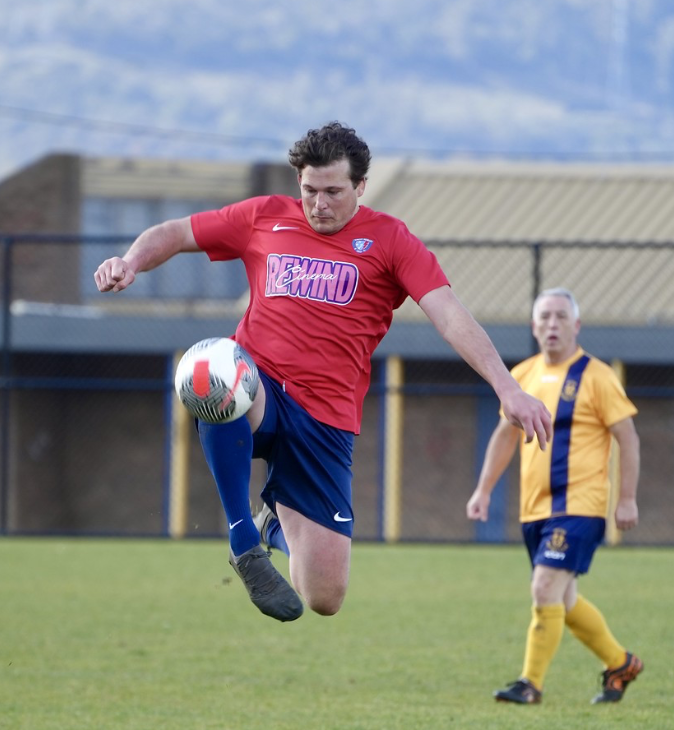
One of my photos of Luke in action