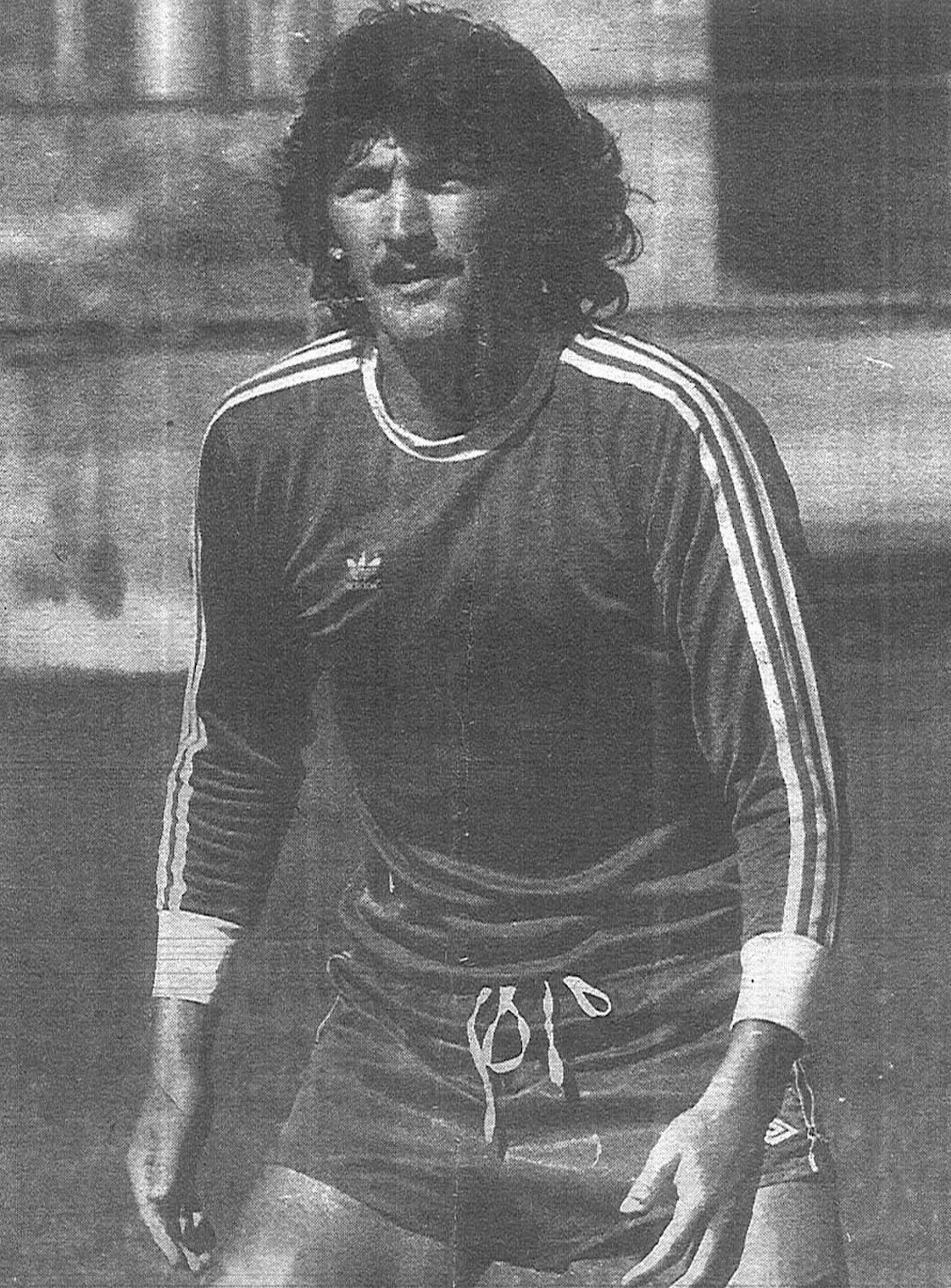
What a Football Life
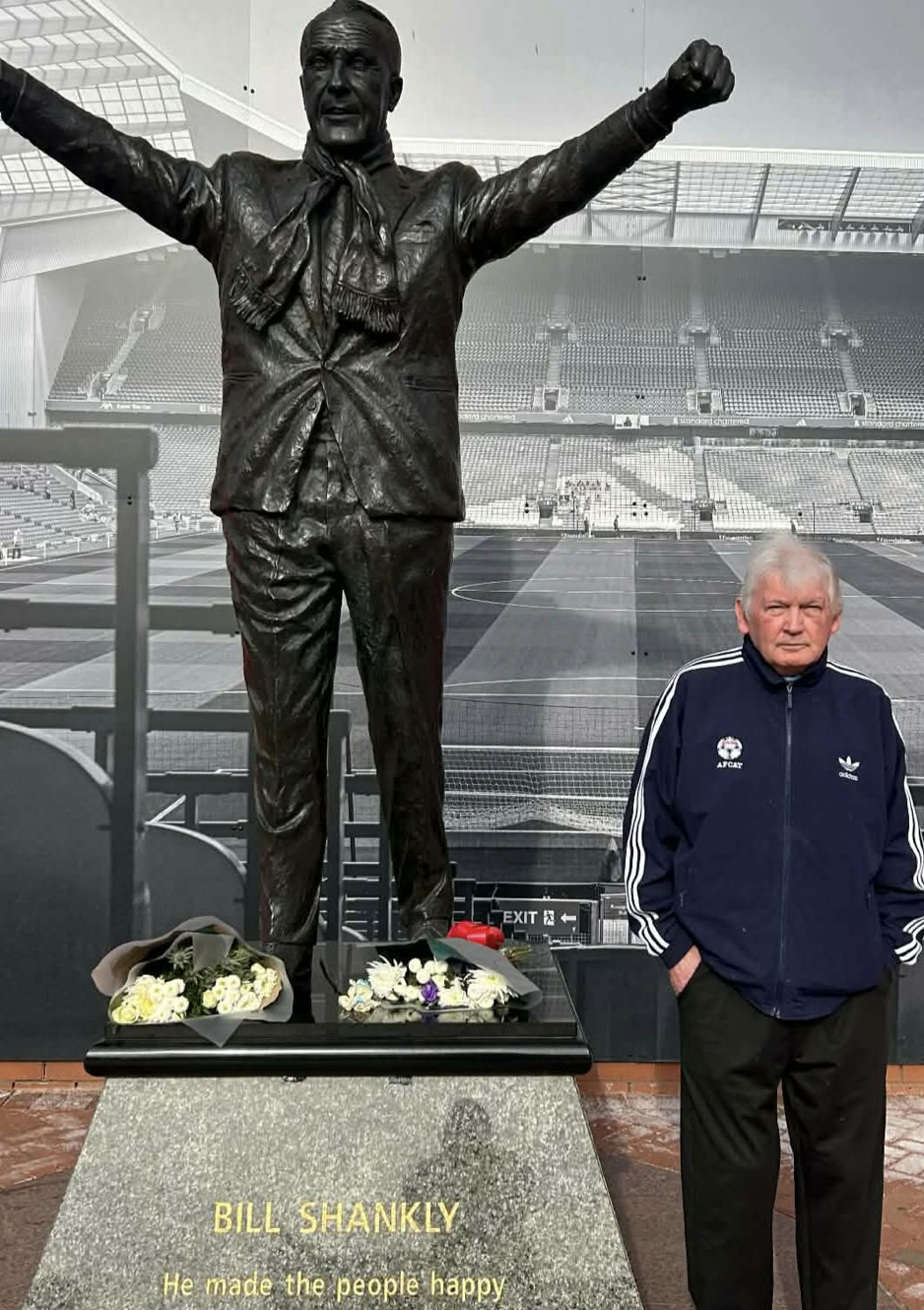
Photo courtesy of Steve and his daughter
The remarkable football journey of Steve Darby
I first met Steve Darby in Sydney at one of the Football Writers Festivals initiated by Bonita Mersiades.
Steve was a guest speaker, talking about his book The Itinerant Coach: The Footballing Life and Times of Steve Darby. It was one of those sessions where you realise very quickly you are listening to someone who has lived a football life most of us only ever read about.
Countries, cultures, chaos, success, setbacks. All of it.
Normally, Nikki would take the photos for my blog posts. Asking her to pop over to Liverpool for this one felt a bit much. Instead, Steve wandered down the road to Anfield and got his daughter to take a few photos for me.
Much appreciated.
It was four degrees.
I remember sitting there that day in Sydney thinking how extraordinary his journey had been. It also made me reflect, personally, on the travelling life of coaching. Hearing Steve speak made me wish I had met Ken decades earlier and been part of more of those experiences, the Maldives, Malaysia, Vietnam, Ethiopia, places where football becomes something more than just a game.
Steve’s story begins in Anfield.
And, like all good football stories, it starts close to home.
Growing up in Anfield
Darby was born in Anfield in Liverpool, just a short walk from the ground.
“I was lucky enough to be born in Anfield about 100 metres from the ground and went to Anfield Road School. That meant I walked past and touched the stadium every day.”
Football shaped everything.
“In reality school was football and after school was football in the streets. As much as I love cricket, cobbles are not the best for the game.”
There was never really a choice.
“It wasn’t like there was a choice to choose football. All your family were either a Red or a Blue and every lad played football.”
Choosing Liverpool
His father gave him a season of both sides of the city.
“My Dad took me to watch Everton one week and Liverpool the next for a season, then let me choose.”
At the time Everton were in Division One and Liverpool in Division Two.
Darby chose Liverpool anyway.
“Bill Shankly.”
“He was just an incredible man who I was lucky enough to sit down and listen to for about an hour. I only wish there were camera phones then.”
His playing hero was Gordon Banks.
“I had gone to Hillsborough to watch Liverpool v Leicester in the FA Cup semi-final in 1963 and Banks won the game.”
A goalkeeper who turned to coaching
“The quality of my goalkeeping led me to coaching!”
At Tranmere Rovers, a coach told him directly he would not make it.
“He told me straight I was not going to make it, which he was right about.”
Instead, he was encouraged toward education.
Darby attended Liverpool Collegiate Grammar School before training as a PE teacher at Leeds Carnegie, while completing a degree in Education Psychology at Leeds University.
At Carnegie, lecturer Merv Beck changed everything.
“He encouraged me to do my FA coaching badges.”
“Coaching opened my eyes to the game. I realised I had never been coached at any level up to then. It was just play football and running at training sessions.”
At just 23, Darby achieved the FA Full Badge, at the time the third youngest to do so.
A phone call to Bahrain
After university, Darby was teaching when the opportunity came.
“Merv Beck called me and asked if I wanted to go to Bahrain as a full-time coach.”
“I just said yes. I never even asked what the salary was.”
It turned out to be about six times his teaching wage.
At East Riffa he coached on sand pitches and later joined national team camps under Jack Mansell.
He also made a key decision that would shape his coaching career.
“I made the decision to learn Arabic, though I am illiterate as the writing beat me, but learning a language was an important step.”
It was the beginning of a pattern that would define his coaching life.
A revolution leads to Tasmania
Darby’s move to Tasmania came via global politics.
Following the Iranian Revolution under Ayatollah Khomeini in 1979, expats were told to leave Bahrain amid fears Iran might invade.
Back in England, Darby received two telegrams.
One from New Zealand.
One from Devonport.
“I luckily chose Tasmania.”
First impressions
He was met in Sydney by Eric Worthington, Australia’s National Director of Coaching.
“A wonderful man, way ahead of his time and the programs he set up are now bearing fruit with Aussie coaches working abroad. A concept which was laughed at in 1980.”
At Launceston Airport, a journalist asked him to walk down the steps juggling a ball while carrying his bag.
“I said if I could do that it would be Madrid Airport not Launceston.”
Then came the newspaper moment.
“I saw Cooee 95 beat Penguin 76 in the football scores. I thought I’ll be a great Keeper here!”
He had never heard of Australian Rules.
“When I first saw it I was both amazed and shocked. No red cards and the tightest shorts possible!”
Over time, he came to appreciate the game and its coaching.
The golden era
Darby arrived during what many consider the golden age of Tasmanian football, a period where the quality on the pitch, both imported and local, was arguably higher than what we see today.
He references players such as Brine, Young, Morton, Ward, Burton, Parker, Sawdon and “the Gazza of Tasmania” Nick Cook.
These imports were combined with strong local players such as the Kannegiessers, Nunn, Peters and Georgetown players like O’Sullivan and Hughes.
Darby himself played for Devonport, South Hobart, University, Croatia and White Eagles.
At White Eagles he met Eva Plechta.
“She was top class and supported me to the hilt and we won the League in 1986.”
As Director of Coaching, he also introduced a State of Origin concept to support local players.
Football and pigeons
“There were some great games in that era especially at Darcy Street and Devonport with full stadiums.”
But it was also about the people.
“There was a fantastic atmosphere amongst the players who often mixed together after games. Ending up in the Casino.”
And then there were moments that only football can produce.
“My first away game with Devonport was a culture shock as we stopped at Campbelltown and my sweeper Alex McDonald went to the back of the bus and let his pigeons out!”
Six weeks that became three years
Darby’s move into Asian football came almost by accident.
“I had just been sacked by Sydney Olympic when Ron Smith from the AIS asked if I fancied six weeks in Johor, Malaysia.”
He stayed three years.
He was brought in to save a team from relegation.
“They had forgotten they were still in the FA Cup as they thought they had no chance.”
They went on to win it.
“The first and only team from the second division to win the FA Cup.”
There was luck involved.
“In the first game the opposition hit the post, we broke away and won 1–0 and the confidence of the players grew.”
He also had quality.
“I had two top class Aussie imports Darren Stewart and Milan Blagojevic.”
Lessons from Asia
Darby coached across Bahrain, Australia, Fiji, Malaysia, Vietnam, Singapore, China, Thailand, India and Laos, as well as youth coaching with Sheffield Wednesday.
The lessons were clear.
“Win games or you are out.”
“The most important thing is not to be colonial.”
“Bend like bamboo. Learn which battles to fight.”
“Adapt to the culture of the country and, wherever possible, learn the language.”
In Malaysia, an administrator named Marzita helped him understand Islamic culture.
In Thailand, he learnt about “losing face”.
“You never criticise a Thai player in front of his teammates as he will lose face. Privately is fine as Thai players are excellent professionals.”
He also learnt how quickly things can turn.
“I once made a senior journalist lose face. He spent a year trying to get me sacked.”
In Vietnam, the lesson was even clearer.
“In 2001 nobody in the team or staff spoke English. You are only as good as your translator.”
With the right support, his team went on to win Vietnam’s first ever Southeast Asian Games gold medal.
The darker side
“Match fixing is the biggest cancer in the game.”
Darby says it is rarely simple.
“It is not a black and white issue as I thought once, but many shades of grey.”
“What do you do if your family is threatened? Your wages are three months behind? Your children need operations?”
He is clear on one point.
“I never was involved in a fix, but I know in hindsight I have been involved in games that we won and were fixed or spot fixed.”
And one of his most striking observations:
“It is quite possible to be involved in fixing and still win the game.”
Again, the philosophy returns.
“That’s where you bend like bamboo.”
The Matildas and change
Darby coached the Matildas in the late 1980s.
The game was very different.
“My Matildas paid to play.”
Selection processes were inconsistent.
“There had been kitchen table administration and selection was often state based depending on who was on the committee.”
He insisted on independence.
“I only took the job as I was guaranteed sole selection.”
He selected players on merit.
“I chose players irrespective of race or sexuality.”
He recalls being asked by a senior administrator why he didn’t select “proper” girls.
“I said we are not playing futsal!”
He also notes there was both misogyny and misandry in that era.
Despite that, players such as Gegenhuber, Forman and Iannotta went on to earn over 50 caps.
Big stadiums and bigger moments
Darby coached in front of 90,000 at Bukit Jalil and 80,000 at Tehran’s Azadi Stadium.
“With guards carrying machine guns around the pitch. I was glad we lost 0–1.”
His favourite stadium was Shah Alam.
But one moment stood above all.
“When Thailand played Liverpool, it was a dream come true.”
He never played for Liverpool.
But he coached against them.
“And we drew 1–1.”
Coaching and the modern game
The game has changed, but the fundamentals, Darby believes, have not.
In some areas, football has improved.
“In terms of physical preparation such as diet and recovery it has made a positive difference.”
In others, he is less convinced.
“I’m still trying to find out where the half space is so I can put my Xg in it!”
His advice remains grounded.
“Learn to manage upwards. Someone is always paying your wages.”
“Learn how to handle the media. They can make you or destroy you.”
And in the modern game:
“I was sacked on Facebook from one job.”
Tasmania’s reality
Darby sees both strengths and challenges.
“The advantages are the wonderful core of volunteers who keep the game going.”
“The disadvantages are the political power of Aussie Rules and the geography of the state.”
He suggests practical improvements.
“In a dream world build a better road between the North and North West and the South so a statewide league is easier.”
“Play games at night under lights and increase media coverage as that will increase sponsorship.”
He also points to a long-standing issue.
“The AIS was the only way in my days and I have no doubt that many Tassie lads could have played in the old NSL such as the Leszcinsky brothers.”
It is a familiar theme in Tasmanian football. Not a lack of talent, but a lack of pathways.
The best XI
Darby’s best team in a 3-5-2:
Hamood Sultan (Bahrain)
Subraman, Aide Iskander (Home United Singapore)
Friedriche (Mumbai, ex Dortmund)
Spider Leszcinsky (White Eagles)
Shawky (Kelantan and Egypt)
Tony Zelic (Socceroos)
Sharul (Perak Malaysia)
Sutee Suksomkit (Thailand)
Anelka (France, Mumbai)
Teerasil (Thailand)
Subs included Peres (Brazil), Darren Stewart, Milan Blagojevic and Berros (Chile).
A final lesson
In India, Darby coached Nicolas Anelka, a player with a difficult reputation in the British media.
The reality was very different.
“You could not have had a better professional and nicer bloke.”
It is a reminder that football, like people, is often very different up close than it appears from a distance.
What a football life
Reading his answers now, alongside photos from a career that has taken him from sand pitches in Bahrain to stadiums holding 90,000 people, it is hard not to reflect on the scale of it.
A boy growing up 100 metres from Anfield.
Walking past the ground every day.
Touching the walls.
Listening to Bill Shankly for an hour.
And then, decades later, coaching against Liverpool.
In between, Tasmania.
Devonport. Darcy Street. White Eagles. Bus trips with pigeons.
From Anfield to Bahrain, to Devonport, to Kuala Lumpur, Tehran and beyond.
And a football life that has stretched across continents, cultures and generations.
It is easy in Australian football to think our stories are small.
They are not.
Sometimes they just travel further than we realise.
What a football life.