He Should Have Had Another Season
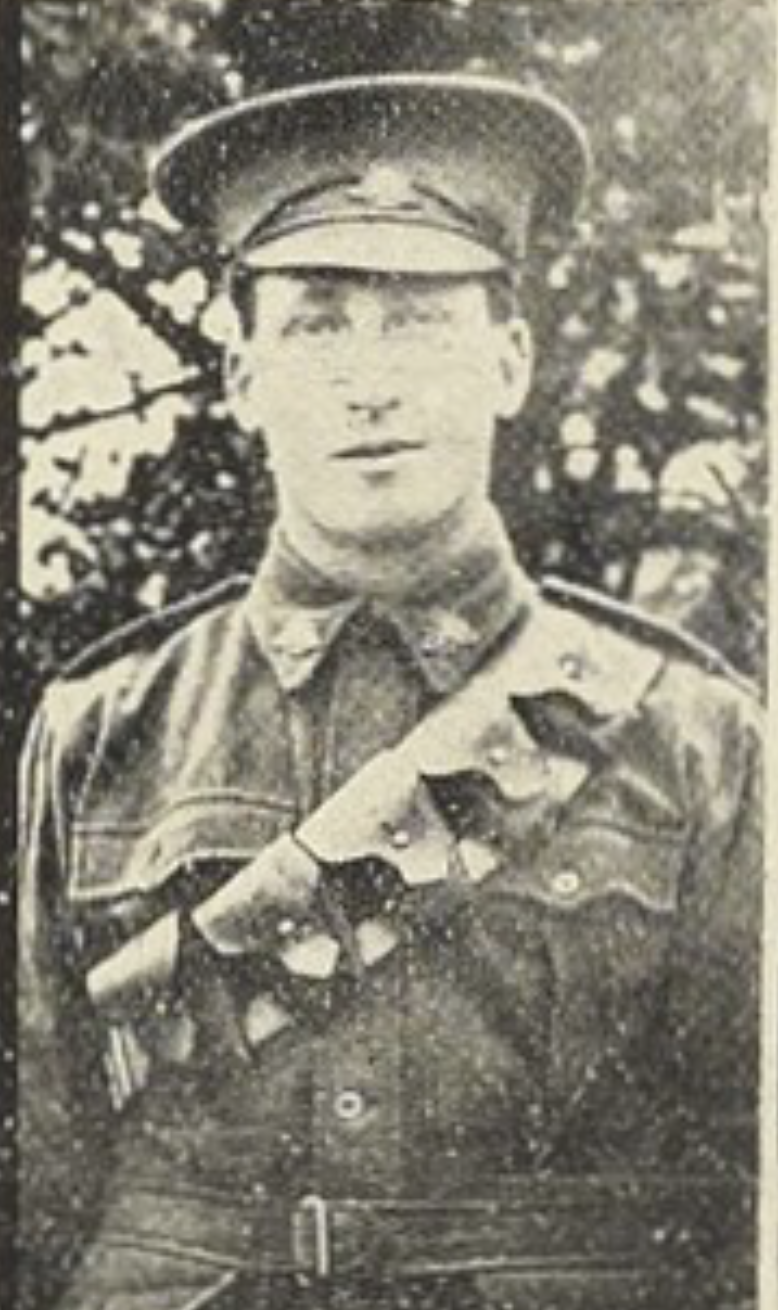
James Youle Frier died 28 May 1918 Dernancourt, France
ANZAC Day
One name, one life, one story
There are thousands of names.
We know that.
We say it every year.
But the truth is, it is too easy for those names to blur into one another. To become something distant. Historical. Manageable.
So today, just one.
James Youle Frier.
Before the war
He was born in Hobart in 1895.
A local boy. Waterworks Road. Hobart State School.
He was the son of William and Jemima Frier. A family home on Waterworks Road. The kind of place you expect someone to come back to.
A painter by trade.
A goalkeeper on Saturdays.
He joined South Hobart in 1911. Started in defence, moved into goal, became the number one. Sat on the committee while still a young man. On the cusp of representative honours.
You can see it clearly. Not potential, but momentum.
The kind that builds quietly. Week by week. Season by season.
A life taking shape in a club, in a routine, in a place.
And then 1915 came. The season was declared null and void.
And like so many others, he enlisted.
The interruption
He left on the Ceramic in November 1915.
From Saturday football in Hobart to the Western Front.
He was wounded once already, at Pozieres in 1916. A scalp wound. Survived. Recovered. Sent back.
Transferred. Back into it.
Third Ypres. 1917 into 1918.
Not one moment. Not one defining event.
Just a continuation.
That might be the hardest part to grasp.
The night of 28 May 1918
A patrol.
Go out. Locate enemy positions.
They came upon an enemy post. A bombing fight. Close, chaotic.
Most of the patrol made it back. Wounded, but back.
James didn’t.
The later testimony is blunt:
Shot through the neck by a machine gun bullet.
Died shortly after.
He was 23.
Buried near where he fell, at Dernancourt.
The distance between places
He is buried in France.
But he is remembered here.
On the Roll of Honour.
At Hobart Town Hall.
On a tree, number 478, along Soldiers’ Memorial Avenue on the Queen’s Domain.
A tree.
Something living. Growing. Still here.
While he is not.
What we say, and what we understand
We gather. We stand still. We listen to the Last Post.
We say the right things.
But it is possible to do all of that and still keep this at a distance.
To honour the idea of sacrifice without really sitting with what was taken.
James wasn’t a symbol when he left.
He was a young man who kept goal for South Hobart.
He had teammates who expected to see him at training.
A committee that expected him at meetings.
A season that was meant to come next.
And then a ship left Sydney.
The thin line between then and now
This is the part that stays with me.
Not the scale of the war. Not the strategy.
Just how ordinary it all was before it wasn’t.
A Saturday game.
A training night.
A routine.
The same rhythms that still exist in football clubs all over Tasmania.
The difference is not as big as we sometimes pretend it is.
Why this story exists at all
Stories like this don’t survive by accident.
They survive because people decide they matter.
Because someone goes looking.
Because someone connects the fragments and refuses to let the detail disappear.
The work of Ian Syson and Athas Zafiris, through socceranzacs.com.au, is the reason we can tell stories like this at all. Special credit also to Paul Hunt, whose research and writing on Tasmanian ANZACs helps keep these lives visible. History is remembered because dedicated people like this do the work.
Without that work, James is just a name.
With it, he is a person again.
One is enough
We cannot hold thousands of stories properly.
But we can hold one.
And if we are honest, one is enough to make the point.
Because once you see him clearly, the others are not abstract anymore.
They are just people you have not met yet.
A goalkeeper.
A painter from Waterworks Road.
A young man who should have had another season.
And didn’t.
Lest we forget.