Hostile Away Games
The folklore
Hostile away games are part of football folklore.
Across the world, they are spoken about with a mix of dread and affection. The noise. The edge. The feeling that you are very clearly not welcome here. Sometimes it tips over the line. Mostly, it sits right in that delicious space called banter.
Recently, we were at Wolverhampton Wanderers when the home crowd was in full voice until Brighton & Hove Albion scored. As the stadium fell quiet, the 5,000-odd travelling Brighton supporters immediately filled the silence with a chant that landed perfectly.
“Are we in a library?”
It was sharp, funny, and timed to perfection. Football theatre at its best.
English banter, experienced together
On our first football tour to England, we went to a Black Country derby between West Bromwich Albion and Wolves at The Hawthorns. Fierce rivals.
We were there with Tasmanian players and their families. Parents, siblings, coaches, all of us sharing something that felt far bigger than the ninety minutes.
Wolves went three nil down, much to the delight of the home supporters. As the scoreline settled, the Wolves away fans decided they had seen enough and began to leave in numbers.
That was when the stadium responded.
Thirty-five thousand Albion fans, in unison, began chanting,
“we see you sneaking out”.
It was brutal. It was funny. And it was unforgettable.
No steward intervention. No announcements. Just collective wit doing what football crowds do best.
Those moments stay with you, especially when you experience them together.
Sitting among the faithful
On another tour, we sat amongst Newcastle United supporters at an away match at Leicester City. Again, we were there with Tasmanian players and their families, not as tourists but as guests stepping into someone else’s football world.
The language was blue. Very blue.
Flares were let off under the stadium in the bar area. The singing rolled on, relentless and joyful. The accents were thick enough that at one point we genuinely had to ask for a translation.
The Newcastle fans loved it.
They thought it was wonderful that a group of Australians were sitting amongst them, joining in, learning the songs, and embracing, even if only for a few hours, their religion.
Newcastle United.
The young players we were escorting thought it was the greatest thing they had ever experienced. Not because it was safe or polished, but because it was alive.
They talked about it for days.
That is football culture. It teaches you resilience, perspective and how to sit in discomfort without fear.
Designed discomfort
That discomfort does not stop at the stands.
Overseas, the difference between home and away dressing rooms is deliberate. It is part of the psychological battle, and everyone understands it.
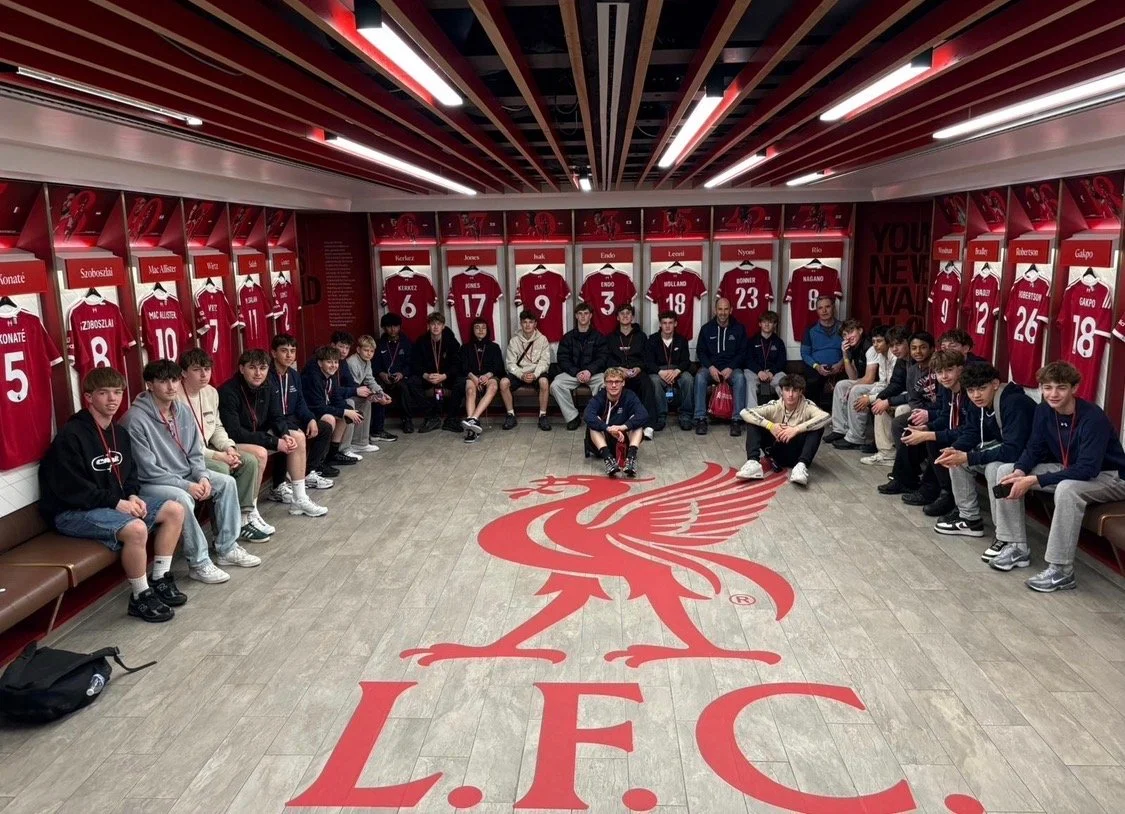
At Anfield, the away dressing room is smaller, tighter, less comfortable and noticeably less welcoming. It is not subtle. It is not apologetic. It is a clear signal that you are not at home.
We saw this first-hand on tour.
Yet when clubs host UEFA Champions League matches, the expectations change. Away teams must be accommodated properly. Facilities must meet minimum standards. Hostility still exists, but it is regulated and transparent.
We saw that contrast clearly at Tottenham Hotspur Stadium. Changerooms similar but different for home and away.
Even Manchester City are expanding seating at Etihad Stadium to meet Champions League hosting standards and with that comes the need to upgrade away facilities as well.
The message is consistent.
Discomfort is allowed. Obstruction is not.
Fan versus President
There is a distinct difference between being at a game as a fan and being at a game as a President, with a team involved.
When you are a fan, hostility feels impersonal. It washes over you. It belongs to the spectacle.
When you are there representing a club, knowing who you are, who you represent and who you are about to play, the intent feels different. Actions land differently. You are no longer anonymous. You are part of the contest before the whistle even blows.
That distinction matters when I reflect on my experiences in Tasmanian football.
Quiet hostility
The hostility I have encountered here has not come from chanting crowds.
It has come in quieter, more procedural ways.
Whiteboards in changerooms covered with advertising material so a coach cannot run a team talk.
Music deliberately blasted at full volume into changerooms to drown out instructions.
Being made to feel unwelcome at the gate before even stepping inside the venue.
And once, at KGV Football Park, being confronted by a very hostile dog and an even more hostile owner, who was clearly unhappy with the scoreline and chose intimidation over words.
These moments felt less like atmosphere and more like strategy.
None of them involved chanting.
None of them were spontaneous.
They were quiet assertions of power. Subtle reminders of who controlled the space and who did not.
Where the line sits
That is the part of hostile away games we rarely talk about.
The difference between noise and manipulation.
Between supporter-driven atmosphere and institutional pettiness.
Football thrives on emotion. It always has. Away days should feel uncomfortable. They should test you. They should remind you that this is not your home.
But there is a line.
When discomfort becomes deliberate obstruction, when hostility is designed not to motivate supporters but to undermine participation, the culture starts to rot.
The irony is that young players notice all of this.
They notice the chants and laugh.
They notice the tension and learn from it.
And they notice the petty stuff too, even when adults pretend they do not.
Hostile away games are not the problem.
How we choose to express power within them is.