Alex MacDonald - A Football Life
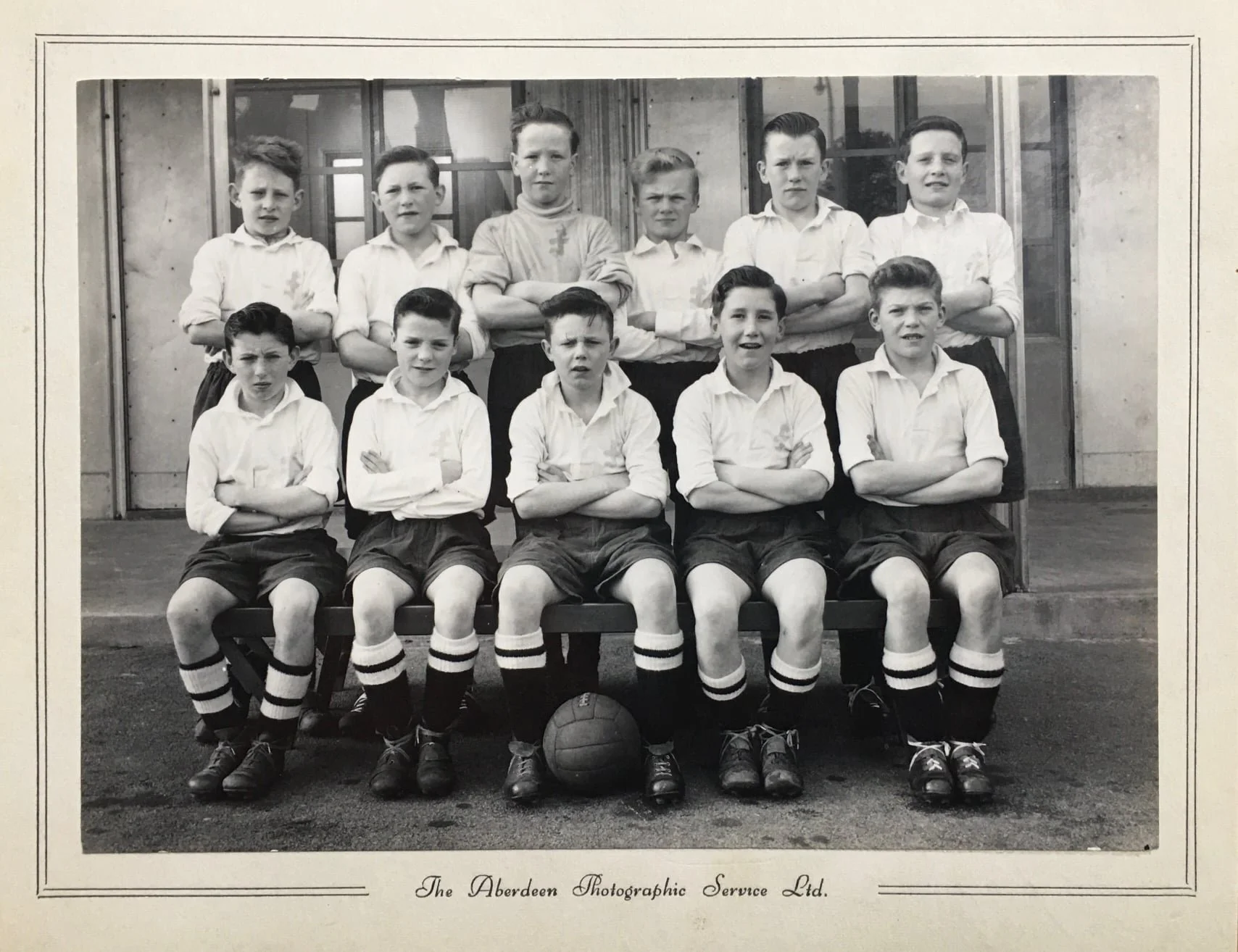
Alex, back row, 2nd from left - 1957 Edinburgh Primary School League Champions, School Board Cup Champions, Inspectors Cup Champions
Some football stories are about trophies, titles, and moments.
Others are about belonging.
Alex MacDonald’s story is the latter.
From a childhood shaped by displacement, to football as refuge and identity, to a life rebuilt through the game in Tasmania, Alex’s journey reminds us that football does not just develop players, it shapes lives.
This is his story, told in his own words.
Early Years: Football as Belonging
Football has shaped my life in ways I could never have imagined.
My earliest memories go back to 1951, as a six-year-old chasing a ball through the streets of Craigmillar in Edinburgh. Like every kid, I dreamed I was playing for Scotland. Life was cramped, three families living in a three-bedroom tenement, but to me it was full and alive. We slept four to a bed under army greatcoats and I thought nothing of it. Life felt good.
At seven, everything changed. My parents sent me to live with relatives in England while they waited to be allocated a new house. I felt abandoned, though I could not name it then. I still remember being put on a train at Waverley Station with a note pinned to my coat and a box of food.
I ended up in Anlaby, Yorkshire. Quiet, unfamiliar, and strange. School was hard. I sounded different. I was teased. Football became my way in.
When I scored a hat trick for the school team, everything shifted. Suddenly I belonged. That was the first time I understood what football could do.
Bill Sinclair and the Power of Coaching
When I returned to Scotland, I faced the same ridicule, my accent had changed again. Once more, football rescued me.
My teacher at Fernieside Primary, Bill Sinclair, changed my life. He ran football the right way, skills first, repetition, discipline, patience. We trained relentlessly, often without playing games. We learned to use both feet. He soaked leather balls overnight so we learned control under difficulty.
Over time, his methods worked. Our under-nine team became the “big team”. At twelve, I was named captain, the last name read out at assembly.
That season we went undefeated. Even the newspapers noticed. Scotland captain John Greig and Rangers player Ralph Brand presented our medals.
Looking back now, Bill Sinclair did far more than teach football. He gave a struggling child resilience, confidence, and belonging. I owe him more than I can ever say.
The Lost Years and a Chance Conversation
From fifteen to twenty-one, I think of my football as my lost years.
I was apprenticed in insulation and sheet metal, travelling constantly between power stations across Scotland and England. Football became fragmented. I trained wherever I landed, carrying a letter from my club asking permission to join sessions. Games were rare, but I trained with good players and coaches, and I enjoyed it more than I realised at the time.
As my apprenticeship ended, I played a friendly match back home. Afterwards, a man in the bar said a few young players were heading to Australia under the ten-pound immigration scheme.
“You’re good enough,” he said.
“Think of it as a two-year football holiday.”
Six weeks later, I was on a plane.
Australia, Tasmania, and Finding Home
I landed in Melbourne in 1967 and hated it. Football wasn’t even a thought. I just wanted to work, save, and go home.
Three months later, work took me to Hobart, and everything changed.
Hobart felt like home almost immediately. Football found me again through a chance pub conversation. One training session with Hobart Caledonian was all it took. I signed, and my Tasmanian football life began.
The Callies were a wonderful club, serious about football, strong socially, and welcoming. The standard surprised me. Hobart football was technically strong, driven by immigrant communities who valued skill and craft.
After two seasons, a representative match up north introduced me to Glenda, the love of my life.
Devonport City and Reinvention
Work took me to Devonport, where I trained with Devonport City during the week and travelled south on weekends. The club felt ambitious, energetic, and alive. Eventually, President Gordon Rimmer squared things off with Callies, and I signed.
That decision led to fifteen years with Devonport City.
The club had vision. Bingo funded facilities. Officials worked tirelessly. Trainers and physios were as good as any in the state. On the field, we were initially mid-table, but off it the club surged forward.
Personally, I found success, best and fairest awards, Sports Writers’ Awards, and rediscovered skills Bill Sinclair had instilled years earlier.
The turning point came with the arrival of Bob Oates, a professional from England. Hierarchies disappeared. I was moved from attack into central defence.
At first, I thought it was a demotion.
It wasn’t.
I thrived. I could read the game, organise, and lead. Devonport City arrived as a force, and I found my place.
The Final Years and What Football Gave Me
In the 1980s, statewide competition arrived. Devonport embraced it again, signing Steve Darby from Liverpool. His standards were high. We didn’t always have the quality to meet them, but I loved working under him and won another best and fairest.
By then, life was changing. We had a young family, land, and a house to build.
One day, walking off the pitch at Valley Road, I knew.
That was it.
I was 36.
Looking Back
I didn’t do too badly. Two state league best and fairests. Two Sports Writers’ Awards. Over thirty medals, including the very first ones I received at twelve years old.
But the greatest prize football gave me was Glenda.
Fifty years on, she’s still beside me.
Football shaped my life, in every sense.
— Interview edited and presented by Victoria Morton