It Is 2026 and Men Are Still Telling Women What to Wear
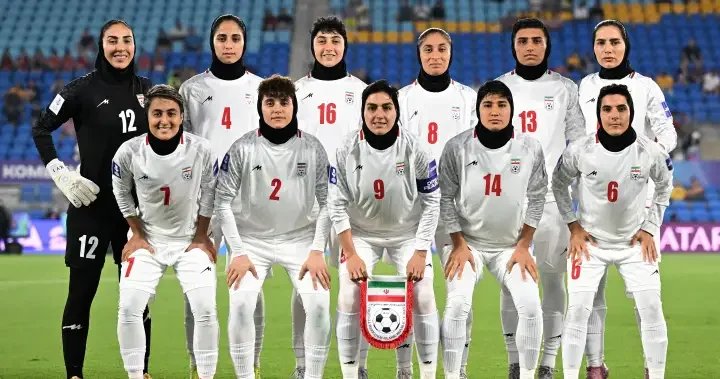
Iranian Women National Team Gold Coast 2026
When Sport Carries the Weight of a Country
I have been fortunate enough to live my life in countries where the government does not tell women what they must or must not wear.
That is a freedom many of us simply take for granted.
Watching the Iran women's national football team play recently, it is impossible not to notice the clothing they are required to wear. Long sleeves. Leg coverings. Hair covered.
This is not a team choice.
It is mandated under law in Iran.
Anyone who has ever played football knows how physically demanding the game is. Ninety minutes of running, sprinting and tackling in the heat is hard enough.
To do that while covering almost your entire body would not be easy.
And I cannot pretend that this does not make me angry.
For generations men have interpreted religious teachings and written rules that tell women what they should wear, how they should behave and where their place should be.
Seeing that imposed on athletes who simply want to play football is confronting.
And it forces you to ask a simple question.
Who wrote those rules?
The uniform that tells a story
The clothing the players wear is not just a uniform.
Under Iranian law women must cover their hair and dress modestly in public. That requirement follows them onto the football pitch.
The international governing body, FIFA changed its rules in 2014 to allow sports hijabs so teams like Iran could compete internationally.
So these athletes run, sprint, tackle and compete wearing full coverage kits.
Anyone who has played football understands how physically demanding the game is.
You run.
You sweat.
You fight fatigue.
Looking at those players, it is impossible not to wonder whether the men who wrote those rules ever imagined what it feels like to play ninety minutes in that kind of clothing.
Sometimes I find myself thinking something else.
What if the Iran men's national football team had to play under the same conditions?
Long sleeves.
Leg coverings.
Hair fully covered.
Ninety minutes of football like that.
Would they complain about the heat?
About the restriction?
About how uncomfortable it is?
Of course they would.
But religious teachings, as interpreted by the men who enforce these rules, do not ask that of them.
Those rules fall almost entirely on women.
And when you strip away the language of culture and religion, what you are left with is something much simpler.
Control.
Women being told what they must wear, how they must behave and how visible they are allowed to be.
And it is 2026 and men are still telling women what they should and should not do.
That fact alone makes me angry beyond words.
Yet despite all of that, these women still walk onto the pitch and play football.
And that takes courage.
When sport and politics collide
Watching the Iranian women this week brought back a memory from earlier in my life.
I grew up in New Zealand at a time when rugby was everything.
Like most New Zealanders, I simply wanted to watch my first sporting love, the New Zealand national rugby union team, the All Blacks, play the South Africa national rugby union team, the Springboks.
But the country around me was arguing.
There were protests.
Pitch invasions.
Police in riot gear on television.
The arguments were not really about rugby anymore.
They were about apartheid in South Africa and whether sport should continue as if nothing was wrong.
At the time I did not fully understand it.
I just knew something much bigger than the game had walked onto the field.
Football and Iran
Watching the Iranian women this week brought that same feeling back.
Before their match they stood silently while the national anthem played.
They did not sing.
No banners.
No speeches.
Just silence.
In a place like Iran that silence carries meaning.
These players are competing internationally while their country is facing conflict and their families are at home living with the consequences.
Several players have spoken about worrying for relatives back home, with communication difficult and the news arriving in fragments. One player struggled to hold back tears during an interview.
In that moment they looked less like international footballers and more like daughters wondering if their families were safe.
The risk they may carry home
There is another uncomfortable thought that sits quietly in the background.
What happens when they go home?
In countries where governments tightly control public expression, even symbolic acts can carry consequences.
There is precedent for this.
During the 2022 World Cup in Qatar, members of the Iran men's national football team initially refused to sing the national anthem. Reports later emerged that players had been warned their families could face pressure if they continued to show dissent.
In another widely reported case, Iranian climber Elnaz Rekabi competed in 2022 without wearing a hijab. When she returned home she was reportedly questioned by authorities and faced restrictions on travel.
Iranian athletes who step outside official expectations have sometimes faced interrogation, bans from competition, or pressure placed on their families.
No one knows what consequences, if any, these women might face.
But the possibility hangs quietly in the air.
Football continues anyway
Despite all of this, the game still unfolds in familiar ways.
Pass.
Move.
Tackle.
Run.
Football stubbornly continues, even when the world around it feels anything but normal.
Quiet courage
Sometimes courage in sport is loud.
A protest.
A confrontation.
A statement.
Sometimes it is quieter than that.
Sometimes it is simply walking onto the field and playing the game while the world around you is complicated and uncertain.
Those Iranian footballers did that this week.
They pulled on their shirts.
They stood quietly during the anthem.
And then they played football.
The game is played on grass and marked by white lines.
But sometimes the weight of an entire country walks onto the pitch with the players.