Just Andy
Just Andy
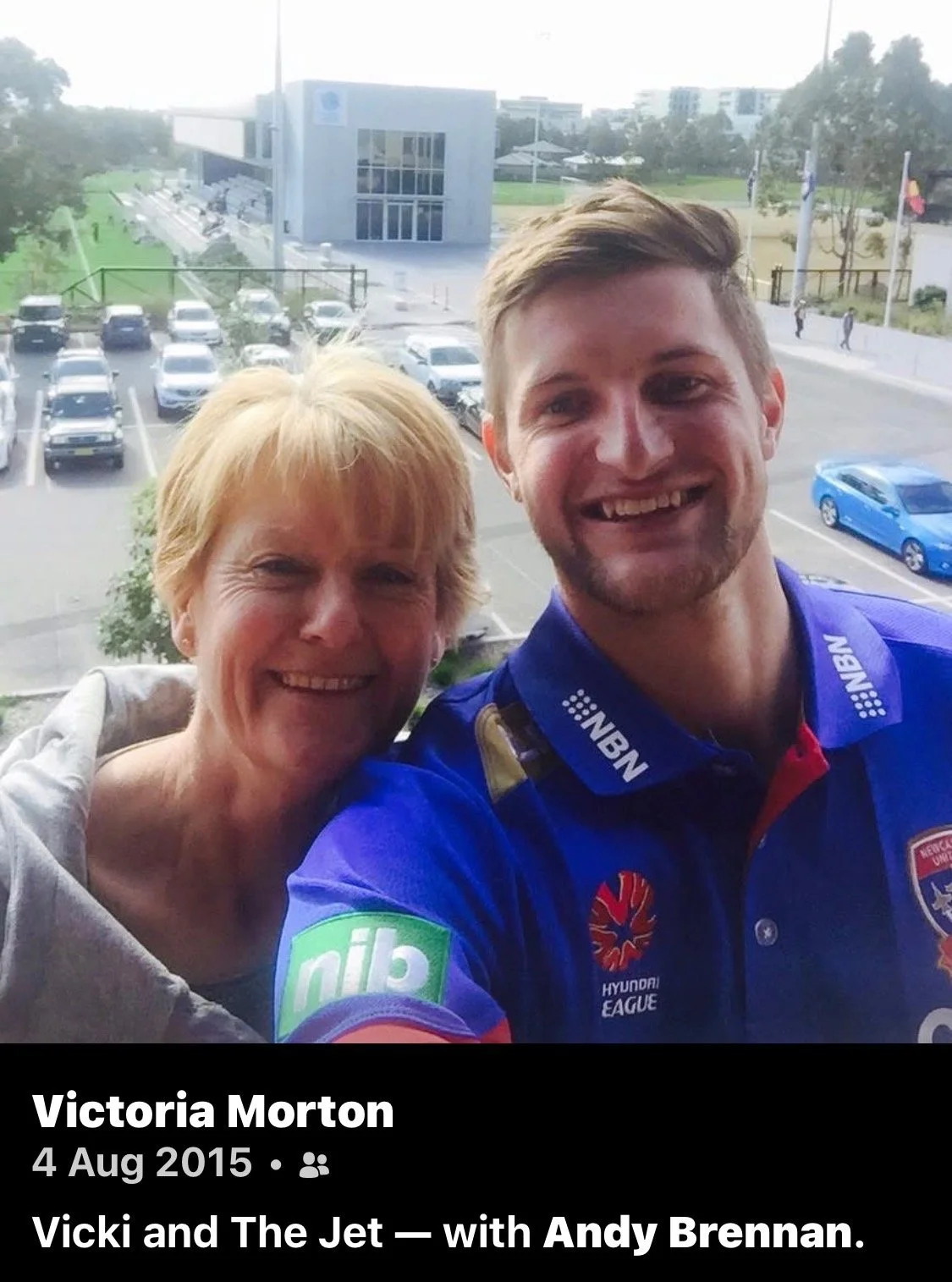
Andy Brennan has been part of our family for most of his life.
He and Ned met when they were four. Boots by the door. Sleep-overs. Backyard games until dark. He was Ned’s best man. He is like a fourth son to me.
He comes from a big sporting family. Every Brennan could play something well. Andy too, football, hockey, anything with a ball. But what we remember most is his gentleness. His kindness. The way he never made a fuss.
Ken coached him for years. Andy was part of the South Hobart family for many years. Many of our juniors remember him running drills, laughing, helping younger players. He grew up inside our football life. Training nights. Away trips. Kitchen table conversations.
Andy is studying a Doctor of Psychology, combining sports and exercise psychology with clinical psychology. He has finished the sports and exercise side, is nearly done with the clinical work and still has his research thesis to go.
To us he was never a headline. He was the kid who hated spicy food and got nosebleeds on our pillow during sleep-overs.
Just Andy. That is how we still see him.
When Andy rang to tell us he was gay, it was not a shock. It was not a problem.
The shock was that he wanted to go public.
We were proud of him. But we were frightened too. Because football crowds can be cruel. And we love him. We were afraid the game we loved might be cruel to one of our own.
Andy chose courage anyway.
This is his story, in his own words.
Growing Up in Sport
Sport was part of being a Brennan, but not as rivalry. It was shared.
They went to each other’s games. Their parents were always there.
One memory stayed with him. He was rowing in a quad. He hated the early mornings and wanted to quit mid-season. His mum told him he had made a commitment to three other boys. If he quit, they would suffer too.
So he stayed.
He did not like it, but he knew it was right. That lesson about commitment has never left him.
Andy was also a strong hockey player. Midfield in hockey. Attacker in football.
Hockey was quick. You had to anticipate play. That stayed with him. In hockey he felt it was his duty to create for others. Setting someone up gave him more satisfaction than scoring himself. That mindset followed him into football.
Football became his focus around fifteen. Not because he stopped loving hockey. He knew how much it meant to his mum. That was hard.
But football felt right.
Football Culture and Finding Himself
Senior football was intense.
Long trips home from up north. Drinking on the bus. Post-game nights out. A culture that assumed everyone would fit in.
Andy often felt like an observer.
There were good people, he says, but some things were toxic. There was little space to be different.
He remembers one early session with Daniel Brown chasing him in a possession drill after Andy had gone past him. Not malicious. Just the norm.
Ken told him to keep getting on the ball. Keep expressing himself.
Football became his identity in that period. Ken’s protection gave him space to be himself and in a way, held him together, for the time being, at least.
Looking back, Andy says he was authentic in football, but it was authenticity with a secret.
He hid a vulnerability. When it felt exposed, he edited himself. Doing that for long enough changes you. It makes it harder to see the parts of yourself that feel unacceptable.
When he later shared that vulnerable side, others often shared theirs too.
Before Coming Out
The years before coming out were, in his words, really terrible.
He describes intense cognitive dissonance. Minimising who he was to ease internal discomfort. Lingering shame. Anxiety.
He thinks that struggle showed up in his football. In his form. Even in his injuries.
At Newcastle and in other intense environments, football was not going well. His identity felt under threat. There was no outlet.
He says, “I’ve never really described how lonely and tough it was.”
It felt like a pot of boiling water with the lid on.
Eventually he reached acceptance. Determination. The lid lifted.
The water still boiled, but it was different.
Relief came.
He feared people would not accept him. That relationships he loved would change.
Instead, when he told those close to him, it was relief. Curiosity. Support.
He kept telling himself one thing.
This is the greatest sift. If they don’t like it, why would I share my life with them.
Football mattered less than honesty.
People close to him were worried. His dad. Me. Others who loved him. Not rejection, just fear for what might happen.
Once he had accepted himself, he needed to finish the process.
Hearing It and Dealing With It
Andy still experiences periodic homophobia.
In games. In life.
Most of the time it does not keep him awake. But there are moments.
He remembers a game at Preston. He was tired. Drained. People in the crowd yelled things throughout the match.
What hurt most was looking around and wondering why no one else said it wasn’t okay. Then the attention turns to him. What do you want to do. How do we handle it. What is the way forward.
Sometimes you just want someone else to step in and fight for you.
First comes shock.
He processes what was said. Who said it. Was it malicious.
Online comments rarely bother him, though it can shock him to see questionable things from people he knows.
Sideline abuse is harder because you are meant to keep playing. There have been moments where he has stood in the middle of the pitch and thought, fuck this, completely drained and wanting to go home.
Most of the time he keeps going.
Sometimes the hardest moments are when someone close says something careless without meaning harm.
Support matters most. Talking. Being with people. Knowing he is not alone.
Sometimes he uses abuse as motivation. Give me the ball. Create something. Make them look and say wow.
But he does not believe in simply blocking things out. With enough heat, things bubble up. For him it is about recognising what happened and choosing what to do next.
Fold in. Or keep playing.
He says that choice is real. Sometimes getting that ball and showing them takes a lot of energy.
Those ideas come from his experience and from the sports psychology work he is doing now.
Family, Friends, and Perspective
Some of his teammates are among his best friends.
Humour helps. It brings people closer and makes difficult topics easier. Sometimes people get carried away, he says, but he can manage that.
Perspective matters most.
Andy says rigidity of belief leads to distress. We all live inside our own experiences. Change comes through empathy and shared stories. If we can create environments where people are less certain about others, he thinks we are succeeding.
When the Brennan family gathers, life is normal. They tease each other. Get on with things.
When he debuted for Newcastle, his whole family was there. Their love never wavered.
When asked if growing up in a big sporting family gave him resilience, he laughed and said maybe I would know better than him.
Those childhood friendships mattered too. Being around people who do not judge you makes a difference when you are questioning yourself.
It always did.
What He Wants Football to Learn
Andy does not think football fully understands what openly LGBTQ players face.
But he does not expect people to understand what they have not lived.
Empathy grows through stories.
To young players he says be patient. Coming out is a process. Read stories. Find people you trust.
He sees coming out as an accelerated version of something most people face across a lifetime. Facing fear. Accepting yourself. Choosing authenticity.
It can be a profound gift. Surviving that fear changes your relationship with fear forever.
That is the thinking he is exploring in his PhD work now.
What He Would Tell His Younger Self
You will be okay.
You are safe.
Things will work out just fine.
Andy Brennan will always be part of our family.
He will always be the boy at our kitchen table, the kid who hated spicy food, the young player Ken backed when others tried to kick him, the friend who stood beside Ned on his wedding day.
He has always been happier setting others up than scoring himself.
He is also a brave man who chose honesty in a sport that is still learning.
Here in Tasmania, where football is small and built on families and volunteers, his courage matters. It tells young players in Hobart, Launceston, Devonport, Ulverstone, everywhere, that they can belong too. That our game must be safe for all of us.
To us he is just Andy.
And we love him very much.