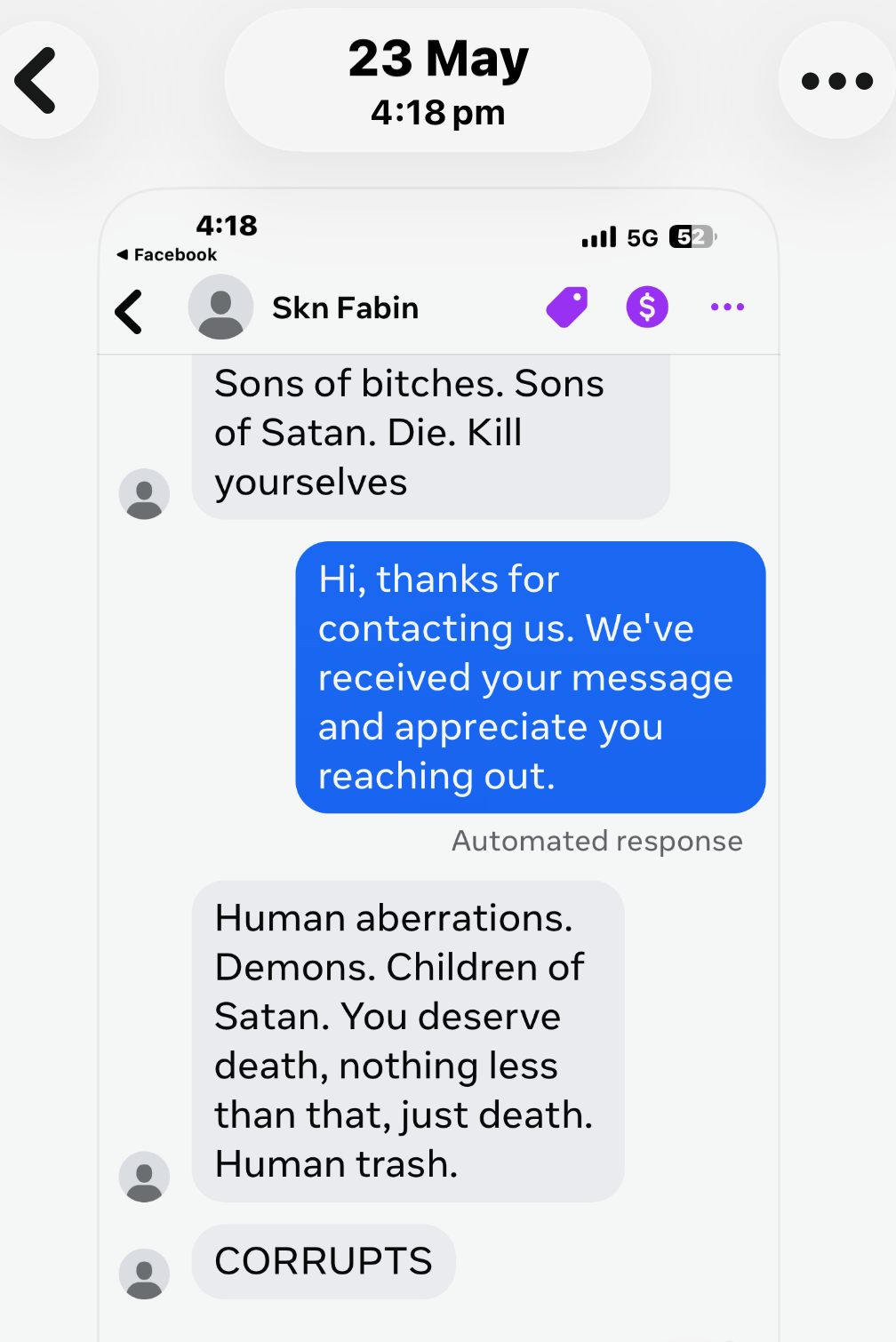
Sons of bitches. Sons of Satan. Die. Kill yourselves.
The hidden cost of football's relationship with gambling.
Sons of bitches. Sons of Satan. Die. Kill yourselves.
That message arrived on South Hobart Football Club's social media channels.
Not after a controversial political post.
Not after a religious debate.
Not after a war.
After a football match.
Because somebody lost a bet.
Most football supporters never see this side of the game.
They see the goals.
The saves.
The celebrations.
The team photos.
The highlights.
What they don't see is the inbox.
Every weekend football club social media administrators across Australia receive messages like these.
Abuse.
Threats.
Match-fixing accusations.
Profanity.
Sometimes death wishes.
And sometimes worse.
Not from rival supporters.
Not from disgruntled parents.
Not from opposition clubs.
From gamblers.
People on the other side of the world who have never heard of the players, never visited Tasmania and couldn't point to South Hobart on a map.
But they know the score.
Because they have money riding on it.
And when the result doesn't go their way, the messages start arriving.
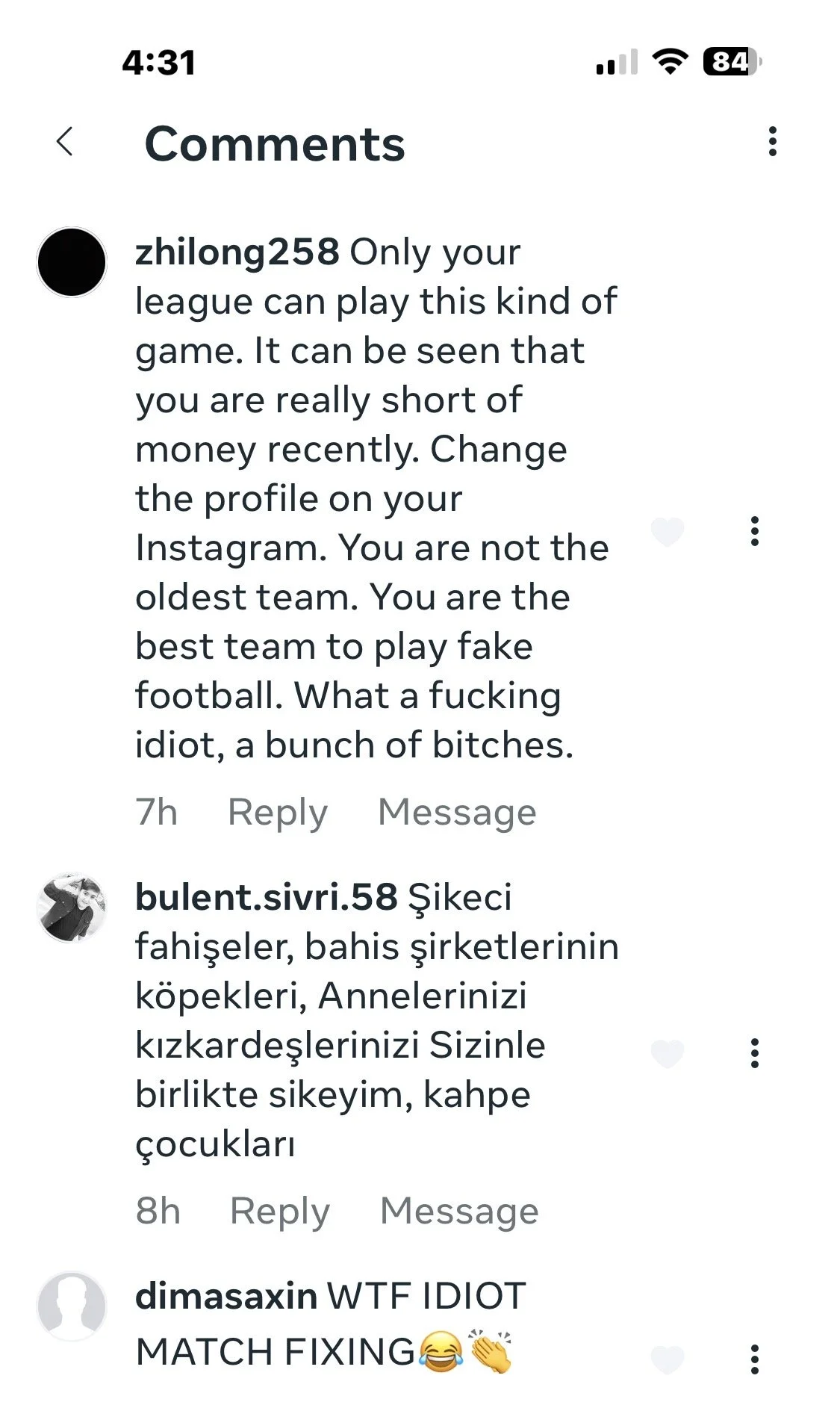
"Match fixing."
"Fake football."
"Corrupt."
"Die."
"Kill yourselves."
This isn't unusual.
It isn't rare.
It isn't even memorable anymore.
That's probably the most disturbing part.
For many football club administrators, this has become normal.
Delete.
Block.
Delete.
Block.
Delete.
Block.
Modern football administration.
The Social Media Admin Nobody Talks About
Football talks a lot about players.
Coaches.
Referees.
Volunteers.
Club presidents.
Technical directors.
Development officers.
There is one role nobody talks about.
The social media admin.
Not because they aren't important.
Because nobody realises what they deal with.
Most people imagine football club social media involves team photos, score updates and celebrating goals.
Sometimes it does.
The rest of the time it can feel like moderating the fallout from a global gambling network.
Every football social media administrator reading this is probably nodding.
They know.
They've seen the messages.
They've deleted the comments.
They've blocked the accounts.
They've received the direct messages.
Some have received the phone calls.
This isn't a South Hobart story.
It's a football story.
The Other Crowd At The Game
Every football match has spectators.
Parents standing on the sideline.
Grandparents wrapped in scarves.
Volunteers running the canteen.
Supporters watching from behind the fence.
But there is another crowd watching football now.
An invisible crowd.
A crowd nobody invited.
People sitting behind betting apps all over the world.
People who couldn't tell you where Tasmania is.
People who don't care about South Hobart.
Or Glenorchy.
Or Devonport.
Or Kingborough.
Or any football club.
They care about one thing.
Their bet.
The players never see them.
The coaches never see them.
The volunteers only discover they exist when the abuse arrives.
"What Was The Half-Time Score?"
For years my phone number was publicly available through South Hobart Football Club.
The calls started arriving.
Usually from overseas.
Mostly Africa.
Sometimes Asia.
Occasionally Europe.
The questions were always the same.
"What was the halftime score?"
"What was the fulltime score?"
"Has the match finished?"
At first it seemed strange.
Then the pattern became obvious.
These people weren't football supporters.
They weren't journalists.
They weren't scouts.
They were gamblers.
To them, South Hobart Football Club wasn't a football club.
It was an information service.
A source of gambling data.
Think about that for a moment.
A volunteer-run football club in Tasmania had somehow become part of a global betting ecosystem.
Nobody discussed it.
Nobody agreed to it.
Nobody voted for it.
It simply happened.
A Missed Penalty In Hobart
Somewhere along the way football stopped being just football.
A missed penalty in Hobart can now cost somebody money in another country.
A volunteer updating Facebook scores has unknowingly become part of a global gambling network.
A teenage goalkeeper can be accused of match fixing by somebody who has never heard of Tasmania.
A striker misses a chance.
A goalkeeper drops a cross.
A defender makes a mistake.
Normal football.
The sort of thing that happens thousands of times every weekend around the world.
Except now there is a financial consequence.
Somebody loses money.
And because social media has removed every barrier between frustration and abuse, the messages start arriving almost instantly.
If all of that sounds ridiculous, it's because it is.
The Great Match-Fixing Fantasy
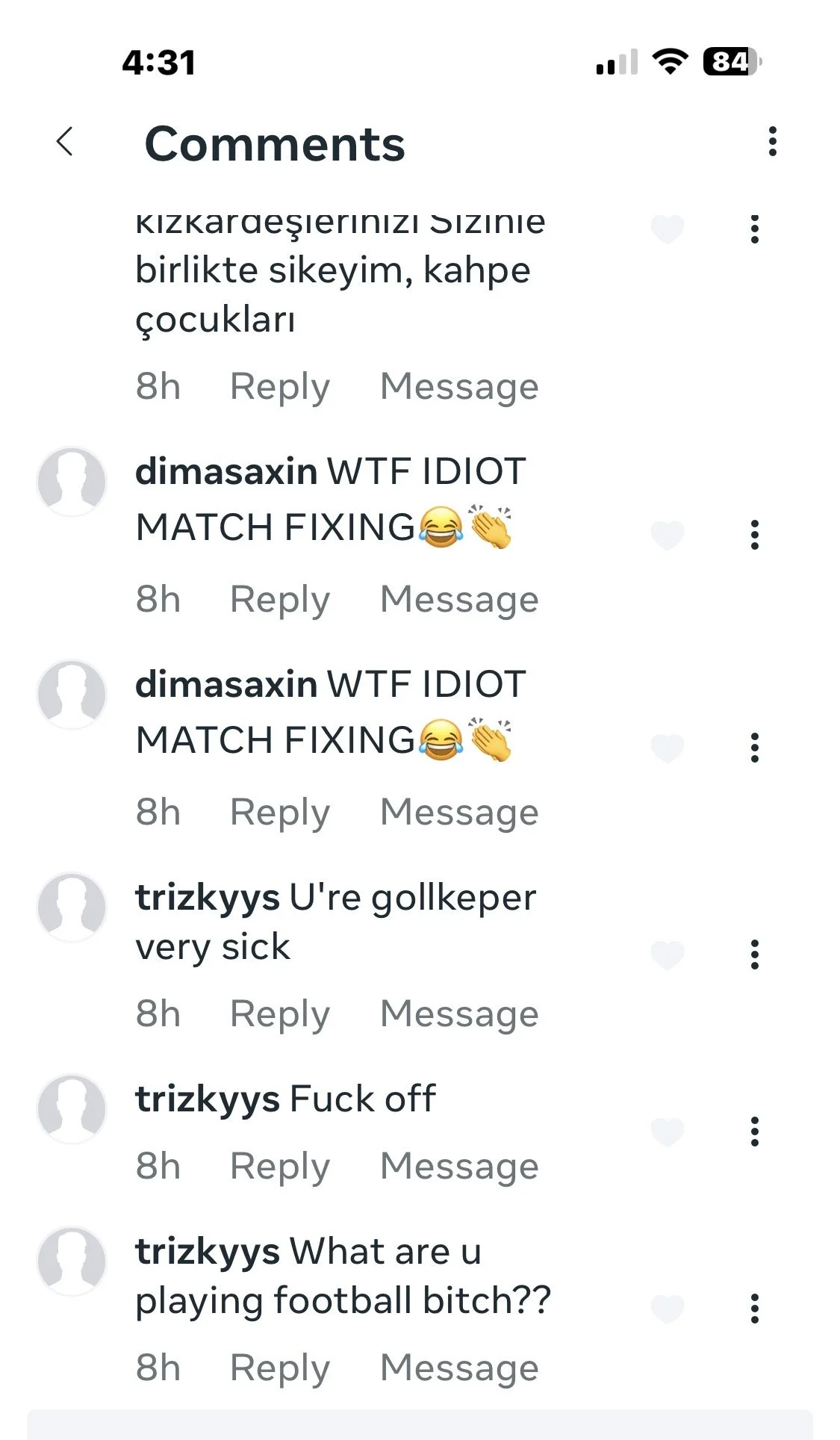
One of the most common accusations thrown at football clubs is match fixing.
A striker misses a chance.
Match fixing.
A goalkeeper makes a mistake.
Match fixing.
An underdog wins.
Match fixing.
A late goal changes the result.
Match fixing.
The irony is extraordinary.
Most community football clubs struggle to find enough volunteers to staff the barbecue.
Yet somewhere on the other side of the world somebody is convinced an elaborate international betting conspiracy is unfolding on a suburban football field in Tasmania.
Apparently a bunch of teenagers, volunteers and part-time coaches have masterminded a global operation.
The reality never seems to occur to them.
Football happened.
The gamblers lost.
Football's Forgotten Volunteers
Whenever gambling and sport are discussed, attention focuses on professional athletes.
Broadcast deals.
Advertising.
Sponsorships.
Tax revenue.
Professional sport.
Nobody talks about the volunteer sitting on their couch after dinner deleting messages from angry gamblers.
Nobody talks about the club administrator accused of match fixing because a teenager missed a chance.
Nobody talks about the parent updating scores.
Nobody talks about the social media admin checking notifications before bed.
Nobody talks about the people who absorb the consequences.
The people who never signed up for this.
Because every one of those messages lands somewhere.
Usually on the phone of a volunteer.
We Never Invited Them
Football clubs exist to serve their communities.
To provide opportunities for children.
To create friendships.
To build belonging.
To bring people together.
They do not exist to become customer service desks for global gambling markets.
Yet every weekend that is exactly what happens.
A missed penalty in Hobart.
A lost bet somewhere else in the world.
An abusive message arrives.
And another volunteer reaches for the block button.
Football talks constantly about safeguarding.
Respect.
Mental health.
Inclusion.
Positive environments.
All important conversations.
But perhaps it is time to talk about this as well.
Because somewhere along the way grassroots football acquired an audience it never asked for.
And every weekend that audience reminds us it is there.
Not with support.
Not with encouragement.
Not with a love of the game.
But with abuse, accusations and anger because somebody's bet didn't come off.
We never invited them.
Yet somehow they became part of football.