Max Clarke: Home, But Not Home
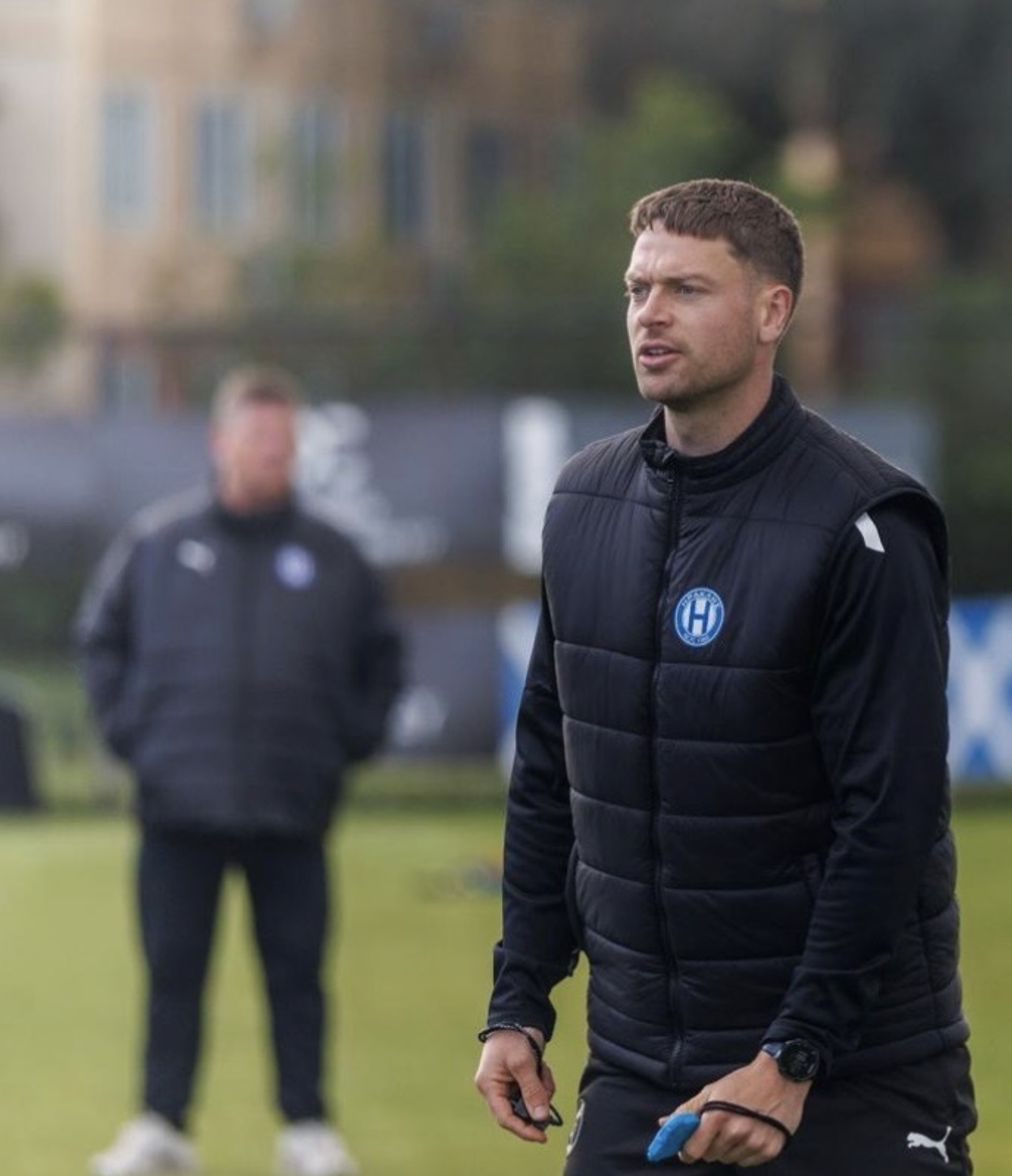
Max Clarke - Photo courtesy of Northcote City
Tomorrow my son Max will walk back into Darcy Street, not as South Hobart’s coach, but as the opposition.
That sentence still feels strange to write.
Last season, Max coached South Hobart. He didn’t just coach us, he led the club through one of those rare seasons that supporters remember for years, a League and Cup double and a team identity that people genuinely connected with.
Now he is returning with Northcote City.
Different badge.
Different changeroom.
Same ground.
Same faces.
And for me, as his mum, it’s an odd mix of emotions, pride, sadness and the quiet reality of what ambition looks like in football.
Tasmanian football is small enough that nothing is anonymous.
When someone leaves, everyone has an opinion.
When someone returns, everyone reads meaning into it.
But most of the time, the real story is not drama.
It is growth.
It is the emotional cost of choosing a pathway.
And it is the complexity of holding two things at once, love for your home club and the need to keep moving.
I wanted to capture this moment properly.
Not as a match preview.
Not as a headline.
But as part of the written record I am building about football in Tasmania, what it asks of people, and what it gives back.
So I asked Max to reflect honestly on returning home, and on leaving home.
Coming back with a piece of home intact
Max said the return feels exciting.
Not loaded.
Not bitter.
More like pride.
A chance to share his hometown and his home club with his new team, and to show how he has evolved as a coach.
“It doesn’t feel like a return with bad blood,” he told me.
“It feels like coming back with a piece of home still intact.”
That line stayed with me.
Because it is possible to leave without rejecting where you came from.
And that is not always how Tasmanian football reads it.
Home, but not home
Darcy Street will feel familiar.
But Max will not be walking into the home changeroom.
He will walk in, take in the place that still holds memories, and then step into the away changeroom and flick the switch.
He described the contrast perfectly.
Walking into Darcy Street will feel like home at first.
But the moment he steps into the away changeroom, it becomes business.
He has never experienced that contrast before.
And he is curious about how it will land in the moment.
That is the reality of football.
The same ground.
The same smell.
The same people.
But suddenly the emotional context is different.
The decision to leave
When a coach wins a double, people assume they will stay.
Comfort is seductive.
Success makes you want to settle.
Max didn’t.
He said leaving South Hobart was the hardest part.
Not because the club was failing.
The opposite.
It was because the club felt like family and was genuinely growing.
But ambition outweighed comfort.
He was careful about choosing his next environment.
He wanted the right next step, not just the next step.
And he is confident he got it right.
That matters to say.
Because too many people interpret leaving as an insult.
Sometimes it is simply a coach being honest with themselves about their pathway.
The emotional cost people don’t see
This is the part many football people pretend isn’t real.
They talk about “opportunities” like the human being is not attached.
Max described the emotional weight clearly.
He said people judge these decisions at surface level.
What they don’t see is the emotional cost, the sacrifice, the uncertainty, and the loneliness that can come with football.
That loneliness is real.
Leaving familiarity.
Leaving daily support systems.
Leaving identity.
Football is a career pathway, but it is also a constant dismantling and rebuilding of self-belief.
Especially for young coaches.
And especially when the football world is watching, even if it doesn’t understand what it is looking at.
Why he came back last year
There is another piece of the story that matters.
Max returned to Hobart last year after being in Melbourne.
He said he recognised football is built on connections as much as qualifications.
Coming home gave him stability, support, and familiarity.
It gave him the kind of environment where he could work clearly.
While there were other opportunities, he said Northcote felt right and allowed him to build with confidence rather than rush the next step.
That’s maturity.
Not taking the first offer.
Not chasing status.
Building carefully.
The double wasn’t the real prize
The trophies mattered.
They always do.
But Max said the bigger achievement was rediscovering his confidence and passion as a coach.
That is not a line you hear often, but it is the truth behind most successful seasons.
Coaching is exhausting.
It is exposure.
It is giving everything, and being judged anyway.
The double did more than fill a cabinet.
It solidified identity.
Max said South Hobart built an identity in how the team played and carried itself, and that clarity has shaped the way he coaches now.
When you watch coaches closely, that is what separates them.
It is not tactics alone.
It is identity.
What he is proud of, beyond trophies
When I asked Max what he was most proud of from his season at South Hobart that had nothing to do with trophies, he didn’t hesitate.
He said he was proud of the collective.
The identity the group built.
The behaviours they lived by.
The way players grew into new roles.
He said the togetherness of the group and the bond they shared across the season is something he will always value.
That is a coach speaking about leadership, not results.
The coaching evolution, what has actually changed
It is easy for coaches to say they have “evolved tactically”, but Max went a step further.
He said he is more adaptable now and manages games better.
He has clearer principles around his style of play, and a better understanding of when adjustments are needed to get results.
He is also more conscious of selecting players based on what a game requires, not just who looks best on paper.
Then he gave a specific example, and I appreciated the honesty.
Looking back at his last away game at Heidelberg with South Hobart, he felt he was probably too stubborn and didn’t respect how strong they were.
Now, he said he would approach that game with more balance and pragmatism.
That is real coaching growth.
Not the tactical diagram stuff.
The psychological stuff.
The humility to learn.
The Northcote project
He is excited about Northcote’s potential.
He described a club with strong history, ambition, and a willingness to do things properly.
He said the challenge has been quickly reacquainting himself with the league, and that has meant leaning on staff and players.
That line matters too.
Young coaches often think they have to prove themselves by doing everything alone.
Max is learning how to lead, and how to trust.
And that builds teams.
Family clubs and professional programs
Max’s perspective on environments was balanced.
Some clubs are exceptional at building a family culture, which matters deeply to him.
Other clubs have resources that allow for sustainable, professional programs.
He said he has learned from both.
That is football in Australia.
Especially in states like ours.
We do not all have the same foundations.
We do not all have the same money.
But the love of the game is not the only ingredient.
Structure matters too.
Tomorrow at Darcy Street
I asked Max what will be the hardest moment tomorrow.
His answer surprised me.
He said he doesn’t think there will be a hard moment.
He tries to enjoy games for what they are.
And tomorrow will be about appreciating a good contest with familiar faces and two teams trying to play the right way.
That is not a defensive answer.
It is a grounded one.
It shows how he’s processing this return, not as drama, but as football.
Although everyone else will probably still feel the emotion.
What he would tell his younger self
This was the line that wrapped the whole thing into one truth.
Max said he would tell his younger self to do it anyway.
Growth is uncomfortable, but necessary.
Leaving doesn’t mean disloyalty.
It means being honest about your potential.
And trusting that the relationships that matter will endure.
Final thoughts
Tomorrow’s match will have its own story.
But this post is not about the score.
It is about the complexity that sits underneath the surface of football in a small community.
Ambition has a cost.
And in Tasmania, where football is tight-knit and long-memoried, that cost is amplified.
But people don’t leave because they don’t care.
Often, they leave because they do.
Because they are trying to become something.
And because deep down, they trust that what mattered will still be there when they return.
Even if it is with a different badge.