Money Talks: What Do We Do With Manchester City Now?
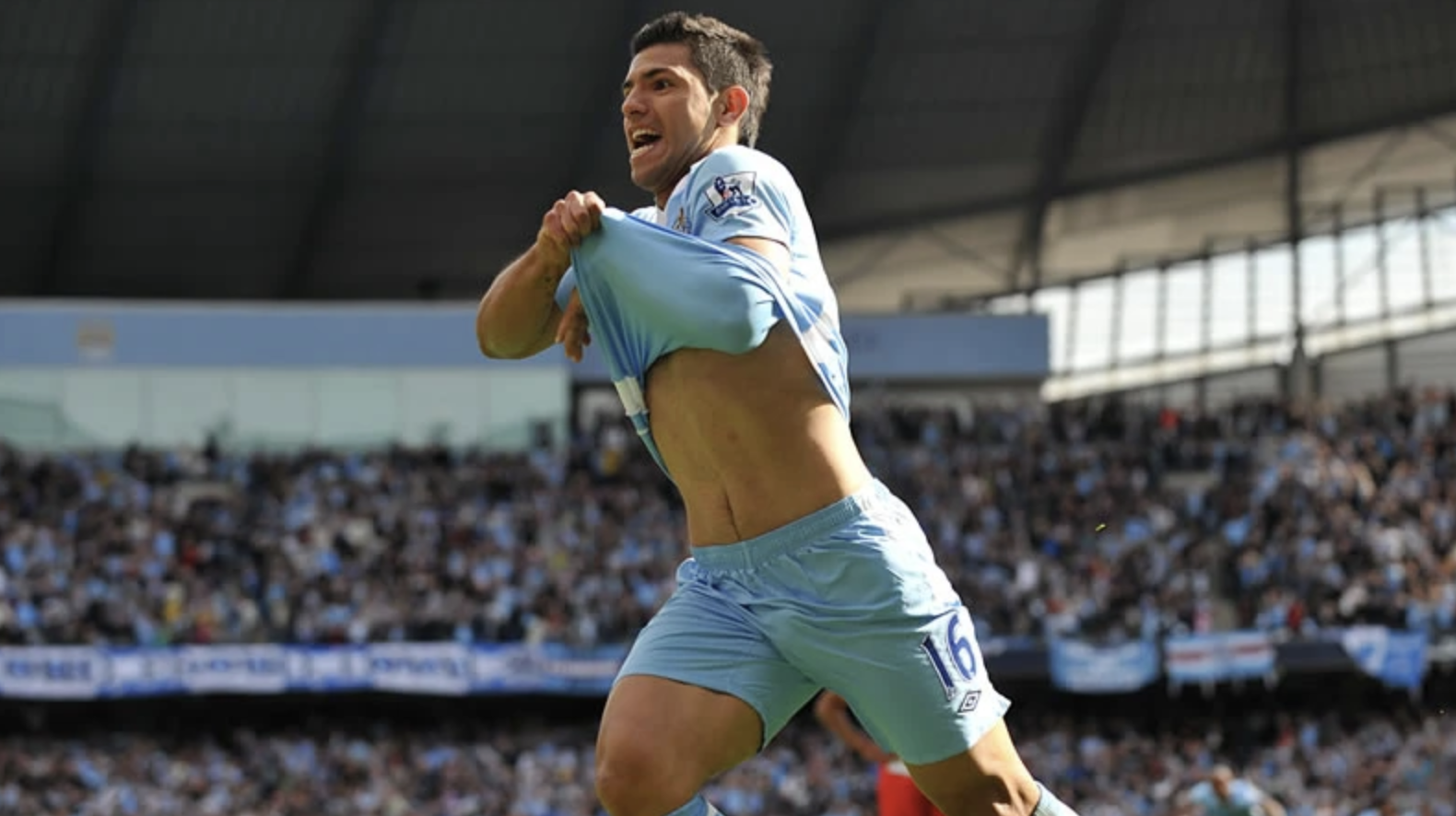
Sergio Agüero celebrates the 93:20 winner against Queens Park Rangers in 2012, the goal that gave Manchester City its first league title in 44 years.
Manchester City gave us extraordinary football. They transformed a club and built a global football organisation whose professionalism I have seen first-hand. Now an independent commission says the financial playing field was not level. How do we reconcile the two?
We all remember Agüero.
You only need the surname.
Manchester City were 2-1 down to Queens Park Rangers as the clock ran into stoppage time on the final day of the 2011-12 season.
Manchester United thought they had won the title.
It was squeaky bum time at our house.
To quote Fergie.
Ken was watching United win at Sunderland.
The title was theirs.
For about two minutes.
Then Džeko.
Then Agüero.
93:20.
City were champions of England for the first time in 44 years.
In our house it was the ultimate loss.
It was also the perfect argument for playing every final-round game on the same day at the same time.
Nobody knew until the very last kick.
I wasn't a City supporter but I loved it.
That moment changed the way many of us thought about Manchester City.
For years this club had lived in the enormous shadow of United.
Relegated.
Promoted.
Relegated again.
Its supporters suffered plenty.
Then suddenly they weren't just good.
They became the best.
Fourteen years later we are being asked to look at that rise differently.
114 out of 115
An independent Premier League commission has found Manchester City guilty of serious breaches of the league's financial rules over nine seasons.
The commission found City arranged sham commercial contracts.
Sponsors paid only part of some sponsorship fees. The rest was funded through Abu Dhabi United Group.
Revenue was artificially inflated and costs reduced by more than £900 million over the period.
The commission also found City filed misstated accounts and concealed the true state of its finances from auditors and football regulators.
These aren't small findings.
This isn't simply a club that spent too much money.
The finding is that City presented a financial picture that didn't reflect what was really happening.
Manchester City rejects that completely and intends to appeal.
No sanction has been imposed yet.
So this story is a long way from finished.
But the findings are there.
They raise some uncomfortable questions.
Because the football was bloody good
I loved watching Pep Guardiola's Manchester City.
At their best the passing, the movement and the control were magnificent.
That football happened.
Kevin De Bruyne still had to see the pass.
Agüero still had to score.
The players still had to perform under enormous pressure.
Pep still had to coach them.
Great football doesn't stop being great football because someone has since examined the accounts.
Manchester City produced some of the finest football of their era.
If these findings survive the appeal, the financial ground under that team was not level.
Both things are true.
What does the supporter do with that?
Does the average Manchester City supporter actually care?
Imagine following City through the bad years.
Imagine watching United win everything while your club wandered through the divisions.
Then you get Agüero.
Premier League titles.
Pep.
De Bruyne.
A Champions League.
A global profile the old Maine Road faithful could never have imagined.
Can a legal decision now tell you those memories should feel different?
I'm not sure it can.
Maine Road to the Etihad
Ken and I and 65 other Tasmanians were at the Etihad last September.
I've been to a lot of football grounds.
Surprisingly it was our least favourite experience.
It felt corporate.
A bit plastic.
That's completely subjective. City supporters may well tell me I'm talking rubbish.
Maybe part of it was knowing what came before.
For 80 years City's home was Maine Road.
The Kippax.
Colin Bell.
Francis Lee.
Shaun Goater.
All the chaos of being Manchester City before Manchester City became what it is today.
City moved in 2003 to the stadium now called the Etihad.
It is bigger and newer.
It sits in a vast modern football campus.
It is a very different football experience.
Standing there I thought about the dyed-in-the-wool City supporter.
The one who went to Maine Road when there weren't trophies every season.
The families who stuck with them through relegations while United ruled England and Europe.
What are they thinking this week?
Angry?
Embarrassed?
Defensive?
Or do they look at everything their club has become and think:
I wouldn't swap any of it.
I don't know.
I don't think outsiders get to tell them how to feel.
Manchester didn't only get footballers
The investment in Manchester City bought more than a football team.
The club's community programs run across Greater Manchester.
The Etihad Campus has become part of the regeneration of east Manchester.
That makes this even more complicated.
Britain's Prime Minister Andy Burnham was Mayor of Greater Manchester until this year.
He is also an Everton supporter.
This week he said he would be “really concerned” if Manchester City's owners sold the club.
He described them as a major partner in building modern Manchester as well as transforming City into a global football force.
At the same time he said it would be wrong for him to intervene in the disciplinary process while sanctions and appeals remain unresolved.
I think that gets to the heart of it.
You can believe the rules have to be enforced and still acknowledge what the investment has brought to Manchester.
Football supporters don't experience their clubs as balance sheets.
They experience them through family.
Saturday afternoons.
Trips away.
Shirts.
Pubs.
Goals.
Defeats.
Memories.
That matters when people talk glibly about wiping achievements away.
My experience of City Football Group
There's another reason this isn't easy to write.
My own experience of City Football Group has been positive.
My son Max worked within the City organisation in Melbourne.
From what I saw it was an extremely professional environment.
During Covid, when football organisations everywhere were under enormous pressure, City looked after its staff very well.
I was impressed.
I've also met Simon Pearce.
He sits on the boards of City Football Group and Manchester City.
He is Vice Chairman of Melbourne City.
He is also a club representative on the board of the Australian Professional Leagues.
We crossed paths at a couple of Bonita Mersiades' Football Writers Festivals, including one not long after Covid.
I thanked him for how City had treated its staff during that time.
It was a nice exchange.
He was prepared to front public football discussions and answer questions.
At least one of those was under Chatham House rules, so I won't reconstruct conversations from years ago.
I didn't walk away with a negative impression of Simon Pearce.
Quite the opposite.
My experience of someone doesn't cancel out a commission's findings.
A commission's findings don't require me to pretend my own experience never happened.
Both belong in the story.
And that brings us to Melbourne City
Manchester City and Melbourne City are part of the same City Football Group.
CFG bought Melbourne Heart in 2014.
Melbourne City is now wholly owned by the group.
Today CFG is majority owned by Newton Investment and Development LLC, which is wholly owned by Sheikh Mansour bin Zayed Al Nahyan. US investment firm Silver Lake holds a minority stake of nearly 17 per cent.
Let me be very clear.
Melbourne City has not been accused of anything.
The men's team has won three premierships and two championships.
Those were won on the pitch.
Under a salary cap.
Under Australian rules.
The players did nothing wrong.
The academy kids at Casey Fields certainly didn't.
The supporters didn't.
This isn't about pinning Manchester City's findings on Melbourne City.
But Australian football can't pretend there's nothing to see here.
The APL has said it will review the Premier League findings.
It has also confirmed Melbourne City has never been the subject of an APL investigation.
Our league is a closed shop.
The clubs own it.
Club people sit on its board.
That's the model.
So one of the directors of the body reviewing the Manchester City findings also sits on Manchester City's board.
I'd expect Simon Pearce to step aside from that review.
I'd just like to hear someone say so.
Football Australia's club licensing rules also include a Fit and Proper Person Test.
By 30 April each year every director and shareholder of an A-League licence applicant must provide a declaration confirming they are not subject to a disqualifying condition.
The requirement applies again when a new director or relevant new shareholder comes in.
England's new Independent Football Regulator also has the power to assess existing owners and senior managers at regulated clubs.
That doesn't mean Melbourne City's licence is suddenly under threat.
I have seen nothing that suggests it is.
But surely somebody asks the questions.
What does the APL review find?
Does Football Australia look separately at the findings?
Does Melbourne City offer any assurances?
If Manchester City loses points, money or faces major compensation claims, does CFG keep spending at the same level on its smaller clubs?
Is Melbourne City a priority in a crisis or a line item?
Will Melbourne City supporters be made to wear an asterisk they did nothing to earn?
Maybe everyone looks and finds no issue at all.
Fine.
But surely you look.
Were we too grateful?
When City Football Group arrived in Australia in 2014 most of us thought it was fantastic news.
I certainly did.
Australian football has spent its professional life looking for people prepared to invest in it.
Someone arrives with expertise, money, international pathways and ambition.
Our first instinct is:
Thank goodness.
Look at what Melbourne City became.
A professional environment.
An academy.
Strong men's and women's teams.
Facilities.
Pathways.
Success.
My own family has seen that professionalism first-hand.
I'm not going to rewrite history and claim I always had doubts.
I didn't.
But maybe Australian football has been so grateful for investment that we haven't been very curious about what sits behind it.
Gratitude and scrutiny can live together.
But isn't football already unfair?
Football has never had a level financial playing field.
Manchester United got rich through decades of success and enormous commercial growth.
Roman Abramovich transformed Chelsea.
Newcastle now has resources its old supporters could barely have dreamed of.
The biggest European clubs earn amounts most clubs will never see.
So where is the line between investment and unfair advantage?
You can argue owners should be allowed to put more of their own money in.
You can argue financial rules protect the established elite.
You can argue the rules are flawed.
All fair.
But that's a different question to the one Manchester City now faces.
Twenty clubs play under rules they agreed to.
If you think the rules are wrong, change them.
If most clubs stay inside the rules while one gains an advantage outside them, the competition isn't level.
That's the fairness question.
Money talks
Maybe money simply talks.
Given enough time success drowns out the questions about how it was won.
A new generation grows up knowing City only as a giant.
Pep's teams become folklore.
The Etihad gets bigger.
The origin story matters less.
Maybe that's modern football.
But Everton and Nottingham Forest have already lost points for breaking financial rules.
Other clubs made decisions about players, wages and spending because they believed there were limits.
Rules only work if everyone believes they're playing under the same ones.
Back to Agüero
So I come back to where I started.
Agüero.
93:20.
I loved that moment.
Even with a United man sitting next to me.
Can a commission decision fourteen years later change how I remember it?
No.
Should it change how we understand City's rise, if the findings survive the appeal?
I think we at least have to ask.
That afternoon every club kicked off at the same time under the same rules.
That's what made it so perfect.
Football isn't played in an accountant's office.
But every competition relies on everyone agreeing where the touchlines are.
Financial rules are touchlines too.
If money talks louder than the rules, what are the rules for?