Pete Edwards: Alignment, Standards and Building Something That Lasts
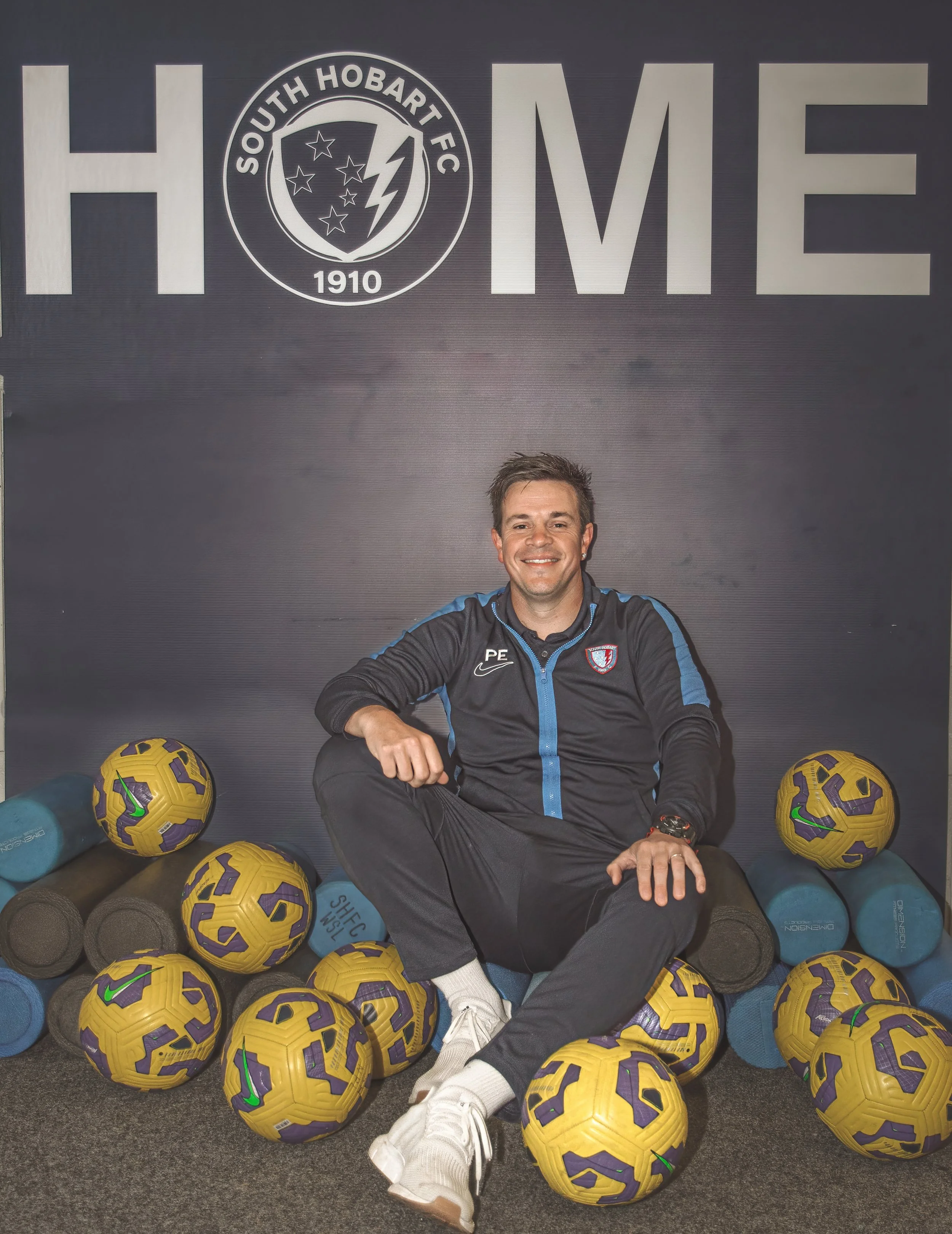
Another amazing photo from Nikki Long - Pete Edwards in the home dressing room
Pete Edwards did not walk into a neutral football environment.
He stepped into a club with history and strong identity, and for 17 years a head coach who didn’t have my surname or that of my son. He also stepped into my family’s football world and, within weeks, was interviewed within an inch of his life. He handled it with calm, clarity and professionalism. That, in itself, tells you a lot.
He talks often about alignment. Between people, values, development and environment. In a football state that is small, passionate and still working out how its systems fit together, that word matters.
Why Tasmania, Why South Hobart
Pete and Sophie did not come to Tasmania by chance.
“I valued my previous environment and the opportunity to work with elite talent and mentors. However, I reached a point where I was seeking a different challenge, one that allowed greater expression of my own philosophies, knowledge and lived experience. Tasmania presented the opportunity to contribute at a deeper level, where I could have a meaningful influence on both player development and the broader direction of a club.
On a personal level, Sophie and I have always been drawn to Tasmania. Its natural environment and sense of time and space create an exceptional quality of life, and after many visits, the move felt both deliberate and inevitable.”
South Hobart, for him, was not “a job”. It was fit.
“South Hobart felt aligned rather than opportunistic. The club has a clear identity and strong values and a genuine commitment to development rather than short-term outcomes. The work that Ken and Vicki have done over many years in the academy space has helped shape South Hobart FC into a truly outstanding football club.
What stood out was the willingness to think long term, about players, people and culture, and to trust the process required to do that well. At the same time there is a clear ambition to continue growing, to compete consistently with mainland clubs and to be recognised as a top-level football environment. It’s an environment where ideas can be challenged, refined and implemented with purpose. That sense of alignment made it feel less like a role to fill and more like a place to contribute meaningfully.”
That word again. Aligned.
In football, many roles are taken for pathway or status. He is talking about culture, people and direction first.
Before committing, he was looking for clarity.
“I needed clarity of intent. A shared understanding of where the club is and where it wants to go. I wanted to see that development was genuinely valued and that there was patience for long-term work. I also needed to see and feel the people within the club, to understand who they are and what they value most. Because people make football clubs, not the badge or the name.
It was important that ideas could be discussed openly and challenged constructively and that there was alignment between ambition and the daily behaviours required to achieve it. Once that was clear, the decision felt inevitable.”
That sentence, “people make football clubs”, is one I could have written myself.
How Football Shaped Him
Pete’s love of the game began where so many do. At home.
“My love of the game started at home, watching football with my dad, brothers and family. Going to games at Newcastle United in the UK showed me what football really means to people and communities, how a club can be part of a city’s identity and lift the mood of entire neighbourhoods. Characters like Shearer, Ginola, Beckham and Kevin Keegan were covered all over my bedroom wall. To dream big as young players do, that one day you could be standing alongside them.
Early on, football gave me structure, challenge and a sense of connection. It taught me discipline, creativity, the value of effort and how to lose with pride and respect, holding my head up high. It shaped my identity as a person and gave me a community I felt valued and safe in above all else. Those experiences shaped not just how I see the game, but how I see people and development.”
There is something consistent in coaches who stay in the game long term. Football was not just competition. It was belonging.
Lessons From Playing and the Coaches Who Changed Him
As a player, he is honest.
“Looking back, I was a player lucky enough to have some natural talent, but I lacked the cutting edge to reach the very top level. Success in this game takes far more than talent. It requires resilience, discipline, mental toughness and the ability to handle pressure and knock backs.
I remember friends and teammates who went on to have successful careers. Some had that X factor everyone talks about, but the truly successful ones had so much more underneath it all. They always found a way to win, even in the simplest drills. They stayed back to do extras, yet were always the first at training. They made mistakes in games, but never really had a bad performance. They learned quickly, moved onto the next action and it was as if nothing could stop them.
Those experiences have shaped the coach I am today. I focus on helping players maximise their potential, developing not just skills but character and creating an environment where effort, learning and self-belief are just as important as talent.”
That is the difference between talent development and person development.
He also saw the harder side of football.
“I won’t mention names, but there were moments early in my journey where the pressure placed on me by certain coaches and environments was overwhelming. The constant expectation to perform, the trial processes and the cut-throat nature of decisions in football can be incredibly difficult to navigate at a young age. There were times I wished for a different coach or club and moments where I could have walked away from the game altogether.
What fundamentally changed how I see the game, however, were the coaches who helped me believe in myself. The ones who encouraged creativity, allowed me to express myself, and helped me play with passion and joy.”
That line about joy is not soft. It is structural. Lose joy and you lose players.
He also speaks about the influence of coaches and leaders such as Kelly Cross, Nick Montgomery, Jimmy Van Weeren, Shannon Cole, Mike Conway and Phil Crenigan, whose leadership and values helped shape his approach to culture, growth mindset and environment.
Coaching Identity
“When people watch a Pete Edwards team, I want them to see intent, intelligence and character on the pitch…”
You can hear the academy background here. Structure and freedom, together.
His non-negotiables are grounded in effort, accountability and respect.
One belief he has shifted is telling.
“Earlier in my career, I believed that coaches win games… Over time, I’ve realised… their primary role is to empower and guide players.”
That is a maturity shift. From control to environment.
That coaching lens - environment over control - also shapes how he looks at football systems more broadly.
Tasmania and the Bigger Picture
Pete is careful not to claim he knows everything yet, but his lens is clear.
“…the most significant difference I see in Tasmanian football is scale and opportunity… the number of games players participate in each year is limited. It all starts with games played. Greater exposure to football leads to better development, more engagement and naturally attracts increased investment and funding.”
This is a conversation Tasmania keeps circling. Not talent. Structure. Games. Opportunity.
Where does he see Tasmania’s strength?
“Tasmania’s real advantage lies in its size…”
Small enough to align. If we choose to.
The biggest barrier?
“The perception that they need to leave the state to reach higher levels.”
He is also clear Tasmania should not copy mainland models blindly. Our context is different. Our solutions need to be too.
Development, Pathways and Standards
For Pete, the academy and first team cannot operate as separate worlds.
“I want the academy and first team to be closely connected in a way that’s visible…”
Visible pathways matter.
By 16, he wants players with professional habits, intelligence in play and strong values.
On winning versus development:
“Winning becomes a natural outcome of consistent development…”
That order matters.
Culture and Leadership
“For me, standards are the behaviours we live every day…”
Prepared, honest, consistent. Coaches included.
When talent and standards clash, culture comes first.
What Success Looks Like
For his first season, he looks beyond the ladder.
“Success… is about building strong foundations…”
Players developing. Pathways visible. Identity clear.
In five years, he hopes to have helped build:
“…a clear and visible pathway from youth to senior football… and a Tasmanian environment where players can stay, grow and reach their potential.”
Why This Matters
What stood out most to me was not tactics or ambition. It was that he talks about people, standards and environment before he talks about winning.
In youth development, that order matters.
He walked into a club with history, expectation and a very loud football family orbiting around it. He has handled that with professionalism and steadiness.
A good coach. A true professional. And, just as importantly, a really decent human being.
Now the work is the everyday bit.