Are we stuck in ACL hell?
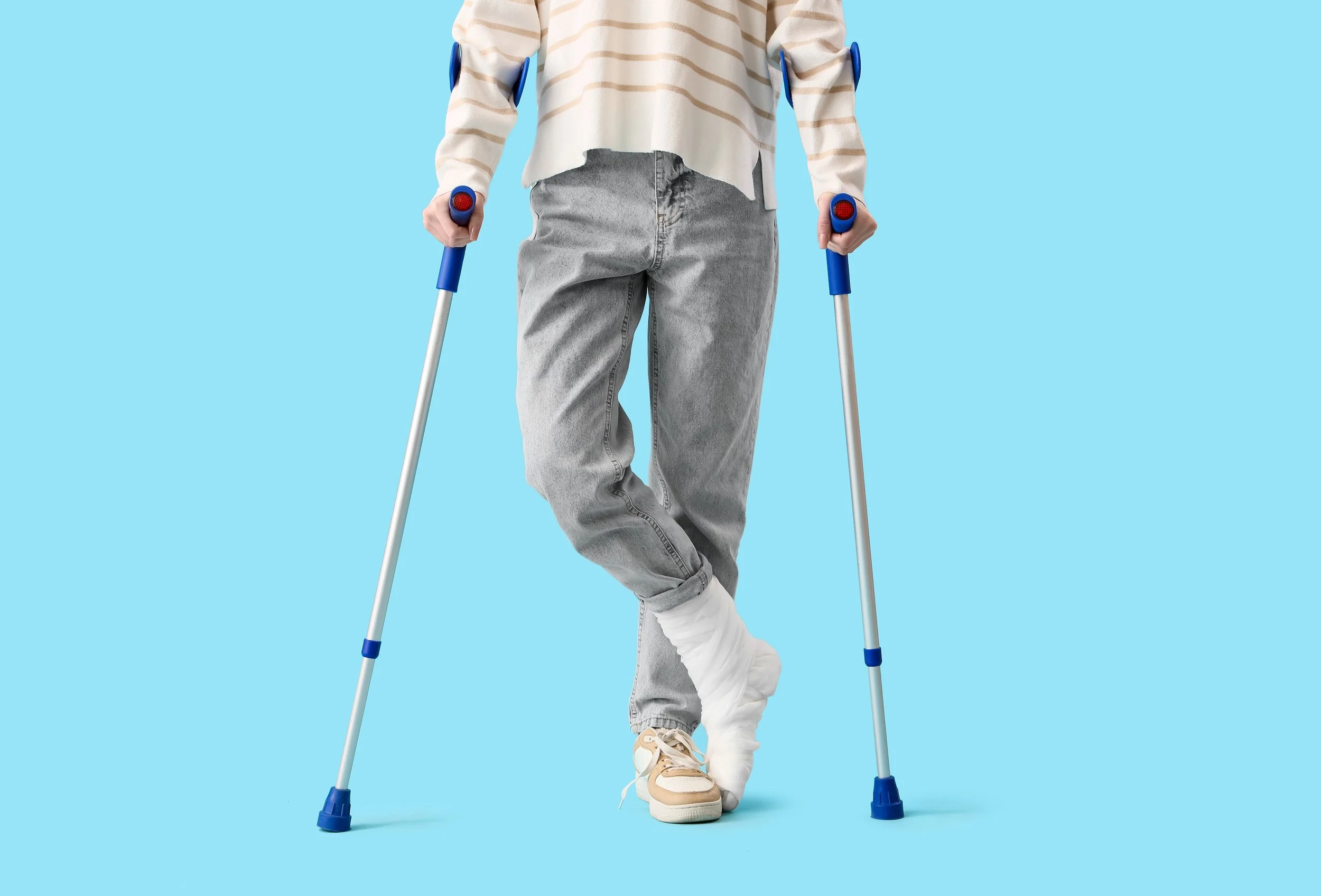
I saw a headline recently that stopped me.
“Are we stuck in ACL hell?”
It was written about the A-Leagues.
It was written about another player.
It was written about another knee.
But it also felt like it was written about something much bigger.
Because knee injuries are not new.
What is new is the frequency.
The relentlessness.
The sense that women’s football is getting faster, stronger and more demanding, while the systems around it are still catching up.
Before going any further, it’s worth saying this clearly.
There is a glossary at the end of this piece explaining ACL injuries, meniscus damage and return-to-play timelines in plain English. The terminology matters, and it’s often misunderstood.
And then I started thinking locally.
Lucy Roberts, our women’s captain, missed an entire season with an ACL injury.
Pishon Choi was a big miss for us as well, sidelined with the same injury.
Those are just two names I can think of immediately.
There are many more, at our club and certainly across others.
At some point, this stops feeling like bad luck.
What an ACL injury actually is
The ACL is the anterior cruciate ligament.
It is one of the major stabilising ligaments inside the knee joint. Its role is to control:
forward movement of the shin bone under the thigh bone
rotation of the knee
stability during sudden changes of direction
In football terms, the ACL is under the most stress when a player is:
decelerating
cutting or pivoting
landing from a jump
changing direction at speed
Most ACL injuries in football are non-contact.
No tackle. No collision. Just a movement the knee cannot tolerate at that moment.
Once torn, the ACL does not heal on its own.
For players who want to return to competitive football, surgery is usually required.
ACL is rarely the only injury
An ACL injury is often spoken about as if it is a single, neat event.
Scan. Surgery. Rehab. Comeback.
In reality, it is often more complicated.
When the ACL ruptures, the knee becomes unstable. That instability frequently leads to damage to other structures, particularly the meniscus.
This is why many players are told they have:
an ACL injury and a meniscus tear
or require additional surgery later
Two players can both be described as having “ACL injuries” and yet have very different recoveries, timelines and long-term outcomes.
The strength it takes to come back
This is the part that often gets lost.
Many women do not just rehab once.
They rehab for months.
They return.
They manage ongoing symptoms.
They have another setback.
Sometimes another surgery.
And they do it all again.
Not because it is easy.
Not because it is paid well.
But because they love playing.
Because football is part of their identity.
Because walking away is often harder than doing the rehab again.
The strength required to come back from an ACL injury, especially more than once, is enormous. Physically. Mentally. Emotionally.
Women’s football is full of players who keep choosing the hard road, even when the system around them makes it harder than it needs to be.
That matters.
The lazy explanation
The lazy explanation goes something like this.
Women tear ACLs because women’s bodies are different.
Hips. Angles. Hormones. Anatomy.
Some of that is relevant.
None of it is sufficient on its own.
Because if biology were the whole answer, we wouldn’t be seeing injury rates climb as the women’s game becomes more professional, more intense and more demanding.
The timing matters.
My uncomfortable theory
My theory is simple.
Women’s football has grown faster than the protections around it.
The game is quicker now.
Players are stronger.
The intensity is higher.
But the systems supporting those demands have not grown at the same pace.
So we have load without protection.
And the knee pays the bill.
Load without protection
Across women’s football, including semi-professional and community levels, we often see:
Small squads, meaning key players carry heavy minutes.
High training and match loads with limited rotation options.
Inconsistent access to strength and conditioning support.
Variable medical resourcing.
Uneven recovery environments.
Surfaces that change week to week.
This is not a criticism of clubs.
It is a structural reality of a game that professionalised unevenly.
Even in Australia, with short seasons
A common assumption is that ACL injuries should be less common in Australia because our women’s seasons are relatively short.
But short does not mean low risk.
ACL injury risk is driven less by season length and more by:
how quickly load increases
how well players are prepared
how much fatigue is involved
what surfaces players move across
In Australia, women’s football often involves:
compressed pre-seasons
rapid jumps from off-season to match intensity
limited year-round strength and conditioning
players balancing football with work or study
The football itself is still fast and demanding.
Knees do not respond to calendars.
They respond to movement, fatigue and control.
Which is why ACL injuries occur here too, even with shorter seasons.
Artificial surfaces and injury risk
Artificial surfaces are often blamed in ACL discussions and the truth is more nuanced than headlines suggest.
Early generations of artificial turf were problematic. Modern third-generation surfaces are much improved.
Current research suggests that modern artificial turf does not automatically cause higher ACL injury rates compared to well-maintained natural grass.
However, surface is not irrelevant.
Risk appears to increase when artificial surfaces are combined with:
fatigue
heavy training and match load
inconsistent surface quality
poor footwear–surface interaction
frequent switching between different surfaces
Surface alone may not cause the injury.
But it can contribute to the overall load environment.
Again, this points to systems, not a single villain.
Football is a high-risk sport for ACL injuries
Another uncomfortable truth is that football itself carries inherent ACL risk.
Women who play football are at higher risk of ACL injury than women in many other sports, particularly those without cutting, pivoting and deceleration demands.
Men do suffer ACL injuries too, but women experience them more frequently in football, particularly non-contact injuries and that difference is too consistent to ignore.Football combines:
frequent changes of direction
rapid deceleration
jumping and landing
fatigue over long passages of play
unpredictable movement
As the women’s game becomes faster and more intense, that risk increases unless the environment around players evolves at the same pace.
Sam Kerr, and why money doesn’t shorten the calendar
There is a temptation to assume that better funding solves ACL injuries.
It helps.
But it does not bend biology.
Sam Kerr, Matildas captain and global star, ruptured her ACL in January 2024 while playing for Chelsea.
She had access to:
world-class surgeons
elite sports medicine teams
unlimited rehabilitation resources
time and security
And she was still out of competitive football for well over a year, closer to 20 months, before returning to match play.
That is not a failure of care.
ACL grafts need time to mature.
Neuromuscular control needs time to rebuild.
Confidence and trust in the knee take time to return.
Money improves support and certainty.
It does not safely compress healing.
Lucy, Pishon, and the part we don’t talk about
When a player misses a season, the injury is not just physical.
It is watching football happen without you.
It is the mental grind of rehab.
It is uncertainty.
Women’s football has always relied on resilience.
But resilience should not be confused with acceptability.
Just because women cope does not mean the system is fine.
So are we stuck in ACL hell?
Only if we keep treating ACL injuries as bad luck and biology.
This is not an ACL crisis.
It is a systems lag problem.
We professionalised the product quickly.
We increased speed, intensity and expectation.
But we did not professionalise:
preparation environments
strength and conditioning access
surface consistency
squad depth
minimum medical standards
at the same pace.
Until that gap is addressed, the question will keep being asked.
And the injuries will keep coming.
Women will keep rehabbing, returning and, in some cases, doing it all again because they love this game.
The question is whether the game will finally meet them halfway.
ACL and knee injury glossary
ACL (Anterior Cruciate Ligament)
A major stabilising ligament inside the knee that controls forward movement and rotation. Once torn, it does not heal on its own.
ACL rupture
A partial or complete tear of the ACL. Often causes instability and usually requires surgery for a return to competitive football.
ACL reconstruction
Surgery where the torn ACL is replaced with a graft, commonly from the hamstring, patellar or quadriceps tendon.
Meniscus (plural: menisci)
Two crescent-shaped cartilage pads in the knee that absorb shock and protect the joint surface.
Meniscus tear
Damage to the cartilage, often occurring alongside ACL injuries. Can prolong recovery and increase long-term knee problems.
Medial vs lateral
Medial refers to the inside of the knee, lateral to the outside.
The medial meniscus is cartilage.
The medial collateral ligament (MCL) is a ligament.
They are different structures.
Non-contact injury
An injury that occurs without a collision. Most ACL injuries in women’s football fall into this category.
Return-to-play
The gradual process of returning to competition after injury. For ACL injuries, this is commonly 9–12 months or longer.
Secondary surgery
Additional procedures required after initial ACL reconstruction, often due to meniscus or cartilage damage.
Women will keep rehabbing, returning and, in some cases, doing it all again because they love this game.
The question is whether the game will finally meet them halfway.