Seatgate Solved: Football Never Got The Email
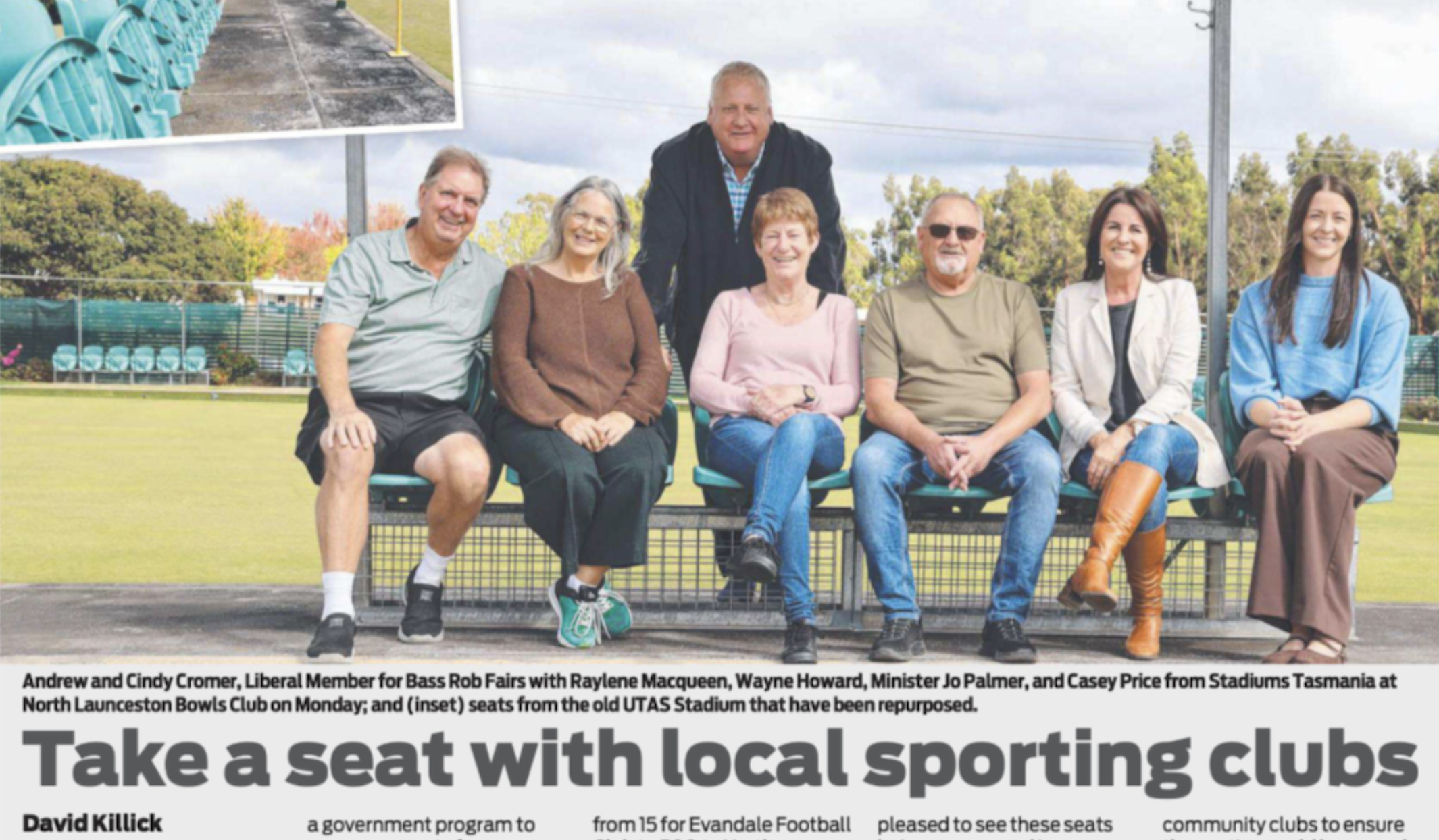
Article from the Mercury
A few months ago I asked a simple question.
Why had more than 1,500 seats removed from UTAS Stadium been distributed to 15 clubs, yet not a single football club appeared on the list?
At the time, I genuinely did not know the answer.
The government's announcement said every club that applied received seats.
That sounded fair.
But it raised another question.
How did clubs know the seats were available?
That became Seatgate.
In my first article I asked whether football clubs knew.
In my second article, following correspondence from Josh Perry of Rosevears and Jo Palmer's office, we learned that clubs had applied through Stadiums Tasmania.
But one question remained.
How were clubs told?
I now have the answer. I wrote to Stadiums Tasmania.
And to Stadiums Tasmania's credit, they provided it promptly and openly when asked.
The response was simple.
Stadiums Tasmania contacted AFL Tasmania and asked it to seek expressions of interest from NTFA clubs.
Some bowls clubs also contacted UTAS Stadium directly.
And with that, the mystery was solved.
Football clubs did not fail to apply.
Football clubs were never part of the communication process used to distribute the seats.
The Outcome Was Predictable
Once Stadiums Tasmania chose AFL Tasmania as the communication pathway, the outcome was largely predetermined.
Of course AFL clubs applied.
They were the clubs that were told.
Of course football clubs didn't apply.
They weren't.
The question was never whether football clubs missed an opportunity.
The question was whether they were ever given one.
Now we know the answer.
Community Sport Or One Sporting Code?
What makes this particularly curious is the timing.
Over recent months we have heard repeated discussions about activating UTAS Stadium.
We have heard about NRL content.
We have heard about A-League content.
We have heard about attracting more events, more audiences and more activity to publicly funded sporting infrastructure.
The message has been clear.
Make better use of our sporting assets.
Engage the community.
Create opportunities.
Which makes the seating story all the more interesting.
Because when a simple opportunity arose to support grassroots sport, the distribution process was limited to a single sporting code.
Not community sport.
One sporting code.
That is what Stadiums Tasmania has now confirmed.
If the objective was helping community sport, there were football clubs, cricket clubs, rugby clubs, hockey clubs, netball clubs and many others across northern Tasmania who may have welcomed the opportunity to put their hand up.
Maybe every seat would still have gone to AFL clubs.
Maybe the outcome would have been exactly the same.
But at least every sporting organisation would have known the opportunity existed.
After all, community sport is full of spectators.
Parents.
Grandparents.
Volunteers.
Supporters.
And unless I have fundamentally misunderstood the purpose of stadium seating, we all have bums that sit on seats.
A Curious Decision
This is not criticism of AFL clubs.
Good luck to them.
They were told about an opportunity and responded.
Nor is it criticism of the clubs that received the seats.
Most community clubs would welcome infrastructure improvements.
But it does raise a legitimate question.
If the objective was helping community sport, why was the opportunity distributed through one sporting code rather than across the broader sporting community?
A simple email to sporting organisations.
A short expression of interest process.
A notice through councils.
Any of those approaches would have ensured clubs from all sports at least knew the seats existed.
Maybe the outcome would have been exactly the same.
Maybe every seat would still have gone to AFL clubs.
But at least every sporting organisation would have had the opportunity to put its hand up.
The Answer
For me, that is the real lesson from Seatgate.
Football did not miss out because it failed to act.
Football missed out because it was never part of the process.
And that distinction matters.
Because once only one sporting network receives the invitation, the outcome stops being surprising.
It becomes inevitable.
Seatgate started with a question.
It ends with an answer.
And the answer is surprisingly simple.
Football never got the email.