Stop Telling Football to be Grateful - Part 2 - Who Heard Us, and Who Didn’t
Who replied, who didn’t, and what that revealed
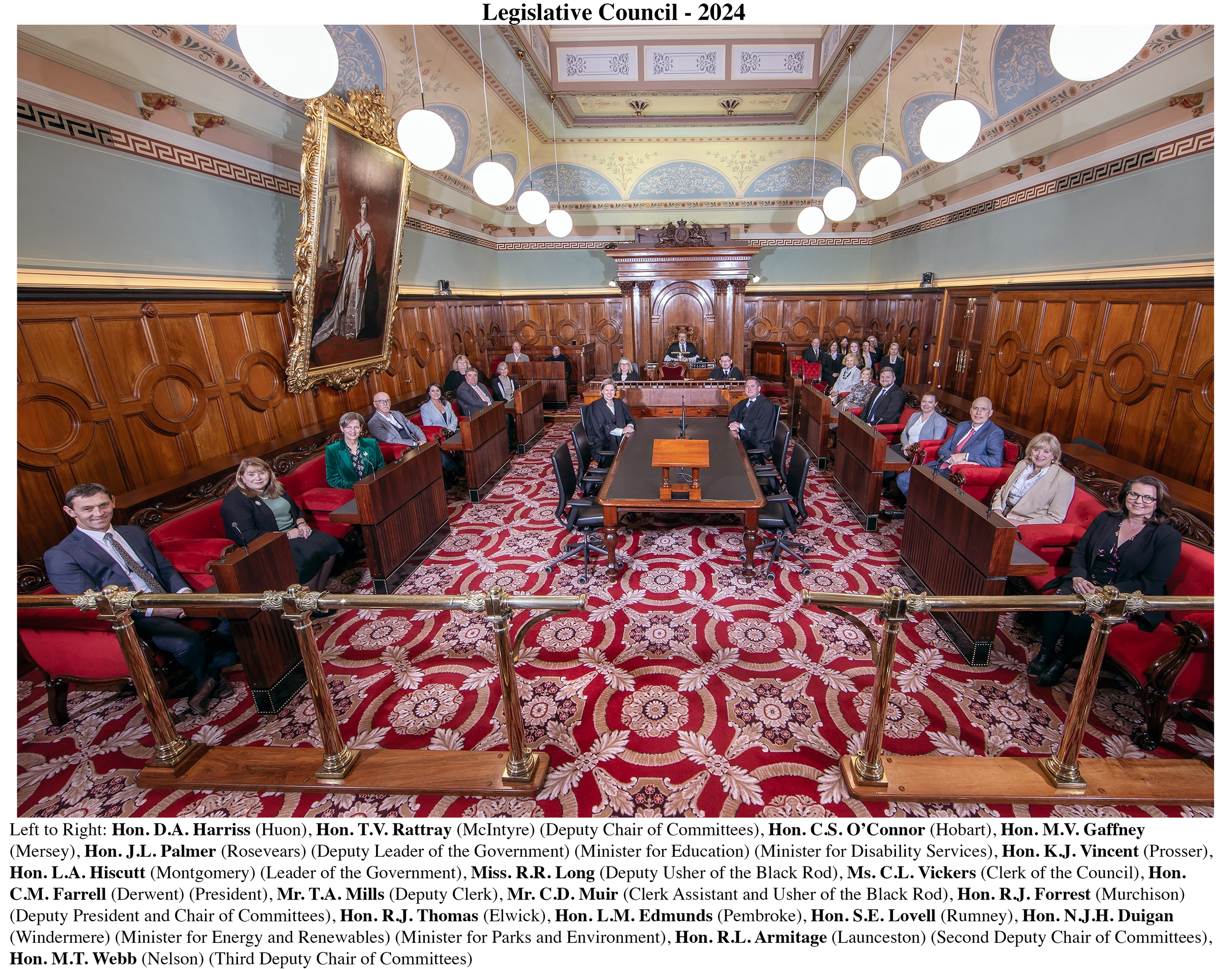
Before the Upper House vote on the Macquarie Point stadium, I wrote to every Member of the Legislative Council.
Not as a politician.
Not as an activist.
Not as part of a pro-stadium or anti-stadium machine.
I wrote as a football person.
A grassroots football person. A volunteer. A parent. A club president. A junior association president. Someone who represents thousands of families who spend their weekends doing what Tasmania always claims to value.
Showing up. Pitching in. Holding the line.
In Part 1, I said this wasn’t about the stadium.
That is still true.
This series is about what the stadium debate exposed.
Because once you strip away the politics, the press conferences and the slogans, one message kept coming through loud and clear to Tasmanian football people.
You are expected to stay quiet.
And if you do speak up, you’re expected to do it politely.
And if you keep going, you’re told you should be grateful.
Part 2 is about correspondence.
Who replied. Who didn’t. And what was revealed in the silence.
Who I wrote to
I wrote to every Member of the Legislative Council, regardless of party.
Football families don’t live in one electorate or vote in neat little blocks.
We are everywhere.
We are the sport that fills the weekends, fills the grounds, fills the car parks, fills the volunteer rosters and still somehow gets treated like we should wait our turn.
Who replied (and how)
This is the list, as accurately as I can make it from my inbox.
Thoughtful reply
Megan Webb (Independent), reply received
Rebecca Thomas (Independent), reply received
Ruth Forrest (Independent), reply received
Michael Gaffney (Independent), reply received
Dean Harriss (Independent), reply received
Reply received (Minister)
Nick Duigan (Liberal), reply received
Acknowledgement only, or triage reply
Rosemary Armitage (Independent), acknowledgement only
Joanne Palmer (Liberal), acknowledgement only
Tania Rattray (Independent), electorate priority or office triage response
Cassy O’Connor (Greens), acknowledgement only
No reply received
Luke Edmonds (Labor), no reply
Craig Farrell (Labor), no reply
Casey Hiscutt (Liberal), no reply
Sarah Lovell (Labor), no reply
Kerry Vincent (Liberal), no reply
That’s the pattern.
Not “all bad”. Not “all good”.
But a pattern.
And when you represent thousands of families who already feel invisible in decision-making, patterns matter.
The “thousands of emails” factor
I also want to acknowledge something else, because fairness matters.
Several MPs said they received thousands of emails about the stadium. One MLC told me directly they had received over 3,000 pieces of correspondence. Another office advised that because of the volume, they prioritised replies only to people who live inside their electorate.
I understand that workload pressure is real.
But it is also revealing.
Because football families don’t stop mattering at electorate boundaries. And when a grassroots sport representing tens of thousands of Tasmanians is raising a structural fairness issue, “sorry, too many emails” is not an answer.
It might be an explanation.
But it is not an answer.
The line that made my blood boil
Only one response raised the point that football has already received grants.
It wasn’t framed as a reprimand, but it carried the same implication.
That football should accept what it gets and move on.
That is exactly the culture I’m pushing back against.
You’ve received grants already.
You’ve had funding.
You’ve gotten something.
In other words.
Stop complaining. Be grateful.
That is the culture I’m calling out.
Because “you’ve received grants” is not an argument.
It is a silencing tactic.
It’s the logic you would use on a community group running a bake sale, not the largest participation sport in Tasmania.
It turns football into a charity case and casts its volunteers as ungrateful whenever they insist on fairness.
Grants are not fairness
Let’s be very clear.
Grants are not the same thing as equitable investment.
Grants are not policy.
Grants are not planning.
Grants are not infrastructure strategy.
Grants are not long-term development.
Grants are not fairness.
Grants are often what governments do when they want to look supportive without making structural commitments, and when they want community sport to keep scraping and scrambling, competing with each other for crumbs.
And football families are sick of it.
We are sick of being told we’re “lucky” to receive a one-off grant while other sports receive major, sustained, strategic investment built into the long-term planning of the State.
We are sick of being told we should smile and say thank you.
That’s not respect.
That’s containment.
This is not personal
I want to say something clearly here.
This series is not about attacking individuals.
Some people replied thoughtfully. Some engaged properly. Some clearly tried to balance competing priorities.
And I respect that.
I also want to be clear about this.
I do not want to work against people who have supported football or genuinely engaged with the issue. Tasmania is too small for scorched earth politics. Good governance requires honest relationships.
But honest relationships also require honest truths.
And one honest truth is this.
Football people are repeatedly treated like we should accept whatever we are given, quietly.
The silence is also a message
The no-replies matter.
Not because every MP is obliged to agree with me.
Not because I’m entitled to personal attention.
But because football families were polite, factual, and measured.
We raised participation numbers.
We raised fairness and equity.
We raised infrastructure shortages.
And still, many were met with silence.
That silence reinforces exactly what football families already feel.
We are seen as background noise.
We are not seen as a priority.
We are expected to keep functioning anyway.
And the reason we keep functioning is not because the system supports us.
It’s because volunteers do.
A fair go
Tasmania loves a few phrases.
“A fair go.”
“Pub test.”
“Common sense.”
So let’s apply that here.
If the biggest participation sport in the State is still short of basic rectangular facilities, still overcrowded, still squeezed, still sharing, still training in the dark, still fighting for ground space, still treated like it should be grateful for scraps.
Does that pass the pub test?
Does that feel like a fair go?
What happens next
In Part 3, I’m moving away from correspondence and into the numbers.
Because this argument is not emotional.
It is measurable.
Participation.
Facilities.
Infrastructure.
Public spending.
And the opportunity cost paid by every other sport, every weekend, in mud, darkness and over-crowded rosters.
Football is not asking for special treatment.
Football is asking for what every other code would demand in our position.
A fair reflection of our size, our load and our contribution to Tasmanian community life.
Part 3 is where the numbers begin.
And once you see them, it becomes harder to pretend this is just football people “whingeing again”.