The English Referee Who Found a Home in Tasmania
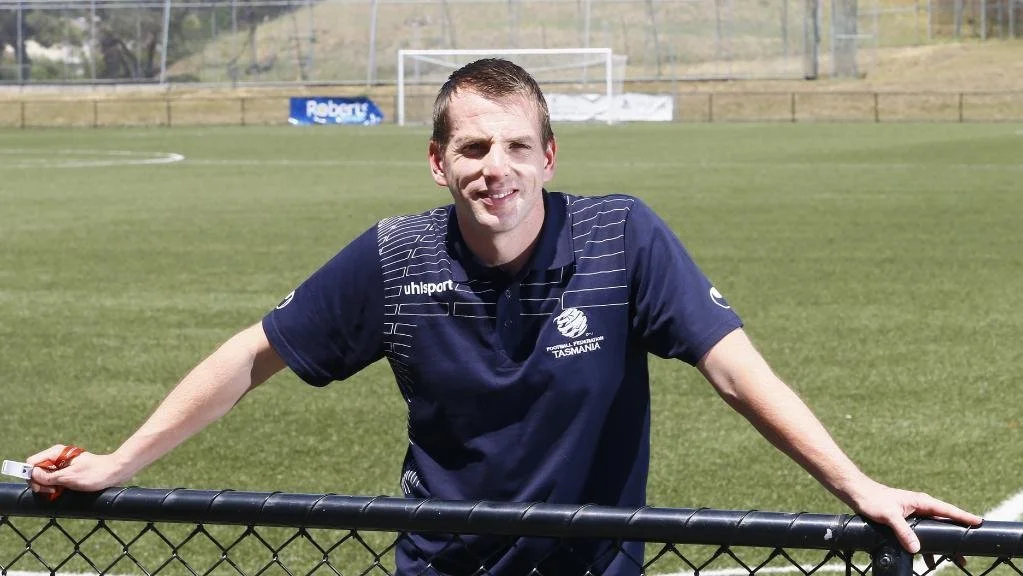
Photo: Football Tasmania
From the English Championship to Preston Lions, Tony Peart reflects on refereeing, leadership, community and the football people who shaped his journey.
When Tony Peart talks about Tasmania, he doesn't sound like someone describing a former workplace.
He sounds like someone talking about home.
Years after leaving for bigger roles in Victorian football, he still owns a house in Tasmania. He still visits regularly. And when asked whether moving here was the right decision, his answer arrives without hesitation.
"Absolutely.”
"I loved my time in Tassie. I still have a house there, still come back for visits, and it will always feel like home."
For many people in Tasmanian football, Tony will always be remembered as Football Tasmania's Referee Development Manager. Others will remember him from referee courses, development programs, radio interviews and countless weekends spent helping officials improve their craft.
Today he is the General Manager of Preston Lions, one of Australia's most historic football clubs.
But his football story began a long way from Tasmania.
It began in England.
A Different Path Into Football
Football was a huge part of Tony's childhood.
Like millions of English children, weekends revolved around the game. Playing it. Watching it. Talking about it.
But while many youngsters dreamed of scoring goals in packed stadiums, Tony became fascinated by something different.
His physical education teacher happened to be a Premier League referee.
That influence proved significant.
While still at school, Tony started refereeing matches himself.
Partly, he jokes, because it occasionally got him out of lessons.
Mostly because he discovered he genuinely enjoyed it.
The responsibility.
The decision making.
The challenge.
Refereeing offered a pathway into football that his playing ability may never have provided.
What started as a schoolboy activity soon became something much more serious.
The Championship Years
Tony progressed through the English refereeing system at a relatively young age.
League One and League Two provided valuable experience before he stepped into the Championship.
For those outside England, the Championship often sits in the shadow of the Premier League.
Those inside football know differently.
"The Championship itself is one of the toughest competitions in world football," Tony says.
"The intensity, crowds, scrutiny and expectations are enormous."
Every match matters.
Promotion can transform a club's future.
Relegation can be devastating.
Every decision is examined.
Every mistake is noticed.
It was an environment that demanded preparation, resilience and consistency.
The lessons learned there would stay with him throughout the rest of his football career.
Finding Tasmania
Like many people, Tony had travelled extensively around Australia before deciding he wanted a new challenge and a different lifestyle.
He had already secured permanent residency before he began looking seriously at opportunities.
Football Tasmania provided one.
The role centred on referee development.
The location offered something completely different from England.
His first impression remains vivid.
"The first thing that struck me was just how friendly and welcoming everyone was."
From his first interview with then CEO Mike Palmer through to conversations with Ian Colhoun before he arrived, Tony felt supported and encouraged.
His introduction to Tasmania was immediate.
One moment he was arriving from England.
The next he was being collected from the airport and taken straight into radio and television interviews.
He laughs about it now, but it was a fitting introduction to a football community that quickly embraced him.
Tony still remembers the people who helped him settle.
Michele.
Glen.
Edo.
Andy Cooling.
Mike Palmer.
Years later, their kindness still stands out.
Discovering Tasmanian Football
Tony arrived with the perspective of somebody who had worked in professional football in England.
Tasmania immediately presented a different environment.
One of the first things that surprised him was the number of clubs.
Coming from England, he initially thought there seemed to be relatively few.
Then he realised something.
Each club was carrying a remarkable amount of football.
Large numbers of teams.
Multiple age groups.
Hundreds of players.
The scale was different.
The commitment wasn't.
Another difference was the football calendar itself.
In England, midweek football is a regular part of life.
In Tasmania, most football activity is concentrated across weekends.
It created a very different rhythm to the game.
What impressed him most, however, was the sense of unity.
Despite the geographical challenges of the state, the referee group displayed a genuine willingness to work together.
There was a strong feeling that everyone was moving in the same direction.
What Tasmania Gets Right
When discussing his years in Tasmania, Tony repeatedly returns to one word.
Development.
"My first few years in Tasmania were probably the most enjoyable of my football career in Australia."
"There was a real focus on development, not just for players, but also for coaches."
From a refereeing perspective, he felt he could genuinely make a difference.
There was a willingness to listen.
A willingness to embrace new ideas.
A willingness to invest in people.
One observation particularly stood out.
Many of Tasmania's stronger clubs operated with multiple teams playing at the same venue throughout the day.
That meant Technical Directors and club leaders could be present.
They could observe players.
Support coaches.
Monitor behaviour.
Reinforce standards.
Shape club culture.
Development wasn't something discussed in a boardroom once a month.
It was happening in front of them every weekend.
Tony believes Tasmania's football community possesses something larger football states sometimes struggle to maintain.
Connection.
People know each other.
Volunteers know coaches.
Referees know club officials.
Administrators know the people on the ground.
Problems are often solved through conversations rather than processes.
"Never underestimate the value of community."
For Tony, that remains one of Tasmania's greatest strengths.
The Challenges Of Being An Island
That doesn't mean the challenges disappear.
Tony jokes that one of football's biggest competitors in Tasmania remains "that oval-shaped ball that seems to dominate the headlines."
Behind the humour sits a serious reality.
Geography influences almost every aspect of football in Tasmania.
Travel costs.
Player pathways.
Referee development.
Competition structures.
Development opportunities.
Simply bringing people together regularly requires significant time, money and effort.
Football also continues to compete for facilities, funding and media attention.
Tony believes there have been times when football has struggled to receive recognition that reflects its participation levels.
Access to facilities.
Facility maintenance.
Government funding.
Media coverage.
All remain ongoing challenges.
Yet what impressed him most was the determination of the people involved.
Rather than becoming discouraged, volunteers, clubs and administrators simply kept working.
The passion never disappeared.
Building Referees, Building People
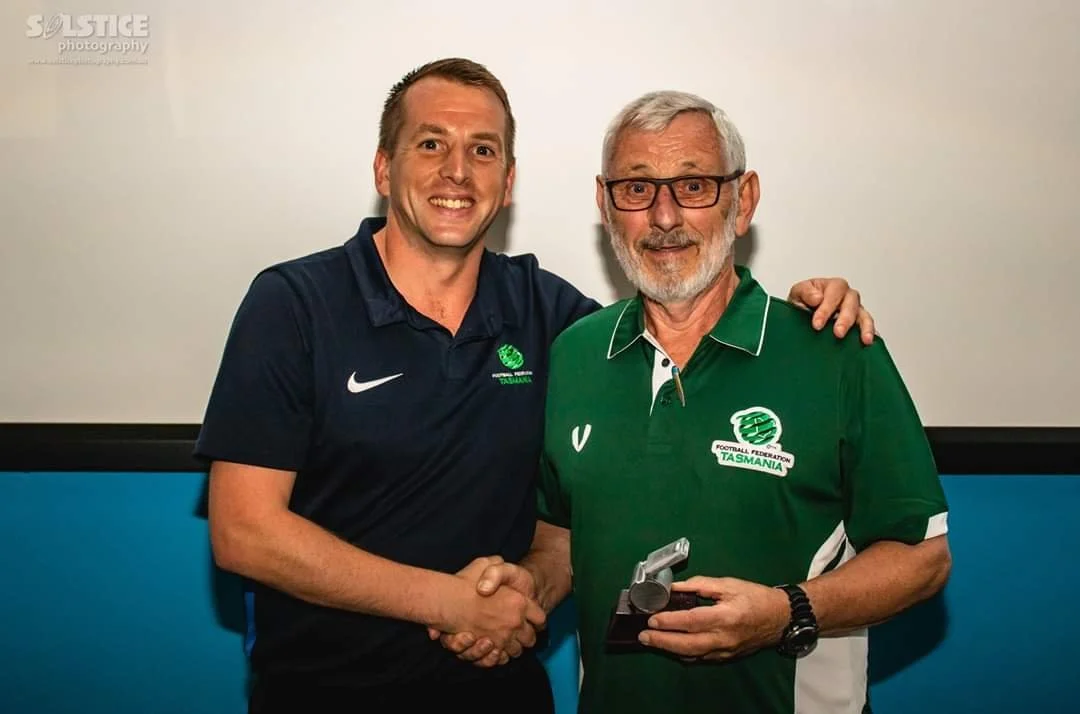
Photo: Football Tasmania
Ask Tony what he is most proud of and he doesn't talk about positions.
He talks about people.
He talks about seeing young referees grow in confidence.
Develop their skills.
Progress through the system.
Reach higher levels of the game.
Claire Green officiating the A-League Women Grand Final.
Brenton, Thomas, Josh and Nathan earning Australia Cup and Championship appointments.
Elliana preparing for and officiating the Matildas' pre-World Cup match.
Groups of Tasmanian referees attending National Championships.
These moments still make him smile.
Even after moving to Victoria, Tony continued to follow the progress of Tasmanian referees closely.
He speaks proudly about seeing groups of Tasmanian officials attend National Championships while he was coaching referee groups at those events.
Watching referees he had worked with continue to progress after he left Tasmania was a reminder that development is rarely about one person or one season.
It is about building pathways that continue long after you move on.
Yet perhaps the achievements he values most are different again.
He speaks proudly about Nathan Coad and Nathan Hill progressing into referee development and leadership roles.
Watching their leadership grow.
Watching them give back to younger referees.
Watching them become mentors themselves.
For Tony, success was never simply about producing better referees.
It was about helping people reach their potential.
"Hopefully, along the way, I helped them grow not only as referees, but as good people as well."
That sentence probably explains more about Tony's philosophy than anything else in this interview.
The Sacrifices Behind Football
Football people are often the visible faces.
The referees.
The coaches.
The administrators.
What is less visible are the people who support them.
Towards the end of our conversation, Tony made a point of acknowledging his partner, Tina.
"Tina deserves a special mention for her unwavering support, sacrificing nearly every weekend for years."
It is an easy detail to overlook.
Hundreds of matches.
Long drives.
Nights away.
Weekends consumed by football.
Behind every long football career there are usually people making sacrifices that never appear in league tables, annual reports or newspaper stories.
For Tony, Tina has been one of those people.
It was important to him that she was acknowledged.
It is important that she is.
Why He Left
If Tasmania felt like home, why leave?
The answer is neither dramatic nor bitter.
It is simply honest.
During his final period in Tasmania, Tony spent almost ten months acting as Competitions Manager while simultaneously managing discipline matters and continuing as Referee Manager.
The workload was enormous.
Eighty-hour weeks became common.
Budget cuts increased pressure and there was a growing expectation to do more with less.
He began to feel he was having less impact on driving positive change.
His voice, he says, was becoming increasingly isolated within the organisation.
Then another opportunity emerged.
Football Victoria advertised the Head of Referees role.
The position offered a chance to influence the game on a much larger scale.
"It was simply an opportunity that was too good to pass up."
Victoria, Preston Lions And A Different Perspective
Today, Tony is General Manager of Preston Lions, one of Australia's most historic football clubs and now part of the Australian Championship structure.
The role brings together everything he has learned throughout his football journey.
Facilities.
Sponsorship.
Volunteers.
Player welfare.
Council relationships.
Government funding.
Football operations.
Events.
Media.
Long-term planning.
Every day presents a different challenge.
Every day reinforces how interconnected football really is.
Moving to Victoria also exposed Tony to football on an entirely different scale.
The number of clubs.
The number of participants.
The diversity of football communities.
The complexity of governance.
Everything became bigger.
Tasmania had allowed a highly personal approach.
Victoria demanded systems capable of managing hundreds of clubs and thousands of participants.
The move broadened his understanding of football administration and reinforced just how much football depends on volunteers.
Without them, the game simply does not function.
Referees, Respect And Governance
One area where Tony remains passionate is referee retention.
Recruitment is important.
Retention is harder.
Expectations continue to rise.
Respect has not always kept pace.
Young referees can face behaviour that should never be accepted.
Creating environments where officials feel safe, valued and supported remains one of football's biggest challenges.
On governance, Tony believes Australian football is improving.
Particularly at club level and within the Championship structure, he sees stronger governance standards, improved transparency and a better understanding of what good administration looks like.
But football remains complicated.
Stakeholders often only see outcomes.
Rarely do they see the hundreds of considerations behind competition structures, fixture scheduling, referee appointments, disciplinary matters, facility allocations or funding decisions.
One of the biggest lessons Tony has learned through refereeing, administration and club management is that there are rarely simple solutions in football.
Decisions that appear straightforward from the outside often carry consequences for clubs, players, referees, volunteers, facilities, finances and governance.
The challenge is finding the best balance among competing priorities rather than searching for a perfect answer.
Usually there is simply the best available option.
The New IFAB Laws
Tony has also been following the new IFAB law changes that will be introduced ahead of the 2026 FIFA World Cup.
Overall, he views them positively.
Football has always evolved.
The key, he believes, is ensuring changes are practical, understandable and consistently applied.
The change he expects to have the greatest impact involves reducing time wasting during substitutions.
Supporters want to see the ball in play.
Anything that encourages that is generally beneficial.
The most controversial change may prove to be the new visual countdowns for goal kicks and throw-ins.
Tony remains interested to see how players and referees adapt.
"We'll see, I guess."
If he could introduce one additional law tomorrow, however, he knows exactly what it would be.
Temporary dismissals for dissent.
Sin bins.
Having participated in IFAB trials in Victoria, he saw immediate improvements in player behaviour.
Players understood there were consequences.
Teams became more accountable.
Referees gained another tool to manage misconduct before situations escalated.
It remains a concept he believes football should continue exploring seriously.
Where Football Wastes Energy
Towards the end of our conversation, I asked Tony where Australian football wastes the most energy.
His answer was thoughtful.
"Too often, football spends time arguing internally rather than focusing on collective growth."
Politics.
Historical disagreements.
Stakeholder battles.
The longer he has spent in football, the more he has realised that most people ultimately want the same thing.
A stronger game.
The challenge is getting everyone moving in the same direction.
The View From The Pub
Ask Tony what he misses most about Tasmania and the answer arrives quickly.
The people.
Friendly.
Welcoming.
Always willing to help.
The countryside.
The clean air.
And perhaps most importantly, a lifestyle where you can still get around without spending your life sitting in traffic.
Towards the end of our discussion, I asked him how he would explain Australian football to his mates back in England.
His answer felt like the perfect conclusion.
"You'd absolutely love the passion," he said.
"But you'd also spend half the night shaking your head at the opportunities the game is still trying to unlock."
An English referee arrived in Tasmania looking for a job.
He left with lifelong friendships, a generation of referees he helped develop, a deeper understanding of Australian football, and a place he still calls home.
That's not a bad legacy.