The Team Sheet. I Am, You Are, We Are Australian
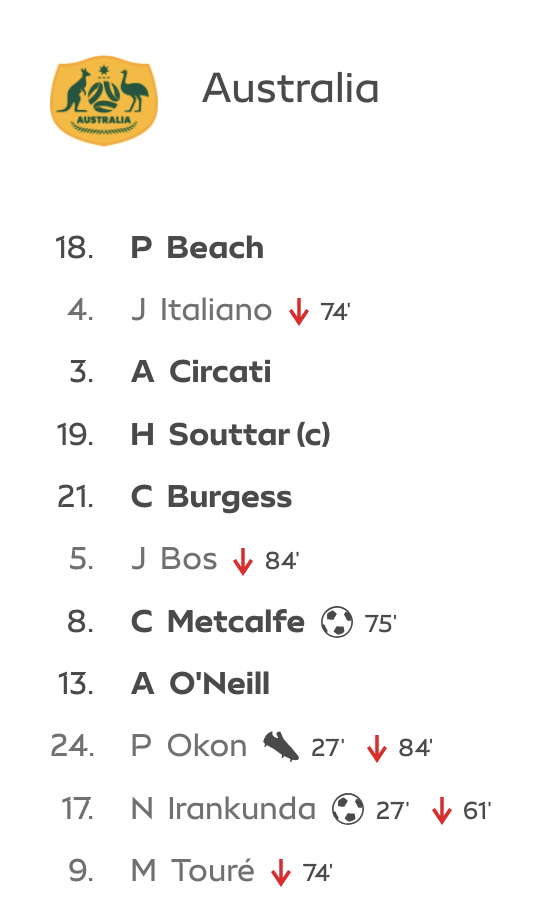
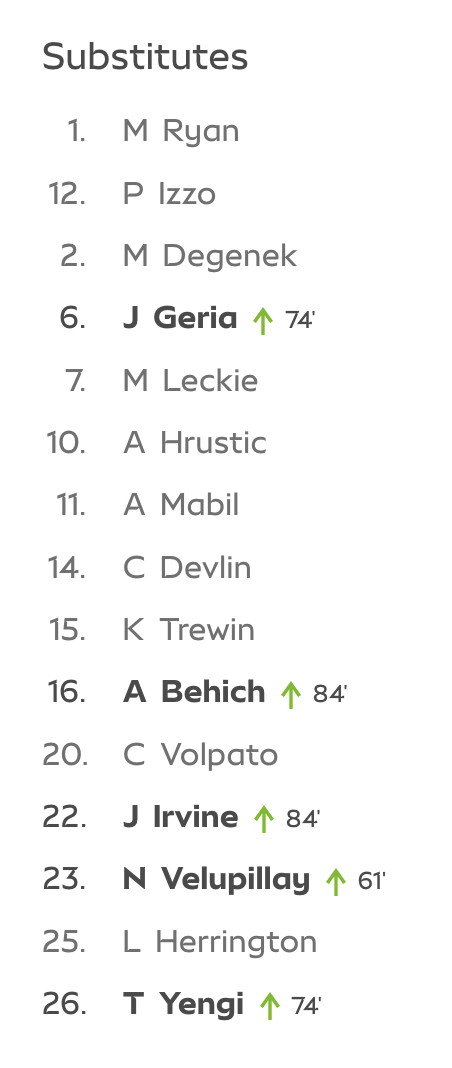
The Socceroos beat Turkey 2-0 on Sunday.
A good win.
A clean sheet.
Another step towards the knockout stages.
Like most people, I spent the match watching the football.
The goals.
The chances.
The result.
But afterwards I found myself looking at something else.
The team sheet.
Alessandro Circati.
Jacob Italiano.
Harry Souttar.
Paul Okon-Engstler.
Nestory Irankunda.
Mohamed Toure.
Nishan Velupillay.
Awer Mabil.
Miloš Degenek.
Names that tell stories.
Names that hint at journeys.
Names that come from all over the world.
And then I started wondering.
What exactly do we mean when we talk about Australians?
A Goal From A Refugee Camp
Nestory Irankunda scored against Turkey.
That sentence alone is remarkable.
Irankunda was born in a refugee camp in Tanzania after his family fled the civil war in Burundi.
Think about that for a moment.
A child born in a refugee camp.
Now scoring for Australia on the biggest stage in world football.
If that is not an Australian story, what is?
And he is not alone.
Mohamed Toure and Awer Mabil also spent time in refugee camps before eventually finding their way to Australia and the Socceroos.
Different journeys.
Different beginnings.
The same green and gold shirt.
Football Knew This Long Ago
Football has always been different in Australia.
Long before governments talked about multiculturalism.
Long before it became part of the national conversation.
Football clubs were already living it.
Italian clubs.
Greek clubs.
Croatian clubs.
Serbian clubs.
Macedonian clubs.
Dutch clubs.
Hungarian clubs.
Turkish clubs.
Clubs built by families looking for community, belonging and a place to call home.
For many migrants, the local football club was one of the first places they felt they belonged.
The Socceroos are, in many ways, the result of that history.
My Own Journey
Then I thought about myself.
I arrived in Australia from New Zealand in 1979.
I never left.
That makes me an immigrant.
Ken arrived from England.
Another immigrant.
Different countries.
Different childhoods.
Different journeys.
Yet somehow we both ended up here.
Building a life.
Raising a family.
Finding our place.
I still get shivers up my spine when I hear the haka.
I still remember Doubtless Bay.
Kari Kari Beach.
Matarangi.
The places of my childhood.
No snakes.
No shoes.
Learning to drive on the beach because Dad handed me the keys to a manual Holden and told me to teach myself.
Those memories are part of me.
They always will be.
You can leave a place without it ever leaving you.
Tasmania
Then there is Tasmania.
I have lived here for thirty-two years.
I love this island.
I care deeply about its football.
Its people.
Its future.
But Tasmanians have their own special category.
You can live here for decades and still be considered "from somewhere else".
There is a certain humour in that.
A uniquely Tasmanian badge that seems to require several generations of family history before full membership is granted.
Perhaps I will never quite qualify.
And that is okay.
Because belonging is not always about where you were born.
Sometimes it is about where you choose to invest your time, your energy and your heart.
What Happened After We Arrived
The older I get, the less interested I become in arguments about where people came from.
Most of us came from somewhere.
The question that interests me is what happened after we arrived.
Did we contribute?
Did we build something?
Did we raise families?
Did we become part of our communities?
Did we leave the place a little better than we found it?
Football has given me a front-row seat to that story.
For decades I have watched people from all over the world arrive in Australia and find a place in the game.
Not because they were Italian.
Or Scottish.
Or Croatian.
Or English.
Or New Zealanders.
But because they became part of something.
A club.
A team.
A community.
A shared purpose.
Perhaps that is what belonging really is.
Not where you started.
But what you chose to become part of.
Home
Australia is where I built my life.
It is where I met Ken.
It is where my children were born.
It is where I found my tribe through football.
And perhaps that is what struck me most about the Socceroos team sheet.
Nestory Irankunda was born in a refugee camp in Tanzania.
Alessandro Circati was born in Italy.
Harry Souttar was born in Scotland.
I was born in New Zealand.
Ken was born in England.
Different journeys.
Different beginnings.
Yet somehow we all ended up here.
Calling Australia home.
The Team Sheet
The Socceroos beat Turkey 2-0 on Sunday.
That was the result.
But the team sheet told a bigger story.
A story about journeys.
A story about belonging.
Long before any of our families arrived, others already called this place home.
A story about a country built by people who arrived from somewhere else.
Some arrived generations ago.
Some arrived recently.
Some came by choice.
Some came because they had no choice.
Yet somehow they all ended up wearing the same colours.
The same badge.
Representing the same country.
I still feel something when I hear the haka.
I know Ken still feels something when England plays.
Nestory Irankunda will always carry part of Burundi with him.
None of that makes us less Australian.
In fact, perhaps it is one of the things that makes Australia what it is.
A country built by people who brought pieces of other places with them.
So here's to all the immigrants.
Here's to all the refugees.
Here's to all the families who crossed oceans looking for opportunity, safety, adventure or simply a better life.
Here's to what Australia has given us.
And here's to what we have given Australia in return.
The Socceroos beat Turkey 2-0 on Sunday.
But the team sheet reminded me of something far more important.
Australia has never been one story.
It has always been millions.