The Volunteer Reflex - Jill Gill
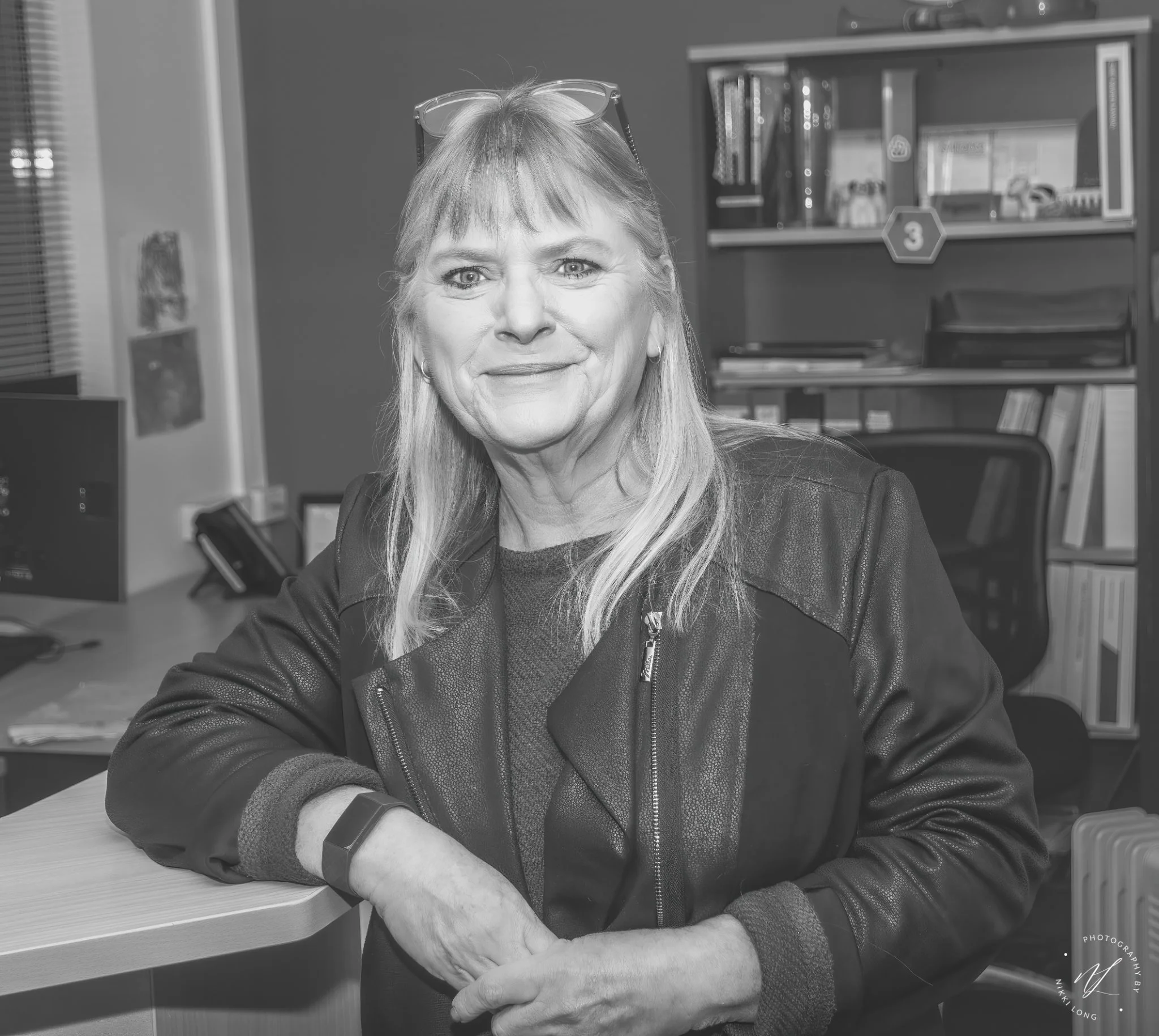
Jill Gill photographed by Nikki Long in 2022
Celebrating Women in Football
This interview was first conducted in 2022.
Roles shift. Titles change. Clubs evolve.
Influence does not.
And Jill Gill’s influence at Clarence Zebras has never really been about titles.
Finding football later in life
Football was not part of Jill’s childhood.
Growing up, the round ball barely featured. If it did, it was seen as a boys’ game. Girls, in those days, were steered toward dancing. That was simply how it was. If a girl played football, it was frowned upon. Not lady like.
No one instilled a love of the game in her.
Even now she laughs that she still has a limited understanding of the rules.
And yet, football found her anyway.
Leaning in
Jill became involved later in life, what she describes as her “maturing years”, which she insists are still very much a work in progress.
Her partner, Frank Perri, who she jokingly refers to as “the infamous Frank Perri”, was already deeply embedded in the club. Jill had a choice. Join in, or spend weekends and at least three nights a week twiddling her thumbs.
She joined in.
Sometimes she jokes that twiddling might have been the wiser option.
Not really.
By 2022 she was in her seventh year of involvement.
Committee member.
Registrar for six years.
Policy helper.
MPIO.
Canteen worker.
Apparently a great coffee maker and a pretty mean hot chocolate specialist.
Home game supper provider for her boys and the opposition.
Whatever needs doing, her hand goes up.
She calls it a bad twitch in her arm. A sucker for punishment.
Every club knows that twitch. It is the volunteer reflex.
The real work happens at home
But Jill’s greatest contribution is not listed on a committee report.
It is her home.
Over the years she has opened her doors to imports from interstate and overseas. Players from America, Canada, England, the West Indies, Hong Kong, Brazil, just to name a few.
Young men far from their own families.
She provides a family environment. A home cooked meal. A hug when needed. A place to land.
At the end of each season, when they return to their own homes, she says a little piece of her heart goes with them.
“Just lucky I have a huge heart.”
You can hear the smile in that sentence.
But you can also hear the truth.
Watching the game grow
As someone who came to football later, Jill does not position herself as an authority on whether Tasmanian football is better or worse than it once was.
What she does notice is growth.
The women’s program expanding each year.
The ratio of boys to girls becoming more comparable.
Junior numbers climbing.
In 2022 she noted their junior registrations had grown from 103 the previous year to 140.
That is not politics.
That is participation you can count.
Football and family
When I asked whether life exists without football, her answer was simple.
Not in their world.
They love the season. They love the build up. They also love the end of the season and the downtime that follows.
Football has enriched her family. Her children and grandchildren are exposed to different cultures, different lifestyles. Anyone who enters their home is accepted as their own.
She laughs that she may have created a monster. One of her daughters is now an avid Clarence supporter, sometimes so vocal on the sidelines that Jill has to walk away.
When she says her family takes these players on as theirs, she means it.
The quiet achievers
When asked which Tasmanians have most influenced her involvement, she did not name one individual.
Instead, she spoke about the quiet achievers.
The people who give up their time week after week, often with little or no recognition. The ones who do not seek applause.
Without them, most clubs would not function, let alone thrive.
Her hat goes off to each and every one of them.
Mine too.
Knowing her lane
Jill was clear about one thing.
She is not interested in politics or club power.
She tried committee politics once. It was not her cup of tea.
“I am not involved in politics or the running of the club. Nor do I wish to be.”
She knows where she is most useful.
And it is not in the boardroom.
Legacy
Jill does not claim a grand legacy.
She sees herself as one of thousands of volunteers who have played an integral part in running the game. In some small way, helping to make it better, more enjoyable, more accessible.
“Volunteers do not necessarily have the time, they just have the heart. The unselfish effort to bring cheer to others will be the beginning of a happier life for ourselves.”
Legacy in community football is rarely about trophies.
It is about who felt welcomed.
Who felt cared for.
Who had somewhere to land.
Jill may not claim a legacy.
But clubs are built on people exactly like her.
And that influence does not change, even when the roles do.