Walter Pless and the Memory of Football
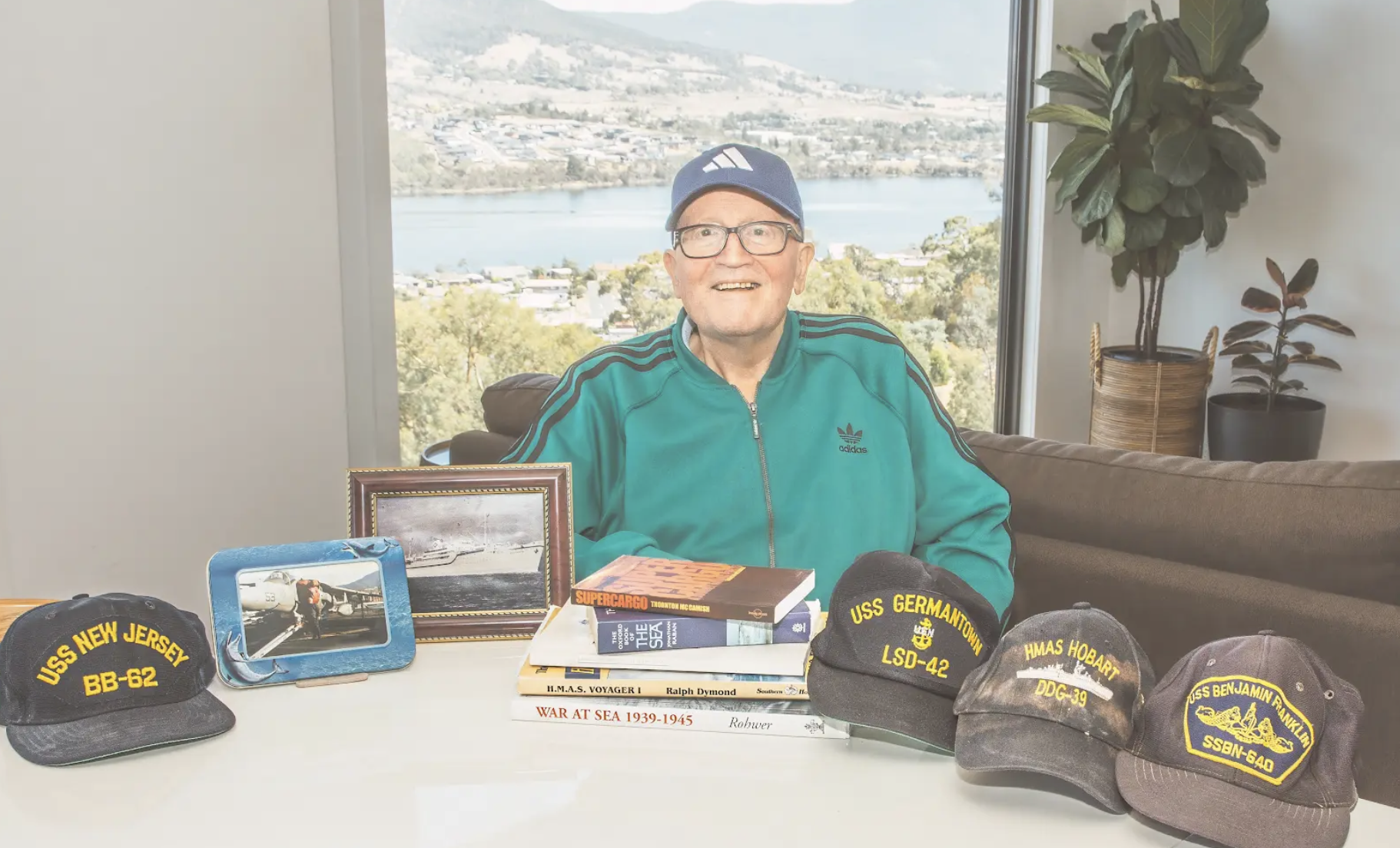
Photo taken with love by Nikki Long
A life spent watching, writing and loving football in Tasmania
Why this interview matters
When I asked Walter Pless if I could interview him, he seemed surprised. Almost embarrassed. As though he were not quite worthy of an interview.
That humility says everything.
Because anyone who has stood on Tasmanian touchlines for the last forty years knows what Walter has done. He recorded our game when few others did. He turned up week after week, in wind, cold mornings and long afternoons, driving from ground to ground so the story of football in this state would not be lost.
He never chased recognition. He just kept turning up.
Player. Coach. Teacher. Writer. Photographer. Volunteer historian.
Walter is known across Tasmania as “Mr Football”.
In 2022 he was inducted into the Football Australia Hall of Fame, one of only a handful of Tasmanians ever to receive that honour.
People like Walter rarely think of themselves as important. They just do the work.
This interview is a small attempt to say thank you and to record his story in his own words.
Childhood in Austria
Walter was born in Lambach, Austria, to Croatian refugee parents.
“I remember the snow in winter and having skis and a sled. We lived in a small village in Upper Austria and I remember travelling to famous cities like Salzburg with Dad, who was a truck driver.”
Football arrived early.
“My dad took me to local games in Austria when I was only three years old. The ground was beside the River Traun and the ball would often end up in the river and have to be fished out. That’s where my uncle broke my nose with a kick. Years later I had surgery on it in Australia but it didn’t really help.”
Soon after, his family migrated.
A new country. A new language. But the same game.
Finding football in Tasmania
Walter arrived in Australia aged five.
“I started school in Grade 1 a few days after we arrived. It was a traumatic experience for me because I didn’t speak a word of English.”
But football was waiting again.
“In Tasmania, my dad would take me with him to games at South Hobart. There were three First Division games every Saturday and that’s how I came to love the game. There were some very good teams and players and the old grandstand was packed.”
Football was family life.
“My father would always take me to games and all my uncles also attended matches. They were players for a while and eventually they also became referees and coaches.”
At school, football was not always available.
“I played Aussie Rules at primary school because there was no soccer team. I didn’t start playing football until second-year high school when we finally got a team.”
Small details that tell a bigger story about football in Tasmania then.
Family, teaching, and Izumi
Teaching became his profession, and he loved it.
“It was wonderful to be able to help kids to learn and you developed a sense of empathy for people. I also coached school football teams.”
Later, through a colleague teaching in Japan and a police exchange programme while Walter was working with Tasmania Police, he met Izumi.
“I was introduced to Izumi when I went to Japan and that’s how we met. We were married in Japan and in Australia.”
She supported his football life.
“Although she doesn’t follow football, she has always supported my love of the game. We used to attend J-League games in Japan and that was a wonderful experience.”
Family mattered deeply.
“My extended family are also precious to me. I have a son and daughter and five grandchildren. I’ve coached three of these grandkids and those three play football at NPL, Championship and Women’s Super League levels now. My two nephews also played football.”
Football ran through generations.
The other passions that shaped him
Walter was never only a football man.
He loved photography, especially ships and aircraft. He travelled on voyages aboard American warships and wrote accounts of those journeys that were published in newspapers and magazines.
He wrote fiction, with short stories published in Australia and the United Kingdom.
He wrote theoretical articles on junior football for education journals, trying to improve coaching and development.
These were the habits of a teacher and observer, and they shaped the depth of his football writing.
Playing days
Walter played for Croatia-Glenorchy, Caledonian, Metro, Rapid and University, spending most seasons with Rapid.
At seventeen he played in the United States for the University of Akron in Ohio and won a tri-state indoor tournament.
He describes himself honestly.
“I was a good reserve team player. My glasses held me back. As soon as a coach sees a player wearing glasses, subconsciously the seeds of doubt are sown.”
At fifteen he broke his leg playing for Southern Tasmania in Sydney and never regained full confidence.
But he remembers his strengths.
“I was always an accurate crosser of the ball, had a powerful shot and took excellent free kicks. The stars of the senior team would always let me take the free-kicks. I’m left-footed and left-footers are always special.”
One match stayed with him.
“I recall playing for Hobart Matric Under-18s against Metro at Cadbury’s and winning 7-0. I made four goals and scored a hat-trick. It was probably my best game ever. Our centre-forward, Tony Davies, was deadly in the air.”
Coaching
Coaching followed naturally.
“Natural progression from a player to a coach. I thought I’d make a better coach than a player and coaching appealed to me. I eventually wanted to write about the game so I needed some street cred.”
He earned the Full Badge of the Australian Soccer Federation, attending a nine-day national course run by Brian Green with Jimmy Shoulder, Ron Smith and Eric Worthington.
There were ideas he wanted to try.
He loved working with players.
“Seeing players improve and be the best that they could be. Seeing players achieve good results.”
Teaching shaped his coaching.
“Teachers often make the best coaches. They can break things down into manageable parts.”
Football gave him purpose.
“Challenges and satisfaction, as well as disappointment at times, but always something to aim for.”
Football also took time.
“I spent a lot of time with football and probably neglected other important things.”
Becoming the writer
Walter began writing about football in 1978.
“I always loved writing and I wanted to write about something I knew a little bit about.”
He became the football writer at The Mercury for 25 years and also wrote for national and international publications including Soccer Action, Australian Soccer Weekly and World Soccer.
“It was a lot of responsibility because you were the voice of the sport.”
He always felt he was fighting for football to be taken seriously.
“It was the world game yet non-football people here didn’t acknowledge that.”
One story he was proud of was interviewing Gary Lineker.
“He was scoring for England one week and the next week he was standing in the middle of the pitch at South Hobart.”
He wrote without fear or favour, sometimes drawing criticism, including after his criticism of Devonport withdrawing from the State League.
Even after retiring in 2009, he kept writing and photographing football through his website.
Volunteer devotion.
How the game has changed
Walter saw football run from kitchen tables.
“It was a serious venture and people invested a lot of time and effort. Administrators were all part-time and did the best they could.”
What improved most?
“The fitness of players and officials and the level of competition.”
What has not improved enough?
“The standard of facilities and media coverage.”
Administrators today?
“Just different. Technology has revolutionised administration.”
One mistake football keeps repeating?
“It doesn’t always take itself seriously enough.”
What worries him, and what gives him hope
“There is still a gap between juniors and senior football. The transition should be seamless.”
But his belief in the game remains.
“It’s the most popular game in the world and it has endless potential. It’s an immovable force and can’t be stopped, despite the obstacles that non-football people erect.”
His blog and football culture
Walter allows comments on his blog.
“As long as they make valid points and are respectful, they should be allowed. Supporters need a voice.”
Harsh comments sting, but debate is part of football.
“Surely debating issues is healthy.”
Matches he still carries
Locally, one match stands above the rest.
“Locally, Tasmania versus New South Wales at South Hobart, 4-5, in the early 1990s.”
Elsewhere he remembers:
“Victoria versus Santos, with Pelé. Eintracht Frankfurt versus Cruzeiro, with Tostão. And the Under-20 World Cup Final in 1981, West Germany 4-0 Qatar.”
People he wanted remembered
Walter named another writer.
“Gordon Burnett, the former soccer writer for The Mercury in the 1950s, 1960s and 1970s. He did a marvellous job.”
Writers remember the game so others can remember too.
Recognition and pride
Walter is proud of the full arc of his football life.
“That I have been a player and coach and then a writer on the game.”
He also represented Tasmania at the International Coaches’ Convention in Sydney in 1981.
In 2022 he was inducted into the Football Australia Hall of Fame.
“It was a humbling experience and one of which my family were very proud. My extended family all travelled to Melbourne for the induction.”
What he wants remembered
Tasmanian football has an illustrious history.
“It has had some great players.”
Walter hopes people will say he loved the game, promoted it and spoke honestly.
His message to the next generation:
“You are playing the greatest game on earth. Respect its traditions, acquaint yourself with its past, and take it positively into the future.”
Thank you, Walter
Tasmanian football owes Walter Pless more than we often realise.
For the countless Saturdays.
For the empty grandstands and the packed ones.
For the cold sidelines and the long drives home.
For the reports and photographs that kept our football alive.
He did it quietly, as a volunteer, because he believed the game deserved to be remembered.
The respect we have for him is endless.
And Tasmanian football is richer because Walter Pless cared enough to write it down.
Thank you, Walter. Truly.