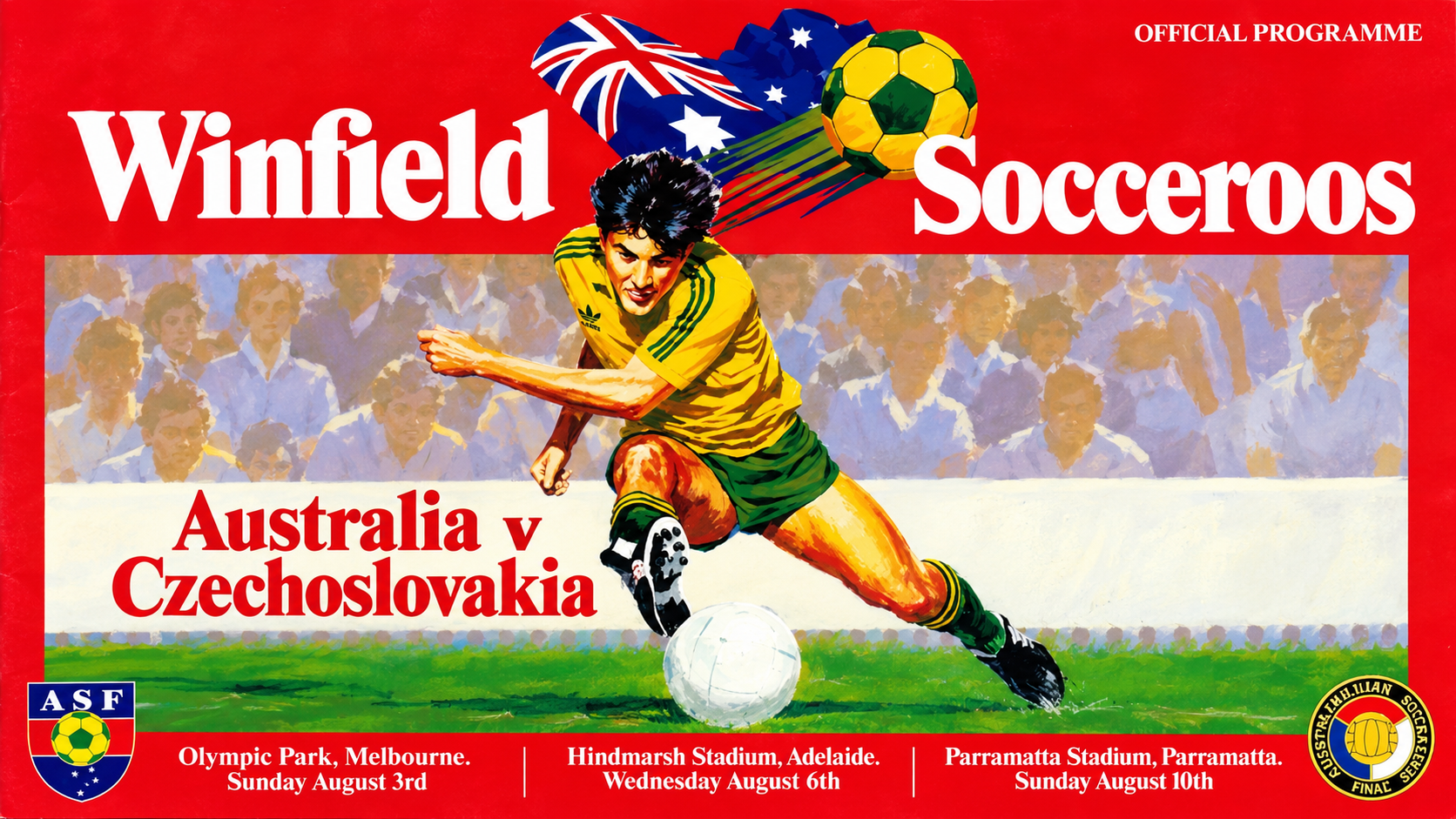
Anyhow, have a Winfield.
Sport, sponsorship and the money we don't ask questions about.
The email arrives.
Dear Club President,
We have been following your club's progress and are impressed by its long history, on-field success and excellent reputation in the community.
We would like to offer $20,000 to sponsor your new women's football program.
We understand your ambition to provide the women with the same opportunities, facilities and support as your men's program. We believe our sponsorship could help make that happen.
In return, we would simply ask for our business name to appear on the front of the women's playing shirts.
We look forward to hearing from you.
Kind regards,
The Hobart Pleasure Palace
Well, there's a dilemma.
The Hobart Pleasure Palace is a fictional, newly opened and heavily promoted brothel.
For the purposes of this exercise, it's completely legitimate. Registered with ASIC. Licensed. Operating legally.
And it wants to give your football club $20,000.
Not $500 towards the raffle. Not a few vouchers for the annual dinner.
Twenty thousand dollars.
Better coaching. New equipment. Travel help. Maybe even lower player fees.
You've spent years arguing that women's football deserves the same investment as the men's. Here's a business offering to help.
There's just one condition.
The women wear Hobart Pleasure Palace across the front of their shirts.
Oh dear.
Would the players want to wear it?
What would the parents say? What about the young girls coming through who look up to these women?
And if the players say no, do you turn down $20,000?
Let's be honest. Businesses aren't queuing outside football clubs with their cheque books open.
Most of the time you're lucky to get a reply to your email.
Then there are your existing sponsors.
The family business that has backed you for years. The real estate agent on the junior shirts. The supermarket that helps with your fundraiser.
Would they want their logos next to a brothel?
Would they quietly drift away?
Suddenly that $20,000 doesn't look quite so big.
Or perhaps nobody would care at all.
Wouldn't that be interesting?
And here's the thing. This isn't entirely imaginary.
In 2012, an amateur Greek football club called Voukefalas was struggling during the country's economic crisis.
The club accepted sponsorship from two local brothels, Villa Erotica and Soula's House of History.
The players wore bright pink shirts carrying the names.
The story went around the world. League organisers banned the pink shirts in games, saying the deal went against the sporting ideal.
The club's argument was simple enough. The businesses were legal and the club needed the money.
Why was a brothel unacceptable when alcohol and gambling were already part of sport?
It's a fair question.
And it leads to a bigger one.
The money has always talked
Sport has never been fussy about where its money comes from.
For decades we happily promoted cigarettes.
The Benson & Hedges World Series Cup. The Winfield Cup.
And soccer was no exception.
In 1986, our national team was promoted as the Winfield Socceroos.
Yes, really.
A cigarette brand attached to the Socceroos.
Imagine the reaction if Football Australia announced that today.
Then came beer.
Newcastle KB United played in the National Soccer League carrying the name of a lager.
Beer became so much a part of sport we stopped noticing it.
Now it's gambling.
Betting ads are woven through our games and our broadcasts. We know the harm it does to families, and we still take the money.
Tobacco was eventually banned. Alcohol and gambling have been reined in.
But nearly all of that came from governments and public pressure.
Not from sport.
Which raises an uncomfortable question.
Does sport ever draw the line itself?
Occasionally the players do.
In 2022, Diamonds player Donnell Wallam raised concerns about wearing the Hancock Prospecting logo. Her teammates stood by her.
Within weeks, Hancock walked away from a $15 million deal.
It was messy. Netball Australia had backed the deal and badly needed the money.
But for once, it was the players who made sport stop and think.
Sportswashing 101
There's a modern word for using sport to clean up a reputation.
Sportswashing.
It was coined in 2015, when Azerbaijan hosted the European Games while facing serious criticism over human rights.
The word is new. The idea isn't.
Nazi Germany used the 1936 Berlin Olympics to show the world a friendly face.
Argentina's military junta hosted the 1978 World Cup while thousands of its own people were disappearing.
More recently, critics have pointed at Russia's 2018 World Cup and Qatar in 2022.
And Saudi Arabia, with Newcastle United, LIV Golf and the 2034 World Cup.
Manchester City's Abu Dhabi owners have faced the same accusation for years.
It isn't only governments.
Companies do it too.
And that brings it a lot closer to home.
What about Tassal?
We already have a Tasmanian example.
Tassal sponsors the Dover Devils. Its name is across the front of the junior shirts.
That money buys equipment, uniforms and the things clubs genuinely need.
It also comes from an industry that plenty of Tasmanians are unhappy about.
Salmon farming has faced years of criticism over water quality, fish deaths and the health of our waterways.
Some people see jobs and a local industry. Others see a cost the environment can't afford.
So when Tassal offers your club money, what does saying yes mean?
Are you backing salmon farming?
Or is a local business simply helping local kids?
In Dover, the answer might be easy. Tassal is part of the town. People work there. Their kids play in the team.
That's real community connection.
It doesn't make the arguments about salmon farming go away.
But it's a very different thing from a company arriving with a big cheque and no history.
There's a twist, though.
Tassal is no longer Tasmanian owned.
It was bought by Canadian company Cooke in 2022.
So how local is local?
The name on the shirt stays the same. The people working in the town stay the same.
The decisions are made a long way from Dover.
It's easy to have strong views in theory.
It's harder when the money could buy new goals and uniforms for 100 children.
And then there's Firmus
I opened The Mercury this morning and there it was again.
Firmus Technologies.
The Tasmanian AI data centre company that keeps making headlines, for its developments and for its growing presence in Tasmanian sport.
Before I go any further, a confession.
I love AI.
I've been accused of using it to help with my writing. Well, yes I do. Every day. Quite a lot actually.
It's given me the freedom to learn, research and explore subjects well outside my usual football territory.
It's given me confidence.
I don't apologise for that.
But I also know AI comes at a cost.
Data centres use enormous amounts of electricity. Cooling them can take a lot of water. Where that power comes from matters.
AI isn't going away. Neither are data centres.
So the real conversation is about doing it properly.
Where we put them. How we power them. What they give back to the communities around them.
Good regulation. Proper safeguards. Transparency.
And when a company in a controversial new industry starts spending heavily on sport, is it just being a good corporate citizen?
Or is something else going on?
How would we know the difference?
The sporting deals
In September, Firmus went on a signing spree.
The Tasmania Devils.
The JackJumpers and the Jewels.
Cricket Tasmania and the Hobart Hurricanes.
The Devils deal runs for six years. Firmus gets its name on the playing shorts and the coaching uniforms.
Community programs were promised too. When the deals were announced, the details were still to be confirmed.
How much is it all worth?
Nobody's saying.
Then on 9 October, Firmus pulled its share market float. There simply wasn't enough investor interest.
Firmus says nothing has fundamentally changed.
But this week The Mercury reported that its biggest Tasmanian project at Bell Bay will now be funded in stages.
Six years is a long time in football.
Boards change. Clubs change. Companies change too.
ANU's Dr Andrew Hughes makes a point every club treasurer will understand. If a big sponsor walks away, it's harder to find the next one.
A sponsorship announcement makes a lovely photo.
The money arriving in the bank account matters a lot more.
Is it sportswashing?
RMIT's Emma Sherry thinks so. She called the Firmus deals a classic case.
Firmus would say it's a Tasmanian company backing Tasmanian sport.
Maybe it's a bit of both.
At our level, sponsors come on board because they have a connection to the club.
They played for us.
Their children play for us.
Or if we're lucky enough, they just love football.
They feel a community connection. That's why they give.
Protecting our reputation is important to us. It matters to our sponsors too. Their name is on our shirts.
Firmus has taken a different approach.
To be fair, Firmus started in Launceston. Its people may love their sport as much as anyone.
In the space of a few weeks, it signed with some of Tasmania's biggest sporting names.
That's a big commitment to Tasmanian sport.
It's also a lot of public visibility.
And it has come while polling suggests most Tasmanians aren't keen on AI data centres here.
That doesn't mean Firmus has done anything wrong.
But it's fair to ask where the connection is.
And who the sponsorship is really for.
What should clubs be asking?
We covered sponsorship during my AFC Diploma of Club Management.
It's easy to talk about it in a classroom.
It's quite another thing when the money is on the table and your club needs it.
So here are the questions I'd want answered before signing anything big.
1. Who are they?
What's their connection to the club? If there isn't one, why us?
2. Can they pay?
Is the money paid up front, every year or in instalments? What happens if a payment doesn't arrive?
3. What do they want back?
Is it just a logo on a shirt? Or are we expected to promote their business or their views?
4. How will our people feel?
Our players, parents, members and volunteers all have to live with this decision.
5. What about our other sponsors?
Will they be comfortable sitting alongside this one? Will the next sponsor be?
6. What if it ends early?
Is there a way out for either side? Do we keep what's already been paid?
7. The Mercury test.
How would we feel seeing this deal on the front page?
Not every sponsorship needs a vote of the members.
But every club should have a sponsorship policy before the tricky offer arrives.
Otherwise it comes down to whoever is sitting around the table that night.
And how badly the club needs the money.
Back to the Pleasure Palace
So let's go back to that email.
Twenty thousand dollars for your women's program.
The business is legal. The offer is genuine.
The women just have to wear the name.
Would you take it?
I genuinely don't know what I'd do.
I'd like to think I'd ask the players first. Talk to the members. Think about our other sponsors.
But I also know what $20,000 could do.
And I know how hard it is to find.
I'm not saying an AI data centre is the same as a brothel.
I'm not saying Firmus has done anything wrong by backing Tasmanian sport.
But the questions are the same.
Who are they? Can they pay? What do they want back? And how will our people feel?
Not just for Firmus.
For every sponsor.
Sport has always taken the money.
Maybe it's time we started asking where it comes from.