When Losing Doesn’t Matter - Tottenham and the modern football paradox
Ken and I watch the Premier League avidly.
Like a lot of football people in Australia, it means late nights, early mornings and a lot of coffee.
Recently we found ourselves having one of those conversations that football supporters have when things start to look strange.
Could Tottenham Hotspur actually go down?
Not just struggle. Not just have a bad season.
Actually be relegated.
At first it felt ridiculous even to say it out loud. Tottenham are one of the biggest clubs in England. A huge stadium. Global supporters. International players.
Relegation feels like something that happens to other clubs.
But the longer we talked about it, the more the conversation shifted.
Not to whether it would happen.
But whether, in modern football, it would actually matter.
Before getting to that question, it helps to remember where Tottenham sit in the long story of English football.
The origin of the name
Tottenham’s nickname actually comes from a medieval English knight.
The “Hotspur” in Tottenham Hotspur comes from Henry Percy, a fiery 14th-century warrior famous for charging headlong into battle.
It was a fitting inspiration for a football club.
Bold. Fearless. Attacking.
For decades Tottenham supporters liked to believe those qualities lived in the way their team played.
A club with deep roots
Tottenham were founded in 1882 by a group of schoolboys in North London.
Over time they became one of England’s most recognisable football clubs.
They were innovators in many ways. Tottenham were the first club in the 20th century to win the English league and FA Cup double in 1961.
They became known for attacking football and flair.
Players such as Jimmy Greaves and Glenn Hoddle were part of that identity.
Tottenham were also the first British club to win a European trophy when they lifted the Cup Winners’ Cup in 1963.
For decades they were not always dominant, but they were always significant.
Tottenham mattered in English football.
Even Tottenham are not immune to football’s cycles. The club was relegated in 1977 before bouncing straight back the following season. Big clubs can fall. Football history reminds us of that.
The modern transformation
Fast forward to the present and Tottenham have something else.
One of the most extraordinary stadiums in the world.
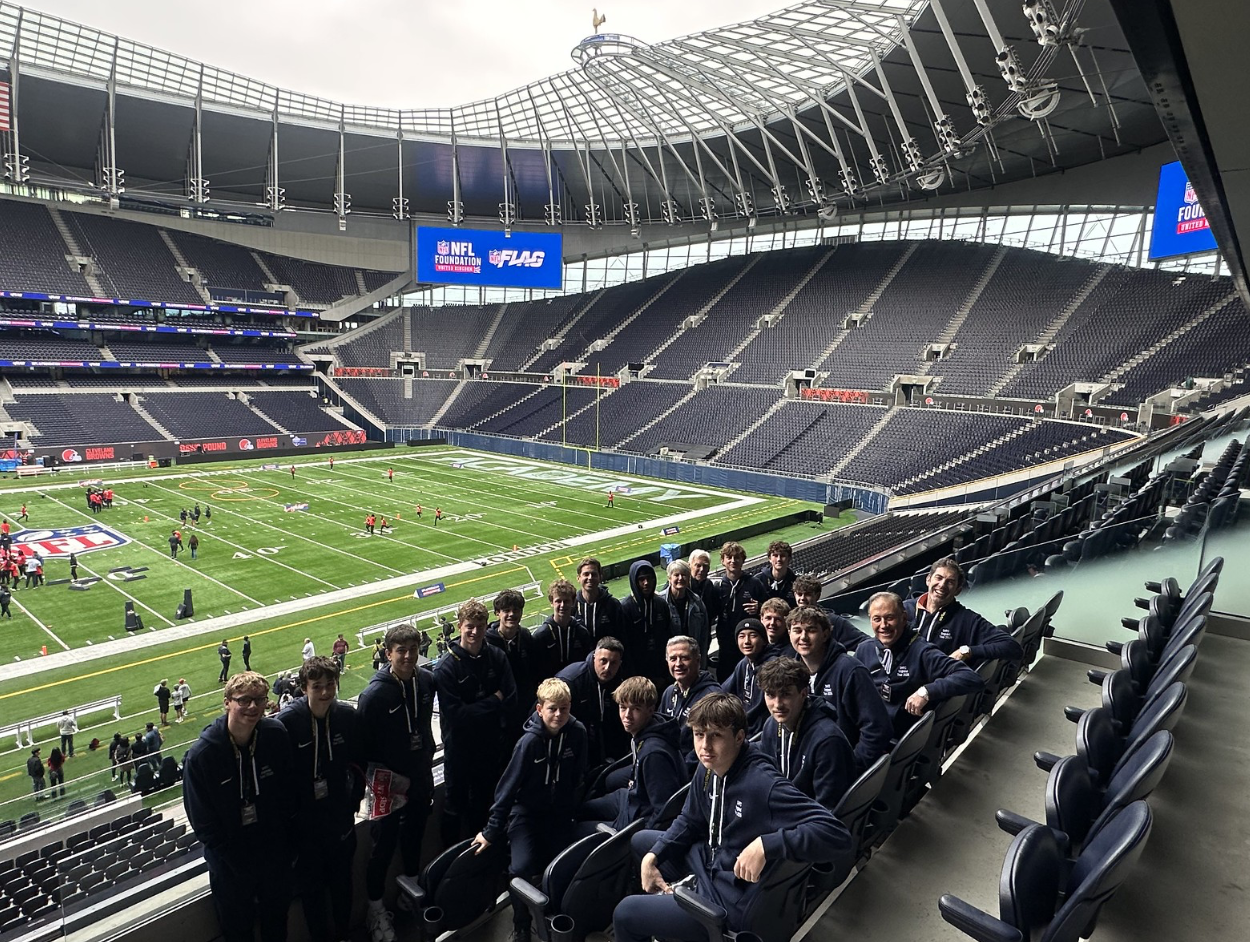
Ken and I were actually at the Tottenham Hotspur Stadium last October.
We were there with 45 other very excited Tasmanians, part of a football trip to England.
Standing inside that stadium with our group of players and families was one of those moments where football feels wonderfully global. A group from a small island at the bottom of the world standing inside one of the biggest stadiums in the game.
Sadly it was NFL fortnight so we couldn’t see a football match.
The guide spoke about the extraordinary revenue those NFL weeks generate. It was a reminder that the stadium is now much more than a football ground.
It is a global entertainment venue.
But it also made me think about the old White Hart Lane.
White Hart Lane felt like a proper football ground.
Tight. Close to the pitch. Built for football and nothing else.
The new stadium is magnificent, but it also tells the story of modern football.
The game is now surrounded by a much bigger entertainment business.
When losing doesn’t immediately hurt
In traditional football culture losing had consequences.
Lose too often and you were relegated.
Relegation meant financial loss, reputational damage and a long road back.
It forced clubs to confront mistakes.
But the modern football economy has softened that reality for some clubs.
Clubs at the top of the Premier League generate extraordinary revenue through broadcasting, sponsorship and global audiences.
For them, a bad season does not necessarily create an immediate crisis.
The business continues.
The stadium remains full.
The sponsorship deals continue.
Commercial growth can continue even while the football stagnates.
Modern football has created a strange possibility.
A club can be thriving as a business while quietly drifting as a football team.
Tottenham as a case study
Tottenham have not lacked ambition.
Managers such as José Mourinho, Antonio Conte and now Ange Postecoglou have all been brought in to try to push the club forward.
Each arrived with different ideas.
Each departure created another reset.
The current moment is particularly interesting for Australian supporters with Ange Postecoglou in charge. His attacking philosophy actually fits Tottenham’s historical identity, yet modern football rarely allows managers the time needed to build something properly.
At times the football has looked promising. At other times the direction has felt uncertain.
That is what prompted Ken and I to have that conversation in the first place.
One moment recently really struck me.
In a match earlier this season the Tottenham manager Igor Tudor substituted a young goalkeeper, Antonín Kinský, after only a short time on the field following several early goals.
Watching it unfold I felt genuinely dreadful for the young man.
Perhaps that reaction comes from being a mother. Perhaps it comes from spending so many years around youth football.
Anyone who has watched young players develop knows how fragile confidence can be, particularly for goalkeepers. They carry the responsibility for every mistake in a way few other positions do.
Seeing a young player exposed like that on such a big stage was hard to watch.
Football can be brutally unforgiving at the highest level.
And in some ways that moment also said something about where Tottenham find themselves right now.
A club searching for answers, reacting in the moment, trying to stop problems rather than calmly building solutions.
Could Tottenham really go down?
It still feels unlikely.
But the fact the question can even be asked says something about the current moment in football.
Why relegation used to matter so much
Promotion and relegation are the brutal accountability system built into football.
It is one of the reasons the game feels so alive.
Performance matters.
Mistakes eventually catch up with you.
No amount of branding or marketing can change the league table.
Historically that is what kept clubs grounded.
No matter how big the name, poor football eventually had consequences.
Even relegation today is cushioned. Clubs dropping out of the Premier League receive significant parachute payments which soften the financial blow that once devastated clubs.
In modern football some clubs have become so commercially powerful that even failure on the pitch does not immediately threaten them.
The modern question
Which brings us back to that conversation.
If a club as large as Tottenham struggled badly enough to go down, what would actually happen?
The financial damage would be real.
But the club itself would probably survive.
The stadium would still stand.
The global supporters would still exist.
The brand would still have value.
The spreadsheets might say the club is thriving.
But football supporters do not measure success on spreadsheets.
They care about identity.
They care about progress.
They care about what happens on the pitch.
And that is why even the possibility of relegation for a club like Tottenham still feels shocking.
Because deep down, football supporters still believe something simple.
Losing should matter.
Even if modern football sometimes tries to pretend it doesn’t.